
Contents
| Date built: | – |
|---|---|
| Deity: | – |
| Architectural style: | – |
| Major festivals | – |
| Locale: | Kodungallur |
| District:: | Thrissur |
| Address: | Pettumma, Kodungallur, Kerala 680664 |
| Phone | 04802803061 |
1. Introduction & Spiritual Essence
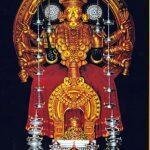
Sree Kurumba Bhagavati Temple, universally known as the Kodungallur Bhagavathy Temple, stands as the spiritual apex of Bhadrakali worship in Kerala. Located in Thrissur district, the presiding deity is Bhadrakali, a fierce yet benevolent form of Maha Kali (Parashakthi). Locally revered as Kodungallur Amma (The Mother of Kodungallur), the goddess is depicted in her ugra (fierce) form, facing North with eight hands wielding various attributes, including the head of the demon king Daruka and a sickle-shaped sword.
Phalaśruti (Spiritual Benefits):
Devotees visit primarily to seek protection from evil forces and to cleanse ancestral karma. The temple is traditionally believed to be the original embodiment of Goddess Kali, making it a powerful site for Shakti worship. It is the head of 64 Bhadrakali temples in Kerala, particularly in the Malabar region. Devotees believe that worshipping here removes obstacles and grants the Bhakta (devotee) the strength to overcome life’s battles.
2. Historical Origins & Scriptural Legend
Origin of the Deity:
The temple’s history is deeply intertwined with the Silappathikaram, the epic Tamil poem by Ilango Adigal. Tradition holds that Kannaki, the heroine who destroyed the city of Madurai through righteous fury, traveled to Kodungallur. It is here that she prayed to Bhadrakali and attained Moksha (salvation), believed to have merged into the sacred murti (idol) of the temple.
Chera Dynasty & Construction:
During the reign of the Later Cheras, Mahodayapuram (modern-day Kodungallur) served as the capital. The temple is believed to have been established approximately 1,800 years ago by Cheran Chenkuttuvan. While the exact date is lost to antiquity, temple records suggest that the site was originally a Shiva shrine. It was the legendary Parasurama who installed the murti of Bhadrakali adjacent to Shiva. The worship practices here incorporate ancient Shaktyem customs that predate many contemporary temple rituals in Kerala.
Local Legend:
According to local lore, the temple was constructed by the Cheraman Perumal. The installation follows the Rurujit Vidhaana pattern in Tantric terms—a form of consecration placing Shiva at one end, Ganesha at the other, and the Sapta Matrikas (Seven Mothers) in between. Five Sri Chakras installed by Adi Shankaracharya are believed to be the primary source of the deity’s spiritual energy.
3. Architectural Marvels
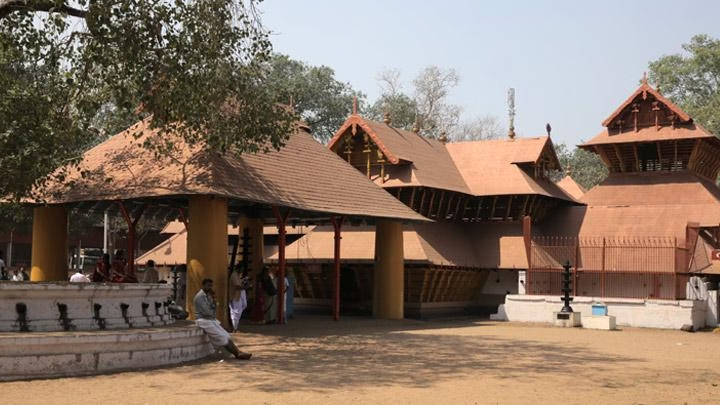
The temple architecture follows the traditional Kerala Style with distinct Tantric alignments. The complex sits on a ten-acre plot surrounded by ancient banyan and peepal trees.
- The Sanctum Sanctorum (Srikovil): Unlike most Kerala temples, the Srikovil faces North (a direction usually reserved for Yama, but here symbolizing the fierce protective gaze of Bhadrakali).
- The Idol: The murti is approximately seven feet high, carved from a single jackfruit tree. The eight arms hold weapons and symbols of power.
- Sapthamatruka Shrine: Located in the western chamber of the inner temple, the Seven Mothers face north, accompanied by idols of Ganapathi (facing east) and Veerabhadra (facing west).
- Sacred Water Body (Pushkarini): Located about fifty meters from the main shrine, this pond is believed to have been created by the goddess striking the ground with her sword. Devotees bathe here before Darshan.
4. Darshan & Ritual Logistics
Daily Timings:
Routine worship typically runs from 03:00 to 21:00 local time. However, timings may vary during festival seasons.
| Session | Timing |
|---|---|
| Morning Darshan | 03:00 AM – 12:00 PM |
| Afternoon Break | 12:00 PM – 04:00 PM |
| Evening Darshan | 04:00 PM – 09:00 PM |
Key Sevas & Online Booking:
To perform rituals, devotees can book through the official temple website or the Kerala Devaswom Board portal.
- Abhishekam: Ritual bathing of the deity with milk, honey, and sandalwood.
- Archana: Chanting of the goddess’s holy names.
- Thulabharam: Offering items equal to the devotee’s weight.
- Online Portal: Visit www.devaswomportal.kerala.gov.in to book specific Sevas.
2026 Festival Dates:
Assuming the current year is 2026, the following major festivals are anticipated. (Note: Dates are based on the Malayalam calendar and may vary slightly).
- Kodungallur Bharani (Kavutheendal): May 8, 2026 (Friday) – The most significant festival involving traditional folk songs and rituals.
- Navarathri: October 6 – October 14, 2026 – Special Valiya Vilakku (grand lamp) ceremonies.
- Mandala Kalam: November 17, 2026 – December 27, 2026 – Peak season for Sabarimala pilgrims visiting this temple.
5. Practical Visitor Guidance
- Dress Code: Traditional attire is mandatory. Men must wear Mundu or Dhoti; women must wear Saree or Salwar Kameez (modest clothing). Shorts and t-shirts are not permitted.
- Photography: Strictly prohibited inside the inner courtyard and sanctum sanctorum. Mobile phones are allowed but must be on silent mode.
- Mobile Lockers: Free lockers are available near the entrance for electronic devices and prohibited items.
- Accessibility: The temple complex has stone steps; wheelchair access may be difficult in older sections. Volunteers are available during peak hours.
- Crowd Management: Tuesdays, Fridays, and Saturdays are exceptionally crowded. Best time to visit: Early morning (3:00 AM – 5:00 AM) or late evening (7:00 PM – 9:00 PM). During summer (April-May), carry water and an umbrella.
6. Pilgrimage Connectivity
How to Reach:
- By Air: Cochin International Airport (COK) is the nearest airport, approximately 25 km away (45 mins by road via NH 66).
- By Rail: Kodungallur Railway Station is the nearest halt. Alternatively, Thrissur Railway Junction (20 km) is a major hub with better connectivity.
- By Road: Located on the Kochi – Ponnani Highway (NH 66). Buses are frequently available from Thrissur and Ernakulam.
Nearby Sacred Sites (Pilgrimage Circuit):
- Thrissur Vadakkunnathan Temple: A UNESCO World Heritage site dedicated to Lord Shiva, 20 km away.
- Koodalmanikyam Temple: Famous for its Bharani festival and Lord Irattakkudi (a form of Vishnu), located in Irinjalakuda (25 km).
- Mammiyoor Temple: Located near Guruvayur, dedicated to Lord Shiva, often visited alongside the Kodungallur temple.
7. Frequently Asked Questions (FAQ)
1. Is there a VIP darshan entry available?
Yes, the temple offers special entry darshan for senior citizens and physically challenged devotees. VIP tickets can be purchased at the counter, subject to availability, usually allowing faster access to the sanctum.
2. Is non-Hindu entry permitted?
While the Kodungallur Bhagavathy Temple is primarily a Hindu place of worship, the rules regarding non-Hindu entry can vary based on the administration’s current guidelines. It is advisable to check with the temple office before planning a visit.
3. Why is the temple famous for Kavutheendal?
The Kavutheendal (Bharani festival) is unique to this temple. Historically, it involved animal sacrifices, which are now banned. The festival is known for the ritualistic singing of traditional ballads and the offering of red-dyed cloths.
4. What are the restriction timings?
The temple remains closed between 12:00 PM and 4:00 PM daily. During festival days, these timings may be altered to accommodate devotees.
5. Can we offer “Theyyam” performance at this temple?
Theyyam is a ritualistic art form specific to North Kerala. While Kodungallur is a Bhadrakali shrine, Theyyam performances are usually offered at the nearby Bhadrakali shrines in North Malabar. Specific offerings at Kodungallur include traditional Bhagavathy rites.
“O Devi of Kodungallur, protect us from all evils and lead us to prosperity.”— A traditional prayer from the temple devotees.
Photo Gallery
How to Reach:
Contact Details
Official Address
Recent Posts

Shri Kaamkoteeshwar Mandir, Varanasi – History & Significance
In the heart of Kashi, the eternal city of Lord Shiva, where the Ganges flows with celestial grace, stands the Shri Kaamkoteeshwar Mandir. This sacred Sannidhi is not merely a temple but a profound spiritual bridge between the Northern…

ओ सांवरे तूने ही मुझको संभाला – Lyrics & Meaning
ओ सांवरे तूने ही मुझको संभाला – A Prayer to Shyam Origin & Spiritual Essence Why This Bhajan Resonates Devotees chant this when overwhelmed by life’s storms—the refrain ‘तूने ही मुझको संभाला’ is the soul’s sigh of relief: “You…

कथा ये है महाराज मेरे की – Lyrics & Meaning
कथा ये है महाराज मेरे की छत्रपति संभाजी महाराज – A Prayer to Chhatrapati Sambhaji Maharaj Origin & Spiritual Essence Why This Bhajan Resonates Devotees chant this when their spirit feels tested—its powerful refrain “महाराज मेरे” is a soul’s…

Rigveda Samhita Yathartha Anuvada (ऋग्वेद संहिता यथार्थ अनुवाद) – Complete Set with Anvayartha & Hindi/English Translation
The Rigveda is the oldest surviving scripture of humanity and the foundational text of Sanātana Dharma. For serious students, scholars, UPSC aspirants studying ancient Indian history, Sanskrit learners, and spiritual seekers, a precise and grammatically structured translation is indispensable.…

आना भी अकेला है जाना भी अकेला है – Lyrics & Meaning | BharatTemples
आना भी अकेला है जाना भी अकेला है – A Prayer to the Divine Witness Origin & Spiritual Essence Why This Bhajan Resonates Devotees turn to this bhajan in moments of deep reflection—when life’s attachments begin to ache. The…

माता शेरावाली के द्वार जो भी जाता है – Lyrics & Meaning
माता शेरावाली के द्वार जो भी जाता है – A Prayer to Maa Sherawali Origin & Spiritual Essence Why This Bhajan Resonates Devotees turn to this bhajan in times of fear or uncertainty—its promise that no one leaves Maa’s…

मार लेना सपणी उबार लेणा भवरा – Lyrics & Meaning
मार लेना सपणी उबार लेणा भवरा – A Prayer to the Divine Beloved Origin & Spiritual Essence Why This Bhajan Resonates Devotees chant this in moments of deep vulnerability—its cry of “मार लेना सपणी, उबार लेणा भवरा” is the…

हमें श्याम सुंदर भरोसा तुम्हारा – Lyrics & Meaning
हमें श्याम सुंदर भरोसा तुम्हारा – A Prayer to Shyam Sundar Origin & Spiritual Essence Why This Bhajan Resonates Devotees chant this when feeling alone—its refrain ‘de do sahara’ is the soul’s cry for divine support. Lyrics in Hindi…

Mere Satguru Ne Di Thi Davai Lyrics in Hindi & Meaning
Mere Satguru Ne Di Thi Davai: Invoking the Guru’s Liberating Wisdom This soul-stirring bhajan venerates the Satguru (True Spiritual Master) as the divine physician who dispenses the only remedy for life’s deepest sufferings. Composed by Sant Karmaveer Tufani, it…

Janm Diyo Thari Maa Dukh Dekhiyo Lyrics in Hindi & Meaning
जन्म दियो थारी माँ दुख देखियो (Maa’s Grief Upon Birthing You) This soul-stirring Chetavani Bhajan (admonitory hymn) is addressed to the Divine Mother (Maa) – a call for repentance when children forget their filial duties in the dark age…