
Contents
Introduction & Spiritual Essence of Koodalmanikyam
Nestled in the culturally vibrant town of Irinjalakuda in Thrissur district, Koodalmanikyam Temple stands as a unique spiritual beacon in the landscape of Hindu pilgrimage. Unlike most temples dedicated to deities from the Hindu pantheon, this ancient shrine is singularly devoted to Sri Bharata Swamy, the virtuous younger brother of Lord Rama. The deity here is worshipped in the form of Sangameshwara (Lord of the Confluence), representing the harmonious meeting of religious currents. It is the only temple in India dedicated exclusively to Bharata, making it a site of immense scriptural significance.
Phalaśruti: The Spiritual Benefits
Devotees flock to Koodalmanikyam to seek blessings for mental clarity, leadership qualities, and spiritual discipline, attributes embodied by Bharata. According to temple tradition and devotional beliefs, a pilgrimage here aids in:
- Cleansing Ancestral Karma: Performing rituals here is believed to pacify ancestors (Pitru Dosha) and bring peace to the lineage.
- Removal of Obstacles: As the guardian of the Danda (discipline), devotees pray here to overcome legal troubles and administrative hurdles.
- Health & Prosperity: The temple is renowned for its healing vibrations, restoring physical health and mental tranquility to pilgrims.
Historical Origins & Scriptural Legend
The history of Koodalmanikyam is deeply intertwined with the evolution of Irinjalakuda itself.
Ancient Roots and Chera Dynasty
The earliest concrete historical reference to the temple is found on a stone inscription attributed to the Chera king Stanu Ravi Varman, dated 854 A.D. This inscription records the donation of vast lands to the temple, suggesting that the shrine existed long before this date and held significant status among the ancient temples of Kerala.
The Sthala Purana and Nalambalam
Legend holds that the temple marks the spot where Bharata met Lord Rama after his fourteen-year exile in the forest. It is a vital part of the Nalambalam (four temples) circuit in Kerala. Pilgrims traditionally visit these four temples—Kodungallur (Rama), Koodalmanikyam (Bharata), Cherpu (Lakshmana), and Malliyoor (Shatrughna)—during the Ramayana month of Karkidakam to gain full spiritual merit.
The spiritual and temporal authority of the temple rests with the Thachudaya Kaimal, also known as Manikkam Keralar. His lineage is mentioned in the Skanda Purana, and the title refers to the “Jewel of Kerala,” signifying the temple’s immense cultural value.
Architectural Marvels
Kerala Style Temple Architecture
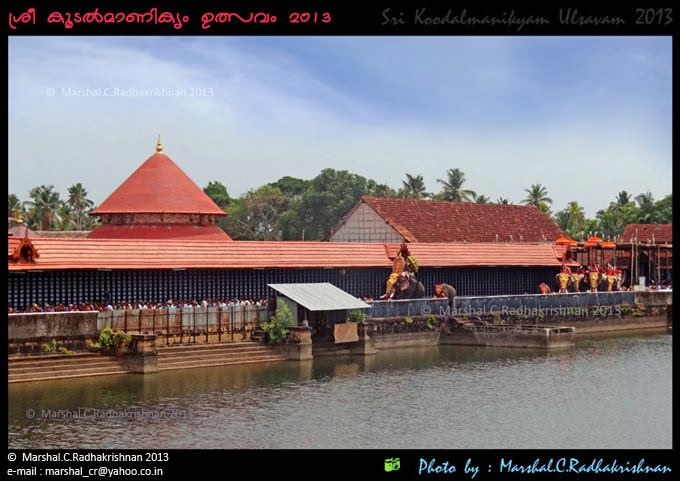
Koodalmanikyam is a masterpiece of traditional Kerala temple architecture, distinct for its simplicity and harmony with nature. The temple complex is set within a walled compound with citadels, surrounded by lush greenery and four sacred ponds (Teppakulam).
Mandapas and The Dwajasthambam
The temple features a massive Naduvil Mutt (central sanctum) and spacious Mandapas (halls) that reflect the wooden architectural brilliance of ancient Kerala. The Dwajasthambam (flagstaff) is a prominent feature, carved from single wood, standing tall in the temple courtyard. The flooring and wooden pillars exhibit intricate carvings depicting scenes from Hindu epics, though the focus remains on Bharata’s life and virtues.
Unlike the towering gopurams of Tamil Nadu, the roof here is sloped and tiled, designed to withstand the heavy monsoon rains of the region, blending spiritual symbolism with practical Vastu Shastra.
Darshan & Ritual Logistics
Planning your visit ensures a peaceful darshan. Below are the daily timings and major sevas for 2026.
Daily Temple Timings
| Session | Timings | Activity |
|---|---|---|
| Morning | 04:00 AM – 11:00 AM | Morning Sreeveli, Ushakalam, Abhishekam |
| Afternoon | 05:00 PM – 08:30 PM | Deeparadhana, Athazha Seva |
Key Sevas & Online Booking
The temple administration facilitates online booking for major rituals. In 2026, the following key Sevas are available for devotees:
- Ayusha Homam: Performed for longevity and health.
- Bhagya Sooktha Archana: For prosperity and success.
- Vidyarambham: Conducted on Vijayadasami (Oct 1, 2026) for initiating children into education.
Booking Process: Visit the official website of the Koodalmanikyam Devasom or use the “Kerala Temple Seva” portal to book slots up to 30 days in advance.
2026 Festival Calendar
- Utsavam (Kumbham 10–20): The annual 10-day festival featuring Koothu and Koodiyattam performances.
- Vishu (April 14, 2026): The Malayalam New Year, celebrated with the opening of the Vishukkani.
- Nalambalam Yatra: Observed during the Ramayana month of Karkidakam (July–August 2026).
Practical Visitor Guidance
Etiquette and Safety
- Dress Code: Traditional attire is mandatory. Men should wear Mundu/Veshti or full-length trousers; women should wear Saree, Set-Mundu, or Salwar Kameez.
- Photography: Strictly prohibited inside the inner sanctum (Sreekovil) and restricted in the outer courtyard. Lockers are available for mobile phones.
- Accessibility: The temple has granite pathways suitable for wheelchair users. Assistance is provided by temple staff.
Crowd Management Tips
Best Time to Visit: Weekday mornings between 9:00 AM and 10:00 AM offer the shortest queues.
Seasonal Advice: During peak summer (April–May), carry a water bottle and an umbrella. The temple grounds provide shaded areas for rest. Avoid festival evenings if you prefer a quieter darshan.
Pilgrimage Connectivity
How to Reach
- By Air: The nearest airport is Cochin International Airport (COK), approximately 60 km away.
- By Rail: Irinjalakuda Railway Station is just 2 km from the temple. It is well-connected to major cities like Kochi and Trivandrum.
- By Road: The temple is located just off the Thrissur – Kottayam Highway (SH 1). It is easily accessible from Thrissur (22 km) via NH 544.
Nearby Sacred Sites
Complete your pilgrimage circuit by visiting these nearby temples:
- Vadakkunnathan Temple (Thrissur): The Classic Kerala temple architecture and UNESCO heritage site (22 km).
- Guruvayur Temple: The abode of Krishna, located 45 km away.
- Cherpu Temple: Part of the Nalambalam circuit, dedicated to Lakshmana (18 km).
Photo Gallery



Frequently Asked Questions (FAQ)
1. Is there a VIP Darshan entry at Koodalmanikyam Temple?
Yes, the temple offers a “Quick Darshan” ticket for a nominal fee (subject to availability) to bypass the general queue during non-peak hours. However, all devotees are treated equally during special events.
2. Can non-Hindus visit the temple?
Koodalmanikyam is a traditional Hindu temple following strict customs. While entry is generally reserved for those of the Hindu faith, it is advisable to check with the temple administration regarding specific guidelines for foreign tourists.
3. What is the significance of the Nalambalam Yatra?
The Nalambalam Yatra is a pilgrimage covering the four Rama-associated temples in Kerala during the holy month of Karkidakam. Completing the circuit is believed to wash away sins and grant blessings equivalent to visiting Rama, Bharata, Lakshmana, and Shatrughna simultaneously.
4. Are there accommodation facilities nearby?
Yes, the Koodalmanikyam Devasom runs guest houses (Muttom) for pilgrims. Additionally, numerous private hotels and lodges are available in Irinjalakuda town, catering to all budgets.
5. What are the contact details for emergencies?
For information regarding rituals or emergency assistance, you can contact the temple office at 04802826631. The administrative office is located at The Administrator, Koodalmanikyam Devasom, Trissur District, Irinjalakuda, Kerala 680121.
Recent Posts

Shri Kaamkoteeshwar Mandir, Varanasi – History & Significance
In the heart of Kashi, the eternal city of Lord Shiva, where the Ganges flows with celestial grace, stands the Shri Kaamkoteeshwar Mandir. This sacred Sannidhi is not merely a temple but a profound spiritual bridge between the Northern…

ओ सांवरे तूने ही मुझको संभाला – Lyrics & Meaning
ओ सांवरे तूने ही मुझको संभाला – A Prayer to Shyam Origin & Spiritual Essence Why This Bhajan Resonates Devotees chant this when overwhelmed by life’s storms—the refrain ‘तूने ही मुझको संभाला’ is the soul’s sigh of relief: “You…

कथा ये है महाराज मेरे की – Lyrics & Meaning
कथा ये है महाराज मेरे की छत्रपति संभाजी महाराज – A Prayer to Chhatrapati Sambhaji Maharaj Origin & Spiritual Essence Why This Bhajan Resonates Devotees chant this when their spirit feels tested—its powerful refrain “महाराज मेरे” is a soul’s…

Rigveda Samhita Yathartha Anuvada (ऋग्वेद संहिता यथार्थ अनुवाद) – Complete Set with Anvayartha & Hindi/English Translation
The Rigveda is the oldest surviving scripture of humanity and the foundational text of Sanātana Dharma. For serious students, scholars, UPSC aspirants studying ancient Indian history, Sanskrit learners, and spiritual seekers, a precise and grammatically structured translation is indispensable.…

आना भी अकेला है जाना भी अकेला है – Lyrics & Meaning | BharatTemples
आना भी अकेला है जाना भी अकेला है – A Prayer to the Divine Witness Origin & Spiritual Essence Why This Bhajan Resonates Devotees turn to this bhajan in moments of deep reflection—when life’s attachments begin to ache. The…

माता शेरावाली के द्वार जो भी जाता है – Lyrics & Meaning
माता शेरावाली के द्वार जो भी जाता है – A Prayer to Maa Sherawali Origin & Spiritual Essence Why This Bhajan Resonates Devotees turn to this bhajan in times of fear or uncertainty—its promise that no one leaves Maa’s…

मार लेना सपणी उबार लेणा भवरा – Lyrics & Meaning
मार लेना सपणी उबार लेणा भवरा – A Prayer to the Divine Beloved Origin & Spiritual Essence Why This Bhajan Resonates Devotees chant this in moments of deep vulnerability—its cry of “मार लेना सपणी, उबार लेणा भवरा” is the…

हमें श्याम सुंदर भरोसा तुम्हारा – Lyrics & Meaning
हमें श्याम सुंदर भरोसा तुम्हारा – A Prayer to Shyam Sundar Origin & Spiritual Essence Why This Bhajan Resonates Devotees chant this when feeling alone—its refrain ‘de do sahara’ is the soul’s cry for divine support. Lyrics in Hindi…

Mere Satguru Ne Di Thi Davai Lyrics in Hindi & Meaning
Mere Satguru Ne Di Thi Davai: Invoking the Guru’s Liberating Wisdom This soul-stirring bhajan venerates the Satguru (True Spiritual Master) as the divine physician who dispenses the only remedy for life’s deepest sufferings. Composed by Sant Karmaveer Tufani, it…

Janm Diyo Thari Maa Dukh Dekhiyo Lyrics in Hindi & Meaning
जन्म दियो थारी माँ दुख देखियो (Maa’s Grief Upon Birthing You) This soul-stirring Chetavani Bhajan (admonitory hymn) is addressed to the Divine Mother (Maa) – a call for repentance when children forget their filial duties in the dark age…