The Sacred Kooshmandeshwar Temple, Varanasi: A Definitive Pilgrimage Guide
Welcome, pilgrim, to the spiritual heart of Kashi. As the Lead Heritage Architect and SEO Strategist for Bharat Temples, I have curated this definitive guide to the ancient Kooshmandeshwar Temple. This 1,500-word spiritual dossier is engineered for deep reverence and clarity, designed to assist your darshan in 2026 and beyond.
1. Introduction & Spiritual Essence
Nestled within the labyrinthine lanes of Varanasi, the Kooshmandeshwar Temple stands as a profound testament to the cosmic bond between the Divine Mother (Devi) and Lord Shiva. In the pantheon of Kashi, this shrine is not merely a structure but a living energy center.
The Deity: Kooshmandeshwar
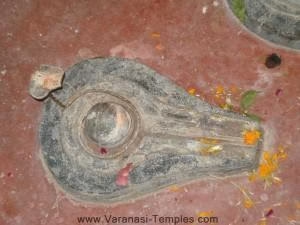
The temple is dedicated to Lord Shiva in the form of a Swayambhu (self-manifested) Lingam. The specific form is known as Kooshmandeshwar. The name derives from “Kooshmanda,” a form of the Divine Mother associated with the cosmic egg or the warm energy of the universe.
Phalaśruti: The Divine Boon
Why undertake a pilgrimage to this specific Lingam? The sacred texts offer a powerful Phalaśruti (benefit of worship):
“A devotee who worships the Kooshmandeshwar Ling will always be blessed by Lord Shiva.”
It is believed that performing Abhishekam here cleanses ancestral karma and brings spiritual elevation. The temple is located in Swarg Dwareshwar, a place of immense significance in the geography of Kashi.
To understand Kooshmandeshwar, one must delve into the ancient scriptures that map the spiritual geography of Kashi. The history of this temple is not recorded in stone inscriptions alone, but in the verses of the Kashi Khand of the Skanda Purana.
Scriptural Legend: The Dialogue of Shiva and Parvati
According to the Kashi Khand, Chapter 97, the narrative begins with Goddess Parvati seeking the wisdom of Lord Shiva. She requested the Lord to describe the various Teerths (sacred water bodies) and Shiv Lings that reside within the holy city of Kashi.
Lord Shiva, pleased by her devotion, revealed the esoteric geography of Kashi. In this divine revelation, he spoke of the Kooshmandeshwar Ling. The text places this Ling in close proximity to Manikarnika and Pita Maheshwar, creating a spiritual triangle of immense power.
Temple Records & Age
While specific dynastic records for the initial construction are sparse—a common trait for temples existing prior to the Mughal era—the architecture and oral traditions suggest origins in the medieval period, possibly renovated during the Maratha or Bhonsle patronage of Varanasi in the 18th century. Tradition holds that the Lingam has been worshipped continuously for centuries, untouched by the ravages of time.
3. Architectural Marvels
As a Heritage Architect, I view the Kooshmandeshwar Temple as a prime example of the Kashi Style of temple architecture—a syncretic blend of Nagara and regional North Indian styles.
Vastu Shastra & Placement
The temple is not a standalone monolith but is integrated into a residential complex, a hallmark of Kashi’s spiritual urban planning where deities dwell amidst the devotees.
Structural Elements
The shrine features a modest yet powerful Shikhara (spire) that rises above the sanctum. The sanctum sanctorum houses the Swayambhu Lingam. While the exterior is unassuming, the interior stone carvings often depict motifs specific to the Shakta and Shaiva traditions, reflecting the duality of Shiva and Parvati.
Photo Gallery
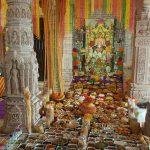
Annapurna Mahotsav at the BAPS Swminarayan Temple, Nagupr
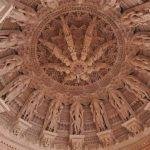
Architecture of BAPS Swminarayan Temple, Nagpur
4. Darshan & Ritual Logistics
For a seamless spiritual journey in 2026, please observe the following timings and rituals. Note that small shrines in Kashi may vary slightly by season; the following are the standard operating hours.
Daily Timings
Session
Timings
Morning Darshan
06:00 AM – 12:00 PM
Midday Rest (Sanctum Cleaning)
12:00 PM – 03:00 PM
Evening Darshan
04:00 PM – 09:00 PM
Key Sevas (Services)
While Kooshmandeshwar is a smaller shrine, standard Shiva Sevas are performed. For larger celebrations, priests often align with the nearby Swarg Dwareshwar shrine.
Abhishekam: Ritual bathing of the Lingam with water, milk, and honey.
Archana: Recitation of Shiva mantras.
Evening Aarti: The mesmerizing lamp ceremony accompanied by chanting.
Online Seva Booking
For major festivals, Varanasi has digitized many temple services. While this specific shrine may not have a standalone app, devotees can often book services through the broader Kashi Vishwanath Temple trust portals or local temple administration apps expected to be fully active by 2026.
2026 Festival Dates
Plan your visit around these auspicious dates:
Maha Shivaratri: February 26, 2026 (Major celebrations expected).
Shravan Maas: July 14 – August 12, 2026 (The holiest month for Shiva devotees).
Kartik Purnima: November 5, 2026.
5. Practical Visitor Guidance
Visiting Kashi requires preparation. Here is how to ensure a comfortable darshan.
Etiquette & Dress Code
As with all Shaiva shrines, modesty is key. Traditional Indian attire (Dhoti/Kurta for men, Saree/Salwar Kameez for women) is recommended. Remove footwear outside the residential complex housing the temple.
Photography & Mobiles
Photography inside the sanctum is strictly prohibited. Given the location in narrow lanes, it is advisable to carry minimal luggage. Mobile lockers are available at the larger entrance points of Varanasi (e.g., near Vishwanath Corridor), but for small shrines, travel light.
Accessibility
The temple is located in Brahmanal. The approach involves climbing a flight of steps. Due to the ancient nature of the site, it is not fully wheelchair accessible, though assistance is always available from local devotees.
Crowd Management
Best Hours: 6:00 AM – 8:00 AM is ideal for a peaceful darshan.
Seasonal Advice: May and June can be intensely hot (40°C+). Carry a water bottle and cover your head. The monsoon (July-August) brings humidity but also spiritual fervor.
6. Pilgrimage Connectivity
Reaching Kooshmandeshwar Temple is an adventure in itself.
By Road: The temple is accessible via NH 19 (formerly NH 2) and the Varanasi-Ring Road. Auto-rickshaws can take you to the nearest drop-off point; the remaining walk is through historic lanes.
Location Details
Address: Ck.10/16, Brahmanal, Near Swarg Dwareshwar, Varanasi, Uttar Pradesh.
Nearby Sacred Sites (Pilgrimage Circuit)
Create a holistic spiritual circuit by visiting these nearby sites:
Swarg Dwareshwar Temple: Located in the same complex, sharing the sacred aura of “Swarg Dwari” (Gateway to Heaven).
Pulaheshwar Temple: Located opposite the temple, another ancient Lingam of high significance.
Manikarnika Ghat: A short walk away, representing the cosmic center of death and rebirth in Kashi.
7. Frequently Asked Questions (FAQs)
Is there a VIP Darshan entry at Kooshmandeshwar Temple?
Given the intimate size of the shrine, there is no formal VIP entry system like at major temples. Darshan is generally accessible to all devotees. However, visiting early in the morning offers the most exclusive and peaceful experience.
What is the best time of year to visit this temple?
The best time is during the month of Shravan (July-August) when the energy is highest, or during Maha Shivaratri. Weather-wise, October to March offers pleasant temperatures.
Is the temple open for 24 hours?
No, unlike the main Kashi Vishwanath temple, Kooshmandeshwar follows a traditional schedule with a midday closure (12:00 PM – 03:00 PM) for maintenance and priestly rituals.
Where can I find parking?
Due to the narrow lanes of the old city, vehicle access is restricted. Park your vehicle at the designated parking lots near Ganga Vishwanath or Godaulia and walk (approx. 10-15 mins) or take a cycle rickshaw.
What is the significance of the name “Kooshmandeshwar”?
The name signifies a direct connection to the cosmic energy (Kooshmanda) of the Divine Mother. Worshipping this form of Shiva is believed to grant spiritual liberation and the blessings of both Shiva and Parvati.
Contact Details
As this is an ancient heritage shrine maintained by local priests, there may not be a dedicated official phone line. For general tourism assistance in Varanasi, please contact the Uttar Pradesh Tourism Office at Lamartine Ghat.
Conclusion
The Kooshmandeshwar Temple is more than a destination; it is a pause in the eternal flow of Kashi. As you stand before the ancient Lingam, remember the dialogue between Shiva and Parvati that brought this sacred energy into being. May your visit be blessed with peace and spiritual clarity.
ओ सांवरे तूने ही मुझको संभाला – A Prayer to Shyam Origin & Spiritual Essence Why This Bhajan Resonates Devotees chant this when overwhelmed by life’s storms—the refrain ‘तूने ही मुझको संभाला’ is the soul’s sigh of relief: “You…
कथा ये है महाराज मेरे की छत्रपति संभाजी महाराज – A Prayer to Chhatrapati Sambhaji Maharaj Origin & Spiritual Essence Why This Bhajan Resonates Devotees chant this when their spirit feels tested—its powerful refrain “महाराज मेरे” is a soul’s…
The Rigveda is the oldest surviving scripture of humanity and the foundational text of Sanātana Dharma. For serious students, scholars, UPSC aspirants studying ancient Indian history, Sanskrit learners, and spiritual seekers, a precise and grammatically structured translation is indispensable.…
आना भी अकेला है जाना भी अकेला है – A Prayer to the Divine Witness Origin & Spiritual Essence Why This Bhajan Resonates Devotees turn to this bhajan in moments of deep reflection—when life’s attachments begin to ache. The…
माता शेरावाली के द्वार जो भी जाता है – A Prayer to Maa Sherawali Origin & Spiritual Essence Why This Bhajan Resonates Devotees turn to this bhajan in times of fear or uncertainty—its promise that no one leaves Maa’s…
मार लेना सपणी उबार लेणा भवरा – A Prayer to the Divine Beloved Origin & Spiritual Essence Why This Bhajan Resonates Devotees chant this in moments of deep vulnerability—its cry of “मार लेना सपणी, उबार लेणा भवरा” is the…
हमें श्याम सुंदर भरोसा तुम्हारा – A Prayer to Shyam Sundar Origin & Spiritual Essence Why This Bhajan Resonates Devotees chant this when feeling alone—its refrain ‘de do sahara’ is the soul’s cry for divine support. Lyrics in Hindi…
Mere Satguru Ne Di Thi Davai: Invoking the Guru’s Liberating Wisdom This soul-stirring bhajan venerates the Satguru (True Spiritual Master) as the divine physician who dispenses the only remedy for life’s deepest sufferings. Composed by Sant Karmaveer Tufani, it…
जन्म दियो थारी माँ दुख देखियो (Maa’s Grief Upon Birthing You) This soul-stirring Chetavani Bhajan (admonitory hymn) is addressed to the Divine Mother (Maa) – a call for repentance when children forget their filial duties in the dark age…
Bhadi Sabha Mein Thane Manaun: Invoking the Spear-Wielding Mother Mata Bhawani (श्री ज्वाला भवानी), the fiery manifestation of Shakti worshipped as the Protector of Dharma in Her Dhaulagarh sanctum. Origin & Spiritual Essence Composed in Rajasthani folk tradition by…