
Contents
Introduction & Spiritual Essence
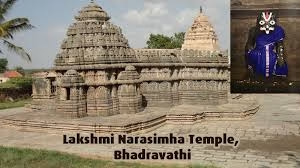
Nestled in the industrial heart of Bhadravati, the Lakshmi Narasimha Temple stands as a serene testament to the Bhakti tradition and architectural grandeur of the Hoysala Empire. Dedicated to Lord Narasimha, the fierce yet compassionate lion-man incarnation of Lord Vishnu, and his consort Goddess Lakshmi, this temple serves as a spiritual anchor for devotees across the Shimoga district.
The Divine Form (Swarupa): The temple enshrines a unique Swayambhu (self-manifested) idol. The primary deity is Lord Narasimha, depicted here in a peaceful form with Goddess Lakshmi seated on his lap, symbolizing the harmonious balance between cosmic power (Shakti) and preservation (Vishnu). This form is distinct from the ferocious Ugra Narasimha and is revered as a remover of fear and ancestral burdens.
Phalaśruti (Spiritual Benefits): According to temple lore and devotional beliefs, sincere prayers at this shrine offer profound benefits:
- Cleansing Ancestral Karma: Performing specific homas (fire rituals) here is believed to pacify the ancestors (Pitru Dosha), ensuring peace for departed souls.
- Protection from Evil: The Narasimha form is the ultimate protector; devotees visit to remove negative influences and planetary afflictions (Graha Dosha).
- Marital Harmony & Prosperity: Seeking blessings from Goddess Lakshmi (seated with the Lord) is said to restore stability in family life and financial well-being.
Historical Origins & Scriptural Legend
History speaks through the stone, and the Lakshmi Narasimha Temple is a prime example of the Hoysala dynasty’s patronage of art and religion.
The Builders: Built during the early 13th century (circa 1220-1250 AD), this temple is attributed to the reign of the Hoysala Empire. While specific inscriptions on this particular structure might require epigraphic scrutiny, the architectural style is unmistakably Hoysala, characterized by the use of soft soapstone (chloritic schist) which allows for intricate carving.
Scriptural & Local Legend:
Tradition holds that the temple was constructed to commemorate the victory of righteousness over tyranny. The Sthala Purana (local oral history) of Bhadravati narrates that the region was once a dense forest where sages performed severe austerities. It is believed that Lord Narasimha appeared here to bless them, taking the form of the Lakshmi-Narasimha duo to bestow prosperity alongside protection. The temple stands today as a protected monument under the Archaeological Survey of India (ASI) and the Karnataka State Department of Archaeology, ensuring its legacy is preserved for future generations.
Architectural Marvels
The temple is an architectural masterpiece, often cited by art historians as a distinctive example of the transitional Hoysala style.
Style and Layout:
The temple is built on a raised platform known as the Jagati, which devotees circumambulate (pradakshina). The structure features a triple shrine (vimana) layout, an exceptional design where three shrines are connected by a common hall (Mandapa). The central shrine is dedicated to Lakshmi Narasimha, while the side shrines house other deities.
The Shikhara (Tower): The main vimana features a towering Shikhara adorned with miniature decorative turrets (Kalasha). Unlike the towering Nagara style of North India, this Shikhara is typically Hoysala—layered and intricate, yet comparatively steeper and pyramidal.
Sculptures and Carvings:
The exterior walls exhibit a two-tier decorative plan (tiered friezes). One can observe:
- Mythological Friezes: Continuous bands of Ramayana and Mahabharata scenes carved in minute detail.
- Divine Dancers: Exquisite panels of celestial dancers (Apsaras) in various poses, showcasing the fluidity of movement.
- Sentinel Pillars: The Mandapa (hall) is supported by ornate pillars. The ceiling often features concentric circles of lotus motifs. The material used is soapstone, which has weathered centuries yet retains the sharpness of its carvings.
Darshan & Ritual Logistics
To ensure a smooth spiritual experience, devotees are encouraged to familiarize themselves with the temple schedule and ritual offerings. Please note that timings are subject to change during festivals and special events.
Daily Darshan Timings
| Session | Timing | Activity |
|---|---|---|
| Morning | 08:00 AM – 12:00 PM | Morning Pooja, Abhishekam |
| Afternoon | 12:00 PM – 05:00 PM | Midday Break / Special Sevas |
| Evening | 05:00 PM – 08:00 PM | Darshan, Evening Aarti |
Key Sevas & Online Booking
While traditional on-the-spot bookings are available, the temple administration encourages the use of online portals for major festivals to manage crowds.
- Abhishekam: A ritual bathing of the deity with milk, honey, and sacred herbs. Performed on Ekadashi days.
- Archana: Recitation of names (Sankalpa) for specific family welfare.
- Deepotsava: A lamp offering ritual performed on Tuesdays and Fridays.
Online Seva Booking: Visit the official Karnataka Temple Portal and search for “Lakshmi Narasimha Temple Bhadravati” to book rituals in advance.
2026 Festival Calendar (Karnataka)
- Narasimha Jayanti: May 21, 2026 (Thursday) – Major annual festival; expect heightened crowds.
- Garuda Vahana Seva: May 23, 2026 (Saturday) – Procession of the deity on the Garuda mount.
- Deepavali: October 20, 2026 – Special lighting and late-night darshan.
- Vaikuntha Ekadashi: January 6, 2026 – High importance for Vishnu devotees.
Practical Visitor Guidance
A visit to a Hoysala temple is a blend of spiritual and historical exploration. Here are essential guidelines to respect the sanctity and utility of the visit.
Code of Conduct & Dress
- Dress Code: Traditional attire is preferred. Men should wear dhotis or pants with shirts; women should wear sarees, salwar kameez, or decent western attire. Avoid shorts and sleeveless tops.
- Photography: Photography is permitted in the outer premises and Mandapa. Strictly prohibited inside the sanctum sanctorum (Garbhagriha).
- Mobile Phones: Electronic devices should be switched to silent mode. Some temples provide lockers; otherwise, it is advisable to carry a small bag for storage.
Crowd Management & Best Times
- Best Time to Visit: Weekday mornings (8:00 AM – 10:00 AM) offer the quietest darshan. Weekends and festival days are crowded.
- Seasonal Advice:
- Summer (March–May): Bhadravati can be hot. Carry a water bottle and a head cover.
- Monsoon (June–September): The region sees moderate rain. The temple stones can be slippery; wear rubber-soled footwear with grip.
Pilgrimage Connectivity
The temple is strategically located in Bhadravati, making it accessible via various modes of transport.
How to Reach
- By Air: The nearest major airport is Mangalore International Airport (IXE), located approximately 195 km away (approx. 4.5 hours by road). Alternatively, Kempegowda International Airport (BLR) in Bangalore is about 255 km away.
- By Rail: Bhadravati has its own railway station (BTV) on the Shivamogga–Talaguppa line. However, the major rail hub is Shimoga Railway Station (SMET), located about 20 km away, which has better connectivity to Bangalore and other metros.
- By Road: Bhadravati is well-connected via National Highway 169 (NH 169) and State Highways. Regular buses ply from Shimoga (20 km) and Bangalore (255 km). Private taxis and cabs are readily available from Shimoga.
Nearby Sacred Sites (Pilgrimage Circuit)
- Shivappa Nayaka Memorial: Located in Bhadravati, this is a site of historical significance and a pleasant park for a quick visit.
- Kodandarama Temple (Hosanagara): Situated about 30 km from Bhadravati, this temple features a monolith Rama-Lakshmana-Sita image in a seated posture.
- Shimoga Venkataramana Temple: Located in Shimoga city, this temple offers a serene architectural contrast and is central to the cultural life of the district.
Frequently Asked Questions (FAQ)
1. Is there a VIP or Special Entry Darshan available?
Yes, the temple management provides a special entry darshan for senior citizens, differently-abled devotees, and those with specific seva tickets. It is recommended to arrive early as this quota is limited per day.
2. What is the best time to visit Lakshmi Narasimha Temple to avoid crowds?
The optimal time for a peaceful darshan is Tuesday and Friday mornings between 8:00 AM and 10:00 AM. Avoid public holidays and the annual Narasimha Jayanti if you prefer a quiet atmosphere.
3. Are there accommodation facilities available nearby?
Bhadravati has several private lodges and guest houses. For more substantial options, it is advisable to stay in Shimoga (20 km), which offers a range of hotels from budget to 3-star categories. The KSTDC (Karnataka State Tourism) also runs hotels in Shimoga.
4. Can international tourists visit this temple?
Yes, international tourists are welcome. However, they must adhere to the dress code. Non-Hindus are generally allowed into the temple premises, but entry into the inner sanctum may be restricted depending on the specific customs enforced on that day.
5. What materials were used for construction?
The temple is constructed primarily using Soapstone (Chloritic Schist), a metamorphic rock that is soft when quarried, allowing for intricate carvings, and hardens upon exposure to air. This is a hallmark of Hoysala architecture.
Photo Gallery
How to Reach
The best way to reach Bhadravati if you desire to travel by air is to take a direct flight to Mangalore airport and then from there, a bus or cab to Bhadravati. The distance between Mangalore airport and Bhadravati is 195 km. Hence, it will take you an average time of 5 hours to reach the destination.
By Rail: Bhadravati has its own railway station and hence, you can catch a direct train from the nearby station to Bhadravati.
By Road: Being an industrial city, the region in and around Bhadravati has a good network of roads. Therefore, you can easily reach Lakshmi Narasimha Temple by road.
Contact Details
Official Address:
Lakshmi Narasimha Temple,
Kanaka Nagar, Bhadravati,
Shimoga District, Karnataka – 577301
Recent Posts

ओ सांवरे तूने ही मुझको संभाला – Lyrics & Meaning
ओ सांवरे तूने ही मुझको संभाला – A Prayer to Shyam Origin & Spiritual Essence Why This Bhajan Resonates Devotees chant this when overwhelmed by life’s storms—the refrain ‘तूने ही मुझको संभाला’ is the soul’s sigh of relief: “You…

कथा ये है महाराज मेरे की – Lyrics & Meaning
कथा ये है महाराज मेरे की छत्रपति संभाजी महाराज – A Prayer to Chhatrapati Sambhaji Maharaj Origin & Spiritual Essence Why This Bhajan Resonates Devotees chant this when their spirit feels tested—its powerful refrain “महाराज मेरे” is a soul’s…

Rigveda Samhita Yathartha Anuvada (ऋग्वेद संहिता यथार्थ अनुवाद) – Complete Set with Anvayartha & Hindi/English Translation
The Rigveda is the oldest surviving scripture of humanity and the foundational text of Sanātana Dharma. For serious students, scholars, UPSC aspirants studying ancient Indian history, Sanskrit learners, and spiritual seekers, a precise and grammatically structured translation is indispensable.…

आना भी अकेला है जाना भी अकेला है – Lyrics & Meaning | BharatTemples
आना भी अकेला है जाना भी अकेला है – A Prayer to the Divine Witness Origin & Spiritual Essence Why This Bhajan Resonates Devotees turn to this bhajan in moments of deep reflection—when life’s attachments begin to ache. The…

माता शेरावाली के द्वार जो भी जाता है – Lyrics & Meaning
माता शेरावाली के द्वार जो भी जाता है – A Prayer to Maa Sherawali Origin & Spiritual Essence Why This Bhajan Resonates Devotees turn to this bhajan in times of fear or uncertainty—its promise that no one leaves Maa’s…

मार लेना सपणी उबार लेणा भवरा – Lyrics & Meaning
मार लेना सपणी उबार लेणा भवरा – A Prayer to the Divine Beloved Origin & Spiritual Essence Why This Bhajan Resonates Devotees chant this in moments of deep vulnerability—its cry of “मार लेना सपणी, उबार लेणा भवरा” is the…

हमें श्याम सुंदर भरोसा तुम्हारा – Lyrics & Meaning
हमें श्याम सुंदर भरोसा तुम्हारा – A Prayer to Shyam Sundar Origin & Spiritual Essence Why This Bhajan Resonates Devotees chant this when feeling alone—its refrain ‘de do sahara’ is the soul’s cry for divine support. Lyrics in Hindi…

Mere Satguru Ne Di Thi Davai Lyrics in Hindi & Meaning
Mere Satguru Ne Di Thi Davai: Invoking the Guru’s Liberating Wisdom This soul-stirring bhajan venerates the Satguru (True Spiritual Master) as the divine physician who dispenses the only remedy for life’s deepest sufferings. Composed by Sant Karmaveer Tufani, it…

Janm Diyo Thari Maa Dukh Dekhiyo Lyrics in Hindi & Meaning
जन्म दियो थारी माँ दुख देखियो (Maa’s Grief Upon Birthing You) This soul-stirring Chetavani Bhajan (admonitory hymn) is addressed to the Divine Mother (Maa) – a call for repentance when children forget their filial duties in the dark age…
Bhadi Sabha Mein Thane Manaun Lyrics in Hindi & Meaning
Bhadi Sabha Mein Thane Manaun: Invoking the Spear-Wielding Mother Mata Bhawani (श्री ज्वाला भवानी), the fiery manifestation of Shakti worshipped as the Protector of Dharma in Her Dhaulagarh sanctum. Origin & Spiritual Essence Composed in Rajasthani folk tradition by…