
Contents
Introduction & Spiritual Essence
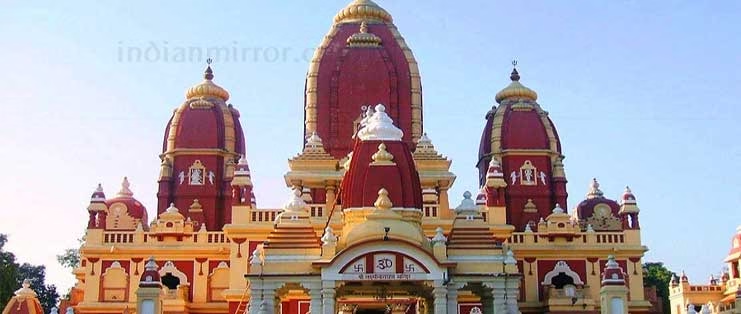
The Laxminarayan Temple, often referred to as the Birla Mandir, stands as a monumental spiritual beacon in the heart of the national capital. Dedicated primarily to Lord Laxminarayan—a form of Lord Vishnu (the Preserver) alongside his consort, Goddess Lakshmi—this temple epitomizes devotion and architectural harmony. It is also the first of several grand temples constructed by the Birla family across India.
Unlike ancient, cyclical time, the temple represents a modern revival of classical Hindu values, inaugurated in 1939. Devotees flock here seeking Shanti (peace) and Samriddhi (prosperity). The Phalaśruti (spiritual benefits) of visiting this temple is believed to include the cleansing of ancestral karma and the removal of financial obstacles. The presence of shrines dedicated to Lord Shiva, Lord Krishna, and Lord Buddha within the complex signifies a unified, inclusive approach to Sanatana Dharma.
Historical Origins & Scriptural Legend
The temple was constructed between 1933 and 1939 by the industrialist Baldeo Das Birla and his son Jugal Kishore Birla. While the Birla family built many temples, this was their flagship project in Delhi. The construction was led by Pandit Vishwanath Shastri, and the concluding Yagna (fire ritual) was performed by Swami Keshwa Nandji.
The temple holds a significant place in India’s modern history. It was inaugurated by Mahatma Gandhi in 1939 on the condition that it would remain open to all Hindus, regardless of caste or sect—a radical move at the time that aligned with the temple’s philosophy of universal acceptance. Tradition holds that the idols were brought from Vrindavan, infusing the site with the divine energy of Braj.
Architectural Marvels
Designed by the renowned architect Sris Chandra Chatterjee, the temple is a masterpiece of the Nagara style of Hindu temple architecture, blending classical aesthetics with the Swadeshi movement’s ideals. The structure rises to a height of approximately 160 feet (the central Shikhara or spire).
The temple complex spans 7.5 acres. The materials used are of the highest quality, including:
- Marble: Sourced from Jaipur for the icons and inner sanctum.
- Kota Stone: From Makrana, Agra, and Kota for the flooring and exteriors.
The facade features intricate carvings depicting scenes from the Puranas and the life of Lord Vishnu. To the north lies the Geeta Bhawan, a hall for discourses. The complex is landscaped with artificial waterfalls, gardens, and fountains, creating a serene atmosphere distinct from the bustling city outside.
Darshan & Ritual Logistics
To ensure a smooth spiritual experience, devotees should note the specific timings for Darshan and Aarti. The temple follows a strict schedule of daily rituals.
Daily Timings (2026 Schedule)
| Darshan Type | Timings |
|---|---|
| Morning Mangala Aarti | 04:30 AM |
| Opening Hours (General) | 06:00 AM – 1:00 PM |
| Evening Shayan Aarti | 6:30 PM – 9:00 PM (Aug-Sep varies) |
| Closing Time | 09:00 PM (Year-round) |
Seva & Bookings
Devotees can book specific Sevas. While online booking is available via the temple’s official channels (check shri lakshminarayanmandir websites), on-site bookings are accepted subject to availability.
- Abhishekam: Ritual bathing of the deity (Morning, 7:00 AM – 8:30 AM).
- Shayan Aarti: The final ritual of the day (approx. 9:00 PM).
- Geeta Path: Recitation sessions in the Geeta Bhawan.
Major Festivals in 2026
- Janmashtami (Lord Krishna’s Birth): Monday, August 18, 2026. The temple is decorated extensively, and night-long vigils are held.
- Diwali: Sunday, October 26, 2026. Special Maha Aarti and lighting (Deep Daan) in the evening.
- Guru Purnima: Thursday, July 10, 2026. Special discourses at Geeta Bhawan.
Practical Visitor Guidance
Visitor Etiquette & Rules
- Dress Code: Traditional attire is preferred (Kurta-Pajama for men, Saree/Churidar for women). Avoid shorts or sleeveless tops.
- Photography: Allowed in the outer garden and complex, but strictly prohibited inside the main sanctum (Garbhagriha).
- Mobile Phones: Please silence your devices. There are no locker facilities, so it is best to leave valuables at home or in your vehicle.
- Footwear: A paid facility is available at the entrance to store shoes.
Crowd Management
The temple attracts large crowds on weekends and festivals. For a peaceful darshan:
- Best Hours: 7:00 AM to 9:00 AM on weekdays.
- Seasonal Advice: Delhi summers (May-June) are scorching; carry a water bottle. Monsoons (July-August) can be humid; light cotton clothing is advised.
Pilgrimage Connectivity
How to Reach
The temple is located on Mandir Marg, west of Connaught Place.
- Metro: The nearest metro station is R. K. Ashram Marg (Blue Line), approximately 2 km away. Auto-rickshaws are readily available.
- Bus: DTC buses frequently stop at Gole Market or Mandir Marg.
- Car: Parking is limited. It is advisable to arrive early morning or late evening to secure a spot.
Nearby Sacred Sites
Expand your pilgrimage circuit by visiting these nearby spiritual centers:
- Kalkaji Mandir: A historic temple dedicated to Goddess Kali, located about 6 km away.
- Sri Digambar Jain Lal Mandir: The oldest Jain temple in Delhi, located in Chandni Chowk.
- Hanuman Temple (Connaught Place): Famous for its cheeky idol and eternal flame.
Frequently Asked Questions (FAQ)
Is there a VIP or Special Darshan entry?
The temple administration does not typically offer a VIP darshan entry. Darshan is open to all on a first-come, first-served basis. However, booking a specific Seva (like Abhishekam) allows for a more structured and closer view of the deity.
Is Laxminarayan Temple open 24 hours?
No. The temple opens at 4:30 AM for the morning Aarti and closes at 9:00 PM after the Shayan Aarti. It remains closed between 1:00 PM and 4:00 PM for the deity’s rest.
Are there accommodation facilities inside the temple?
The Birla Mandir complex does not have accommodation facilities for tourists. However, numerous hotels and guest houses are available in the nearby Connaught Place and Patel Nagar areas.
Can non-Hindus visit the temple?
While the temple is dedicated to Hindu deities, it was founded on the principle of openness. However, non-Hindus are generally requested to view the architecture from the garden area, while the inner sanctum is reserved for those who practice the faith.
What is the significance of the Geeta Bhawan?
The Geeta Bhawan, located to the north of the main temple, is a dedicated hall for spiritual discourses and the recitation of the Bhagavad Gita. It serves as a center for learning and contemplation.
Recent Posts

Shri Kaamkoteeshwar Mandir, Varanasi – History & Significance
In the heart of Kashi, the eternal city of Lord Shiva, where the Ganges flows with celestial grace, stands the Shri Kaamkoteeshwar Mandir. This sacred Sannidhi is not merely a temple but a profound spiritual bridge between the Northern…

ओ सांवरे तूने ही मुझको संभाला – Lyrics & Meaning
ओ सांवरे तूने ही मुझको संभाला – A Prayer to Shyam Origin & Spiritual Essence Why This Bhajan Resonates Devotees chant this when overwhelmed by life’s storms—the refrain ‘तूने ही मुझको संभाला’ is the soul’s sigh of relief: “You…

कथा ये है महाराज मेरे की – Lyrics & Meaning
कथा ये है महाराज मेरे की छत्रपति संभाजी महाराज – A Prayer to Chhatrapati Sambhaji Maharaj Origin & Spiritual Essence Why This Bhajan Resonates Devotees chant this when their spirit feels tested—its powerful refrain “महाराज मेरे” is a soul’s…

Rigveda Samhita Yathartha Anuvada (ऋग्वेद संहिता यथार्थ अनुवाद) – Complete Set with Anvayartha & Hindi/English Translation
The Rigveda is the oldest surviving scripture of humanity and the foundational text of Sanātana Dharma. For serious students, scholars, UPSC aspirants studying ancient Indian history, Sanskrit learners, and spiritual seekers, a precise and grammatically structured translation is indispensable.…

आना भी अकेला है जाना भी अकेला है – Lyrics & Meaning | BharatTemples
आना भी अकेला है जाना भी अकेला है – A Prayer to the Divine Witness Origin & Spiritual Essence Why This Bhajan Resonates Devotees turn to this bhajan in moments of deep reflection—when life’s attachments begin to ache. The…

माता शेरावाली के द्वार जो भी जाता है – Lyrics & Meaning
माता शेरावाली के द्वार जो भी जाता है – A Prayer to Maa Sherawali Origin & Spiritual Essence Why This Bhajan Resonates Devotees turn to this bhajan in times of fear or uncertainty—its promise that no one leaves Maa’s…

मार लेना सपणी उबार लेणा भवरा – Lyrics & Meaning
मार लेना सपणी उबार लेणा भवरा – A Prayer to the Divine Beloved Origin & Spiritual Essence Why This Bhajan Resonates Devotees chant this in moments of deep vulnerability—its cry of “मार लेना सपणी, उबार लेणा भवरा” is the…

हमें श्याम सुंदर भरोसा तुम्हारा – Lyrics & Meaning
हमें श्याम सुंदर भरोसा तुम्हारा – A Prayer to Shyam Sundar Origin & Spiritual Essence Why This Bhajan Resonates Devotees chant this when feeling alone—its refrain ‘de do sahara’ is the soul’s cry for divine support. Lyrics in Hindi…

Mere Satguru Ne Di Thi Davai Lyrics in Hindi & Meaning
Mere Satguru Ne Di Thi Davai: Invoking the Guru’s Liberating Wisdom This soul-stirring bhajan venerates the Satguru (True Spiritual Master) as the divine physician who dispenses the only remedy for life’s deepest sufferings. Composed by Sant Karmaveer Tufani, it…

Janm Diyo Thari Maa Dukh Dekhiyo Lyrics in Hindi & Meaning
जन्म दियो थारी माँ दुख देखियो (Maa’s Grief Upon Birthing You) This soul-stirring Chetavani Bhajan (admonitory hymn) is addressed to the Divine Mother (Maa) – a call for repentance when children forget their filial duties in the dark age…