
Contents
Introduction & Spiritual Essence
Nestled in the lush landscapes of Vatakara, Kozhikode district, the Lokanarkavu Temple stands as a timeless beacon of spiritual energy and cultural heritage. Affectionately known as the “God of the Commoners,” this 1,500-year-old shrine is dedicated to Goddess Durga (Bhagavathi). Unlike many fierce manifestations, the deity here is revered in the form of Swayambhu (self-manifested), radiating maternal protection and valor.
The name Lokanarkavu is derived from Lokamalayarkavu, signifying a world (Lokam) comprising of mountain (Mala), river (Aaru), and grove (Kavu). This unique confluence of geography creates a potent spiritual atmosphere.
Phalaśruti (Spiritual Benefits):
- Protection from Calamities: Devotees believe that worshipping here shields them from misfortunes and black magic.
- Ancestral Peace: Rituals performed here are believed to cleanse ancestral karma, bringing peace to forefathers.
Professional Success: Artists, performers, and martial artists (Kalarippayattu practitioners) specifically visit to seek blessings for a successful debut or career progression.
Historical Origins & Scriptural Legend
The history of Lokanarkavu is a fascinating blend of Vedic traditions and Dravidian heritage.
The Aryan Legacy
According to temple records and oral traditions, the temple was established approximately 1,500 years ago by 500 Aryan Nagariks (Vaishya Brahmins). These migrants arrived in Kerala for trade and eventually settled in Vatakara. Unlike many regional shrines that evolved from pre-existing tribal or Dravidian traditions, Lokanarkavu was established with strict Vedic rituals. The Goddess is believed to have accompanied these 500 families in the form of a lady, manifesting as their protective mother.
The Legend of Thacholi Othenan
Tradition holds that the temple gained immense fame through the legendary martial hero of North Malabar, Thacholi Othenan. He was a devotee of Lokanarkavu Bhagavathi and visited the shrine daily. The local ballads (Vadakkan Pattukal) celebrate his devotion and the divine strength he drew from the Goddess. While he was a devotee, historical records clarify that he was not the founder; the temple predates him significantly.
Unlike many Shakta temples in Kerala which historically involved Thamasa pooja (animal sacrifice), Lokanarkavu maintained a Sattvic nature due to its Aryan founders, offering tender coconut and grains instead of meat or liquor.
Architectural Marvels
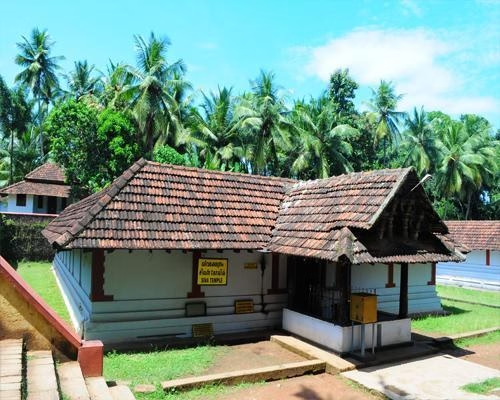
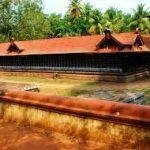
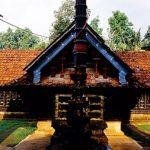
The temple complex is a quintessential example of traditional Kerala Style architecture.
Structure and Layout
The sanctum sanctorum is relatively small and simple, yet deeply mystical. The temple complex actually consists of three smaller shrines dedicated to:
- Goddess Durga (Lokanarkavu Bhagavathi)
- Lord Shiva
- Lord Vishnu
Sculptures and Art
The walls feature ancient wood carvings depicting scenes from Hindu epics and local folklore. The sanctum is believed to be the stage where Thacholikali, a martial dance mimicking Kalarippayattu, is performed. The architecture strictly adheres to Vastu Shastra principles, ensuring energy flow towards the sanctum.
While the temple is not designated as an ASI protected monument, its ancient construction methods using laterite and wood are preserved meticulously by the temple trust.
Darshan & Ritual Logistics (2026 Calendar)
Below are the operational timings for your visit in 2026. Please note that timings may vary slightly during festivals.
| Session | Timing | Activity |
|---|---|---|
| Morning | 05:00 AM – 12:00 PM | Morning Prasadam, Abhishekam |
| Evening | 05:00 PM – 08:00 PM | Deeparadhana, Athazhapuja |
Key Sevas (Poojas)
The temple follows a strict ritualistic schedule.
- Vilakku (Lamp Lighting): The 16th Vilakku is highly significant, conducted by the descendants of the original Aryan migrant families.
- Abhishekam: Performed with holy water, milk, and sandalwood paste.
- Archana: Offering of flowers and chanting of hymns.
2026 Festival Dates
Temple festivals are celebrated with grandeur, specifically:
- Mandala Vilakku (Vrischikam Month): A 41-day festival starting mid-November (approx. November 15, 2026 to December 26, 2026). The concluding Arattu is a major event.
- Pooram Festival (Meenam Month): Celebrated in March/April (April 2, 2026). This includes the unique Poorakkali dance.
- Navaratri: Nine days of dedication to the Goddess (Oct 2026).
Note: Online booking details are managed by the temple administration. Devotees are advised to contact the temple office directly via the phone number listed below for 2026 Seva bookings.
Practical Visitor Guidance
To ensure a serene darshan experience, please adhere to the following guidelines:
Code of Conduct
- Dress Code: Traditional attire is mandatory. Men must wear dhotis or pants with shirts (no t-shirts). Women are expected to wear sarees or modest skirts. Casual wear like jeans and t-shirts is discouraged inside the sanctum.
- Photography: Photography is strictly prohibited within the inner sanctum and main prayer halls to maintain the sanctity of the space.
- Mobile Devices: Please silence phones. Lockers are available near the entrance for electronic devices if required.
Crowd Management
- Best Time to Visit: Early morning (05:00 – 07:00 AM) offers the most peaceful Darshan.
- Seasonal Advice: Kerala is tropical. If visiting during summer (April–May), carry water and an umbrella. During the monsoon (June–September), rain gear is essential. The Mandala season (Nov–Dec) attracts large crowds; expect longer waiting times.
Pilgrimage Connectivity
How to Reach
Lokanarkavu Temple is located in Memunda, 4 km from Vatakara.
- By Air: The nearest airport is Kannur International Airport (approximately 54 km away). Alternatively, Calicut International Airport (CCJ) is about 90 km away.
- By Rail: The nearest railway station is Vatakara Railway Station (5 km from the temple). It is well-connected to major cities like Kochi and Thiruvananthapuram.
- By Road: Located on the Vatakara–Nadapuram Road (State Highway). It connects easily to National Highway 66.
Nearby Sacred Sites
Enhance your pilgrimage by visiting these nearby locations:
- Kodungallur Bhagavathy Temple (Kurumbathurukkara): A renowned shrine in Thrissur district (approx. 80 km).
- Tusharagiri Waterfalls: A natural retreat located 25 km from Vatakara.
- Beypore Port: A historic port known for shipbuilding (approx. 50 km south).
Photo Gallery
Frequently Asked Questions (FAQ)
1. Is there a VIP Darshan entry available?
Currently, Lokanarkavu Temple does not offer a formal VIP ticket system like mega-temples in Tirupati. However, devotees seeking special access for elderly family members or medical reasons may request assistance from the temple office.
2. Can non-Hindus enter the temple?
As per traditional customs, entry is strictly reserved for Hindus. Non-Hindu visitors are permitted to view the architecture from the outer courtyards but are not allowed inside the sanctum sanctorum.
3. What is the significance of the stage near the entrance?
To the right of the main entrance, there is a stage dedicated to the memory of the Aryan Brahmin ancestors who built the temple. Devotees are expected to offer a silent prayer here before proceeding to the main shrine; tradition holds that the Goddess gives precedence to the wishes of those who honor these founders.
4. Is accommodation available nearby?
There are limited lodges and homestays in Vatakara (4 km away). For better amenities, Kozhikode city (50 km) offers a wide range of hotels. The Devaswom (temple administration) may have limited guest houses, subject to availability.
5. Why is Kalarippayattu associated with this temple?
Due to the legendary worship of Thacholi Othenan, the martial art hero, the temple is considered the spiritual guardian of Kalarippayattu. Even today, new practitioners visit to seek blessings before their first public performance.
Contact Details
Lokanarkavu Devaswom
Address: Kavil Rd, Villiappally, Kerala 673104
Phone: +91 4962 527 444
Recent Posts

ओ सांवरे तूने ही मुझको संभाला – Lyrics & Meaning
ओ सांवरे तूने ही मुझको संभाला – A Prayer to Shyam Origin & Spiritual Essence Why This Bhajan Resonates Devotees chant this when overwhelmed by life’s storms—the refrain ‘तूने ही मुझको संभाला’ is the soul’s sigh of relief: “You…

कथा ये है महाराज मेरे की – Lyrics & Meaning
कथा ये है महाराज मेरे की छत्रपति संभाजी महाराज – A Prayer to Chhatrapati Sambhaji Maharaj Origin & Spiritual Essence Why This Bhajan Resonates Devotees chant this when their spirit feels tested—its powerful refrain “महाराज मेरे” is a soul’s…

Rigveda Samhita Yathartha Anuvada (ऋग्वेद संहिता यथार्थ अनुवाद) – Complete Set with Anvayartha & Hindi/English Translation
The Rigveda is the oldest surviving scripture of humanity and the foundational text of Sanātana Dharma. For serious students, scholars, UPSC aspirants studying ancient Indian history, Sanskrit learners, and spiritual seekers, a precise and grammatically structured translation is indispensable.…

आना भी अकेला है जाना भी अकेला है – Lyrics & Meaning | BharatTemples
आना भी अकेला है जाना भी अकेला है – A Prayer to the Divine Witness Origin & Spiritual Essence Why This Bhajan Resonates Devotees turn to this bhajan in moments of deep reflection—when life’s attachments begin to ache. The…

माता शेरावाली के द्वार जो भी जाता है – Lyrics & Meaning
माता शेरावाली के द्वार जो भी जाता है – A Prayer to Maa Sherawali Origin & Spiritual Essence Why This Bhajan Resonates Devotees turn to this bhajan in times of fear or uncertainty—its promise that no one leaves Maa’s…

मार लेना सपणी उबार लेणा भवरा – Lyrics & Meaning
मार लेना सपणी उबार लेणा भवरा – A Prayer to the Divine Beloved Origin & Spiritual Essence Why This Bhajan Resonates Devotees chant this in moments of deep vulnerability—its cry of “मार लेना सपणी, उबार लेणा भवरा” is the…

हमें श्याम सुंदर भरोसा तुम्हारा – Lyrics & Meaning
हमें श्याम सुंदर भरोसा तुम्हारा – A Prayer to Shyam Sundar Origin & Spiritual Essence Why This Bhajan Resonates Devotees chant this when feeling alone—its refrain ‘de do sahara’ is the soul’s cry for divine support. Lyrics in Hindi…

Mere Satguru Ne Di Thi Davai Lyrics in Hindi & Meaning
Mere Satguru Ne Di Thi Davai: Invoking the Guru’s Liberating Wisdom This soul-stirring bhajan venerates the Satguru (True Spiritual Master) as the divine physician who dispenses the only remedy for life’s deepest sufferings. Composed by Sant Karmaveer Tufani, it…

Janm Diyo Thari Maa Dukh Dekhiyo Lyrics in Hindi & Meaning
जन्म दियो थारी माँ दुख देखियो (Maa’s Grief Upon Birthing You) This soul-stirring Chetavani Bhajan (admonitory hymn) is addressed to the Divine Mother (Maa) – a call for repentance when children forget their filial duties in the dark age…

Bhadi Sabha Mein Thane Manaun Lyrics in Hindi & Meaning
Bhadi Sabha Mein Thane Manaun: Invoking the Spear-Wielding Mother Mata Bhawani (श्री ज्वाला भवानी), the fiery manifestation of Shakti worshipped as the Protector of Dharma in Her Dhaulagarh sanctum. Origin & Spiritual Essence Composed in Rajasthani folk tradition by…