
Contents
1. Introduction & Spiritual Essence
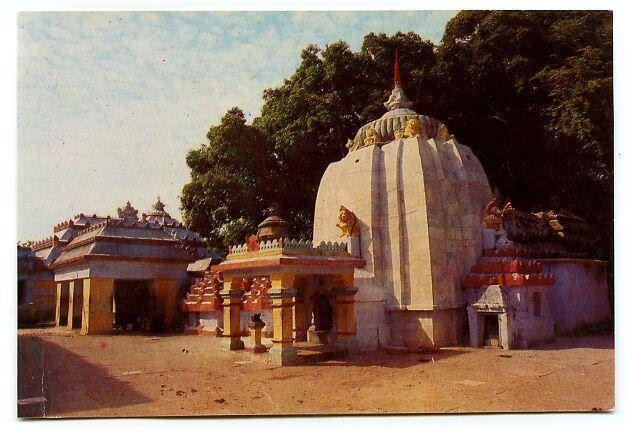
Located just a kilometer from the towering Jagannath Temple, the Lokanatha Temple in Puri, Odisha, offers a serene sanctuary dedicated to Lord Shiva. Often referred to as the ‘Varanasi of Odisha’, this ancient shrine is believed to be the abode of a Swayambhu Lingam (self-manifested phallus).
The spiritual essence of Lokanatha is deeply rooted in the epic Ramayana. Legend holds that Lord Rama, consumed by grief after his war with Ravana, sought to absolve the Brahmahatya (sin of killing a Brahmin). By installing a Rudra Lingam fashioned from a cucumber (known locally as Kakadu) in the forest of Puri, he invoked Lord Shiva. This sacred spot became the foundation of the temple.
Phalaśruti: The Fruit of Devotion
Devotees flock to Lokanatha for specific spiritual benefits known as Phalaśruti:
- Cleansing Ancestral Karma: Performing rituals here is believed to liberate ancestors from the cycle of rebirth.
- Health & Healing: Lord Lokanatha is revered as the Dhara Lingam, with the power to cure chronic ailments and relieve physical suffering.
- Divine Union: Unmarried devotees pray here for a righteous partner, as the temple represents the inseparable bond of Shiva and Parvati.
2. Historical Origins & Scriptural Legend
According to temple records and the Skanda Purana, the history of Lokanatha spans over a millennium. While the exact dynasty responsible for the initial construction is debated, oral tradition and local archaeological evidence suggest the current structure was significantly developed in the 11th and 12th centuries under the patronage of the Eastern Ganga Dynasty.
The Sthala Purana (Local Legend)
The Sthala Purana (local scripture) narrates the story of Bhandara Lokanatha. During the annual Brahma Paribartan (ritual changing of the Deities’ idols) at the Jagannath Temple, the original idols of Lord Jagannath, Balabhadra, and Subhadra are hidden. The copper and silver plates containing the Brahma (divine essence) are transferred to a secret chest known as the Ratnabhandara. It is believed that Lord Lokanatha, as Bhandara Lokanatha, acts as the divine guardian of this treasure.
Scriptural Reference: The Bhakti Ratnakara mentions the Hari-Hara meeting in Puri, where Lord Vishnu (Jagannath) and Lord Shiva (Lokanatha) are worshipped as one.
3. Architectural Marvels
The temple architecture is a blend of Kalinga and Nagara styles, distinct from the typical Dravida architecture of Southern India.
- The Vimana (Main Sanctum): The shrine is built using reddish sandstone and is located about 10 feet below the road level, creating a sunken courtyard effect.
- The Layout: The complex comprises four distinct sections: the Vimana (sanctum), Jagamohana (entrance hall), Natamandapa (dancing hall), and Bhogamandapa (offering hall).
- Sculptures: The outer walls feature exquisite carvings of deities. The northern wall houses Shiva-Parvati, while the eastern wall displays Kartikeya. The southern wall features a four-handed Lord Ganesha. Notably, the main sanctum is currently covered in silver plates and marble, obscuring the detailed stone carvings.
- Parvati Sagara: A large pond within the premises is known as Parvati Sagara. Devotees wash their hands and feet here before darshan. The pond is teeming with fish, and feeding them is considered auspicious.
4. Darshan & Ritual Logistics
The daily rituals at Lokanatha follow the ancient Agamic traditions. The Shayana (sleeping) Darshan of Lord Lokanatha is a unique feature, where the deity is made to rest after the mid-day meal.
| Session | Timing | Activity |
|---|---|---|
| Morning | 6:00 AM – 12:00 PM | Mangala Alati, Abhishekam, & General Darshan |
| Afternoon | 12:00 PM – 5:00 PM | Shayana (Rest Period) – Temple closed for public |
| Evening | 5:00 PM – 9:00 PM | Sandhya Alati, Bada Shringara Darshan |
Key Sevas & Online Booking
For the 2026 pilgrimage season, devotees can perform specific Sevas (services) which require prior arrangement:
- Abhishekam: Ritual bathing of the Lingam with water, milk, and honey.
- Maha Rudra Abhishekam: A grand ritual performed for full planetary pacification.
- Archana: Recitation of Shiva Sahasranama (1,000 names of Shiva).
How to Book: While the Lokanatha temple relies largely on on-site donations, general darshan and special Pujas can be coordinated through the Shri Jagannatha Temple Administration (SJTA) counters in Puri, or via the official online portal.
2026 Festival Calendar (Major Dates)
- Shivaratri (Maha Shivaratri): February 26, 2026. This is the most significant day here, featuring a rare meeting of Lord Jagannath (Vishnu) and Lord Lokanatha (Shiva).
- Chandan Yatra: April/May 2026 (Begins on Akshaya Tritiya). The deities are smeared with sandalwood paste.
- Sital Sasthi: June 2026. Celebration of the marriage of Shiva and Parvati.
5. Practical Visitor Guidance
To ensure a smooth pilgrimage, please adhere to the following guidelines:
- Dress Code: Traditional Indian attire is mandatory. Men should wear Dhoti or formal pants with a shirt/shawl; women should wear Saree or Salwar Kameez. Western clothing (shorts/jeans) is discouraged.
- Photography & Mobiles: Electronic devices, cameras, and mobile phones are strictly prohibited inside the sanctum. Use the mobile lockers provided near the entrance (usually for a nominal fee).
- Footwear: You must remove footwear before entering the temple premises. Designated shoe racks are available.
- Crowd Management:
• Best Time to Visit: Early morning (6:00 AM – 8:00 AM) or late evening (7:00 PM – 9:00 PM).
• Seasonal Advice: Puri is humid year-round. In summer (April–June), carry a water bottle and umbrella. Winters (Nov–Feb) are pleasant but crowded during festivals. - Accessibility: The temple compound is about 10 feet below road level. There are stairs at the entrance; unfortunately, wheelchair access to the main sanctum is currently limited due to the heritage nature of the structure.
6. Pilgrimage Connectivity
How to Reach
- By Air: The nearest airport is Biju Patnaik International Airport in Bhubaneswar (approx. 60 km). From there, hire a taxi via NH 316 (formerly NH 5).
- By Rail: Puri Railway Station (Station Code: PURI) is well-connected to major cities like Delhi, Mumbai, and Kolkata. The temple is 3 km from the station; local auto-rickshaws are readily available.
- By Road: Puri is connected via NH 316 and NH 57. Buses run frequently from Bhubaneswar (OSRTC) and other major Odisha cities.
Nearby Sacred Sites
Complete your spiritual circuit by visiting these landmarks:
- Shri Jagannath Temple (1 km): The primary pilgrimage site of Puri.
- Mausi Maa Temple (Baladevudi): Located near the Swargadwar (Beach), this temple is dedicated to the aunt of Lord Jagannath.
- Sakshi Gopal Temple (1.5 km): Famous for the story of the witness (Sakshi) Gopal and the milkmaids.
7. Frequently Asked Questions (FAQ)
Is there a VIP darshan entry at Lokanatha Temple?
Unlike the main Jagannath Temple, the Lokanatha Temple does not typically have a formal VIP ticket system. Darshan is generally free and open to all. However, purchasing a Seva ticket (like Abhishekam) allows you closer access to the sanctum during the ritual performance.
What is the significance of the fish in Parvati Sagara?
It is believed that the fish in the temple pond are manifestations of devotees who were saved from a curse. Offering food to them is considered an act of charity and brings good karma.
Can I perform Rudra Abhishekam on a Monday?
Yes, Mondays are highly auspicious for Lord Shiva. However, for specific Rudra Abhishekam, you should coordinate with the temple Pujaris at least one day in advance to arrange materials (milk, honey, bael leaves).
Is the temple open during the Car Festival (Rath Yatra)?
Yes, but the timings may be altered due to the massive crowds. It is often advised to visit Lokanatha Temple early in the morning before the Ratha Yatra procession begins on the Grand Road.
Where is the original Swayambhu Lingam located?
The Swayambhu Lingam is located in the inner sanctum (Garbhagriha). While devotees cannot touch the deity directly, it is visible through the doorway. Note that the top portion of the Lingam is currently adorned with silver.
Photo Gallery
Contact Details
| Date built: | 11th – 12th Century AD |
|---|---|
| Deity: | Lord Lokanatha (Shiva) |
| Architectural style: | Kalinga / Nagara |
| Major festivals | Shivaratri, Chandan Yatra, Sital Sasthi |
| Locale: | Chandanpur, Puri |
| District:: | Puri |
| Address: | NH 203, Chandanpur, Odisha 752014 |
| Phone | 09776744099 |
Recent Posts

ओ सांवरे तूने ही मुझको संभाला – Lyrics & Meaning
ओ सांवरे तूने ही मुझको संभाला – A Prayer to Shyam Origin & Spiritual Essence Why This Bhajan Resonates Devotees chant this when overwhelmed by life’s storms—the refrain ‘तूने ही मुझको संभाला’ is the soul’s sigh of relief: “You…

कथा ये है महाराज मेरे की – Lyrics & Meaning
कथा ये है महाराज मेरे की छत्रपति संभाजी महाराज – A Prayer to Chhatrapati Sambhaji Maharaj Origin & Spiritual Essence Why This Bhajan Resonates Devotees chant this when their spirit feels tested—its powerful refrain “महाराज मेरे” is a soul’s…

Rigveda Samhita Yathartha Anuvada (ऋग्वेद संहिता यथार्थ अनुवाद) – Complete Set with Anvayartha & Hindi/English Translation
The Rigveda is the oldest surviving scripture of humanity and the foundational text of Sanātana Dharma. For serious students, scholars, UPSC aspirants studying ancient Indian history, Sanskrit learners, and spiritual seekers, a precise and grammatically structured translation is indispensable.…

आना भी अकेला है जाना भी अकेला है – Lyrics & Meaning | BharatTemples
आना भी अकेला है जाना भी अकेला है – A Prayer to the Divine Witness Origin & Spiritual Essence Why This Bhajan Resonates Devotees turn to this bhajan in moments of deep reflection—when life’s attachments begin to ache. The…

माता शेरावाली के द्वार जो भी जाता है – Lyrics & Meaning
माता शेरावाली के द्वार जो भी जाता है – A Prayer to Maa Sherawali Origin & Spiritual Essence Why This Bhajan Resonates Devotees turn to this bhajan in times of fear or uncertainty—its promise that no one leaves Maa’s…

मार लेना सपणी उबार लेणा भवरा – Lyrics & Meaning
मार लेना सपणी उबार लेणा भवरा – A Prayer to the Divine Beloved Origin & Spiritual Essence Why This Bhajan Resonates Devotees chant this in moments of deep vulnerability—its cry of “मार लेना सपणी, उबार लेणा भवरा” is the…

हमें श्याम सुंदर भरोसा तुम्हारा – Lyrics & Meaning
हमें श्याम सुंदर भरोसा तुम्हारा – A Prayer to Shyam Sundar Origin & Spiritual Essence Why This Bhajan Resonates Devotees chant this when feeling alone—its refrain ‘de do sahara’ is the soul’s cry for divine support. Lyrics in Hindi…

Mere Satguru Ne Di Thi Davai Lyrics in Hindi & Meaning
Mere Satguru Ne Di Thi Davai: Invoking the Guru’s Liberating Wisdom This soul-stirring bhajan venerates the Satguru (True Spiritual Master) as the divine physician who dispenses the only remedy for life’s deepest sufferings. Composed by Sant Karmaveer Tufani, it…

Janm Diyo Thari Maa Dukh Dekhiyo Lyrics in Hindi & Meaning
जन्म दियो थारी माँ दुख देखियो (Maa’s Grief Upon Birthing You) This soul-stirring Chetavani Bhajan (admonitory hymn) is addressed to the Divine Mother (Maa) – a call for repentance when children forget their filial duties in the dark age…
Bhadi Sabha Mein Thane Manaun Lyrics in Hindi & Meaning
Bhadi Sabha Mein Thane Manaun: Invoking the Spear-Wielding Mother Mata Bhawani (श्री ज्वाला भवानी), the fiery manifestation of Shakti worshipped as the Protector of Dharma in Her Dhaulagarh sanctum. Origin & Spiritual Essence Composed in Rajasthani folk tradition by…