Lolark Aditya Temple, Varanasi: History, Darshan Timings & Complete Guide
Receive daily temple updates, divine darshan, and morning bhajans directly on WhatsApp.
Contents
- 1 Introduction & Spiritual Essence of Lolark Aditya
- 2 Historical Origins & Scriptural Legend
- 3 Architectural Marvels
- 4 Darshan & Ritual Logistics (2026 Updates)
- 5 Practical Visitor Guidance
- 6 Pilgrimage Connectivity
- 7 Frequently Asked Questions (FAQ)
Introduction & Spiritual Essence of Lolark Aditya
Located in the southern part of Kashi, near the confluence of the Assi River and the Ganges (Assi Ganga Sangam), the Lolark Aditya Temple stands as one of the most ancient and revered Surya (Sun) temples in India. This shrine is unique not only for its spiritual potency but also for its geological connection to the holy river.
Deity and Form: The temple is dedicated to Lolark Aditya, a form of Lord Surya (the Sun God). Here, the deity is worshipped as Swayambhu (self-manifested) in the form of a sacred pond (Kund) rather than a conventional stone idol. The water of the Lolark Kund is believed to be directly connected to the underground channels of the Ganges, making the act of bathing here equivalent to bathing in the Ganges itself.
Phalaśruti: The Spiritual Benefits
According to the Kashi Khand (Chapter 46) of the Skanda Purana, the significance of the Lolark Aditya Temple is immense for devotees seeking spiritual and material fulfillment.
- Ancestral Cleansing: Bathing in the Lolark Kund during the auspicious Magha month (specifically when Shukla Shashti or Saptami coincides with a Sunday) cleanses the devotee’s sins accumulated over seven previous births.
- Healing and Health: Regular prayer and Abhishekam to Lolark Aditya on Sundays are believed to absolve all sins and cure chronic skin ailments.
- Fulfillment of Desires: Couples praying for the blessing of a child (putra prapti) visit this temple, believing the Sun God’s energy here grants progeny and removes Pitru Dosha (ancestral karmic blocks).
📖 Related: Paas Pani Vinayak Temple Varanasi: History, Timings & Complete Guide
Historical Origins & Scriptural Legend
The history of the Lolark Aditya Temple is a tapestry of mythology and documented history.
Mythological Significance
Tradition holds that Lord Rama, the seventh avatar of Lord Vishnu, worshipped Lord Surya at this very spot during his exile. The name “Lolark” is derived from the combination of “Lola” (shaking or swinging) and “Ark” (Sun), possibly referring to the shimmering reflection of the Sun in the pond or the vibration of divine energy at the site.
Architectural Lineage
While the original foundations are ancient, historical records suggest significant contributions during the reign of the Chandela dynasty (circa 9th–10th century CE), renowned for building the Khajuraho temples. Over centuries, the temple complex has undergone renovations, yet it retains the sanctity of the Treta Yuga. The current structure preserves the spiritual aura while offering modern amenities for pilgrims.
Architectural Marvels
The architecture of the Lolark Aditya Temple is a distinct blend of Dravidian and North Indian Nagara styles, reflecting the cross-cultural influences of South India that permeated Varanasi through migrating priestly families.
- The Shikhara: The temple features a modest yet striking Shikhara (spire) typical of the Nagara style, adorned with intricate carvings of floral motifs and divine figures.
- The Sanctum & Kund: Unlike typical temples, the sanctum sanctorum houses the Lolark Kund. The architecture is designed to allow natural light to illuminate the water, creating a divine play of light and shadow.
- Sculptural Details: The walls and surrounding mandapas feature sculptures depicting various forms of the Sun God driving his chariot, alongside other Vedic deities.
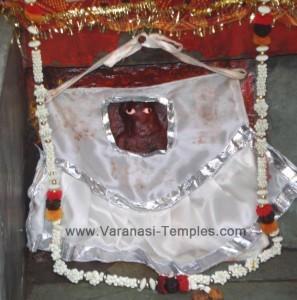
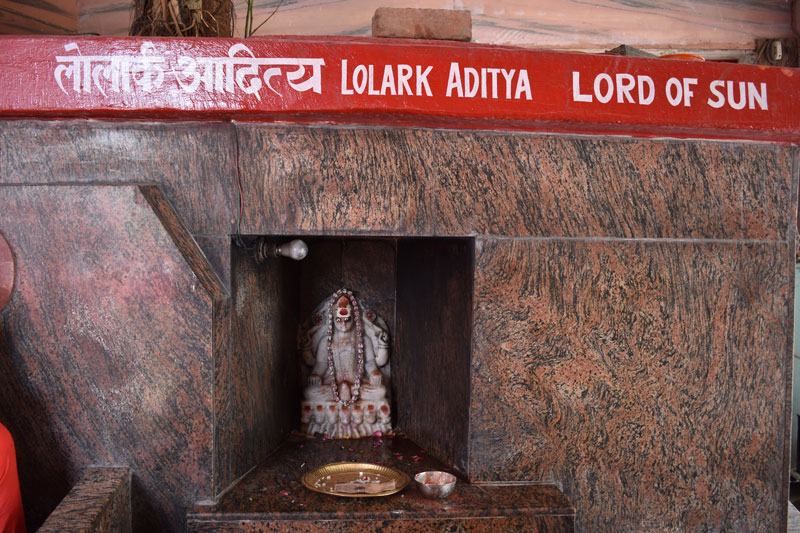
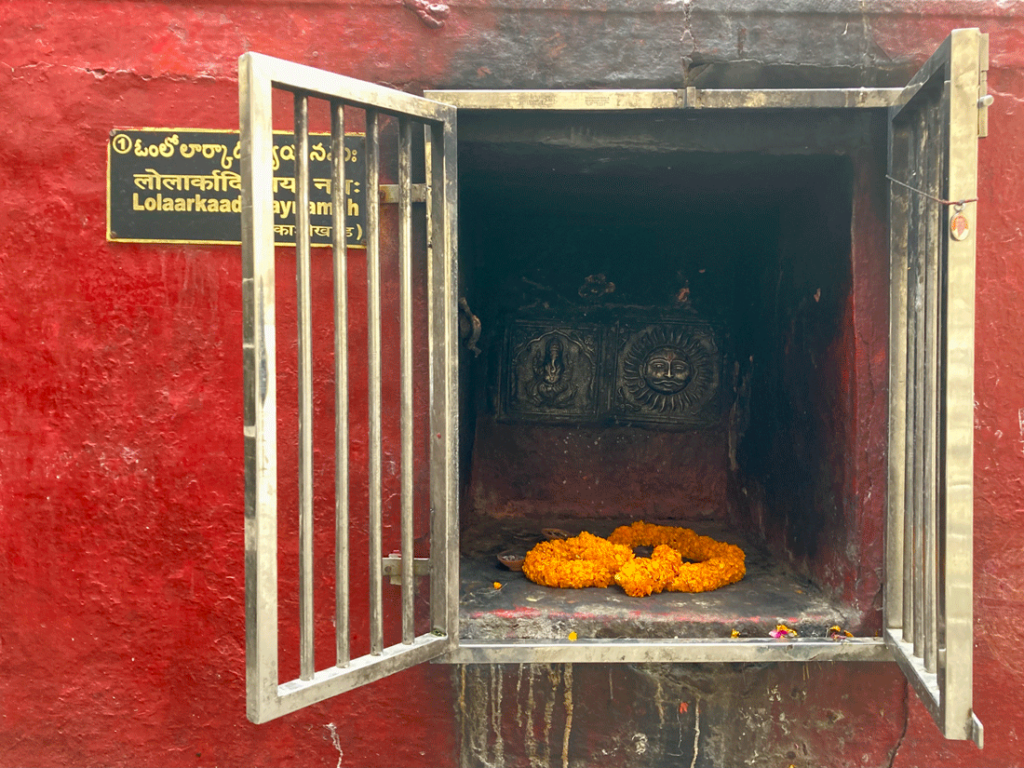
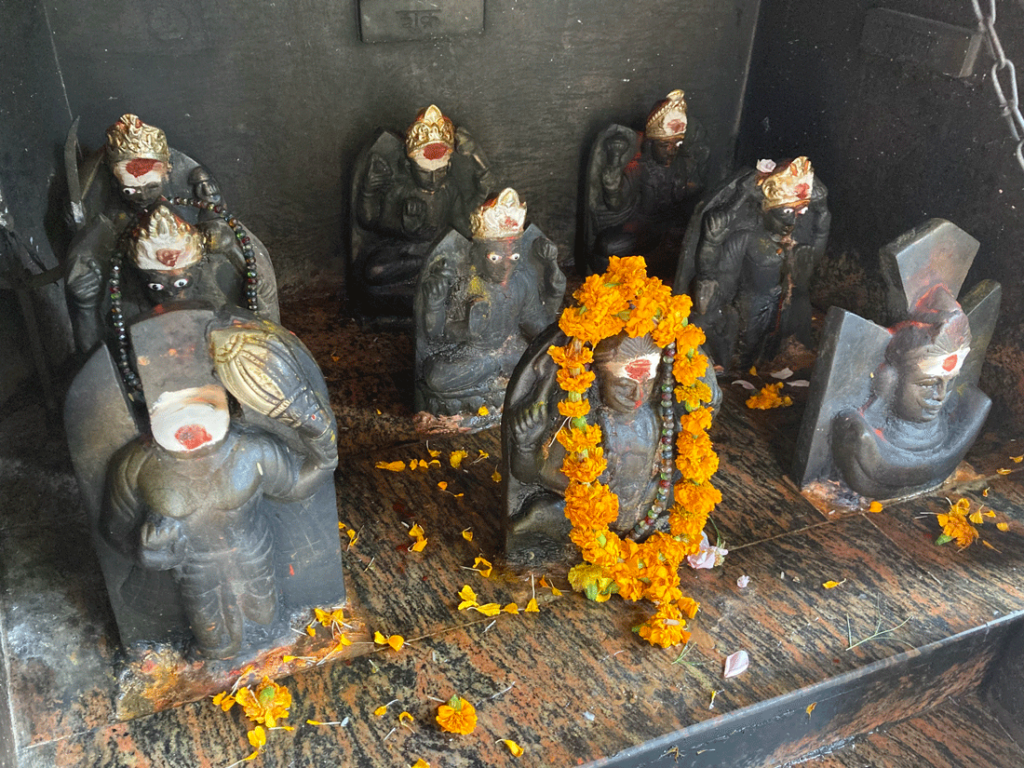
Lolark-Aditya2-297×300, Lolark Aditya Temple, Varanasi
Darshan & Ritual Logistics (2026 Updates)
Visitors are encouraged to plan their visit around the daily Aarti timings. Please note that temple timings may vary slightly during festivals.
📖 Related: Bheeshan Bhoot Bhairav Temple: History, Darshan Timings & Complete Guide
Daily Temple Timings
| Session | Timing | Activity |
|---|---|---|
| Morning | 05:00 AM – 12:00 PM | Mangala Aarti, Abhishekam |
| Afternoon | 12:00 PM – 04:00 PM | Rest period / Temple Cleaning |
| Evening | 04:00 PM – 08:30 PM | Sandhya Aarti, Shayan Aarti |
Key Sevas & 2026 Festival Dates
Devotees can book specific Sevas (ritual services) to enhance their spiritual experience.
- Abhishekam: Performed with Ganga Jal and raw milk.
- Archana: Special Surya Mantra Japa (108 repetitions).
- Online Seva Booking: While direct booking is handled by local temple trusts, many services can be facilitated via the Varanasi District Administration portal or authorized travel agents.
Major Festivals in 2026:
- Maha Shivaratri: February 26, 2026 (Drastic crowds expected in Kashi).
- Lolark Shasthi: October 29, 2026 (The primary festival here).
- Makar Sankranti: January 14, 2026 (Special bathing in the Kund).
Practical Visitor Guidance
To ensure a respectful and smooth darshan experience, please adhere to the following guidelines:
- Dress Code: Traditional Indian attire is recommended. Men should wear Dhoti/Kurta, and women Saree/Salwar Kameez. Modest clothing covering shoulders and knees is mandatory.
- Photography: Photography is strictly prohibited inside the sanctum sanctorum and within the Kund area. Mobile phones should be kept on silent mode.
- Footwear: Shoes must be removed at the designated stands outside the temple complex.
- Crowd Management: The temple is located in a narrow lane near Assi Ghat. It is highly recommended to visit between 6:00 AM and 8:00 AM to avoid crowds. Tuesdays and Sundays are particularly busy.
- Seasonal Advice: Summers (April-June) in Varanasi are extremely hot. Carry a water bottle, umbrella, and sunglasses. The temple floor can be scorching during midday.
Pilgrimage Connectivity
Lolark Aditya is situated in the southern part of Varanasi, near Assi Ganga Sangam.
How to Reach
- By Air: Lal Bahadur Shastri International Airport (VNS) is approximately 25 km away. A taxi or cab (approx. 1 hour) can take you to Assi Ghat.
- By Rail: Varanasi Junction (BSB) is 8 km from Assi Ghat. From the station, take an auto-rickshaw to Marwadi Seva Sangh, Assi (approx. 20-30 mins).
- On Foot/Boat: From Assi Ghat, walk towards Tulsi Ghat. Alternatively, hire a boat from Dashashwamedh Ghat to Tulsi Ghat and climb the steps (Tulsi Ghat steps lead directly toward the Kund).
📖 Related: Chatur Mukheshwar Temple Varanasi: History, Darshan Timings & Complete Guide
Creating a Pilgrimage Circuit
Combine your visit to Lolark Aditya with these nearby sacred sites to complete a southern Varanasi circuit:
- Assi Ghat: The southernmost ghat where the Ganges meets the Assi rivulet. Ideal for sunrise viewing and the morning Ganga Aarti.
- Viswanath Gali (Varanasi): Travel north to visit the Kashi Vishwanath Jyotirlinga (approx. 4 km by road). This completes the duo of Sun (Aditya) and Moon/Time (Shiva).
- Sankat Mochan Hanuman Temple: Located very close to Assi Ghat (walking distance), this temple is dedicated to Lord Hanuman and is a major spiritual stop.
Frequently Asked Questions (FAQ)
1. Is there a VIP darshan entry at Lolark Aditya Temple?
No, Lolark Aditya is a traditional shrine and does not have a formal VIP or paid darshan queue like the Kashi Vishwanath Corridor. However, visiting early in the morning provides the most peaceful and quick darshan.
2. Can I bathe in the Lolark Kund?
Yes, bathing in the Kund is the primary ritual. However, the water level can vary. It is advisable to wear conservative swimwear underneath traditional clothes or carry a change of clothes. The temple trust provides changing rooms, but they are basic.
3. Is online seva booking available for Lolark Aditya?
While specific online portals for this temple are limited, general UP tourism and Varanasi municipal portals often list major sevas. Alternatively, you can authorize a local priest (Pandit) present at the temple to perform Archana on your behalf.
4. What is the significance of Sunday at this temple?
Sunday is the day associated with the Sun God. It is believed that offering Til Abhishekam (Sesame oil abhishekam) to Lolark Aditya on Sundays cures diseases and removes obstacles in life.
5. Is the temple accessible for senior citizens?
The temple is located on a ghat, which requires climbing steps. While the ascent from Assi Ghat is manageable, it can be challenging for those with mobility issues. It is best to approach via auto-rickshaw to the nearest drop-off point.