
Contents
Estimated Reading Time: 12 Minutes
Introduction & Spiritual Essence: The Living Goddess of Odisha
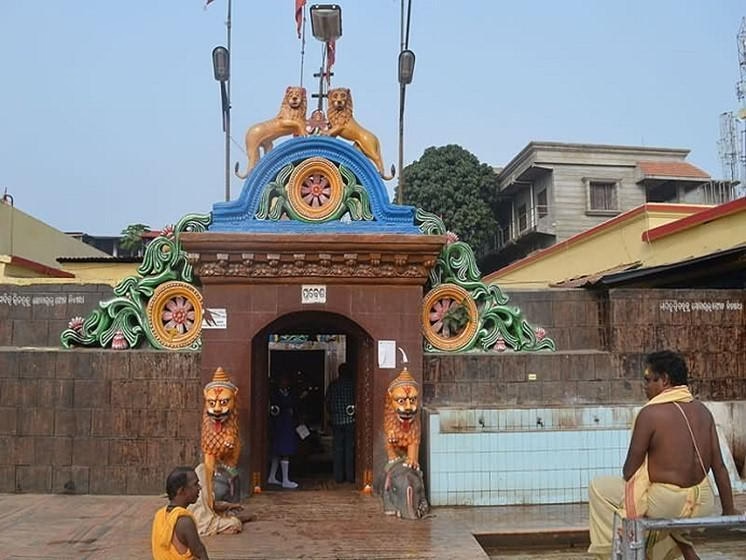
Welcome to Maa Chandi Temple, Cuttack, the spiritual heart of Odisha. While technically located in Odisha‘s cultural capital, this sanctuary transcends geography. As the presiding deity of Cuttack, Maa Katak Chandi is revered not merely as a deity carved in stone, but as the Bhuvaneshvari Mahavidya—the Queen of the Universe.
Phalaśruti: Why Devotees Visit
Devotees flock to this ancient shrine seeking specific spiritual boons:
- Cleansing Ancestral Karma: It is believed that offering red silk and Sindoor here alleviates ancestral debts.
- Removal of Fear (Abhaya): Maa Chandi, depicted with the Abhaya Mudra, dispels fear and protects from legal disputes.
- Wish Fulfillment (Varada): Known as Chandika, she is the granter of boons. The local lore suggests that if one offers Sindoor (vermilion) to the Goddess, their wishes manifest within the next 48 hours.
Historical Origins & Scriptural Legend
The history of Maa Chandi Temple is a blend of medieval royalty and divine intervention. The temple is believed to house an image of the deity older than the structure itself, dating back to the Gajapati Kingdom. During periods of Islamic invasions, the idol was buried to protect it, only to be rediscovered later.
The Sthala Purana: The Dream of Hansa Panda
According to temple records and local tradition, the rediscovery of the deity is attributed to Late Sri Hansa Panda, the Purohit of the King of Kanika. Legend holds that while grazing cattle on a barren patch of land near the Mahanadi river, Hansa Panda fell asleep on a heap of dry mud.
He dreamt of the Goddess Chandika, who requested him to unearth her from the land. Upon consulting the King of Kanika, Sri Panda excavated the site. Reports state that forty bullock carts worth of Red Sindoor were removed, revealing the sacred idol of Maa Katak Chandi. The temple was subsequently constructed on this site in 1946, establishing a lineage of hereditary Sevayats (priests) from the Panda family that continues to this day.
Architectural Marvels & Vastu
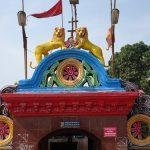
While the temple follows a traditional Kalinga Architectural Style (a distinct style of Odisha, often grouped under the Nagara school but unique to the region), the specific structural details are embedded in the sanctity of the space. The temple is designed according to Vastu Shastra principles to align the energy of the devotee with the deity.
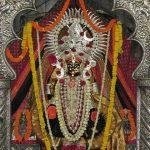
The sanctum sanctorum houses the four-armed deity. She holds:
- Paasha (Noose): To bind the ego.
- Ankusha (Goad): To drive the devotee toward righteousness.
- Abhaya (Fearlessness): The gesture of protection.
- Varada (Boon): The gesture of granting material and spiritual wishes.
Though an archaeological survey (ASI) status is not explicitly listed for this specific shrine, the preservation of the 20th-century structure and the ancient idol makes it a significant heritage site in Cuttack.
Darshan & Ritual Logistics (2026 Guide)
To ensure a seamless pilgrimage, please refer to the daily schedule and special Seva options. As we approach the year 2026, timings are subject to seasonal adjustments (especially during festivals).
Daily Darshan Timings
| Daily Schedule | |
|---|---|
| Morning Darshan | 5:00 AM – 1:00 PM |
| Evening Darshan | 4:00 PM – 10:00 PM |
| Midday Break | 1:00 PM – 4:00 PM (Sanctum Closed) |
| Special Pooja Hours | 5:30 AM (Daily Rituals) |
Key Sevas & Online Booking
The temple management facilitates Online Seva Booking via the official Odisha Temple Administration portals or authorized local agents. Given the hereditary nature of the priesthood, many rituals are performed by the Panda family.
- Abhishekam (Ritual Bathing): Performed with milk, honey, and ghee. Recommended for health and longevity.
- Archana (Chanting): Recitation of Bhuvaneshwari Mantra. Ideal for spiritual focus.
- Red Sindoor Offering: The primary offering. Devotees purchase Sindoor from the temple counter and offer it to the deity.
2026 Major Festival Dates (Tentative)
- Durga Puja (Ashwina Krishna Ashtami): October 2026. The temple observes a 16-day festival starting from the dark fortnight of Ashwina.
- Kali Puja: Coincides with Diwali (November 2026). This is one of the most crowded times at Maa Chandi Temple.
- Vijayadashami (Dussehra): October 2026.
Photo Gallery
Visual documentation of the divine architecture and daily rituals.


Practical Visitor Guidance
To maintain the sanctity of the temple and ensure safety, please adhere to the following guidelines.
Dress Code & Etiquette
- Attire: Traditional Indian clothing (Saree, Kurta-Pajama, Dhoti) is preferred. Modest western wear is permitted but discouraged. Avoid black clothing.
- Photography: Strictly prohibited inside the Garbhagriha (Sanctum Sanctorum). Photography in the outer courtyard is allowed, subject to crowd conditions.
Crowd Management & Accessibility
- Peak Hours: Avoid 7:00 AM – 9:00 AM and 6:00 PM – 8:00 PM unless attending Aarti. Tuesdays and Fridays are exceptionally crowded.
- Seasonal Advice: Cuttack summers (May–June) are humid. Carry a water bottle (allowed outside sanctum) and a handkerchief.
- Accessibility: The temple has ramps for wheelchair access, though the inner sanctum involves narrow passages.
- Lockers: Mobile phones and leather items must be deposited at the free counter (check post) outside the main gate.
Pilgrimage Connectivity
How to Reach
The temple is located at Stadium Rd, Chandi Chhaka, Tulasipur Colony, Cuttack, Odisha 753008.
- By Air: The nearest airport is Biju Patnaik International Airport (BBI) in Bhubaneswar (approx. 45 km). A taxi ride takes 60–90 minutes.
- By Rail: Cuttack Railway Station is the nearest railhead, just 3 km away. Auto-rickshaws are readily available.
- By Road: Located off NH-16 (formerly NH-5). The temple is well-connected to Bhubaneswar and Puri via State Highway 42.
Nearby Sacred Sites
Extend your pilgrimage circuit with these nearby attractions:
- Maa Cuttack Chandi (Pitha) Temple: The historic seat of the Goddess before the current temple was built.
- Dhabaleswar Temple: Located on an island in the Mahanadi river (approx. 40 km), known for its suspension bridge and ancient Shiva shrine.
- Barabati Fort & Jagannath Temple: Located in the heart of Cuttack for a blend of history and spirituality.
Frequently Asked Questions (FAQs)
1. Is there a VIP Darshan entry available?
Yes, a separate queue is available for elderly devotees (above 65 years) and differently-abled visitors. During festivals, paid VIP passes may be issued by the temple committee to bypass the general queue.
2. Can I perform the daily rituals as a non-resident?
While the hereditary priests (Pandas) perform the primary rituals, devotees can sponsor Archana and Abhishekam. You do not need to be a local resident to book Seva online.
3. What is the significance of the Red Sindoor?
Red Sindoor represents the feminine power (Shakti) and marital bliss. Offering Sindoor to Maa Chandi is believed to remove obstacles in marriage and bring prosperity to the family.
4. Are there accommodation facilities near the temple?
Yes, Cuttack offers numerous hotels and guest houses. For pilgrims, the Mandakini Bhavan and other choultries near the temple offer basic lodging at affordable rates.
5. What is the best time to visit Maa Chandi Temple?
The best weather is from October to February. However, for a spiritually charged experience, visit during Durga Puja or Kali Puja in late 2026, keeping in mind the massive crowds.
Recent Posts

Shri Kaamkoteeshwar Mandir, Varanasi – History & Significance
In the heart of Kashi, the eternal city of Lord Shiva, where the Ganges flows with celestial grace, stands the Shri Kaamkoteeshwar Mandir. This sacred Sannidhi is not merely a temple but a profound spiritual bridge between the Northern…

ओ सांवरे तूने ही मुझको संभाला – Lyrics & Meaning
ओ सांवरे तूने ही मुझको संभाला – A Prayer to Shyam Origin & Spiritual Essence Why This Bhajan Resonates Devotees chant this when overwhelmed by life’s storms—the refrain ‘तूने ही मुझको संभाला’ is the soul’s sigh of relief: “You…

कथा ये है महाराज मेरे की – Lyrics & Meaning
कथा ये है महाराज मेरे की छत्रपति संभाजी महाराज – A Prayer to Chhatrapati Sambhaji Maharaj Origin & Spiritual Essence Why This Bhajan Resonates Devotees chant this when their spirit feels tested—its powerful refrain “महाराज मेरे” is a soul’s…

Rigveda Samhita Yathartha Anuvada (ऋग्वेद संहिता यथार्थ अनुवाद) – Complete Set with Anvayartha & Hindi/English Translation
The Rigveda is the oldest surviving scripture of humanity and the foundational text of Sanātana Dharma. For serious students, scholars, UPSC aspirants studying ancient Indian history, Sanskrit learners, and spiritual seekers, a precise and grammatically structured translation is indispensable.…

आना भी अकेला है जाना भी अकेला है – Lyrics & Meaning | BharatTemples
आना भी अकेला है जाना भी अकेला है – A Prayer to the Divine Witness Origin & Spiritual Essence Why This Bhajan Resonates Devotees turn to this bhajan in moments of deep reflection—when life’s attachments begin to ache. The…

माता शेरावाली के द्वार जो भी जाता है – Lyrics & Meaning
माता शेरावाली के द्वार जो भी जाता है – A Prayer to Maa Sherawali Origin & Spiritual Essence Why This Bhajan Resonates Devotees turn to this bhajan in times of fear or uncertainty—its promise that no one leaves Maa’s…

मार लेना सपणी उबार लेणा भवरा – Lyrics & Meaning
मार लेना सपणी उबार लेणा भवरा – A Prayer to the Divine Beloved Origin & Spiritual Essence Why This Bhajan Resonates Devotees chant this in moments of deep vulnerability—its cry of “मार लेना सपणी, उबार लेणा भवरा” is the…

हमें श्याम सुंदर भरोसा तुम्हारा – Lyrics & Meaning
हमें श्याम सुंदर भरोसा तुम्हारा – A Prayer to Shyam Sundar Origin & Spiritual Essence Why This Bhajan Resonates Devotees chant this when feeling alone—its refrain ‘de do sahara’ is the soul’s cry for divine support. Lyrics in Hindi…

Mere Satguru Ne Di Thi Davai Lyrics in Hindi & Meaning
Mere Satguru Ne Di Thi Davai: Invoking the Guru’s Liberating Wisdom This soul-stirring bhajan venerates the Satguru (True Spiritual Master) as the divine physician who dispenses the only remedy for life’s deepest sufferings. Composed by Sant Karmaveer Tufani, it…

Janm Diyo Thari Maa Dukh Dekhiyo Lyrics in Hindi & Meaning
जन्म दियो थारी माँ दुख देखियो (Maa’s Grief Upon Birthing You) This soul-stirring Chetavani Bhajan (admonitory hymn) is addressed to the Divine Mother (Maa) – a call for repentance when children forget their filial duties in the dark age…