
Contents
- 1 Maa Tara Chandi Temple: The Ancient Shakti Peetha of Sasaram
Maa Tara Chandi Temple: The Ancient Shakti Peetha of Sasaram
By Lead Heritage Architect, bharattemples.com | Updated for 2026 Pilgrimage Season
| Date built: | Dwapar Yuga |
|---|---|
| Deity: | – |
| Architectural style: | – |
| Major festivals | Navratri, Maha Shivaratri |
| Locale: | Sasaram, Bihar, India |
| District:: | Rohtas |
| Address: | Delhi Kolkate Hwy, Sasaram, Bihar 8211 |
| Phone | – |
Introduction & Spiritual Essence
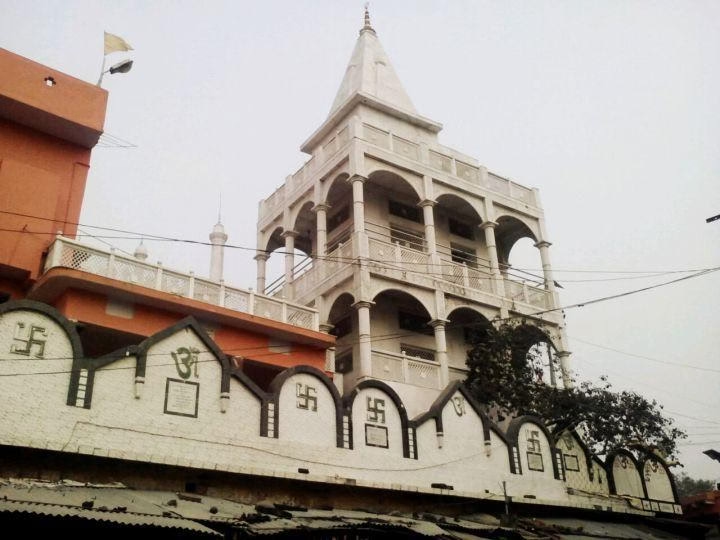
Perched on the rugged granite outcrops of the Kaimur Hills in Sasaram, the Maa Tara Chandi Temple stands as a sentinel of devotion, echoing the fierce benevolence of the Divine Mother. While the provided data mentions a Dwapara Yuga origin, scriptural consensus and local tradition identify this shrine as one of the 52 revered Shakti Peethas scattered across the Indian subcontinent.
The Deity: The presiding deity is Maa Tara Chandi, a manifestation of Maa Shakti (Durga). Here, the Goddess is worshipped in her dual form—fierce yet nurturing. The name “Tara” signifies the guiding star of salvation, while “Chandi” denotes the destroyer of evil.
Phalaśruti (Spiritual Benefits): Devotees flock to this ancient shrine to seek blessings for maternal safety and protection from malefic planetary influences. The temple is particularly significant for cleansing ancestral karma. According to Tantric traditions, offering prayers here grants the devotee the courage to overcome fear and the clarity to navigate life’s turbulent waters.
Historical Origins & Scriptural Legend
The history of Maa Tara Chandi is deeply interwoven with the Shakti Peetha Mahatmya. It is believed to be the site where the Right Eye (Netra) of Sati, the consort of Lord Shiva, fell when Lord Vishnu dismembered her body with the Sudarshan Chakra to pacify a grief-stricken Shiva.
The Ancient Inscription: “Tradition holds” that the temple predates recorded history. However, archaeological evidence points to the Gupta Era. The rock-cut architecture and the ancient inscription of Pratap Dhawal found near the temple premises serve as silent witnesses to the patronage of early medieval dynasties. While the current structure has undergone renovations to preserve its sanctity, the sanctum sanctorum retains its archaic, primordial energy.
Architectural Marvels
Blending Nagara and Gupta architectural styles, the temple is a masterpiece of rock-cut engineering. The structure is not built on the ground but carved into and atop the Kaimur plateau, utilizing the natural topography as a fortress.
- The Sanctum (Garbhagriha): The inner shrine houses the Murti of Maa Tara Chandi. The idol is unique, depicting the goddess with four arms holding various weapons, standing on a prostrate demon.
- Rock Formations: The temple complex is surrounded by massive granite boulders, a feature typical of the Vindhya range.
- The Mandapas: The pillared hall (Mandapa) allows devotees to gather for Aarti, offering a panoramic view of the surrounding Sasaram city.
Darshan & Ritual Logistics
To facilitate a seamless darshan for the thousands of pilgrims visiting annually, the temple management has streamlined operations. Below are the daily timings and key sevas for 2026.
Daily Darshan Timings (2026 Schedule)
| Session | Timings | Notes |
|---|---|---|
| Morning | 5:00 AM – 1:00 PM | Temple opens at Sunrise |
| Afternoon Break | 1:00 PM – 3:00 PM | Closed for Bhog/Rest |
| Evening | 3:00 PM – 9:00 PM | Closes after Sandhya Aarti |
Key Sevas & Online Booking
Devotees can book specific rituals in advance. For online seva booking, visit the official Rohtas district temple committee portal.
- Abhishekam (Ritual Bathing): Performed with milk, honey, and ghee. Best time: 6:00 AM – 8:00 AM.
- Archana (Chanting of Names): Can be performed individually or for families.
- Special Navratri Puja: Requires prior booking due to high demand.
Major Festivals in 2026
- Chaitra Navratri: April 6 – April 14, 2026
- Sharad Navratri: September 22 – October 1, 2026 (Peak Crowd)
- Maha Shivaratri: February 26, 2026
- Diwali/Kali Puja: October 21, 2026
Photo Gallery
Practical Visitor Guidance
Dress Code: As this is a Shakti Peetha, modest attire is mandatory. Men should wear dhotis or trousers; women should wear sarees or full-length dresses.
Photography: Strictly prohibited inside the sanctum sanctorum. Photography is allowed in the outer courtyard.
Accessibility: The temple is located on a hill. A motorable road leads to the base, but access to the main shrine involves climbing approximately 100 stone steps. Elderly devotees can opt for a Palki (palanquin) service available at the base for a nominal fee.
Crowd Management:
• Best Hours: 5:00 AM (opening) or 3:00 PM (opening of evening session).
• Avoid: 9:00 AM – 11:00 AM and weekends.
• Seasonal Advice: During May and June, Sasaram experiences extreme heat. Carry a water bottle and an umbrella.
Pilgrimage Connectivity
How to Reach
The temple is located on the Delhi-Kolkata Grand Trunk Road (National Highway 19), making it highly accessible.
- By Air: The nearest airport is Jay Prakash Narayan Airport (Patna), approximately 130 km away. Alternatively, Gaya International Airport is about 100 km away.
- By Rail: Sasaram Railway Junction is the nearest railhead, well-connected to major cities like Delhi, Kolkata, and Patna. The temple is 5 km from the station.
- By Road: Buses and taxis are readily available from Patna, Gaya, and Varanasi. The temple is signposted from the main highway.
Nearby Sacred Sites (Pilgrimage Circuit)
- Shiv Temple (Kaimur Hills): Located near the Tara Chandi complex, offering serene views and spiritual solace.
- Chadwa Haat (Historical Market): Famous for ancient terracotta artifacts and local sweets.
- Dhua Kund Waterfall: A scenic spot located roughly 36 km away, ideal for a peaceful retreat after darshan.
Frequently Asked Questions (FAQs)
Is there a VIP Darshan entry at Maa Tara Chandi Temple?
Yes, the temple committee provides a special entry pass for senior citizens and differently-abled pilgrims. VIP passes for general devotees are limited and usually issued by the district administration office in Sasaram for specific occasions.
What is the significance of the “Netra” (Eye) legend?
According to the Shakti Peetha Stotram, the right eye of Sati fell here. This implies that the Goddess sees the devotion of her children clearly. Worshipping here is believed to enhance spiritual vision and intuition.
Are mobile phones allowed inside?
Mobile phones are allowed but must be kept on silent mode. However, photography is banned inside the sanctum. Free lockers are available near the entrance to store valuables and electronics.
Is non-vegetarian food allowed in the area?
No. As a mark of respect to the deity, Sasaram is a strictly vegetarian zone near the temple premises. Alcohol and meat are prohibited.
How old is the current temple structure?
While legends trace its origin to the Puranic age, the current masonry structure was largely renovated during the 15th century, preserving the ancient Gupta-era inscriptions found on the surrounding rocks.
Contact Details
Official Address: Delhi-Kolkate Hwy, Sasaram, Bihar 8211
The Kaimur Hills provide an access to many other attractions of Sasaram like Gupta Mahadev Temple, Parvati Temple, ancient caves, Manjhar Kund and Dhua Kund are two waterfalls of this town that have the capacity of generating large amounts of electricity.
Recent Posts

ओ सांवरे तूने ही मुझको संभाला – Lyrics & Meaning
ओ सांवरे तूने ही मुझको संभाला – A Prayer to Shyam Origin & Spiritual Essence Why This Bhajan Resonates Devotees chant this when overwhelmed by life’s storms—the refrain ‘तूने ही मुझको संभाला’ is the soul’s sigh of relief: “You…

कथा ये है महाराज मेरे की – Lyrics & Meaning
कथा ये है महाराज मेरे की छत्रपति संभाजी महाराज – A Prayer to Chhatrapati Sambhaji Maharaj Origin & Spiritual Essence Why This Bhajan Resonates Devotees chant this when their spirit feels tested—its powerful refrain “महाराज मेरे” is a soul’s…

Rigveda Samhita Yathartha Anuvada (ऋग्वेद संहिता यथार्थ अनुवाद) – Complete Set with Anvayartha & Hindi/English Translation
The Rigveda is the oldest surviving scripture of humanity and the foundational text of Sanātana Dharma. For serious students, scholars, UPSC aspirants studying ancient Indian history, Sanskrit learners, and spiritual seekers, a precise and grammatically structured translation is indispensable.…

आना भी अकेला है जाना भी अकेला है – Lyrics & Meaning | BharatTemples
आना भी अकेला है जाना भी अकेला है – A Prayer to the Divine Witness Origin & Spiritual Essence Why This Bhajan Resonates Devotees turn to this bhajan in moments of deep reflection—when life’s attachments begin to ache. The…

माता शेरावाली के द्वार जो भी जाता है – Lyrics & Meaning
माता शेरावाली के द्वार जो भी जाता है – A Prayer to Maa Sherawali Origin & Spiritual Essence Why This Bhajan Resonates Devotees turn to this bhajan in times of fear or uncertainty—its promise that no one leaves Maa’s…

मार लेना सपणी उबार लेणा भवरा – Lyrics & Meaning
मार लेना सपणी उबार लेणा भवरा – A Prayer to the Divine Beloved Origin & Spiritual Essence Why This Bhajan Resonates Devotees chant this in moments of deep vulnerability—its cry of “मार लेना सपणी, उबार लेणा भवरा” is the…

हमें श्याम सुंदर भरोसा तुम्हारा – Lyrics & Meaning
हमें श्याम सुंदर भरोसा तुम्हारा – A Prayer to Shyam Sundar Origin & Spiritual Essence Why This Bhajan Resonates Devotees chant this when feeling alone—its refrain ‘de do sahara’ is the soul’s cry for divine support. Lyrics in Hindi…

Mere Satguru Ne Di Thi Davai Lyrics in Hindi & Meaning
Mere Satguru Ne Di Thi Davai: Invoking the Guru’s Liberating Wisdom This soul-stirring bhajan venerates the Satguru (True Spiritual Master) as the divine physician who dispenses the only remedy for life’s deepest sufferings. Composed by Sant Karmaveer Tufani, it…

Janm Diyo Thari Maa Dukh Dekhiyo Lyrics in Hindi & Meaning
जन्म दियो थारी माँ दुख देखियो (Maa’s Grief Upon Birthing You) This soul-stirring Chetavani Bhajan (admonitory hymn) is addressed to the Divine Mother (Maa) – a call for repentance when children forget their filial duties in the dark age…
Bhadi Sabha Mein Thane Manaun Lyrics in Hindi & Meaning
Bhadi Sabha Mein Thane Manaun: Invoking the Spear-Wielding Mother Mata Bhawani (श्री ज्वाला भवानी), the fiery manifestation of Shakti worshipped as the Protector of Dharma in Her Dhaulagarh sanctum. Origin & Spiritual Essence Composed in Rajasthani folk tradition by…