

Contents
- 1 Mahalakshmeeshwar Temple, Varanasi: A Definitive Pilgrimage Guide
Mahalakshmeeshwar Temple, Varanasi: A Definitive Pilgrimage Guide
A Journey into the Spiritual Heart of Kashi
Welcome to bharattemples.com, your trusted guide to the sacred heritage of India. In this comprehensive guide, we delve deep into the mystical realm of the Mahalakshmeeshwar Temple in Varanasi. Nestled near the sacred Lakshmi Kund, this temple is not merely a stone structure but a living testament to the divine dialogue between Lord Shiva and Goddess Parvati, as recorded in the ancient Kashi Khand.
Introduction & Spiritual Essence
Located in the mystical bylanes of the old city, the Mahalakshmeeshwar Temple is a sanctuary of divine energy. It is one of the most potent spiritual sites in Varanasi, revered by seekers of prosperity and liberation.
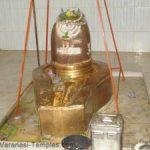
- Primary Deity: Mahalakshmeeshwar (a form of Lord Shiva) and Mahalakshmi Devi. The temple houses a Swayambhu (self-manifested) Shivling.
- Alternate Names: The temple is locally famous as Sorahia Mahadev.
- Form: The Murti (idol) of Lord Shiva here is unique, representing the combined grace of Shiva (the destroyer) and Lakshmi (the provider of wealth).
Phalaśruti: The Spiritual Benefits
Why do devotees undertake the specific pilgrimage to Mahalakshmeeshwar? According to the sacred Kashi Khand (a chapter in the Skanda Purana), the rewards of worshipping here are celestial.
It is believed that a devotee who bathes in the nearby Lakshmi Kund and offers prayers to Mahalakshmeeshwar attains a heavenly status. The scriptures state that the devotee will be flanked by Deva Strees (celestial damsels), waving Chanvar (fly whisks) around them—symbolizing a life of eternal comfort and royal dignity in heaven after earthly existence.
Furthermore, this locality is identified as a Shakti Peeth (seat of vital energy), specifically the Mahalakshmi Shakti Peeth, making it the most powerful site for invoking prosperity and material well-being in the entire Kashi region.
Historical Origins & Scriptural Legend
The Divine Dialogue
The history of Mahalakshmeeshwar is not found in royal inscriptions but in divine revelations. Tradition holds that during a conversation between Lord Shiva and Goddess Parvati about the various Shivlings in Kashi, Lord Shiva revealed the existence of this specific Ling in the vicinity of Lakshmi Kund.
Celestial Pilgrimage
A unique aspect of this temple’s spiritual history is that it is not just earthly devotees who worship here. The Kashi Khand describes a phenomenon where devatas (deities) living in heaven, along with their wives, descend to earth specifically to worship at Mahalakshmeeshwar. This elevates the temple’s status from a local shrine to a cosmic axis where heaven and earth meet.
Architectural Timeline
While exact dynastic records are sparse due to the ancient oral traditions of Kashi, the temple architecture reflects the classic North Indian (Nagara) style, with renovations likely taking place during the Maratha period in the late 18th or 19th century. The structure has been preserved by local devotees, maintaining its sanctity through centuries of changing landscapes.
Architectural Marvels
The Mahalakshmeeshwar Temple is a classic example of Nagara style temple architecture, adapted to the unique spatial constraints of Varanasi’s dense urban fabric.
- Shikhara (Spire): The temple features a towering Shikhara that curves upward towards the sky, symbolizing the ascent of the soul. It is adorned with small Amalakas (stone disks) at the apex.
- Mandapa (Pillared Hall): The entrance leads through a compact Mandapa which serves as the gathering space for devotees during prayers. The pillars are intricately carved, featuring motifs of Yalis and floral patterns typical of Indian temple art.
- Sanctum Sanctorum (Garbhagriha): The inner sanctum houses the Swayambhu Shivling. Unlike modern statues, the Shivling here is smooth, dark, and reflects the natural energy of the site. The Garbhagriha is designed to be intimate, allowing the devotee to feel enveloped by the divine presence.
- Vastu Shastra: The temple layout follows the principles of Vastu Shastra, with the entrance facing the east to welcome the rising sun and positive solar energies. The energy flow is focused strictly on the central Garbhagriha.
Darshan & Ritual Logistics
To ensure a seamless spiritual experience, we have curated the essential timing and ritual details for 2026. Please note that timings may vary slightly during festivals.
Daily Darshan Timings
| Session | Timing | Activity |
|---|---|---|
| Morning | 06:00 AM – 12:00 PM | Shringar Darshan, Mangala Aarti |
| Afternoon | 12:00 PM – 04:00 PM | Rest period (Outer Pradakshina allowed) |
| Evening | 04:30 PM – 09:00 PM | Sandhya Aarti, Shayan Darshan |
Key Sevas & Booking
Devotees can book specific Sevas online or at the temple office.
- Abhishekam: Ritual bathing of the Shivling with milk, honey, and ghee. Best performed in the morning.
- Archana: Recitation of 108 names of Mahalakshmeeshwar and Mahalakshmi.
- Online Booking: Visitors can book these services via the official Kashi Vishwanath Temple Trust portal (which manages several surrounding temples) or at the local counter near the temple entrance.
2026 Major Festival Dates
- Maha Shivaratri: February 26, 2026 (Grand night-long vigil and special Abhishekam).
- Shravan Month: July 14 – August 13, 2026 (Special morning Shringar and Jaalabhishek). Mondays are the most auspicious.
- Deepawali: October 19, 2026 (Temple illumination and Lakshmi Puja).
- Mahalakshmi Jayanti: September 2, 2026 (Special Maha Aarti for Goddess Lakshmi).
Practical Visitor Guidance
Rules & Etiquette
- Dress Code: Traditional attire is highly recommended. Men should wear Dhoti or trousers (no shorts), and women should wear sarees or full-length dresses.
- Photography: Photography is strictly prohibited inside the Garbhagriha. It is allowed in the outer courtyard, but please respect the privacy of praying devotees.
- Electronics: Mobile phones must be silenced. Use of earphones is not allowed.
- Accessibility: The temple is located in the old city. The approach involves narrow steps. It is not wheelchair accessible.
Crowd Management & Seasonal Advice
- Best Hours: Early morning (6:00 AM – 8:00 AM) or late evening (8:00 PM onwards) offer the most peaceful darshan.
- Summer (April–June): Varanasi can get extremely hot. Carry water and a head covering. The Garbhagriha remains cool.
- Monsoon (July–September): The old city drains poorly. Wear non-slip footwear and carry an umbrella.
Pilgrimage Connectivity
How to Reach
The Mahalakshmeeshwar Temple is located at D.52/54, near Lakshmi Kund.
- By Train: The nearest major railway station is Varanasi Junction (BSB), approximately 3 km away (15-20 mins by auto-rickshaw).
- By Air: Lal Bahadur Shastri International Airport (VNS) is about 25 km away.
- By Road: Accessible via NH 19 or NH 35. The final approach is best taken by Auto Rickshaw or e-Rickshaw via Luxa road, as the inner lanes are pedestrian-only.
Nearby Sacred Sites (Pilgrimage Circuit)
Extend your spiritual journey with these nearby temples:
- Lakshmi Kund: Just steps away from the temple, this holy tank is essential for ritual bathing before darshan.
- Shri Kaal Bhairav Temple: One of the most important temples in Varanasi, dedicated to the fierce form of Shiva (approx. 1.5 km away).
- Shri Durga Temple (Durga Kund): The vibrant red temple dedicated to Goddess Durga (approx. 3 km away).
Frequently Asked Questions (FAQ)
1. Is there a VIP darshan entry at Mahalakshmeeshwar Temple?
No, this is a traditional temple rather than a major commercial shrine. Darshan is generally quick (5-10 minutes) as crowds are moderate. However, during Maha Shivaratri and Shravan Mondays, the queue may take 30-45 minutes.
2. What is the significance of the name ‘Sorahia Mahadev’?
Mahalakshmeeshwar is locally famous as Sorahia Mahadev. This name is deeply revered in the local dialect. The “Sorahia” association signifies a specific lineage or manifestation of Shiva that bestows the blessings of the 16 arts (Kalas) and prosperity.
3. Can I perform a Shradh ritual here?
Yes, the temple is a powerful location for Shradh and Tarpan. The proximity to Lakshmi Kund makes it ideal for performing ancestral rites to ensure peace for departed souls and cleansing of ancestral karma.
4. Are non-Hindus allowed inside?
Like most ancient Shakti Peeths and Shiva temples in Varanasi, entry is traditionally restricted to those following the Hindu faith. It is advisable to check with the temple priests, but generally, entry is permitted only for Hindu devotees.
5. Where can I park my vehicle?
Vehicles cannot enter the narrow lanes leading to the temple. Public parking is available near Luxa Road or Kabir Chaura. From there, it is a 5-minute walk or a short e-rickshaw ride to the temple.
Photo Gallery
Contact Details
Address:
Mahalakshmeeshwar Temple
D.52/54, Near Lakshmi Kund
Varanasi, Uttar Pradesh 221001
Phone: Not officially listed (Managed by local trust)
Email: info@bharattemples.com (for general inquiries)
Recent Posts

Shri Kaamkoteeshwar Mandir, Varanasi – History & Significance
In the heart of Kashi, the eternal city of Lord Shiva, where the Ganges flows with celestial grace, stands the Shri Kaamkoteeshwar Mandir. This sacred Sannidhi is not merely a temple but a profound spiritual bridge between the Northern…

ओ सांवरे तूने ही मुझको संभाला – Lyrics & Meaning
ओ सांवरे तूने ही मुझको संभाला – A Prayer to Shyam Origin & Spiritual Essence Why This Bhajan Resonates Devotees chant this when overwhelmed by life’s storms—the refrain ‘तूने ही मुझको संभाला’ is the soul’s sigh of relief: “You…

कथा ये है महाराज मेरे की – Lyrics & Meaning
कथा ये है महाराज मेरे की छत्रपति संभाजी महाराज – A Prayer to Chhatrapati Sambhaji Maharaj Origin & Spiritual Essence Why This Bhajan Resonates Devotees chant this when their spirit feels tested—its powerful refrain “महाराज मेरे” is a soul’s…

Rigveda Samhita Yathartha Anuvada (ऋग्वेद संहिता यथार्थ अनुवाद) – Complete Set with Anvayartha & Hindi/English Translation
The Rigveda is the oldest surviving scripture of humanity and the foundational text of Sanātana Dharma. For serious students, scholars, UPSC aspirants studying ancient Indian history, Sanskrit learners, and spiritual seekers, a precise and grammatically structured translation is indispensable.…

आना भी अकेला है जाना भी अकेला है – Lyrics & Meaning | BharatTemples
आना भी अकेला है जाना भी अकेला है – A Prayer to the Divine Witness Origin & Spiritual Essence Why This Bhajan Resonates Devotees turn to this bhajan in moments of deep reflection—when life’s attachments begin to ache. The…

माता शेरावाली के द्वार जो भी जाता है – Lyrics & Meaning
माता शेरावाली के द्वार जो भी जाता है – A Prayer to Maa Sherawali Origin & Spiritual Essence Why This Bhajan Resonates Devotees turn to this bhajan in times of fear or uncertainty—its promise that no one leaves Maa’s…

मार लेना सपणी उबार लेणा भवरा – Lyrics & Meaning
मार लेना सपणी उबार लेणा भवरा – A Prayer to the Divine Beloved Origin & Spiritual Essence Why This Bhajan Resonates Devotees chant this in moments of deep vulnerability—its cry of “मार लेना सपणी, उबार लेणा भवरा” is the…

हमें श्याम सुंदर भरोसा तुम्हारा – Lyrics & Meaning
हमें श्याम सुंदर भरोसा तुम्हारा – A Prayer to Shyam Sundar Origin & Spiritual Essence Why This Bhajan Resonates Devotees chant this when feeling alone—its refrain ‘de do sahara’ is the soul’s cry for divine support. Lyrics in Hindi…

Mere Satguru Ne Di Thi Davai Lyrics in Hindi & Meaning
Mere Satguru Ne Di Thi Davai: Invoking the Guru’s Liberating Wisdom This soul-stirring bhajan venerates the Satguru (True Spiritual Master) as the divine physician who dispenses the only remedy for life’s deepest sufferings. Composed by Sant Karmaveer Tufani, it…

Janm Diyo Thari Maa Dukh Dekhiyo Lyrics in Hindi & Meaning
जन्म दियो थारी माँ दुख देखियो (Maa’s Grief Upon Birthing You) This soul-stirring Chetavani Bhajan (admonitory hymn) is addressed to the Divine Mother (Maa) – a call for repentance when children forget their filial duties in the dark age…