

Contents
By BharatTemples.com Heritage Team | Updated: January 2026
Standing guard at the base of the colossal Rockfort Hill in Trichy, the Manikka Vinayakar Temple serves as the spiritual sentinel for the city of Tiruchirappalli. To the uninitiated, it is a modest structure nestled in the bustling bazaar; to the devotee, it is the sacred threshold that guards the path to Lord Thayumanavar and Uchi Pillaiyar above. This definitive guide explores the architectural precision, scriptural roots, and devotional logistics of this ancient shrine.
1. Introduction & Spiritual Essence
Primary Deity: The temple is dedicated to Lord Manikka Vinayakar (a form of Lord Ganesha). In Tamil, Manikkam translates to “precious gem” or “ruby,” signifying the temple’s value as the Patron Deity of Trichy. Unlike many forms of Ganesha, the presiding deity here is known as the “Kshetrapalaka” (Guardian of the Territory), ensuring the spiritual safety of the entire Rockfort complex.
Phalaśruti (Spiritual Benefits):
Devotees believe that offering prayers to Manikka Vinayakar before ascending the Rockfort is mandatory for a successful pilgrimage to the upper temples. The specific spiritual benefits include:
- Removal of Obstacles: Being the first deity of the complex, he clears the path—both physical and karmic—for the ascent.
- Ancestral Liberation: Offering Modakams here is believed to cleanse ancestral lineage blockages, facilitating Pitra Shanti (peace for forefathers).
- Prosperity & Wealth: As the granter of wishes (Mangala Murthy), devotees seek his blessings for financial stability and precious moments in life.
2. Historical Origins & Scriptural Legend
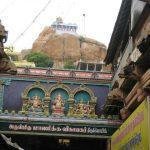
The history of the Rockfort is etched into its very geology, consisting of 3.8 billion-year-old rocks (archaean) and the temple architecture that adorns them.
The Builders:
While the geology is prehistoric, the masonry is historical. According to temple records and architectural analysis, the foundations were originally laid by the Pallavas (7th–9th century CE). However, the major structural completion and expansion are attributed to the Nayaks of Madurai (16th–18th century CE), who are responsible for the granite pillars and the distinct Dravidian style visible today.
Legends of the Sanctum:
The Sthala Purana (local legend) highlights why the temple is unique. Originally, the sanctum sanctorum (Garbhagriha) was believed to face the East. However, legend speaks of a sage named Sarama Munivar who was performing a ritual using Sevvanthi flowers. The local king, driven by greed, stole these sacred flowers and disturbed the sage’s penance.
In his anger and to punish the king, Lord Manikka Vinayakar permanently shifted his position to face West. This is why the Kodi Maram (Flagstaff) is situated behind the sanctum rather than in front, a rare architectural deviation found only in this temple in Tamil Nadu.
3. Architectural Marvels
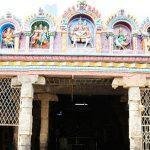
The Manikka Vinayakar Temple is a prime example of Dravidian Architecture, adapted to fit the cave temple tradition.
Structural Elements:
- Vimana: The roof of the sanctum is a circular dome (Vimana) which has recently been gold-plated, reflecting the sun and symbolizing the radiance of divine wisdom.
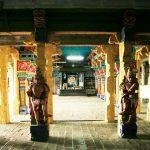
- Mandapa: The spacious hall on the western side features intricate carvings and pictures depicting Lord Vinayaka in various Bhavas (forms and postures). The pillars are typical of Nayak architecture—massive, often decorated with Yalis (mythical creatures) or floral motifs.
- Folk Art: The temple is often the stage for traditional folk arts like Thevaram recitals, where musicians stand in the eastern quadrant, facing the deity (who faces West) in a unique alignment of energy.
While not a designated UNESCO site, the temple is part of the protected heritage of the Tamil Nadu Department of Archaeology.
4. Darshan & Ritual Logistics (2026 Guide)
Visitors can perform daily rituals and book specific Sevas. The temple administration uses a centralized system for major festivals.
Daily Temple Timings
The temple remains open for approximately 13 hours daily to accommodate the heavy footfall of Trichy.
| Session | Start Time | End Time |
|---|---|---|
| Morning | 05:30 AM | 12:00 PM |
| Afternoon Break | 12:00 PM | 04:00 PM |
| Evening | 04:00 PM | 09:00 PM |
Key Sevas & Booking
- Abhishekam: Performed twice daily (Morning & Evening). Dry Abhishekam (pouring milk/water) is common; however, materials for special Abhishekam must be purchased from the temple counter.
- Archana: Available continuously. The Moolavar Archana (in front of the main idol) is the most potent.
- Online Booking: For major festivals, devotees can book Special Darshan and Archana through the Tamil Nadu Temple e-Services Portal or the official Trichy RTCC (Revenue and Taxation Centre for Cultural Sciences) portal. Search for “Manikka Vinayakar (Rockfort)”.
2026 Festival Highlights
- Thai Chathurthi (Jan 2026): The Utsavar Murthi (procession deity) is taken on a procession around the Rockfort base. This is the grandest festival here.
- Vinayagar Chathurthi (Aug 2026): A 10-day celebration. The idol is adorned with Sevvanthi flowers, honoring the local legend.
- Deepavali &> Pongal: Special Thiruvizha (parks) decorations are set up, and Maha Deeparadhanai is performed every hour.
5. Practical Visitor Guidance
Visiting a heritage site in a bustling city like Trichy requires preparation.
- Dress Code: Strict adherence to traditional attire is expected. Men must wear Veshti (dhoti) or trousers with a shirt; women must wear Saree, Salwar Kameez, or traditional full-length skirts. Jeans are often discouraged.
- Photography & Mobiles: Photography is strictly prohibited inside the sanctum sanctorum. Mobile phones are permitted but must be kept silent. There are no digital lockers, so it is advisable to travel light.
- Accessibility: The temple is at ground level with few steps, making it accessible for elders. However, the ascent to the Uchi Pillaiyar temple (above) involves steep climbs.
- Crowd Management:
Best Time: Weekdays between 10:00 AM – 11:30 AM (after morning rituals) and 7:00 PM – 8:30 PM.
Peak Times: Saturday/Sunday mornings and festival evenings. Avoid visiting during midday summer (May–June) without hydration, as the Rockfort granite radiates intense heat.
6. Pilgrimage Connectivity
How to Reach:
Manikka Vinayagar Temple is located at the foothills of Rockfort (also known as Thalagiri). It is situated at the heart of Trichy city, adjacent to the Main Guard Gate and Teppakulam (tank).
- Nearest Airport: Trichy International Airport (TRZ) is approximately 10–12 km away. A taxi/cab takes about 25 minutes via NH56.
- Nearest Railway Station: Trichy Junction (TPJ) is 5 km away. Auto-rickshaws are readily available.
- Road Access: The temple is located off the NH56 bypass. Public buses (City and PRTC) stop at “Main Guard Gate,” just a 2-minute walk from the temple.
Nearby Sacred Sites (Circuit):
Since the Rockfort is the center of Trichy’s spirituality, combine your visit with these nearby temples:
- Thayumanavar Temple: Located mid-way up the Rockfort hill. Dedicated to Lord Shiva.
- Uchi Pillaiyar Temple: At the summit of Rockfort. Offers a panoramic view of Trichy.
- Kallalagar Temple (Alagar Kovil): Located 20 km away in Madurai, accessible via the well-maintained NH44.
7. Frequently Asked Questions
Is there a VIP Darshan entry available?
Yes. The temple administration offers a “Special Darshan” ticket (usually nominal, around ₹20–₹50) that allows devotees to bypass the general queue during crowded times. This can be purchased at the temple counter or booked online via the Tamil Nadu Temple portal.
Can I visit the temple if I am in impure state?
According to temple traditions, one should not enter the inner sanctum if in a state of ritual impurity. However, you can pray from the mandapa area. Purification baths are available at public tanks nearby (Teppakulam).
What is the significance of the west-facing sanctum?
As per the local legend (Sthala Purana), the deity faces west to punish the king who stole the sage’s flowers. This westward orientation is unique and signifies the dispelling of ignorance (represented by the West/Sunset) and the guarding of the land.
Is there a dress code for men?
Yes. While traditional Veshti and Angavastram are preferred, clean trousers and shirts are allowed. Shorts and sleeveless shirts are generally not permitted inside the temple premises.
Where can I park my vehicle?
There is a designated paid parking zone at the base of Rockfort, near the Main Guard Gate. During peak festivals, public transport is recommended as roads are often closed for processions.
Recent Posts

आना भी अकेला है जाना भी अकेला है – Lyrics & Meaning | BharatTemples
आना भी अकेला है जाना भी अकेला है – A Prayer to the Divine Witness Origin & Spiritual Essence Why This Bhajan Resonates Devotees turn to this bhajan in moments of deep reflection—when life’s attachments begin to ache. The…

माता शेरावाली के द्वार जो भी जाता है – Lyrics & Meaning
माता शेरावाली के द्वार जो भी जाता है – A Prayer to Maa Sherawali Origin & Spiritual Essence Why This Bhajan Resonates Devotees turn to this bhajan in times of fear or uncertainty—its promise that no one leaves Maa’s…

मार लेना सपणी उबार लेणा भवरा – Lyrics & Meaning
मार लेना सपणी उबार लेणा भवरा – A Prayer to the Divine Beloved Origin & Spiritual Essence Why This Bhajan Resonates Devotees chant this in moments of deep vulnerability—its cry of “मार लेना सपणी, उबार लेणा भवरा” is the…

हमें श्याम सुंदर भरोसा तुम्हारा – Lyrics & Meaning
हमें श्याम सुंदर भरोसा तुम्हारा – A Prayer to Shyam Sundar Origin & Spiritual Essence Why This Bhajan Resonates Devotees chant this when feeling alone—its refrain ‘de do sahara’ is the soul’s cry for divine support. Lyrics in Hindi…

Mere Satguru Ne Di Thi Davai Lyrics in Hindi & Meaning
Mere Satguru Ne Di Thi Davai: Invoking the Guru’s Liberating Wisdom This soul-stirring bhajan venerates the Satguru (True Spiritual Master) as the divine physician who dispenses the only remedy for life’s deepest sufferings. Composed by Sant Karmaveer Tufani, it…

Janm Diyo Thari Maa Dukh Dekhiyo Lyrics in Hindi & Meaning
जन्म दियो थारी माँ दुख देखियो (Maa’s Grief Upon Birthing You) This soul-stirring Chetavani Bhajan (admonitory hymn) is addressed to the Divine Mother (Maa) – a call for repentance when children forget their filial duties in the dark age…
Bhadi Sabha Mein Thane Manaun Lyrics in Hindi & Meaning
Bhadi Sabha Mein Thane Manaun: Invoking the Spear-Wielding Mother Mata Bhawani (श्री ज्वाला भवानी), the fiery manifestation of Shakti worshipped as the Protector of Dharma in Her Dhaulagarh sanctum. Origin & Spiritual Essence Composed in Rajasthani folk tradition by…
श्याम सुन्दरवा छोटे छोटे कनुवा Lyrics & Meaning
श्याम सुन्दरवा छोटे छोटे कनुवा (Shyam Sundarva Chhote Chhote Kanuva) is a heartfelt invocation to Lord Krishna in his most enchanting form—Shyam Sundar (the dark, beautiful one). This bhajan is a plea for the divine child Kanha to grace…
Maat Meri Chintapurni Lyrics in Hindi & Meaning
Maat Meri Chintapurni is a heartfelt devotional prayer dedicated to Maa Chintapurni, a form of the Divine Mother. She is revered as the remover of worries and the granter of wishes, especially venerated in the Himalayan region of Himachal…
थारी रे नदियां का ढावा पे खीची राजा Lyrics & Meaning
खीची राजा का अद्भुत युद्ध: एक शौर्य गाथा यह भजन एक पौराणिक या ऐतिहासिक शूरवीर राजा की वीरता का वर्णन करता है, जो प्रायः गुजराती लोक संस्कृति में लोककथाओं का हिस्सा है। इसकी रचना दुर्गेश कटारा ने की है…