
Contents
Introduction & Spiritual Essence
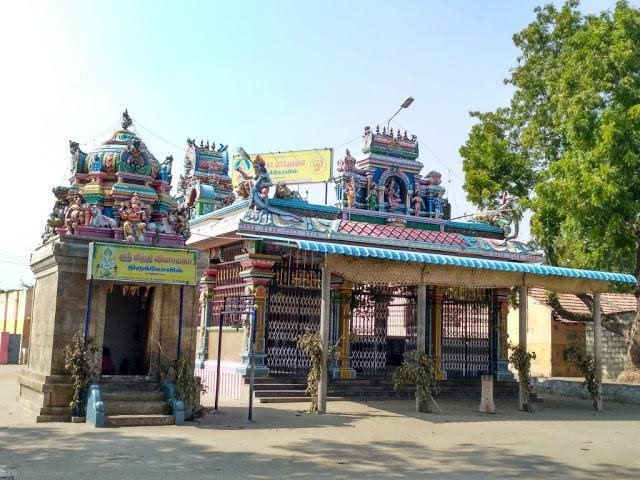
Nestled in the serene village of Karthigaipatti in the Trichy district, the Mariyamman Temple stands as a beacon of hope and healing for devotees across Tamil Nadu. While the official records may lack the specific century of construction, the spiritual energy permeating this sanctuary speaks volumes of its ancient roots. The temple is dedicated to Mariyamman, the deity primarily revered as the Goddess of Rain, Rainspouts, and Epidemic Control, often identified as a manifestation of Goddess Parvati or Durga.
Phalaśruti: The Spiritual Benefits
Devotees flock to this temple not merely for sightseeing, but for profound spiritual remedies. According to local tradition, offering prayers here aids in:
- Protection from Epidemics: Historically invoked to ward off diseases like smallpox and cholera; today, it is revered for general health and immunity.
- Rainfall and Agriculture: As the “Rain Goddess,” prayers here are believed to ensure timely monsoons, vital for the agrarian communities of the Cauvery delta.
- Cleansing Ancestral Karma: Performing specific abhishekams is believed to alleviate pitru dosha (ancestral faults) and bring peace to departed souls.
- Mental Peace: The tranquil location near Thottiyam offers a respite from urban chaos, aiding in meditation and mental clarity.
Historical Origins & Scriptural Legend
While the precise date of construction is not stamped in stone records, the temple’s architecture and the oral traditions suggest a legacy spanning centuries, likely established during the Vijayanagara or Nayak period when village temples were fortified and flourished. The temple has undergone renovations to maintain its structural integrity and sanctity.
The Sthala Purana: The Legend of Mariyamman
According to temple records and local folklore, Mariyamman is the village deity (Kuladevata) protecting the people of Karthigaipatti. Tradition holds that the Goddess appeared here in the form of a powerful force to subdue evil spirits and diseases plaguing the region. In Tamil folklore, “Mari” refers to rain (Megham), and the Goddess is often depicted with stones representing the seeds of rain. She is the benevolent mother who listens to the cries of the poor and grants their wishes through timely rains and protection from drought or disease.
Architectural Marvels
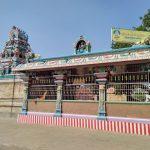
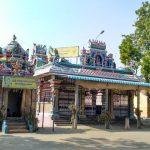
The Mariyamman Temple at Karthigaipatti showcases the classic Dravidian Architecture style, characterized by its high enclosing walls and pyramidal towers.
Sanctum and Mandapas
The Garbhagriha (inner sanctum) houses the main deity of Mariyamman. Unlike some large metropolitan temples, village temples like this maintain an intimate connection with the devotee. The Mandapa (hall) features sturdy stone pillars adorned with carvings of deities and floral motifs typical of Tamil temple art. The Shikhara (tower) above the sanctum, while modest compared to the massive towers of Trichy’s Rock Fort, is distinct and painted in vibrant colors, drawing the eye upward in prayer.
Vastu Shastra Elements
The temple layout adheres to ancient Vastu principles, ensuring that the energy flows from the entrance to the inner sanctum without obstruction. The presence of a Yantra or sacred geometric diagram at the base of the idol is a focal point for Tantric rituals performed by the priests.
Darshan & Ritual Logistics
Planning your visit requires an understanding of the daily rituals and festival schedules. As we look toward 2026, here are the estimated timings and key events. Please note: Temple timings may vary slightly during festival seasons.
Daily Timings
| Session | Timings |
|---|---|
| Morning Darshan | 6:00 AM – 12:00 PM |
| Midday Break | 12:00 PM – 4:00 PM |
| Evening Darshan | 4:00 PM – 8:30 PM |
| Special Note | Timings extended during Amavasya/New Moon & Festivals. |
Key Sevas & Online Booking
Devotees can participate in various rituals to seek blessings:
- Abhishekam: Ritual bathing of the deity with water, milk, honey, and sandalwood. Performed on Tuesdays and Fridays.
- Archana: Recitation of the Goddess’s names (e.g., Mariamman Potri). Can be performed daily.
- Homam/Havan: Fire rituals performed for specific wishes or removal of obstacles.
While traditional booking is done at the temple counter, the Tamil Nadu HR&CE department is expanding digital services. By 2026, devotees are encouraged to check the official ttdconline.com or the relevant HR&CE portal for “Online Seva Booking” at village temples like Karthigaipatti.
2026 Festival Dates (Major)
- Chithirai Thiruvizha (April 2026): The annual temple festival, spanning 10 days, culminating in the Ther Thiruvizha (Car Festival).
- Aadi Perukku (July/August 2026): Special prayers offered to the Rain Goddess for a bountiful monsoon.
- Deepavali (Oct/Nov 2026): Special oil abhishekam for health and protection.
- Pongal (Jan 2026): Harvest festival celebrations with pongal offerings to the deity.
Practical Visitor Guidance
To ensure a respectful and smooth darshan experience, adhere to the following guidelines:
Dress Code & Etiquette
Visitors must dress modestly. Men should wear dhotis or trousers with a shirt; women should wear sarees, salwar kameez, or long skirts. Avoid shorts and sleeveless tops.
Photography & Electronics
Photography is strictly prohibited inside the inner sanctum. Mobile phones should be silenced or kept in lockers if available at the entrance. Flash photography is not allowed as it disturbs the sanctity of the rituals.
Crowd Management & Seasonal Advice
- Best Hours: The early morning (6:30 AM – 7:30 AM) is the most peaceful time for darshan.
- Peak Seasons: Avoid weekends and public holidays if you prefer a less crowded experience.
- Seasonal Tip: During the summer months (April–June), carry a water bottle and a hand fan, as the lines can be exposed to the sun. In the monsoon season (Aadi months), carry an umbrella.
- Accessibility: The temple premise is ground level, making it accessible for most. However, the sanctum has a small step; assistance is available for elderly visitors.
Pilgrimage Connectivity
How to Reach Mariyamman Temple, Karthigaipatti
The temple is strategically located near Thottiyam in the Trichy district.
- By Air: The nearest airport is Trichy International Airport (TRZ), approximately 65 km away. Taxis and cabs are available directly to Karthigaipatti.
- By Rail: The closest railway junction is Kulithalai Railway Station (approx. 20 km). Alternatively, Trichy Junction is about 60 km away.
- By Road: The temple is easily accessible via the SH 9 (Trichy – Kulithalai Road). It is located about 2.5 km from Thottiyam and 3 km from the Thottiyam Bus Stand. Private autos and share autos are readily available from Thottiyam.
Nearby Sacred Sites (Pilgrimage Circuit)
Expand your spiritual journey by visiting these nearby destinations:
- Mahadevar Temple, Thottiyam (3 km): An ancient temple dedicated to Lord Shiva, located close to the banks of the Kaveri river.
- Kulithalai Pasupatheeswarar Temple (20 km): A historic rock-cut temple dedicated to Lord Shiva, known for its inscriptions and scenic river views.
- Samayapuram Mariamman Temple (45 km): One of the most famous Mariamman temples in Tamil Nadu, located on the Trichy-Salem highway.
Frequently Asked Questions (FAQ)
1. Is there a VIP Darshan entry at Karthigaipatti Mariyamman Temple?
Unlike large state-run temples, this village temple focuses on community darshan. However, donations can be made to the temple office for priority entry during peak festival times. It is best to check with the temple executive officer upon arrival.
2. What is the significance of the stones in Mariamman’s hair?
In traditional iconography, Mariamman is depicted with stones or seeds embedded in her hair. These represent the seeds of rain (clouds) and the agricultural cycle. Devotees believe this form symbolizes her power to control the monsoon and ensure prosperity.
3. Are non-Hindus allowed inside the temple?
Generally, entry is restricted to those who follow the Hindu faith and believe in the sanctity of the rituals. However, policies can vary; it is recommended to contact the temple administration for specific rules regarding foreign tourists or non-Hindus.
4. Is there accommodation available near the temple?
Basic lodges and guest houses are available in Thottiyam (3 km). For more comfortable stays with AC and modern amenities, Trichy or Kulithalai (20 km) offer numerous hotels and budget stays.
5. How do I perform an Abhishekam remotely?
Many temples now offer the facility for devotees to book abhishekams online via the Tamil Nadu HR&CE website. You can select the date and seva type, and the priests will perform the ritual on your behalf. You will receive a notification and prasadam details.
Recent Posts

Shri Kaamkoteeshwar Mandir, Varanasi – History & Significance
In the heart of Kashi, the eternal city of Lord Shiva, where the Ganges flows with celestial grace, stands the Shri Kaamkoteeshwar Mandir. This sacred Sannidhi is not merely a temple but a profound spiritual bridge between the Northern…

ओ सांवरे तूने ही मुझको संभाला – Lyrics & Meaning
ओ सांवरे तूने ही मुझको संभाला – A Prayer to Shyam Origin & Spiritual Essence Why This Bhajan Resonates Devotees chant this when overwhelmed by life’s storms—the refrain ‘तूने ही मुझको संभाला’ is the soul’s sigh of relief: “You…

कथा ये है महाराज मेरे की – Lyrics & Meaning
कथा ये है महाराज मेरे की छत्रपति संभाजी महाराज – A Prayer to Chhatrapati Sambhaji Maharaj Origin & Spiritual Essence Why This Bhajan Resonates Devotees chant this when their spirit feels tested—its powerful refrain “महाराज मेरे” is a soul’s…

Rigveda Samhita Yathartha Anuvada (ऋग्वेद संहिता यथार्थ अनुवाद) – Complete Set with Anvayartha & Hindi/English Translation
The Rigveda is the oldest surviving scripture of humanity and the foundational text of Sanātana Dharma. For serious students, scholars, UPSC aspirants studying ancient Indian history, Sanskrit learners, and spiritual seekers, a precise and grammatically structured translation is indispensable.…

आना भी अकेला है जाना भी अकेला है – Lyrics & Meaning | BharatTemples
आना भी अकेला है जाना भी अकेला है – A Prayer to the Divine Witness Origin & Spiritual Essence Why This Bhajan Resonates Devotees turn to this bhajan in moments of deep reflection—when life’s attachments begin to ache. The…

माता शेरावाली के द्वार जो भी जाता है – Lyrics & Meaning
माता शेरावाली के द्वार जो भी जाता है – A Prayer to Maa Sherawali Origin & Spiritual Essence Why This Bhajan Resonates Devotees turn to this bhajan in times of fear or uncertainty—its promise that no one leaves Maa’s…

मार लेना सपणी उबार लेणा भवरा – Lyrics & Meaning
मार लेना सपणी उबार लेणा भवरा – A Prayer to the Divine Beloved Origin & Spiritual Essence Why This Bhajan Resonates Devotees chant this in moments of deep vulnerability—its cry of “मार लेना सपणी, उबार लेणा भवरा” is the…

हमें श्याम सुंदर भरोसा तुम्हारा – Lyrics & Meaning
हमें श्याम सुंदर भरोसा तुम्हारा – A Prayer to Shyam Sundar Origin & Spiritual Essence Why This Bhajan Resonates Devotees chant this when feeling alone—its refrain ‘de do sahara’ is the soul’s cry for divine support. Lyrics in Hindi…

Mere Satguru Ne Di Thi Davai Lyrics in Hindi & Meaning
Mere Satguru Ne Di Thi Davai: Invoking the Guru’s Liberating Wisdom This soul-stirring bhajan venerates the Satguru (True Spiritual Master) as the divine physician who dispenses the only remedy for life’s deepest sufferings. Composed by Sant Karmaveer Tufani, it…

Janm Diyo Thari Maa Dukh Dekhiyo Lyrics in Hindi & Meaning
जन्म दियो थारी माँ दुख देखियो (Maa’s Grief Upon Birthing You) This soul-stirring Chetavani Bhajan (admonitory hymn) is addressed to the Divine Mother (Maa) – a call for repentance when children forget their filial duties in the dark age…