
Contents
Introduction & Spiritual Essence
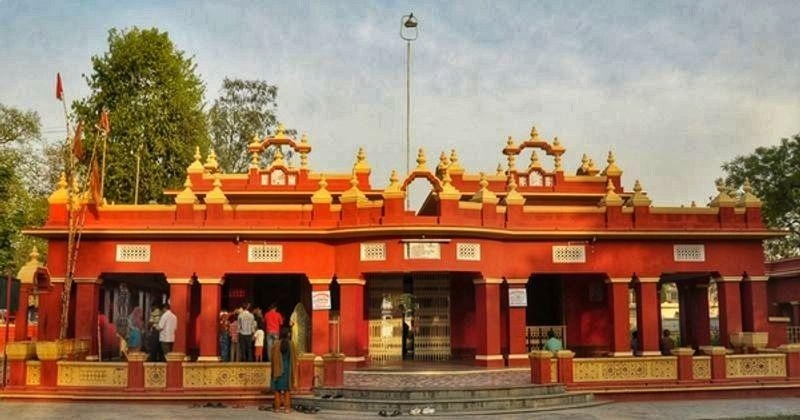
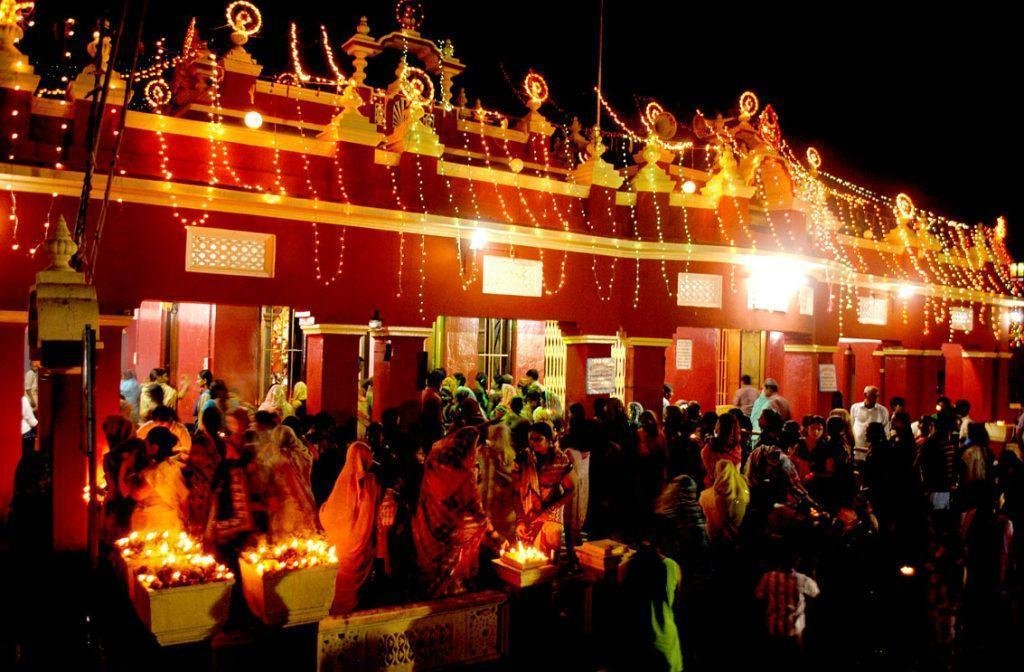
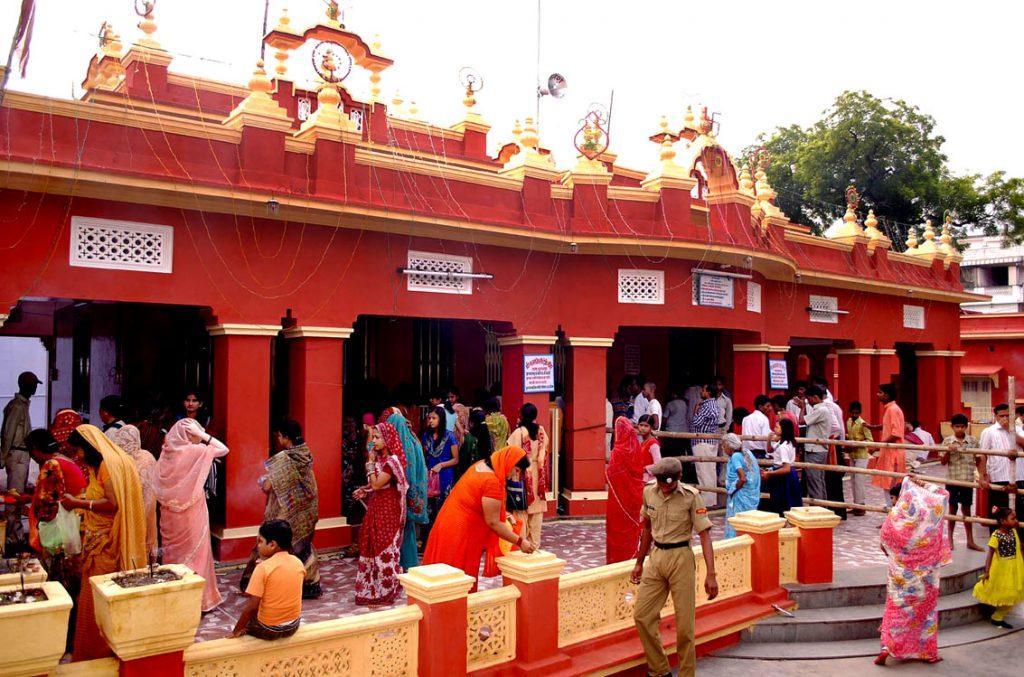
The Mata Temple in Muzaffarpur, officially known as the Maa Raj Rajeshwari Devi Temple, stands as a profound Shakti Sthal in the heart of Bihar. Much like the revered Kamakhya Temple in Assam, this shrine is dedicated to the mystical cycles of creation and the raw power of the Divine Feminine. It is not merely a site of worship but a living embodiment of nature’s rhythms, deeply respected by devotees across India.
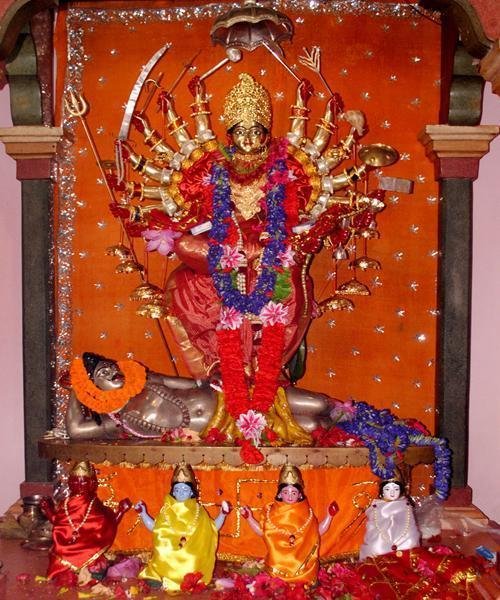
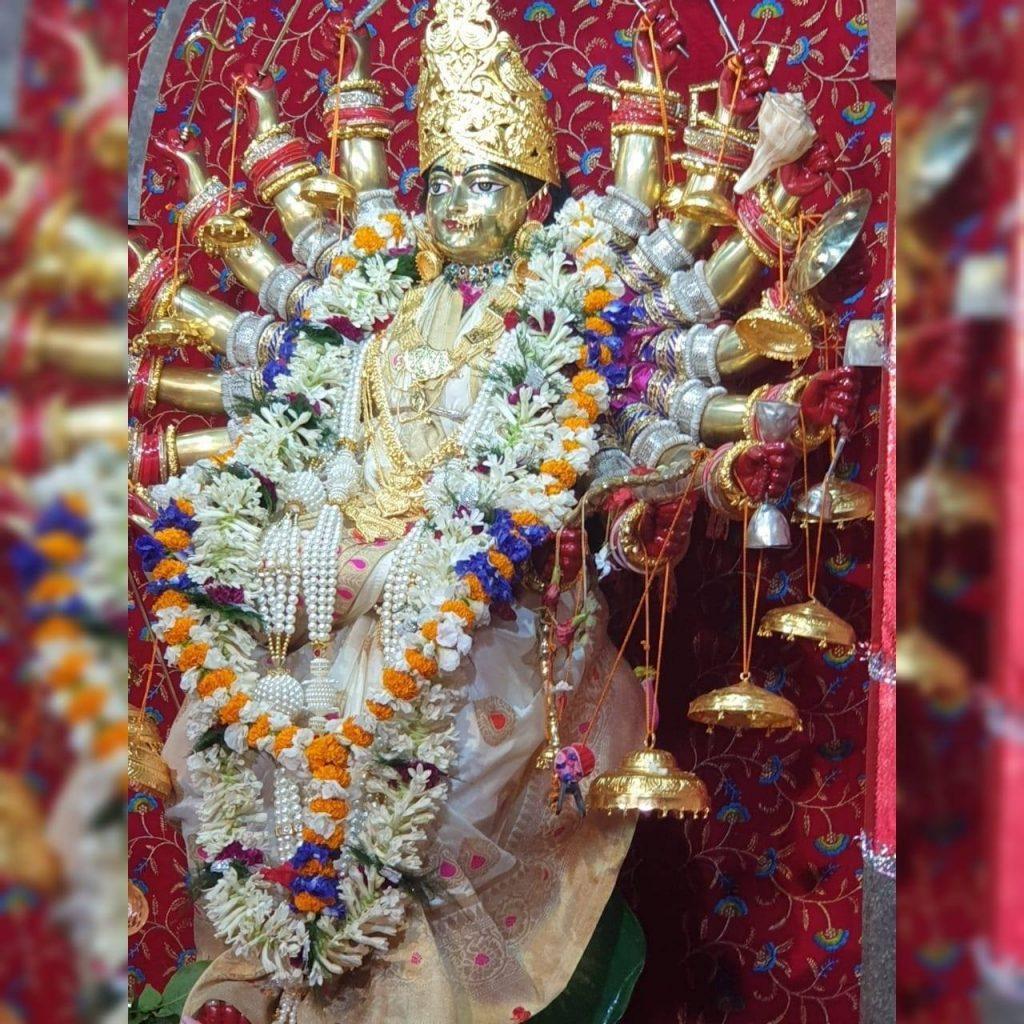
The primary deity here is Shodashi Maheshwari, a form of the Goddess described in the Agam Shastra. She represents the fourth of the ten Mahavidyas (Great Wisdom Goddesses). Devotees flock to this temple not only for general blessings but specifically for the fulfillment of wishes (Manokamna Siddhi) and the purification of ancestral karma. The temple’s unique spiritual signature lies in its strict adherence to traditional Tantric practices, where the Goddess is worshipped in her truest, unmanifested form.
The Mata Temple in the Muzaffarpur district in Bihar is another temple where men are not allowed entry during certain days in the year. It is the time when the Mata has her periods. Only women are allowed inside with the Temple out-of-bounds, even for male priests during this time.
A Shakti Sthal, much like the Kamakhya Temple in Assam, prohibits men from entering the temple premises during the time when the Goddess is believed to be menstruating. Mata Temple in Muzaffarpur, Bihar only permits women during the time of “periods”.
During this time, the temple management also allows only women to enter the premises. The rules are so strictly followed that during this auspicious time even a male priest is not allowed to enter the temple premises, and it becomes ‘women only’.
Historical Origins & Scriptural Legend
The Founder: Bachcha Babu
According to temple records, the shrine was established in the mid-20th century by Uma Shankar Prasad, affectionately known as Bachcha Babu. The origins of the temple are rooted in a deep personal devotion and a miraculous tale of parenthood. Legend holds that Bachcha Babu had five daughters and longed for a son. He was advised to seek the blessings of Mata to fulfill his wishes.
Following the instructions of the scholar Pandit Nirsan Mishra, the temple was consecrated on June 28, 1941 (Ashadh Shukla Paksha Tritiya Tithi). Miraculously, Bachcha Babu was blessed with a son, Ratna, shortly after the temple’s construction. This event cemented the local belief in the temple’s power to grant boons.
Theological Significance: Shodashi Maheshwari
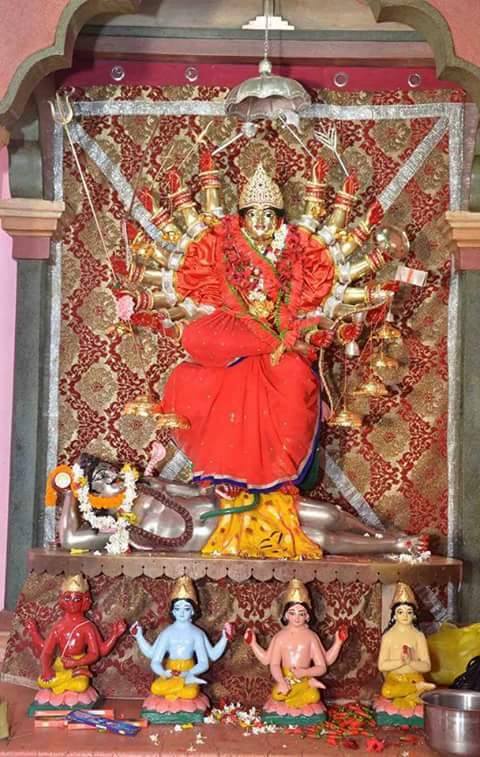
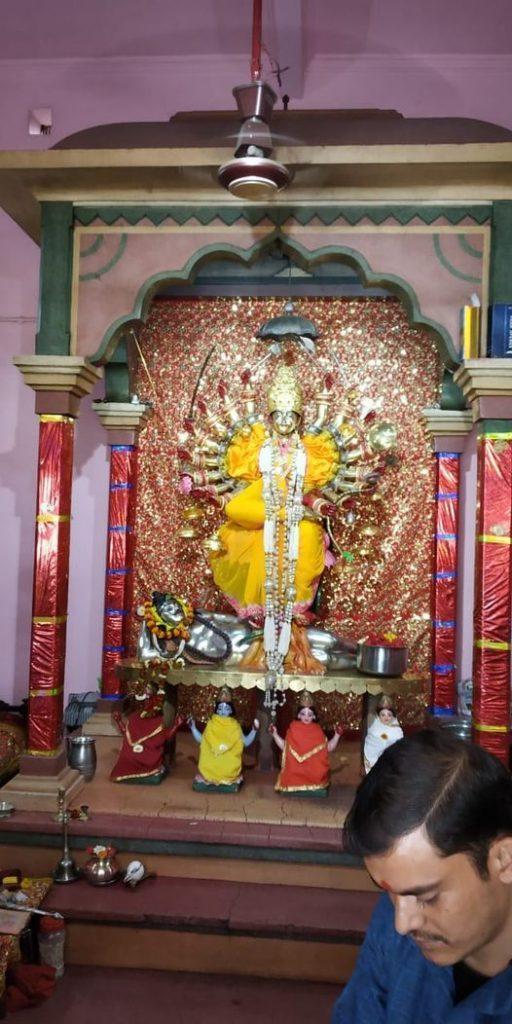
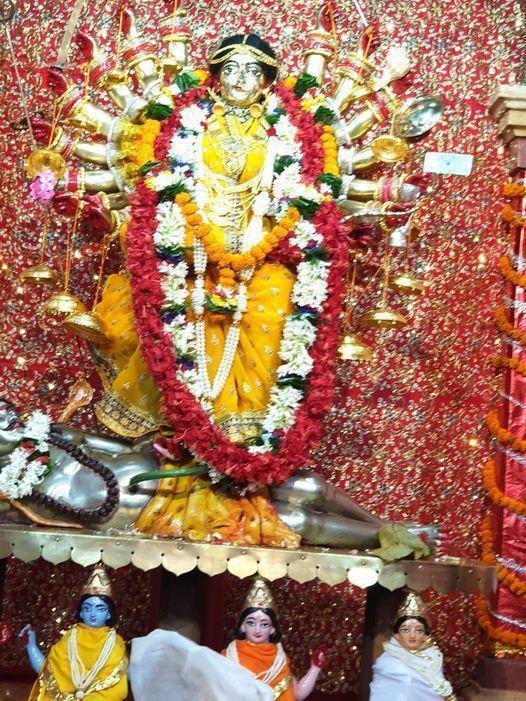
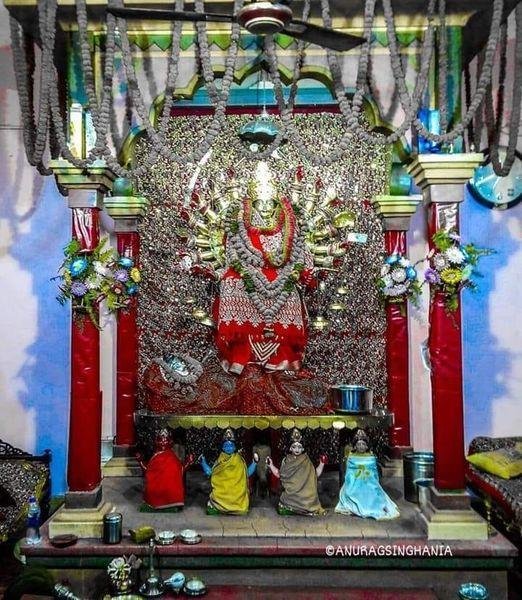
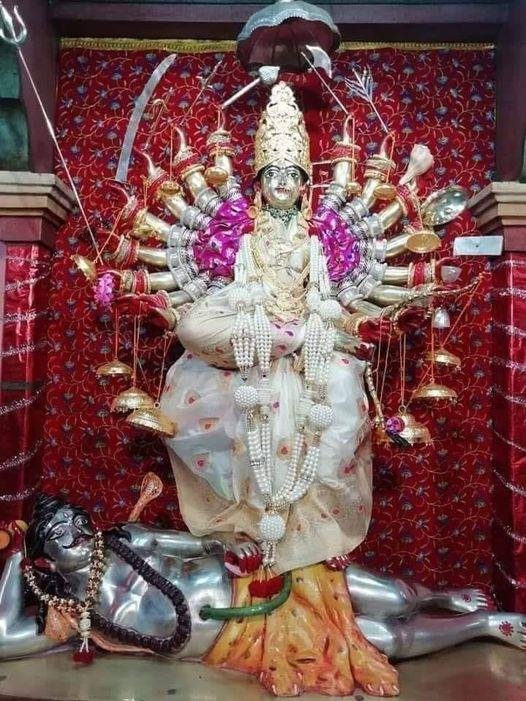
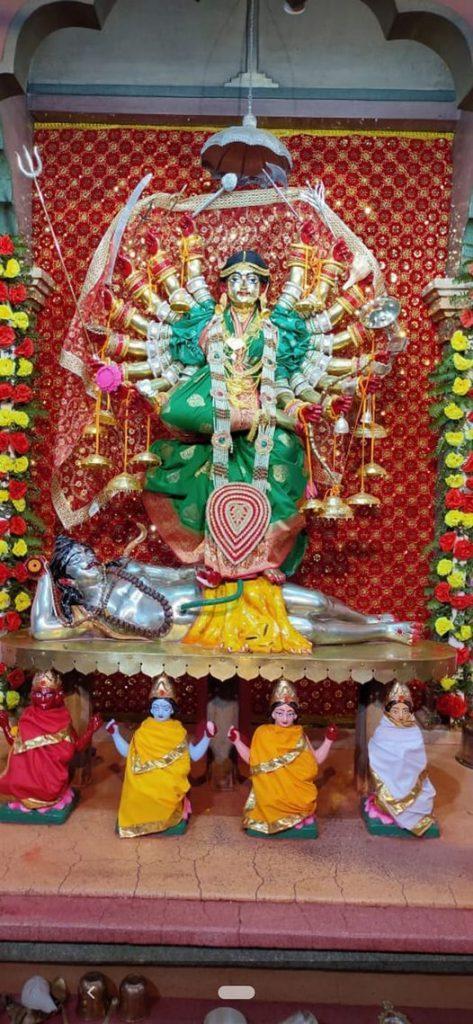
The deity enshrined here is not a standard stone murti but a mystical representation of Shodashi Maheshwari. In the Agam Shastra, she is described as having sixteen arms and two eyes (Shodasha = Sixteen). She is the Shodashi who sits on a lotus seat emerging from the navel of Lord Mahadev (Shiva), who lies in a calm, cosmic slumber.
Tradition holds that the energies of the temple are arranged vertically in the sanctum: Brahma, Vishnu, Rudra, and Ishvara are situated at the bottom, while Mahadev lies above them, acting as the base from which the lotus of creation—and the Goddess atop it—manifests.
Architectural Marvels
Design and Layout
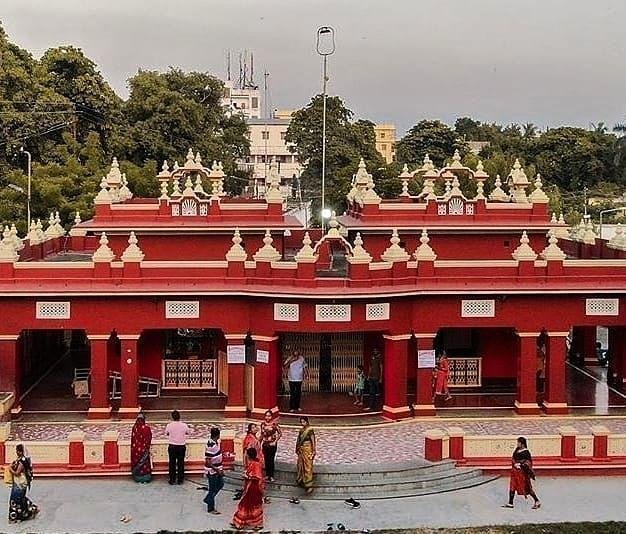
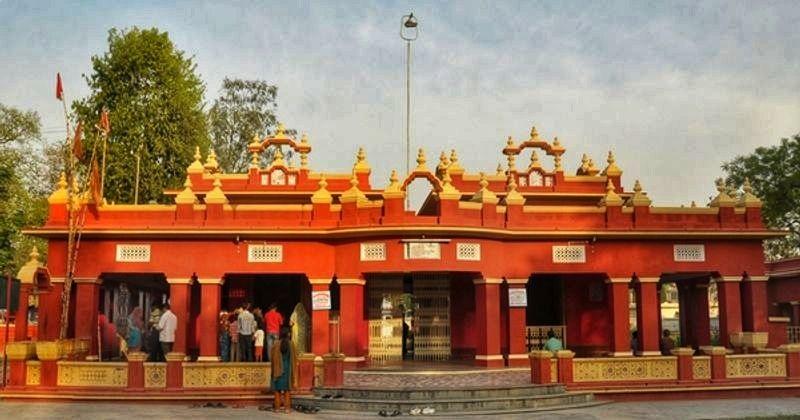
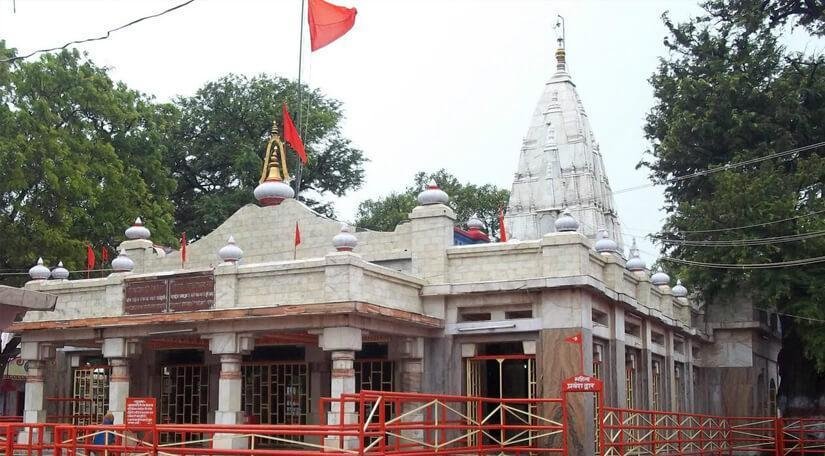
While the temple follows a traditional North Indian (Nagara) style of architecture, its layout is specifically designed to accommodate the unique ritualistic requirements of a Shakti Sthal. The structure is built to facilitate the circumambulation (Pradakshina) of the sanctum, allowing devotees to honor the surrounding deities.
The Sanctum Sanctorum
The inner sanctum (Garbhagriha) is relatively compact, focusing the energy on the central deity. The architectural focus is on the verticality of the energy transfer—from the lying form of Shiva to the seated, active form of the Goddess. The walls feature intricate carvings depicting scenes from the Mahavidyas and the legend of Maharishi Durvasha, who is said to have worshipped Shri Shodashi Mata here.
The temple is situated in a residential area of Ramna, Muzaffarpur, giving it a distinct community feel rather than a massive, commercial complex.
Darshan & Ritual Logistics
Daily Temple Timings (2026 Schedule)
The temple operates on a schedule that aligns with the traditional Pratah Kaal (Morning) and Sandhya Kaal (Evening).
| Session | Timing | Activity |
|---|---|---|
| Morning | 06:00 AM – 11:00 AM | General Darshan |
| Evening | 04:30 PM – 10:00 PM | General Darshan |
| Aarti | 06:30 AM & 09:00 PM | Mangala & Sandhya Aarti |
Key Sevas and Online Booking
While the temple is smaller compared to major shrines, devotees can participate in several Sevas. In 2026, the temple management is expected to continue its focus on community offerings.
- Abhishekam: Ritual bathing of the deity (usually performed by authorized priests).
- Archana: Recitation of the 108 names of Shodashi Maheshwari.
- Bhog/Naivedyam: Offering of sweets and fruits.
Note on Online Booking: As of 2026, the Mata Temple Muzaffarpur primarily operates through direct donation and on-site arrangements. While the temple does not have a dedicated app for Seva, devotees often coordinate specific pujas via phone or through the temple management’s contact details provided below.
Festivals in 2026
The temple is most vibrant during the Navratris. In 2026, the following auspicious periods are observed:
- Chaitra Navratri (Vasantiya): March 30 – April 7, 2026 (Vasanta Panchami).
- Ashwin Navratri (Sharadiya): September 22 – October 1, 2026 (Durga Ashtami).
- Maghi Gupta Navratri: January (Paush/Shravan month).
- Ashadh Gupta Navratri: June/July (Monsoon season).
Practical Visitor Guidance
Rules and Regulations
Strict adherence to tradition is the hallmark of this temple:
- Women-Only Periods: Similar to Kamakhya, there are specific days (usually 3-4 days per month) when the temple is closed to the public and only women are allowed inside for cleaning and rituals. This is treated with the utmost sanctity.
- Dress Code: Traditional Indian attire is recommended (Saree, Salwar Kameez, or Kurta-Pajama for men). Avoid western clothing like shorts or sleeveless tops.
- Photography: Generally allowed in the outer courtyard but restricted inside the sanctum sanctorum.
- Electronic Devices: Mobile phones are permitted but should be kept on silent mode. There are no formal locker facilities, so please travel light.
Crowd Management & Best Time to Visit
While the temple is active daily, it sees maximum crowds during the Shardiya Navratri and Chaitra Navratri.
- Best Time: Early morning (6:00 AM) offers the most serene Darshan.
- Seasonal Advice: Muzaffarpur can get extremely hot in May and June. Carry a water bottle and a handkerchief. Monsoons (July-September) can be humid; light rain gear is advisable.
- Accessibility: The temple is in a residential lane, so large vehicles cannot enter directly. It is accessible via paved pathways, but wheelchair access might require assistance due to steps at the entrance.
Pilgrimage Connectivity
How to Reach
From Muzaffarpur Railway Station: Approx 2 Kms (Can be reached by rickshaw, auto or own car)
From Ramdayalu Bus Stand: Approx 3 Kms (Can be reached by rickshaw, auto or own car)
From Bhagwanpur Bus Stand: Approx 4 Kms (Can be reached by rickshaw, auto or own car)
Nearby Sacred Sites (Pilgrimage Circuit)
Make your visit a holistic journey by visiting these nearby spiritual sites:
- Kali Mata Temple (Chaturbhuj Sthan): Located in the heart of Muzaffarpur, this is one of the oldest and most revered temples in the city, approximately 4 km away.
- Garib Nath Temple (Bari Durgaji): A historic temple dedicated to Lord Shiva, known for its grand Shivratri celebrations, just 3 km from the station.
- Sita Kund (Bari Sita Kund): Located in Kurthoul (approx 12 km away), this archaeological site is believed to be where Goddess Sita stayed during her exile.
Frequently Asked Questions (FAQ)
1. Is there a VIP darshan entry at Mata Temple?
No. As a community-managed temple, there is no formal VIP ticket system. Darshan is open to all, though priority is given to those who have booked specific Sevas (pujas) in advance.
Yes, generally men are allowed entry during Navratri. However, strict restrictions apply during the specific days the Goddess is believed to be menstruating (often coinciding with the beginning of the cycle). It is advisable to call the temple office before visiting if you are traveling from a long distance.
3. Is the temple open for 24 hours?
No, the temple follows specific timings: Morning 6:00 AM to 11:00 AM and Evening 4:30 PM to 10:00 PM.
4. What is the significance of Shodashi Maheshwari?
Shodashi is a manifestation of the Goddess Devi who is as youthful and beautiful as a sixteen-year-old. She represents the full bloom of beauty and power, sitting on the lotus that arises from the navel of the sleeping Shiva.
5. How can I contact the temple management?
For inquiries regarding Seva or specific festival timings, you can contact the temple administration at the number provided in the contact details section.
Address:
Maa Raj Rajeshwari Devi Temple
Uma Shankar Prasad Lane
Ramna, District – Muzaffarpur
Bihar, Pin Code – 842001
Contact Details:
Tel: 9304320970
Recent Posts

Shri Kaamkoteeshwar Mandir, Varanasi – History & Significance
In the heart of Kashi, the eternal city of Lord Shiva, where the Ganges flows with celestial grace, stands the Shri Kaamkoteeshwar Mandir. This sacred Sannidhi is not merely a temple but a profound spiritual bridge between the Northern…

ओ सांवरे तूने ही मुझको संभाला – Lyrics & Meaning
ओ सांवरे तूने ही मुझको संभाला – A Prayer to Shyam Origin & Spiritual Essence Why This Bhajan Resonates Devotees chant this when overwhelmed by life’s storms—the refrain ‘तूने ही मुझको संभाला’ is the soul’s sigh of relief: “You…

कथा ये है महाराज मेरे की – Lyrics & Meaning
कथा ये है महाराज मेरे की छत्रपति संभाजी महाराज – A Prayer to Chhatrapati Sambhaji Maharaj Origin & Spiritual Essence Why This Bhajan Resonates Devotees chant this when their spirit feels tested—its powerful refrain “महाराज मेरे” is a soul’s…

Rigveda Samhita Yathartha Anuvada (ऋग्वेद संहिता यथार्थ अनुवाद) – Complete Set with Anvayartha & Hindi/English Translation
The Rigveda is the oldest surviving scripture of humanity and the foundational text of Sanātana Dharma. For serious students, scholars, UPSC aspirants studying ancient Indian history, Sanskrit learners, and spiritual seekers, a precise and grammatically structured translation is indispensable.…

आना भी अकेला है जाना भी अकेला है – Lyrics & Meaning | BharatTemples
आना भी अकेला है जाना भी अकेला है – A Prayer to the Divine Witness Origin & Spiritual Essence Why This Bhajan Resonates Devotees turn to this bhajan in moments of deep reflection—when life’s attachments begin to ache. The…

माता शेरावाली के द्वार जो भी जाता है – Lyrics & Meaning
माता शेरावाली के द्वार जो भी जाता है – A Prayer to Maa Sherawali Origin & Spiritual Essence Why This Bhajan Resonates Devotees turn to this bhajan in times of fear or uncertainty—its promise that no one leaves Maa’s…

मार लेना सपणी उबार लेणा भवरा – Lyrics & Meaning
मार लेना सपणी उबार लेणा भवरा – A Prayer to the Divine Beloved Origin & Spiritual Essence Why This Bhajan Resonates Devotees chant this in moments of deep vulnerability—its cry of “मार लेना सपणी, उबार लेणा भवरा” is the…

हमें श्याम सुंदर भरोसा तुम्हारा – Lyrics & Meaning
हमें श्याम सुंदर भरोसा तुम्हारा – A Prayer to Shyam Sundar Origin & Spiritual Essence Why This Bhajan Resonates Devotees chant this when feeling alone—its refrain ‘de do sahara’ is the soul’s cry for divine support. Lyrics in Hindi…

Mere Satguru Ne Di Thi Davai Lyrics in Hindi & Meaning
Mere Satguru Ne Di Thi Davai: Invoking the Guru’s Liberating Wisdom This soul-stirring bhajan venerates the Satguru (True Spiritual Master) as the divine physician who dispenses the only remedy for life’s deepest sufferings. Composed by Sant Karmaveer Tufani, it…

Janm Diyo Thari Maa Dukh Dekhiyo Lyrics in Hindi & Meaning
जन्म दियो थारी माँ दुख देखियो (Maa’s Grief Upon Birthing You) This soul-stirring Chetavani Bhajan (admonitory hymn) is addressed to the Divine Mother (Maa) – a call for repentance when children forget their filial duties in the dark age…