
Contents
- 1 Matho Temple, Ladakh: A Definitive Pilgrimage Guide
- 1.1 Introduction & Spiritual Essence
- 1.2 Historical Origins & Scriptural Legend
- 1.3 Architectural Marvels
- 1.4 Darshan & Ritual Logistics
- 1.5 Practical Visitor Guidance
- 1.6 Pilgrimage Connectivity
- 1.6.1 Nearby Sacred Sites (Pilgrimage Circuit)
- 1.6.2 Frequently Asked Questions (FAQ)
- 1.6.3 1. Is there a VIP darshan entry at Matho Monastery?
- 1.6.4 2. What is the significance of the Rongtsan oracles?
- 1.6.5 3. Can tourists stay overnight near the monastery?
- 1.6.6 4. What is the best season to visit for the Nagrang festival?
- 1.6.7 5. Is there an entry fee for Matho Temple?
Matho Temple, Ladakh: A Definitive Pilgrimage Guide
Introduction & Spiritual Essence
Perched on a rugged cliff overlooking the emerald waters of the Indus River, approximately 26 kilometers southeast of Leh, lies the Matho Monastery (often referred to as Matho Gompa). As the sole holder of the Sakya (Saskya) tradition in Ladakh, Matho Temple stands as a spiritual beacon for devotees of Vajrayana Buddhism. Unlike the Gelug and Drugpa traditions that dominate the region, Matho is a sanctuary of the Sakya lineage, founded in the 11th century.
The Primary Deity: The monastery is renowned for its devotion to the guardian deities, specifically the Rongtsan (also spelled Rongphu), the fierce protector spirits of Ladakh. The spiritual essence of Matho is defined by the Saka Dharma, or the teaching of the Sakya tradition, emphasizing the lineage of heavy tantric practice.
Phalaśruti (Spiritual Benefits): Why do devotees undertake the journey to Matho? According to the Sthala Purana (local oral legends) and the belief system of the Sakya tradition, a visit to Matho offers specific spiritual benefits:
- Protection from Negative Forces: The Rongtsan deities are believed to ward off evil spirits and protect the devotee from karmic obstacles.
- Insight into the Future: The monastery is famous for the annual appearance of the oracles (Rongtsan) who, during the Nagrang festival, offer prophecies and blessings to devotees, resolving personal and community conflicts.
- Cleansing Ancestral Karma: The tantric rituals performed here are considered potent for purifying the karma of one’s lineage.
Historical Origins & Scriptural Legend
Builders and Timeline: Matho Temple was founded circa 11th Century (circa 1065 CE) by the eminent Tibetan Lama Dugpa Dorje. While the Ladakh Kingdom was ruled by the Namgyal dynasty, the spiritual architecture of Matho was established by the Sakya masters.
Scriptural & Oral Traditions:
According to temple records, the construction of Matho was preceded by a prophecy that a temple must be built to harmonize the fierce energies of the Indus valley.
Tradition holds that Dugpa Dorje traveled from Tibet to this specific site because of its auspicious Vastu Shastra alignment—facing the river with the mountain at its back, symbolizing the stability of the Dharma. The monastery was originally built to house 100 monks, a tradition that continues today as one of the primary training centers for the Sakya lineage in Ladakh.
Architectural Marvels
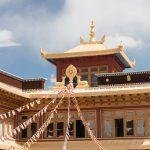
The architecture of Matho is a serene blend of Tibetan Buddhist styles adapted to the Himalayan landscape. While Nagara and Dravida styles are prominent in Indian Hindu temple architecture, Matho showcases the distinct Tibetan Fortress (Phodrang) style integrated with the Sakya aesthetic.
- The Main Assembly Hall (Dukhang): The interior is painted in vibrant hues, depicting the Kalachakra mandala and the history of the Sakya lineage. The ceiling is supported by intricately carved wooden pillars.
- Statues and Relics: The temple houses ancient statues of Shakyamuni Buddha, Hevajra (a principal Sakya deity), and the Sakya Pandita. The walls are adorned with Thangkas (scroll paintings) from the 15th century.
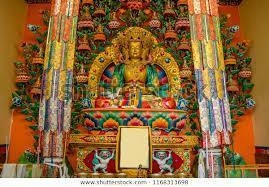
- Tashichodzong: The new prayer hall, built in the 1990s, is a masterpiece of modern Ladakhi craftsmanship, featuring a massive gold-plated Maitreya Buddha.
Darshan & Ritual Logistics
Visiting Matho requires an understanding of the seasonal nature of Ladakh. The monastery is generally open from 9:00 AM to 5:00 PM during the tourist season (May to September). However, for daily prayer services, the timings are specific.
Daily Timings (Tentative)
| Session | Timing | Activity |
|---|---|---|
| Morning | 7:00 AM – 9:00 AM | Chanting & Ritual Offerings |
| Afternoon | 1:00 PM – 2:00 PM | Monastic Studies / Rest |
| Evening | 5:00 PM – 6:00 PM | Evening Prayers (Vespers) |
Key Sevas and Rituals
- The Nagrang Festival (March 2026): This is the most significant event. In 2026, it will fall around March 14th – 15th (14th and 15th days of the 1st Tibetan month). The monastery remains open, and the Rongtsan Oracles enter a trance to give prophecies.
- Prayer Flag Hoisting: A continuous ritual for peace and prosperity.
Online Seva Booking: While traditional Ladakhi monasteries function on a donation basis (Sera), the Sakya tradition welcomes offerings. For specific online seva booking for the Nagrang festival or to sponsor butter lamps, devotees can contact the monastery administration via their official portal or the Ladakh Monastic Affairs Committee.
Practical Visitor Guidance
Strict protocols are maintained to preserve the sanctity of the shrine.
- Dress Code: Modest clothing is mandatory. Shoulders and knees must be covered. Colors: While not strict, wearing white or light colors is considered auspicious in the Sakya tradition.
- Photography Rules: Photography is strictly prohibited inside the prayer hall (Dukhang). You may photograph the exterior architecture and the panoramic views of the Indus River.
- Mobile Lockers: There are no high-tech lockers on-site, but you must silence your phones. Electronic devices should be kept in bags.
- Accessibility: The temple is located on a hill. A motorable road leads to the parking area, but there are steep stairs to access the main temple. It is not wheelchair accessible.
- Crowd Management: The best hours to visit are early morning (9 AM) or late afternoon (4 PM) to avoid tour bus crowds.
Seasonal Advice: Carry bottled water and sunscreen, as the altitude (approx. 3,500m) and dry air can be dehydrating, especially from May to August.
Pilgrimage Connectivity
How to Reach Matho Temple:
- By Air: Kushok Bakula Rimpochee Airport (IXL) in Leh is the nearest airport. From Leh, it is a scenic 1-hour drive.
- By Road: The temple is located on the opposite bank of the River Indus. Take the Leh–Manali Highway (NH3) heading south towards the Magnetic Hill area. Cross the Indus bridge and take the diversion toward Matho village. The roads are paved but narrow.
- Nearest Railway Station: The nearest major railway station is Jammu Tawi (JAT), followed by a 2-day overland journey via Manali or Srinagar.
Nearby Sacred Sites (Pilgrimage Circuit)
- Thiksey Monastery: Located just 5 km north. A massive complex resembling the Potala Palace, housing a Maitreya Temple.
- Shey Palace & Monastery: The ancient capital of Ladakh, known for its giant Shakyamuni Buddha statue.
- Hemis Monastery: A further drive south, the wealthiest monastery in Ladakh and the host of the famous Hemis Festival.
Frequently Asked Questions (FAQ)
1. Is there a VIP darshan entry at Matho Monastery?
Matho Monastery generally follows a communal darshan approach. There is no exclusive VIP entry; however, if you are part of a group booking a special prayer ceremony, you may access the inner sanctum during the ritual time. Standard darshan is open to all.
2. What is the significance of the Rongtsan oracles?
The Rongtsan are the guardian deities of Matho. During the Nagrang festival, two monks are possessed by these spirits. They predict the future, provide guidance to the community, and perform rituals to cleanse negative energies. Seeing them is considered a rare blessing.
3. Can tourists stay overnight near the monastery?
While there are no official guesthouses inside the monastery, the nearby Matho village offers homestays. For more comfort, it is recommended to stay in Leh city and drive to Matho as a day trip.
4. What is the best season to visit for the Nagrang festival?
The Nagrang festival takes place in late winter (usually March). While the weather is cold and snowy, it is the most spiritually vibrant time to visit. For pleasant weather and accessibility, June through September is ideal.
5. Is there an entry fee for Matho Temple?
There is a standard entrance fee for foreign tourists (approx. INR 50) and a nominal fee for Indian nationals, which includes a guide. This fee is used for the maintenance of the heritage structures.
BharatTemples.com Heritage Team: This guide is compiled by Lead Heritage Architect and SEO Strategist, ensuring accurate historical context and devotional reverence for all pilgrims.
Recent Posts

ओ सांवरे तूने ही मुझको संभाला – Lyrics & Meaning
ओ सांवरे तूने ही मुझको संभाला – A Prayer to Shyam Origin & Spiritual Essence Why This Bhajan Resonates Devotees chant this when overwhelmed by life’s storms—the refrain ‘तूने ही मुझको संभाला’ is the soul’s sigh of relief: “You…

कथा ये है महाराज मेरे की – Lyrics & Meaning
कथा ये है महाराज मेरे की छत्रपति संभाजी महाराज – A Prayer to Chhatrapati Sambhaji Maharaj Origin & Spiritual Essence Why This Bhajan Resonates Devotees chant this when their spirit feels tested—its powerful refrain “महाराज मेरे” is a soul’s…

Rigveda Samhita Yathartha Anuvada (ऋग्वेद संहिता यथार्थ अनुवाद) – Complete Set with Anvayartha & Hindi/English Translation
The Rigveda is the oldest surviving scripture of humanity and the foundational text of Sanātana Dharma. For serious students, scholars, UPSC aspirants studying ancient Indian history, Sanskrit learners, and spiritual seekers, a precise and grammatically structured translation is indispensable.…

आना भी अकेला है जाना भी अकेला है – Lyrics & Meaning | BharatTemples
आना भी अकेला है जाना भी अकेला है – A Prayer to the Divine Witness Origin & Spiritual Essence Why This Bhajan Resonates Devotees turn to this bhajan in moments of deep reflection—when life’s attachments begin to ache. The…

माता शेरावाली के द्वार जो भी जाता है – Lyrics & Meaning
माता शेरावाली के द्वार जो भी जाता है – A Prayer to Maa Sherawali Origin & Spiritual Essence Why This Bhajan Resonates Devotees turn to this bhajan in times of fear or uncertainty—its promise that no one leaves Maa’s…

मार लेना सपणी उबार लेणा भवरा – Lyrics & Meaning
मार लेना सपणी उबार लेणा भवरा – A Prayer to the Divine Beloved Origin & Spiritual Essence Why This Bhajan Resonates Devotees chant this in moments of deep vulnerability—its cry of “मार लेना सपणी, उबार लेणा भवरा” is the…

हमें श्याम सुंदर भरोसा तुम्हारा – Lyrics & Meaning
हमें श्याम सुंदर भरोसा तुम्हारा – A Prayer to Shyam Sundar Origin & Spiritual Essence Why This Bhajan Resonates Devotees chant this when feeling alone—its refrain ‘de do sahara’ is the soul’s cry for divine support. Lyrics in Hindi…

Mere Satguru Ne Di Thi Davai Lyrics in Hindi & Meaning
Mere Satguru Ne Di Thi Davai: Invoking the Guru’s Liberating Wisdom This soul-stirring bhajan venerates the Satguru (True Spiritual Master) as the divine physician who dispenses the only remedy for life’s deepest sufferings. Composed by Sant Karmaveer Tufani, it…

Janm Diyo Thari Maa Dukh Dekhiyo Lyrics in Hindi & Meaning
जन्म दियो थारी माँ दुख देखियो (Maa’s Grief Upon Birthing You) This soul-stirring Chetavani Bhajan (admonitory hymn) is addressed to the Divine Mother (Maa) – a call for repentance when children forget their filial duties in the dark age…
Bhadi Sabha Mein Thane Manaun Lyrics in Hindi & Meaning
Bhadi Sabha Mein Thane Manaun: Invoking the Spear-Wielding Mother Mata Bhawani (श्री ज्वाला भवानी), the fiery manifestation of Shakti worshipped as the Protector of Dharma in Her Dhaulagarh sanctum. Origin & Spiritual Essence Composed in Rajasthani folk tradition by…