
Contents
Mehandipur Balaji Temple: A Definitive Pilgrimage Guide
Introduction & Spiritual Essence
In the heart of Rajasthan, amidst the arid landscape bordering the Dausa and Karauli districts, stands the Mehandipur Balaji Temple. This sacred sanctuary is dedicated to Lord Hanuman, revered here in his childhood form as Balaji. While Hanuman temples dot the Indian subcontinent, Mehandipur holds a unique distinction: it is widely regarded as a potent center for spiritual cleansing and the exorcism of negative energies.
The primary deity, Shri Balaji Maharaj, is a Swayambhu (self-manifested) idol. Unlike constructed murtis, this form is believed to have emerged from the earth, radiating immense spiritual power. The temple is not merely a place of worship but a refuge for devotees known as Sankatwalas—those suffering from distress, affliction, or perceived possession by evil spirits.
Historical Origins & Scriptural Legend
The Discovery of the Divine Idol
According to temple records and oral tradition (Stthala Purana), the temple’s origins trace back to the 11th century. The idol was discovered by a local milkman, Rai Ji Pardhan, who noticed that the milk he offered to a particular stone on a hill near the old village was always emptied overnight.
One night, he hid and witnessed a divine serpent drinking the milk. The next day, he confided in the village elders. Upon digging the spot, they unearthed the self-manifested idols of Balaji Maharaj and Pret Raj (King of Spirits). It is said that Lord Hanuman appeared in a dream to the villagers, instructing them to install the idols for the welfare of humanity and the protection of the world.
The Lineage of Mahants
The spiritual administration of the temple has been maintained by a lineage of Mahants. The first Mahant, Shri Ganeshpuriji Maharaj, established the rituals of the temple. The current Mahant, Shri Kishorpuriji Maharaj, strictly upholds these traditions, including the mandatory vegetarian diet within the temple precincts and the regular recitation of holy texts.
Architectural Marvels
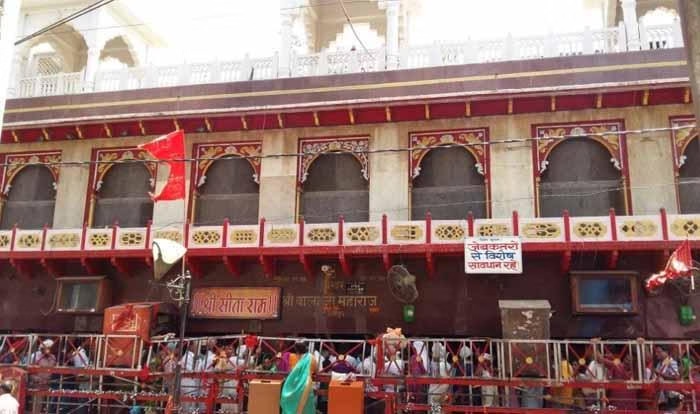
The Mehandipur Balaji Temple complex is a vibrant example of Nagara-style temple architecture, characterized by its beehive-shaped shikhara (tower) and intricate carvings. While the structure has been renovated over the centuries, the sanctity of the original layout remains preserved.
Key Structural Elements
- The Garbhagriha (Sanctum Sanctorum): Housing the black stone idol of Balaji Maharaj, the sanctum is the focal point of the complex. The atmosphere here is thick with devotion, especially during the Aarti times.
- Shri Siyaram Bhagavan Temple: Located in front of the main Balaji Mandir, this shrine is an architectural beauty in its own right, housing the idols of Lord Rama and Lakshmana.
- The Complex Layout: The temple is part of a larger complex that includes shrines for Anjani Mata, Kali Mata, Panchmukhi Hanuman, and Ganeshji. The design accommodates the movement of large crowds, with distinct pathways for entry and exit.
Darshan & Ritual Logistics
The rituals at Mehandipur are unique and strictly time-bound. The energy of the temple shifts throughout the day, dictated by the performance of specific sevas.
Daily Darshan Timings (2026 Schedule)
| Time Slot | Activity |
|---|---|
| 5:00 AM – 6:00 AM | Mangala (Morning Aarti) & Darshan Opens |
| 6:00 AM – 12:00 PM | Regular Darshan & Mid-day Rituals |
| 12:00 PM – 1:30 PM | Bhog & Rituals (Sanjhi Seva) |
| 1:30 PM – 4:30 PM | Afternoon Break (Gates Closed) |
| 4:30 PM – 7:30 PM | Evening Darshan & Bhog |
| 8:00 PM – 9:00 PM | Sandhya Aarti (Closing) |
Key Sevas & Rituals
Unlike standard temple offerings, Mehandipur utilizes specific rituals to combat distress:
- Arji: A written petition submitted to Balaji Maharaj requesting relief from suffering. The paper is wrapped in a specific cloth and placed before the deity.
- Sawamani: A continuous offering of sweets (specifically Boondi Ke Laddu) and food to the deity, performed for a specific duration (11, 21, or 41 days).
- Darkhast: A ritual performed to remove the “evil eye” or negative influences. It involves specific materials (kumkum, rice, camphor) and is performed by the temple priests.
Online Seva Booking & 2026 Festivals
To accommodate international devotees, the temple management has streamlined online booking for Sevas. As of 2026, the official portal allows for:
- Online Arji submission (Digital Prayer Petition).
- Booking Sawamani slots.
- Donations for Prasad distribution.
Major Festival Dates for 2026:
- Hanuman Jayanti: April 12, 2026 (Massive Akhand Ramayan Path and special Aarti).
- Diwali: October 21, 2026 (Special Deep Daan and Pret Raj Puja).
- Navratri: March 28 – April 5, 2026 & September 18 – September 26, 2026 (Daily Kali Mata Puja).









