
Contents
- 1 Introduction & Spiritual Essence of Mrityunjayeshwar
- 2 Historical Origins & Scriptural Legend
- 3 Architectural Marvels
- 4 Darshan & Ritual Logistics
- 5 Practical Visitor Guidance
- 6 Pilgrimage Connectivity
- 7 Photo Gallery
- 8 Frequently Asked Questions (FAQs)
- 8.1 1. Is there a VIP Darshan entry at Mrityunjayeshwar Temple?
- 8.2 2. What is the significance of the Kalodak Koop (Well) inside the temple?
- 8.3 3. Is Mrityunjay Mahadev the same as Mrityunjayeshwar?
- 8.4 4. Can we perform Rudrabhishek on behalf of someone?
- 8.5 5. What is the best route to reach the temple from Varanasi Junction?
- 9 Contact Details
Introduction & Spiritual Essence of Mrityunjayeshwar
In the spiritual fabric of Kashi (Varanasi), where the cycle of life and death is believed to dissolve into the eternal, stands the sacred Mrityunjayeshwar Mahadev Temple (also revered as Mrityunjay Mahadev). Located in the heart of Daranagar, Visheshwarganj, this ancient shrine is dedicated to Lord Shiva in his form as Mrityunjayeshwar—the Conqueror of Death.
Phalaśruti: Why Devotees Visit
The spiritual potency of this temple is rooted in the Kashi Khand of the Skanda Purana. Legend holds that Lord Shiva described the sacred Teerths (pools) and Koops (wells) of Kashi with great pleasure.
According to sacred tradition, the Swayambhu (self-manifested) Lingam here possesses immense power to ward off Akala Mrityu (untimely death). Devotees flock here specifically to seek relief from ancestral curses, prolonged illnesses, and life-threatening obstacles. The adjacent Kalodak Koop is believed to contain curative waters capable of curing chronic diseases, making this temple a unique center for spiritual and physical healing.
Historical Origins & Scriptural Legend
According to temple records and local folklore, the current structure of the temple dates back to the 18th Century. While the spiritual origins are scriptural—predating recorded history—the architectural heritage has been preserved through centuries of patronage by local feudal lords and devotees.
Scriptural Reference: In Kashi Khand, Chapter 97, Lord Shiva reveals the existence of this Lingam, explaining that it is also known as Apa Mrityu Hareshwar—the Lord who removes the fear of death. Tradition holds that the name “Mrityunjay” signifies a victory over the cycle of mortality, offering devotees longevity and peace.
Architectural Marvels
The temple showcases a distinct blend of spiritual aesthetics and structural resilience. As noted in historical data, the primary Architectural Style is Dravidian, characterized by its pyramidal towers and spacious pillared halls.
- The Shikhara (Tower): The temple features a modest yet elegant tower typical of the Dravidian style, distinct from the Nagara style prevalent in North India, giving it a unique architectural identity in Varanasi.
- The Sanctum (Garbhagriha): The inner sanctum houses the Mrityunjayeshwar Lingam, which is adorned with fresh marigold garlands and bilva leaves daily. The atmosphere inside the dark sanctum enhances the mystical experience of the Jyotirlinga appearance.
- Notable Sculptures: The temple walls and pillars feature intricate carvings depicting scenes from the Puranas, focusing on Lord Shiva’s various avatars and cosmic dances.
Darshan & Ritual Logistics
Visiting the Mrityunjayeshwar Temple requires an understanding of the daily rituals and seasonal timings. The temple follows the standard Varanasi temple hours, though timings may vary slightly during festivals.
Daily Darshan Timings
| Darshan Session | Timings |
|---|---|
| Morning Darshan | 05:00 AM – 12:00 PM |
| Afternoon Break | 12:00 PM – 03:00 PM |
| Evening Darshan | 04:00 PM – 09:00 PM |
Key Sevas and Online Booking
To enhance your spiritual journey, the temple facilitates various Sevas. While direct booking at the counter is available, we recommend using online portals for convenience.
- Abhishekam: Ritual bathing of the Lingam with Panchamrit (milk, curd, ghee, honey, and sugar). Timing: 6:00 AM to 11:00 AM.
- Maha Mrityunjay Jaap: 108 repetitions of the Maha Mrityunjay Mantra for health and longevity.
- Rudrabhishek: A comprehensive Vedic ritual for blessings.
Online Seva Booking: Devotees can book these services via the official Kashi Vishwanath Temple Trust portal or third-party authorized sites. Look for “Mrityunjay Mahadev” under the list of associated shrines.
2026 Festival Schedule (Varanasi)
Plan your visit around these major festivals for a heightened devotional atmosphere:
- Maha Shivratri (February 26, 2026): The most auspicious night. The temple remains open 24 hours with special Jaagaran (night-long vigil).
- Shravan Month (July – August 2026): Mondays during this month are exceptionally crowded. Early morning darshan (4:00 AM) is advised.
- Kartik Purnima (November 5, 2026): Special Deep Daan (lamp offering) rituals are conducted near the adjacent well.
Practical Visitor Guidance
To ensure a peaceful Darshan, please adhere to the following guidelines:
Rules & Etiquette
- Dress Code: Traditional Indian attire is recommended. Men should wear dhotis or trousers with shirts; women should wear sarees, salwar kameez, or decent long skirts.
- Photography: Photography is strictly prohibited inside the sanctum sanctorum (Garbhagriha). You may photograph the exterior architecture and temple complex.
- Mobile & Lockers: Electronic devices are discouraged inside the inner shrine. Mobile lockers are available near the entrance for a nominal fee.
- Accessibility: The temple has steps at the entrance. It may be challenging for wheelchairs; assistance from volunteers is recommended.
Crowd Management & Seasonal Advice
- Best Hours to Visit: 5:00 AM – 7:00 AM (early morning) or 7:00 PM – 9:00 PM (evening) to avoid peak crowds.
- Summer (April-June): Varanasi can get extremely hot. Carry a water bottle (refill stations available nearby) and a cap.
- Monsoon (July-September): The area around Visheshwarganj can be slippery. Wear waterproof footwear.
Pilgrimage Connectivity
Mrityunjayeshwar Temple is located in the bustling Daranagar area, making it accessible yet requiring navigation through narrow lanes.
How to Reach
- Nearest Airport: Lal Bahadur Shastri International Airport (LBS) is approximately 25 km away (45-60 mins by taxi).
- Nearest Railway Station: Varanasi Junction (BSB) is 5 km away. Auto-rickshaws are the most common mode of transport.
- By Road (NH): The temple is located off State Highway 5 (SH 5). From the airport, take the Varanasi-Allahabad Highway (NH 19). Approaching via Bisheshwarganj/GPO is the most efficient route.
Nearby Sacred Sites (Pilgrimage Circuit)
Enhance your Kashi Yatra by visiting these nearby shrines:
- Kaal Bhairav Temple (1.5 km): The fierce guardian of Kashi. It is believed one must visit Kaal Bhairav after visiting Vishwanath.
- Durga Temple (2 km): Known as the “Monkey Temple,” dedicated to Goddess Durga in her red hue.
- Sankat Mochan Hanuman Temple (2.5 km): Located on the banks of the Assi Ghat, dedicated to Lord Hanuman.
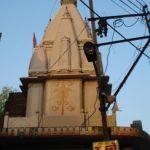
Photo Gallery
Frequently Asked Questions (FAQs)
1. Is there a VIP Darshan entry at Mrityunjayeshwar Temple?
Unlike the main Kashi Vishwanath Corridor, Mrityunjayeshwar Temple is a smaller shrine. While there is no formal “VIP ticketing” system, devotees who have booked Pooja/Seva in advance are allowed priority entry during the designated ritual time slots.
2. What is the significance of the Kalodak Koop (Well) inside the temple?
The Kalodak Koop is a holy well located within the temple complex. As per Kashi Khand, its water is considered medicinal and is believed to cure diseases and ward off negative energies. Devotees often sprinkle this water on themselves before entering the sanctum.
3. Is Mrityunjay Mahadev the same as Mrityunjayeshwar?
Yes. Local devotees predominantly refer to the deity as Mrityunjay Mahadev, while scriptural texts and formal records use the name Mrityunjayeshwar. Both names refer to the same Shiva Lingam.
4. Can we perform Rudrabhishek on behalf of someone?
Absolutely. Many devotees perform Rudrabhishek here for the longevity and health of family members, especially those suffering from prolonged illness. The priest requires the Gotra and name of the person for whom the ritual is being performed.
5. What is the best route to reach the temple from Varanasi Junction?
Take an auto-rickshaw to Bisheshwarganj/GPO. From there, the temple at Daranagar is accessible via narrow lanes. It is advisable to walk the final 200 meters or ask locals for “Mrityunjay Mahadev Mandir” as vehicles may find it difficult to enter deep into the market area.
Contact Details
Address: K52/39, Daranagar, Visheshwarganj, Varanasi, Uttar Pradesh 221001
Phone: 9305180926
Recent Posts

ओ सांवरे तूने ही मुझको संभाला – Lyrics & Meaning
ओ सांवरे तूने ही मुझको संभाला – A Prayer to Shyam Origin & Spiritual Essence Why This Bhajan Resonates Devotees chant this when overwhelmed by life’s storms—the refrain ‘तूने ही मुझको संभाला’ is the soul’s sigh of relief: “You…

कथा ये है महाराज मेरे की – Lyrics & Meaning
कथा ये है महाराज मेरे की छत्रपति संभाजी महाराज – A Prayer to Chhatrapati Sambhaji Maharaj Origin & Spiritual Essence Why This Bhajan Resonates Devotees chant this when their spirit feels tested—its powerful refrain “महाराज मेरे” is a soul’s…

Rigveda Samhita Yathartha Anuvada (ऋग्वेद संहिता यथार्थ अनुवाद) – Complete Set with Anvayartha & Hindi/English Translation
The Rigveda is the oldest surviving scripture of humanity and the foundational text of Sanātana Dharma. For serious students, scholars, UPSC aspirants studying ancient Indian history, Sanskrit learners, and spiritual seekers, a precise and grammatically structured translation is indispensable.…

आना भी अकेला है जाना भी अकेला है – Lyrics & Meaning | BharatTemples
आना भी अकेला है जाना भी अकेला है – A Prayer to the Divine Witness Origin & Spiritual Essence Why This Bhajan Resonates Devotees turn to this bhajan in moments of deep reflection—when life’s attachments begin to ache. The…

माता शेरावाली के द्वार जो भी जाता है – Lyrics & Meaning
माता शेरावाली के द्वार जो भी जाता है – A Prayer to Maa Sherawali Origin & Spiritual Essence Why This Bhajan Resonates Devotees turn to this bhajan in times of fear or uncertainty—its promise that no one leaves Maa’s…

मार लेना सपणी उबार लेणा भवरा – Lyrics & Meaning
मार लेना सपणी उबार लेणा भवरा – A Prayer to the Divine Beloved Origin & Spiritual Essence Why This Bhajan Resonates Devotees chant this in moments of deep vulnerability—its cry of “मार लेना सपणी, उबार लेणा भवरा” is the…

हमें श्याम सुंदर भरोसा तुम्हारा – Lyrics & Meaning
हमें श्याम सुंदर भरोसा तुम्हारा – A Prayer to Shyam Sundar Origin & Spiritual Essence Why This Bhajan Resonates Devotees chant this when feeling alone—its refrain ‘de do sahara’ is the soul’s cry for divine support. Lyrics in Hindi…

Mere Satguru Ne Di Thi Davai Lyrics in Hindi & Meaning
Mere Satguru Ne Di Thi Davai: Invoking the Guru’s Liberating Wisdom This soul-stirring bhajan venerates the Satguru (True Spiritual Master) as the divine physician who dispenses the only remedy for life’s deepest sufferings. Composed by Sant Karmaveer Tufani, it…

Janm Diyo Thari Maa Dukh Dekhiyo Lyrics in Hindi & Meaning
जन्म दियो थारी माँ दुख देखियो (Maa’s Grief Upon Birthing You) This soul-stirring Chetavani Bhajan (admonitory hymn) is addressed to the Divine Mother (Maa) – a call for repentance when children forget their filial duties in the dark age…
Bhadi Sabha Mein Thane Manaun Lyrics in Hindi & Meaning
Bhadi Sabha Mein Thane Manaun: Invoking the Spear-Wielding Mother Mata Bhawani (श्री ज्वाला भवानी), the fiery manifestation of Shakti worshipped as the Protector of Dharma in Her Dhaulagarh sanctum. Origin & Spiritual Essence Composed in Rajasthani folk tradition by…