Munda Vinayak Temple Varanasi: History, Timings & Complete Guide
Receive daily temple updates, divine darshan, and morning bhajans directly on WhatsApp.
Contents
- 1 Introduction & Spiritual Essence
- 2 Historical Origins & Scriptural Legend
- 3 Architectural Marvels
- 4 Darshan & Ritual Logistics
- 5 Practical Visitor Guidance
- 6 Pilgrimage Connectivity
- 7 Frequently Asked Questions (FAQ)
- 8 Photo Gallery
- 9 Official Contact Details
Introduction & Spiritual Essence
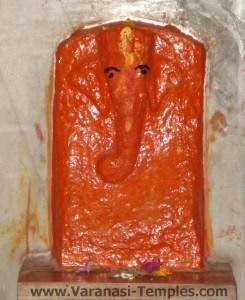
In the sacred geography of Kashi (Varanasi), where every street corner echoes with ancient mantras, resides Munda Vinayak. This revered shrine is dedicated to Lord Ganesha in his form as the remover of obstacles. The term “Munda” translates to “head” in Sanskrit, and folklore suggests that this deity represents the primordial head of Ganesha, worshipped as the Supreme Vighnaharta (Remover of Obstacles). Unlike the grandiose stone structures, Munda Vinayak is a powerful Swayambhu (self-manifested) idol, where only the divine head is visible to devotees, set amidst the divine presence of Devi Chandi.
Phalaśruti (The Divine Benefit): It is believed that a darshan of Munda Vinayak, especially before starting a new venture or journey, cleanses ancestral karma and invites auspicious beginnings. Devotees visit specifically to seek protection from malefic planetary influences and to attain mental clarity.
Historical Origins & Scriptural Legend
While Varanasi holds historical records spanning millennia, the exact documentation of the Munda Vinayak temple’s construction date remains elusive in public archives, a common trait for many ancient shrines in Kashi that evolved organically around sacred sites. Tradition holds that the idol dates back to the early medieval period, possibly established during the Gupta era or by a local dynasty devoted to Shaivism and Shaktism.
The Legend of the Head: According to local oral traditions and the Sthala Purana, the temple is named Munda Vinayak because the idol is depicted without its lower body, focusing entirely on the “Munda” (head). Mythology states that Lord Ganesha removed his head here to end the suffering of devotees, imbuing the stone with immense spiritual potency. Another legend ties this site to the Shakta tradition, suggesting that Ganesha resides eternally here to guard the energy of Goddess Chandi, whose temple stands adjacent.
📖 Related: Vibhandeshwar Temple, Varanasi: History, Darshan Timings & Guide
Architectural Marvels
The architecture of Munda Vinayak Temple is a modest yet profound representation of traditional Hindu temple design. Unlike the towering Shikharas of North Indian (Nagara style) grand temples, this shrine is built to emphasize intimacy and devotion.
- Sanctum Sanctorum (Garbhagriha): The inner chamber houses the ancient stone idol of Lord Ganesha. The black stone idol faces east, adhering to Vastu Shastra principles that ensure the flow of positive energy from the rising sun.
- Integration with Devi Shrine: Architecturally, the temple is integrated within the larger complex of the Chandi Devi Temple. This reflects the syncretic culture of Varanasi where Ganesh and Shakti are worshipped in unison.
- Artistic Details: The surrounding walls feature carvings of smaller deities and floral motifs typical of North Indian temple art, though weathered by time, they retain an aura of antiquity.
Darshan & Ritual Logistics
The temple maintains a devotional atmosphere from early morning until late at night, allowing devotees flexibility in their worship schedule.
Daily Temple Timings
| Session | Timing | Details |
|---|---|---|
| Morning Darshan | 05:00 AM – 12:00 PM | Ideal for Mangala Aarti and peaceful darshan. |
| Afternoon Closure | 12:00 PM – 03:00 PM | Temple remains closed for deity rest and cleaning. |
| Evening Darshan | 03:00 PM – 10:00 PM | Includes Shringar and Sandhya Aarti. |
Key Sevas and Online Booking
Devotees can perform various Sevas (rituals) to honor Lord Ganesha. While many bookings are conducted in person, digital platforms are increasingly common for Varanasi temples.
- Abhishekam: Ritual bathing of the idol with water, milk, and honey. Best performed on Wednesdays.
- Archana: Recitation of Ganesha names (108 or 1008 names).
- Modak Offering: Distribution of sweet dumplings (Modak), Lord Ganesha’s favorite.
📖 Related: Pasupateshwar Temple, Varanasi: History, Timings & Complete Guide
Online Booking: For the wider Kashi Vishwanath Corridor and associated temples, devotees can utilize the official Kashi Vishwanath app or the government portal www.kashivishwanath.org. While Munda Vinayak is a smaller shrine, many devotees book general Pooja coupons valid across the complex.
2026 Major Festival Dates
- Wednesdays: Special significance for Ganesha worship throughout the year.
- Ganesh Chaturthi: August 26, 2026 – The birthday of Lord Ganesha. Expect special Aartis and massive crowds.
- Magha Shukla Chaturthi: January 28, 2026 – A highly auspicious day for winter worship.
- Sankashti Chaturthi: Occurring monthly (check lunar calendar).
Practical Visitor Guidance
Visiting Munda Vinayak requires preparation, as it is located in the bustling Sadar Bazar area near Chandi Temple.
Code of Conduct & Rules
- Dress Code: Modest attire is mandatory. Men should wear dhotis or trousers (no shorts), and women should wear sarees, salwar kameez, or long skirts.
- Photography: Strictly prohibited inside the sanctum sanctorum. Mobile photography in the courtyard may be allowed but seek permission from the Pujari.
- Electronics: Large bags and cameras are restricted. It is advisable to use the mobile lockers available at the main Kashi Vishwanath security checkpoints before entering the narrow lanes.
- Accessibility: The temple is located in a dense market area with uneven lanes. It is not wheelchair accessible.
Crowd Management & Seasonal Advice
- Best Hours: Visit between 6:00 AM and 8:00 AM for a tranquil experience. Evenings after 7:00 PM are also relatively peaceful.
- Seasonal Tips: Summer (April-June) in Varanasi is scorching; carry a water bottle and umbrella. Monsoon (July-Sept) brings humidity and slippery roads; wear flat, non-slippery footwear.
Pilgrimage Connectivity
Munda Vinayak is centrally located in Varanasi, making it accessible via various modes of transport.
How to Reach
- Nearest Airport: Lal Bahadur Shastri International Airport (LBS), located approximately 30 km from Sadar Bazar. Taxis and cabs are readily available.
- Nearest Railway Station: Varanasi Junction (BSB) is about 6 km away. Alternatively, Kashi Vishwanath Temple (Kashi) station is closer for those arriving by intercity trains.
- By Road/NH: The temple is situated on Cariappa Marg, accessible via NH-19 (formerly NH-2). From the highway, take the turning towards the Bheeshma Chandi Devi temple indicator.
Nearby Sacred Sites (Pilgrimage Circuit)
- Chandi Devi Temple: Located immediately adjacent to Munda Vinayak. Dedicated to Goddess Chandi, an fierce form of Durga.
- Kashi Vishwanath Temple (New Temple): Located about 2 km away. The primary pilgrimage center of Varanasi.
- Sankat Mochan Hanuman Temple: Approximately 4 km away. Famous for the relief from troubles (Sankat Mochan).
Frequently Asked Questions (FAQ)
1. What is the significance of the “Munda” (Head) form?
The “Munda” form symbolizes the seat of consciousness and intellect. By focusing solely on the head, the temple emphasizes the power of the mind and the divine gaze of Ganesha, which removes ignorance and obstacles.
2. Is there a VIP darshan entry?
As a smaller shrine within the Chandi Temple complex, there is no specific VIP entry gate. However, visiting early in the morning or late at night provides a swift and intimate darshan experience without crowds.
3. Can I perform a Satyanarayan Puja here?
While regular Ganesha pujas and Abhishekams are conducted, larger elaborate ceremonies like Satyanarayan Puja are generally performed at larger venues like the Kashi Vishwanath Mandir or dedicated Purohit halls in the city.
4. Is the temple open on all days?
Yes, the temple remains open 365 days a year. It follows the standard Varanasi temple schedule but maintains shorter closure periods for cleaning and sanctity.
5. Where can I park my vehicle?
Parking in the Sadar Bazar area is limited. It is recommended to park at the designated parking lots near JHV Mall or Hotel Clarks and walk the remaining distance (approx. 5-10 minutes) through the market lanes.
Photo Gallery
Munda2-245×300, Munda Vinayak Temple, Varanasi
Official Contact Details
Temple Administration: Chandi Devi Temple Trust / Local Priest Committee
Location: Sadar Bazar, near JHV Mall/Hotel Clarks, Varanasi, Uttar Pradesh 221001
📖 Related: Kedareshwar Temple Varanasi: History, Darshan Timings & Jyotirling Guide