
Contents
Introduction & Spiritual Essence: Nageswaraswamy Temple
Nestled in the spiritual hub of Kumbakonam, the Nageswaraswamy Temple stands as a timeless beacon of Shaivism. This Paadal Petra Sthalam is revered in the verses of Thirugnana Sambanthar and is unique for its architectural orientation and specific planetary blessings. The primary deity here is Nageswarar (Lord Shiva), worshipped as the “Lord of Serpents.” Unlike typical Shiva shrines, this temple is intricately linked to the celestial body Rahu (North Node of the Moon).
Phalaśruti (Spiritual Benefits):
Devotees flock here primarily to alleviate Sarpa Dosha (Kemadruma Dosha) caused by the malefic influence of Rahu and Ketu in their astrological charts. Legend holds that worshipping Lord Nageswarar here, specifically along with the other four Nageshwarar temples in the Kumbakonam circuit, promises relief from ancestral karma, chronic health issues, and blessings for marital harmony. The Shiva Lingam here is a Swayambhu (self-manifested) murti, radiating immense spiritual energy.
Historical Origins & Scriptural Legend
Construction & Renovations:
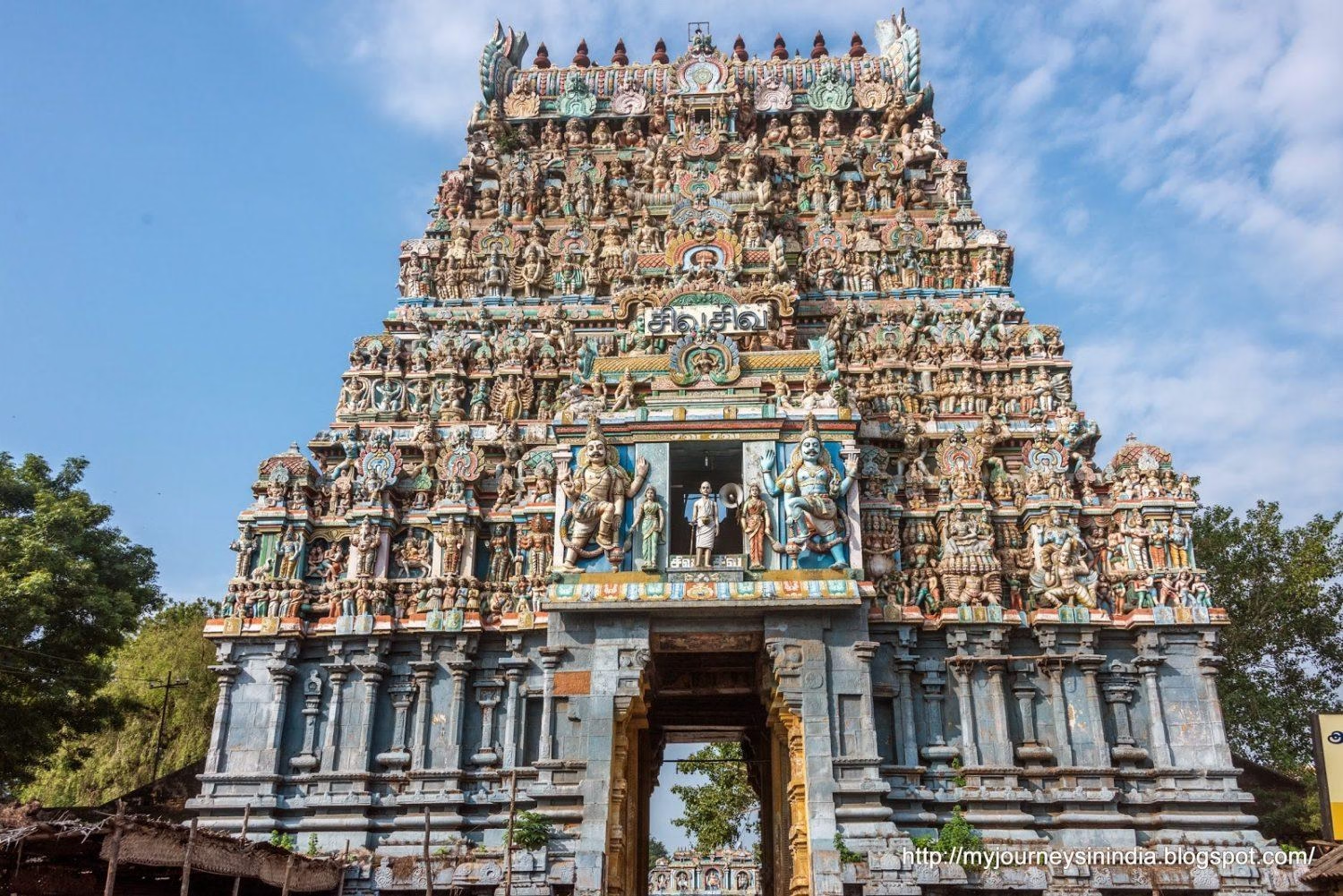
Built by the great Aditya Chola (Aditya Karikala Chola) during the late 9th century CE, the temple is a masterpiece of early Chola artistry. Though the exact date is not stamped in stone, historical consensus places its construction between 850-900 AD. Subsequent renovations were carried out by the Later Cholas and Nayak rulers, who added the towering Gopurams seen today. According to temple records, inscriptions dating back to the 10th century detail land grants for the maintenance of the temple and the salary of scholars.
Scriptural Legend (Sthala Purana):
The lore of this temple is deeply rooted in the Garuda Purana and local Tamil traditions. It is believed that the mighty serpent king Adisesha performed penance here to regain the strength lost while bearing the weight of the cosmos. Pleased by his devotion, Lord Shiva and Goddess Parvathy appeared here as Nageswarar and Nageswari Amman. Another legend mentions that the mythological serpents Dakshan and Kaarkotakan worshipped Shiva at this spot.
Furthermore, this temple is famously known as Surya Kottam (or Keezha Kottam). It is dedicated to the Sun God, Surya, in a unique astronomical alignment. Tradition holds that the temple is designed as a giant solar calendar, where sunlight penetrates the sanctum sanctorum to illuminate the Swayambhu Lingam only during the Tamil month of Chithirai (April-May), specifically the first three days.
Architectural Marvels
Style & Vastu:
The temple exemplifies the Dravidian architectural style with Nagara influences. The structure is planned based on Vastu Shastra principles, aligning with celestial geometry. The main sanctum (Garbhagriha) is built in the form of a Padabandha-Padmaka type, standing on a Padmopana (lotus base).
Key Features:
– The Chariot Architecture: The complex of the Nataraja shrine and the sanctum itself resemble a chariot on wheels. This mirrors the grandeur of the Airavatesvara Temple at Darasuram and the Sarangapani Temple in Kumbakonam.
– Sculptures: The outer walls feature life-sized sculptures of donors, contemporary royalty, and deities like Ardhanarishvara, Brahma, and Dakshinamoorthy. The low-relief carvings on the plinth depict epic scenes, reminiscent of intricate woodwork.
– The Devi Shrine: An independent structure in the outer Prakaram, facing south, it houses the consort of Nageswarar. Unlike most Shiva temples where the Devi shrine is adjacent, it is detached here, a unique Saiva feature.
– The Rahu Shrine: The temple is a premier Navagraha Sthalam specifically for Rahu. The shrine is located in the second precinct, where the deity is depicted with a human head and a serpent’s body.
While the temple is a marvel of Chola architecture, it does not currently hold the UNESCO World Heritage status (which belongs to the Brihadeeswarar Temple in Thanjavur), but it is protected by the Archaeological Survey of India (ASI) due to its historical significance.
Darshan & Ritual Logistics
The temple administration operates a strict schedule for Thiruvadarshanam. Devotees are advised to check for festival-specific timings.
Daily Opening & Closing Timings (2026 Schedule)
| Session | Timing | Breaks (Oozhiyar) |
|---|---|---|
| Morning | 6:00 AM – 12:00 PM | 10:00 AM – 10:30 AM |
| Evening | 4:00 PM – 8:30 PM | 6:00 PM – 6:30 PM |
Key Sevas & Online Booking
To ensure a seamless experience, the temple offers online booking for major Sevas:
- Rahu Graha Shanti Homam: Highly recommended for those with Rahu Dasha; performed on Saturdays and Tuesdays.
- Abhishekam: Performed daily at 7:00 AM and 6:00 PM (Tuesdays are significant).
- Archana: Can be offered individually or for the family at the Naga Theertham tank.
Booking Process: Visit the official Tamil Nadu Tourism Development Corporation (TTDC) portal or the temple’s specific listing on the Official HR&CE Website for 2026 reservations. Advance booking is required for Abhishekam during weekends.
2026 Major Festival Dates
- Arudra Darshanam: January 2026 (Date TBD as per Tamil Calendar) – Celebrating Lord Nataraja.
- Maha Shivaratri: February 26, 2026 – The grandest celebration here, all-night Jagaran.
- Vaisakha / Chithirai Festival: April 14 – May 15, 2026 – Featuring the unique solar alignment where sunlight falls on the deity.
- Skanda Shashti: November 2026 – Celebrating Lord Murugan.
Practical Visitor Guidance
Visiting Kumbakonam requires preparation, especially during the summer months and festival seasons.
- Dress Code: Strict adherence to traditional attire is mandatory. Men must wear Dhoti or formal trousers with a shirt (vests strictly prohibited). Women must wear Saree, Salwar Kameez, or traditional Skirts. Western wear (jeans, shorts) is not permitted inside the sanctum.
- Photography & Mobiles: Photography is strictly prohibited inside the inner sanctum and the Rahu shrine. Mobile lockers are available at the entrance for electronic devices. Please deposit items before entering the Garbhagriha.
- Accessibility: The temple has stone-paved corridors. While there are no elevators to the upper tiers, the ground level and inner sanctum are accessible to senior citizens via a side entrance. Wheelchairs are available upon request at the administrative office.
- Crowd Management:
- Best Hours: Weekdays between 7:00 AM and 9:00 AM offer the least crowd.
- Seasonal Advice: Kumbakonam is humid. In May (Chithirai), temperatures can exceed 35°C. Carry a water bottle, wear cotton clothing, and use the temple’s free water stations. Avoid visiting between 11:00 AM and 3:00 PM in summer due to extreme heat.
Pilgrimage Connectivity
How to Reach Nageswaraswamy Temple
The temple is located in the heart of Kumbakonam, specifically on Nageswaran North Street, Tamil Nadu 612001.
- By Air: The nearest airport is Tiruchirappalli International Airport (TRZ), approximately 90 km away. From the airport, take a taxi or state bus (TNSTC) to Kumbakonam (Travel time: ~2 hours).
- By Rail: Kumbakonam Railway Station is the nearest junction, located just 2 km from the temple. Auto-rickshaws are readily available outside the station.
- By Road: Kumbakonam is well-connected by NH 32 (formerly NH 210) linking Trichy to Puducherry. State-run buses connect Kumbakonam to all major Tamil Nadu cities.
Nearby Sacred Sites
Devotees are encouraged to complete the Kumbakonam Navagraha Circuit or the Pancha Ishwarams:
- Sarangapani Temple (1 km away): A Divya Desam dedicated to Lord Vishnu, sharing the chariot architecture similarity.
- Adhi Kumbeswarar Temple (1.5 km away): The main temple of Kumbakonam, dedicated to Lord Shiva and the pot of nectar (Amrita).
- Thirunageswaram Naganathar Temple (5 km away): Another vital Navagraha temple for Rahu Grah, located just south of Kumbakonam.
Photo Gallery
How to Reach:
Address: Nageswaran North Street, Kumbakonam, Tamil Nadu 612001
Contact Details
- Phone: 0435-243-0386
- Official Email: [Insert Official Email if available]
- Help Desk: Available at the temple entrance for devotee assistance.
Frequently Asked Questions (FAQ)
1. What is the significance of Rahu in Nageswaraswamy Temple?
Nageswaraswamy Temple is one of the nine Navagraha temples in the Kumbakonam region. It is specifically dedicated to Rahu. According to Vedic astrology, worshipping Rahu here helps mitigate the negative effects of Kala Sarpa Dosha and other afflictions caused by Rahu in one’s birth chart.
2. Is there a VIP Darshan entry available?
Yes, the temple administration offers a Special Entry Darshan for a nominal fee (usually ₹50 – ₹100 depending on the festival). This allows devotees to bypass the general queue during peak hours. Tickets can be purchased at the counter near the Gopuram.
3. Can I perform a wedding ceremony at this temple?
The Nageswaraswamy Temple does not host large-scale weddings like the Adhi Kumbeswarar Temple. However, simple betrothal rituals or Kalyana Utsavam (small-scale wedding ceremonies) can be arranged by contacting the temple executive officer at least one month in advance.
4. What are the safe timings for female solo travelers?
While the temple is generally safe, it is advisable for solo female travelers to visit between 7:00 AM and 10:00 AM or 4:00 PM and 6:00 PM. Avoid the isolated inner corridors of the Prakaram after dusk without a companion.
5. How does the sunlight enter the sanctum?
The temple features a unique architectural design where the eastern entrance and the sanctum’s structure allow a ray of sunlight to fall directly on the Swayambhu Lingam for three days in mid-April (Tamil month Chithirai). This is a deliberate astronomical design by the Chola architects.
Recent Posts

Shri Kaamkoteeshwar Mandir, Varanasi – History & Significance
In the heart of Kashi, the eternal city of Lord Shiva, where the Ganges flows with celestial grace, stands the Shri Kaamkoteeshwar Mandir. This sacred Sannidhi is not merely a temple but a profound spiritual bridge between the Northern…

ओ सांवरे तूने ही मुझको संभाला – Lyrics & Meaning
ओ सांवरे तूने ही मुझको संभाला – A Prayer to Shyam Origin & Spiritual Essence Why This Bhajan Resonates Devotees chant this when overwhelmed by life’s storms—the refrain ‘तूने ही मुझको संभाला’ is the soul’s sigh of relief: “You…

कथा ये है महाराज मेरे की – Lyrics & Meaning
कथा ये है महाराज मेरे की छत्रपति संभाजी महाराज – A Prayer to Chhatrapati Sambhaji Maharaj Origin & Spiritual Essence Why This Bhajan Resonates Devotees chant this when their spirit feels tested—its powerful refrain “महाराज मेरे” is a soul’s…

Rigveda Samhita Yathartha Anuvada (ऋग्वेद संहिता यथार्थ अनुवाद) – Complete Set with Anvayartha & Hindi/English Translation
The Rigveda is the oldest surviving scripture of humanity and the foundational text of Sanātana Dharma. For serious students, scholars, UPSC aspirants studying ancient Indian history, Sanskrit learners, and spiritual seekers, a precise and grammatically structured translation is indispensable.…

आना भी अकेला है जाना भी अकेला है – Lyrics & Meaning | BharatTemples
आना भी अकेला है जाना भी अकेला है – A Prayer to the Divine Witness Origin & Spiritual Essence Why This Bhajan Resonates Devotees turn to this bhajan in moments of deep reflection—when life’s attachments begin to ache. The…

माता शेरावाली के द्वार जो भी जाता है – Lyrics & Meaning
माता शेरावाली के द्वार जो भी जाता है – A Prayer to Maa Sherawali Origin & Spiritual Essence Why This Bhajan Resonates Devotees turn to this bhajan in times of fear or uncertainty—its promise that no one leaves Maa’s…

मार लेना सपणी उबार लेणा भवरा – Lyrics & Meaning
मार लेना सपणी उबार लेणा भवरा – A Prayer to the Divine Beloved Origin & Spiritual Essence Why This Bhajan Resonates Devotees chant this in moments of deep vulnerability—its cry of “मार लेना सपणी, उबार लेणा भवरा” is the…

हमें श्याम सुंदर भरोसा तुम्हारा – Lyrics & Meaning
हमें श्याम सुंदर भरोसा तुम्हारा – A Prayer to Shyam Sundar Origin & Spiritual Essence Why This Bhajan Resonates Devotees chant this when feeling alone—its refrain ‘de do sahara’ is the soul’s cry for divine support. Lyrics in Hindi…

Mere Satguru Ne Di Thi Davai Lyrics in Hindi & Meaning
Mere Satguru Ne Di Thi Davai: Invoking the Guru’s Liberating Wisdom This soul-stirring bhajan venerates the Satguru (True Spiritual Master) as the divine physician who dispenses the only remedy for life’s deepest sufferings. Composed by Sant Karmaveer Tufani, it…

Janm Diyo Thari Maa Dukh Dekhiyo Lyrics in Hindi & Meaning
जन्म दियो थारी माँ दुख देखियो (Maa’s Grief Upon Birthing You) This soul-stirring Chetavani Bhajan (admonitory hymn) is addressed to the Divine Mother (Maa) – a call for repentance when children forget their filial duties in the dark age…