
Contents
Introduction & Spiritual Essence of Nal Koopeshwar
The ancient city of Kashi (Varanasi) is a veritable forest of sacred Shiva Lingas, each possessing a unique vibrational frequency and spiritual potency. Among these hidden gems is the Nal Koopeshwar Temple, also revered as Nal Kubereshwar. Located in the narrow, winding lanes of Ghasi Tola, this temple is a testament to the enduring faith of devotees seeking agricultural prosperity and ancestral peace.
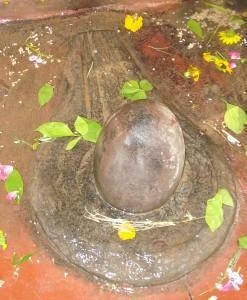
Primary Deity: The temple houses a Swayambhu (self-manifested) Shiva Linga, known as Nal Koop Ling. The term “Nal” refers to the pipe or channel through which water flows, symbolizing the life-giving essence of water and agriculture.
Phalaśruti: The Spiritual Benefits
According to the sacred Kashi Khand (Chapter 97) of the Skanda Purana, the presiding deity of this temple blesses devotees with two primary boons:
- Agricultural Abundance: Taking a holy dip in the Nal Koop (the sacred well in front of the Linga) and offering prayers to Lord Nal Koopeshwar ensures bountiful crops and grains.
- Wealth and Ancestral Karma: In an agrarian society like India, good harvests equated to wealth. Devotees believe that worshipping here not only brings material prosperity but also helps cleanse ancestral karma related to food and water scarcity.
Historical Origins & Scriptural Legend
The history of Nal Koopeshwar is deeply intertwined with the mythology of Kashi. During a divine conversation, Goddess Parvati inquired about the various Teerths (sacred ponds) and Koops (wells) in Kashi. Lord Shiva, in his description of Kashi, highlighted this specific site located towards the east of Kameshwar.
The Tale of Resilience
Tradition holds that during periods of historical invasion, many idols and Lingas were hidden by devotees to protect them from desecration. The Nal Koop Ling, originally situated near Kameshwar, was moved to its current location at K-30/6 Ghasi Tola. While some local legends refer to it as the former Panchalkeshwar, scriptural references in the Kashi Khand exclusively mention Nal Koop Ling.
Unlike grand palatial temples, this shrine is located within a private residence. The compiler notes that devotees can worship the Ling through a grilled door, maintaining the sanctity of the private home while allowing public darshan. This unique arrangement highlights the seamless integration of domestic life and divine worship in Kashi.
Architectural Marvels
While the Nal Koopeshwar temple does not follow the towering Nagara or Dravida styles of massive stone complexes, it represents the domestic temple architecture of Kashi, where shrines are built into residential structures. This style is characterized by intimacy and ancient simplicity.
- The Shikhara: The temple features a modest Shikhara (towering spire) typical of Varanasi’s smaller shrines, constructed using traditional stone and lime mortar.
- The Sanctum (Garbhagriha): The inner sanctum houses the ancient Shiva Linga, facing east, allowing sunlight to illuminate the abode during morning hours.
- The Sacred Well (Nal Koop): Situated directly in front of the Linga, this well is the architectural centerpiece mentioned in the scriptures. Its preservation over centuries is a marvel of local community effort.
Darshan & Ritual Logistics
Visitors should note that as a shrine located within a private residence, timings are flexible but generally align with traditional temple schedules. It is advisable to confirm specific hours before visiting, especially during monsoon seasons.
Daily Darshan Schedule (2026)
| Session | Timings | Activity |
|---|---|---|
| Morning Darshan | 06:00 AM – 12:00 PM | Opening, Morning Aarti |
| Afternoon Break | 12:00 PM – 04:00 PM | Sanctum Rest / Priest Lunch |
| Evening Darshan | 04:00 PM – 09:00 PM | Evening Aarti & Closing |
Key Sevas & Online Booking
While Nal Koopeshwar is a smaller shrine, the essence of Kashi Sevas applies. For larger complexes in Varanasi, online seva booking is standard, but for this specific temple, rituals are usually performed on-site with the resident priest.
2026 Festival Calendar Highlights
- Shivratri: February 26, 2026 (Special Nightlong Darshan)
- Somvar Vrat: Every Monday (Perform Abhishekam with milk)
- Maha Shivaratri: February 26–27, 2026
- Monsoon Shivratri: August 23, 2026
Note: For large-scale ceremonies, devotees often visit the nearby Kashi Vishwanath Temple. However, offering milk and water to Nal Koop Ling is considered highly auspicious.
Practical Visitor Guidance
Since Nal Koopeshwar is situated in the bustling Ghasi Tola area, a mindful approach to the visit is recommended.
- Dress Code: Traditional attire is preferred (Dhoti/Kurta for men, Saree/Salwar Kameez for women). Modest clothing is mandatory.
- Photography: As the temple is within a private residential complex, photography is strictly prohibited inside the sanctum. Please respect the privacy of the residents.
- Crowd Management: The lanes of Varanasi are narrow. The best time to visit is early morning (6 AM – 8 AM) to avoid the rush of pilgrims heading to Kashi Vishwanath.
- Seasonal Advice: In summer (May-June), the stone floors retain heat; carry water. In winter (Dec-Jan), mornings are foggy—afternoon visits are more pleasant.
Pilgrimage Connectivity
Reaching this temple requires navigating the historic streets of Varanasi.
How to Reach
- Nearest Airport: Lal Bahadur Shastri International Airport (VNS), approximately 25 km away.
- Nearest Railway Station: Varanasi Junction (BSB), about 5 km away. Autorickshaws are the most convenient mode to reach Ghasi Tola.
- Road Access: The temple is accessible via NH-19 (Varanasi-Mughal Sarai Road). Visitors can take an auto to Bhairo Nath Temple and walk the remaining distance through the gullies.
Nearby Sacred Sites (Pilgrimage Circuit)
Combine your visit to Nal Koopeshwar with these nearby spiritual destinations:
- Kashi Vishwanath Temple (Approx. 2 km): The primary destination for all Kashi pilgrims.
- Kashi Khand Temple (Sankat Mochan): Located nearby, this is another temple with deep scriptural connections.
- Kameshwar Temple: Mentioned in the same Kashi Khand chapter, located east of the main ghats.
Frequently Asked Questions (FAQ)
1. Is there a VIP darshan entry available at Nal Koopeshwar?
As this is a private shrine managed within a residential house, there is no formal VIP entry system like large pilgrim centers. However, visiting during early morning hours ensures a peaceful, private darshan experience.
2. Can I perform an Abhishekam myself?
Yes. The compiler of the original text mentioned being allowed to perform a small abhishekam with Gangajal. It is recommended to bring a small container of clean water and flowers. Permission should be sought from the resident priest or house owner politely.
3. Is there parking available near the temple?
No, there is no dedicated parking. The lanes of Ghasi Tola are too narrow for cars. It is best to hire an auto-rickshaw to the nearest drop-off point (Bhairo Nath) and walk the remaining 5-10 minutes.
4. Why is the well (Nal Koop) significant?
It is believed to be the same well described in the Kashi Khand. Bathing in or offering water from this well is said to bring agricultural prosperity and relief from water-borne sins (jal dosha).
5. How do I book online seva for this temple?
Currently, there is no centralized online portal for Nal Koopeshwar. Sevas are arranged directly with the onsite priest. For broader Varanasi temple bookings, one can visit the official Kashi Vishwanath website.
Preserving the Heritage
As the Lead Heritage Architect of BharatTemples.com, I emphasize the importance of supporting such micro-heritage sites. These smaller shrines are often the true custodians of oral history and local traditions. When visiting Nal Koopeshwar, consider contributing to the maintenance of the well and the sanctum, ensuring this ancient site thrives for future generations.
May Lord Shiva bless you with prosperity and peace in your pilgrimage to Kashi.
Recent Posts

ओ सांवरे तूने ही मुझको संभाला – Lyrics & Meaning
ओ सांवरे तूने ही मुझको संभाला – A Prayer to Shyam Origin & Spiritual Essence Why This Bhajan Resonates Devotees chant this when overwhelmed by life’s storms—the refrain ‘तूने ही मुझको संभाला’ is the soul’s sigh of relief: “You…

कथा ये है महाराज मेरे की – Lyrics & Meaning
कथा ये है महाराज मेरे की छत्रपति संभाजी महाराज – A Prayer to Chhatrapati Sambhaji Maharaj Origin & Spiritual Essence Why This Bhajan Resonates Devotees chant this when their spirit feels tested—its powerful refrain “महाराज मेरे” is a soul’s…

Rigveda Samhita Yathartha Anuvada (ऋग्वेद संहिता यथार्थ अनुवाद) – Complete Set with Anvayartha & Hindi/English Translation
The Rigveda is the oldest surviving scripture of humanity and the foundational text of Sanātana Dharma. For serious students, scholars, UPSC aspirants studying ancient Indian history, Sanskrit learners, and spiritual seekers, a precise and grammatically structured translation is indispensable.…

आना भी अकेला है जाना भी अकेला है – Lyrics & Meaning | BharatTemples
आना भी अकेला है जाना भी अकेला है – A Prayer to the Divine Witness Origin & Spiritual Essence Why This Bhajan Resonates Devotees turn to this bhajan in moments of deep reflection—when life’s attachments begin to ache. The…

माता शेरावाली के द्वार जो भी जाता है – Lyrics & Meaning
माता शेरावाली के द्वार जो भी जाता है – A Prayer to Maa Sherawali Origin & Spiritual Essence Why This Bhajan Resonates Devotees turn to this bhajan in times of fear or uncertainty—its promise that no one leaves Maa’s…

मार लेना सपणी उबार लेणा भवरा – Lyrics & Meaning
मार लेना सपणी उबार लेणा भवरा – A Prayer to the Divine Beloved Origin & Spiritual Essence Why This Bhajan Resonates Devotees chant this in moments of deep vulnerability—its cry of “मार लेना सपणी, उबार लेणा भवरा” is the…

हमें श्याम सुंदर भरोसा तुम्हारा – Lyrics & Meaning
हमें श्याम सुंदर भरोसा तुम्हारा – A Prayer to Shyam Sundar Origin & Spiritual Essence Why This Bhajan Resonates Devotees chant this when feeling alone—its refrain ‘de do sahara’ is the soul’s cry for divine support. Lyrics in Hindi…

Mere Satguru Ne Di Thi Davai Lyrics in Hindi & Meaning
Mere Satguru Ne Di Thi Davai: Invoking the Guru’s Liberating Wisdom This soul-stirring bhajan venerates the Satguru (True Spiritual Master) as the divine physician who dispenses the only remedy for life’s deepest sufferings. Composed by Sant Karmaveer Tufani, it…

Janm Diyo Thari Maa Dukh Dekhiyo Lyrics in Hindi & Meaning
जन्म दियो थारी माँ दुख देखियो (Maa’s Grief Upon Birthing You) This soul-stirring Chetavani Bhajan (admonitory hymn) is addressed to the Divine Mother (Maa) – a call for repentance when children forget their filial duties in the dark age…
Bhadi Sabha Mein Thane Manaun Lyrics in Hindi & Meaning
Bhadi Sabha Mein Thane Manaun: Invoking the Spear-Wielding Mother Mata Bhawani (श्री ज्वाला भवानी), the fiery manifestation of Shakti worshipped as the Protector of Dharma in Her Dhaulagarh sanctum. Origin & Spiritual Essence Composed in Rajasthani folk tradition by…