
Contents
1. Introduction & Spiritual Essence
Nestled in the serene village of Ezhuchur in the Kanchipuram district, the Nallinakka Eswarar Temple stands as a testament to faith, resilience, and cosmic harmony. Dedicated to Lord Shiva, this ancient shrine is revered by devotees seeking balance and bliss in their lives.
The Deity: Nallinakka Eswarar
The primary deity here is Sri Nallinakkeeswarar (a form of Shiva), whose name is derived from the Tamil words “Nallu” (good/best) and “Inam” (harmony/cooperation). He is essentially the “God of Harmony.” The presiding Goddess is Sri Deivanayaki (a form of Parvati).
Phalaśruti: The Divine Boon
Why do devotees undertake this pilgrimage? The Phalaśruti (benefits of worship) associated with Nallinakka Eswarar is profound:
- Harmonious Relationships: Devotees pray here to resolve conflicts and foster mutual cooperation (Nallinakkam) within families, between spouses, and among friends.
- Cleansing Ancestral Karma: Rituals performed here are believed to alleviate afflictions caused by planetary positions, specifically the adverse effects of Mars (Mangal).
- Voice and Art: Aspiring singers and artists offer abhishekam with milk and honey to gain a sweet voice and artistic success.
2. Historical Origins & Scriptural Legend
A History of Rebirth
According to temple records and local history, the sanctity of this site dates back approximately 1,200 years, likely originating during the Pallava dynasty, known for their patronage of Tamil Nadu’s temple architecture. However, the temple fell into disrepair over the centuries.
The modern history of Nallinakka Eswarar Temple is a story of miraculous rediscovery. In the late 20th century, the temple was completely overgrown by dense bushes and trees, forgotten by the outside world.
The Rediscovery
Tradition holds that an auto-rickshaw driver (reportedly a Muslim by faith) ventured into Ezhuchur and identified the ancient structure hidden within the vegetation. He alerted the local villagers. Sparked by this discovery, the local community, led by the Nama Shivaya Trust, undertook the arduous task of rebuilding the temple.
From 2000 to 2012, the structure was painstakingly reconstructed using stone. The temple was consecrated (Kumbhabhishekam) on June 29, 2012, restoring its spiritual vibrancy.
The Legend of the Naga
Local folklore narrates a captivating Sthala Purana: A large serpent (Naga) is said to visit the temple twice daily to perform Pradakshina (circumambulation) around the Shiva Lingam. This living legend adds a mystical aura to the shrine, symbolizing the harmony between nature and the divine.
3. Architectural Marvels
Dravidian Style
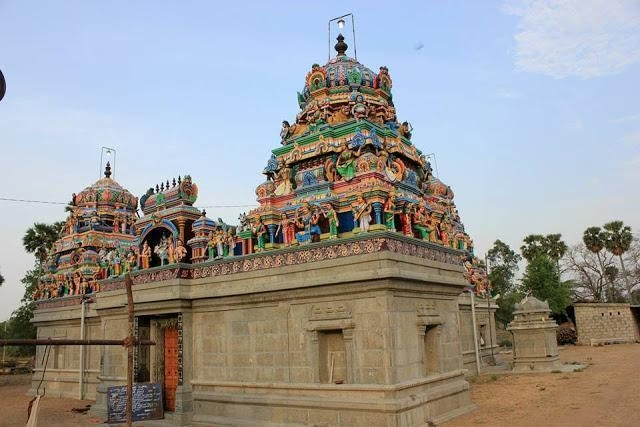
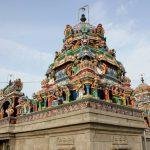
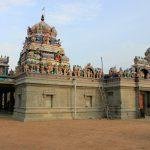
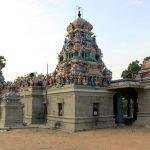
The temple showcases the classic Dravidian architectural style. Following its reconstruction in 2012, the temple features a pristine stone structure that adheres to traditional Vastu Shastra principles.
Structural Highlights
- Garbhagriha (Sanctum Sanctorum): Houses the Swayambhu (self-manifested) form of Nallinakka Eswarar.
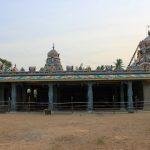
- Mandapas: The pillared halls allow devotees to gather for rituals and view the annual temple festivals.
- Artistry: The stone carvings depict various forms of Shiva and traditional motifs, reflecting the craftsmanship of contemporary Tamil temple builders.
While the temple is a protected heritage site under the local trust, its architecture serves as a beacon of the Dravidian aesthetic, emphasizing verticality in the Rajagopuram (entrance tower).
4. Darshan & Ritual Logistics
Daily Timings
The temple maintains specific opening hours to facilitate daily pujas.
| Session | Timings |
|---|---|
| Morning Darshan | 5:00 AM – 9:00 AM |
| Afternoon Closure | 9:00 AM – 4:00 PM |
| Evening Darshan | 4:00 PM – 8:00 PM |
*Note: Temple timings may vary slightly during festival seasons.
Key Sevas and Offerings
Devotees can participate in various sevas to seek blessings:
- Abhishekam: Performed with milk, honey, and vibhuti. This is highly recommended for couples seeking harmony.
- Archana: Personalized prayers (e.g., for child birth or health).
- Vastra Daanam: Offering clothes to the deity.
2026 Festival Calendar & Online Booking
To ensure a seamless darshan experience, online seva booking is available through the temple trust’s official channels.
- Pradosham: Observed every month (check Tamil calendar for specific dates).
- Maha Shivaratri (2026): February 16, 2026. This is the most significant annual festival, featuring night-long vigils and special Abhishekams.
Booking: Contact the temple administration via the phone numbers listed below to request bookings for special pujas in advance.
5. Practical Visitor Guidance
Code of Conduct
- Dress Code: Traditional attire is mandatory. Men should wear dhotis or pants with shirts; women should wear sarees, salwars, or churidars.
- Photography: Inside the sanctum sanctorum, photography is strictly prohibited to maintain the sanctity of the shrine.
- Electronic Devices: Mobile phones should be silenced during darshan.
Crowd Management & Accessibility
As a village temple, crowds are generally manageable compared to major city temples.
- Best Time to Visit: Early morning (5:00 AM – 6:00 AM) offers the most peaceful darshan.
- Seasonal Advice: During the summer months (April–June), carry water bottles, as Tamil Nadu temperatures can be high.
- Accessibility: The temple is accessible for elderly devotees, with ramps available for the main entrance.
Photo Gallery


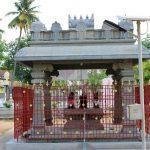


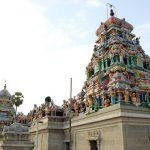
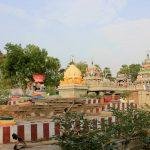
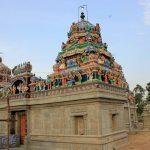
6. Pilgrimage Connectivity
How to Reach Ezhuchur
Ezhuchur is a village located approximately 57 km southwest of Chennai, on the road connecting Tambaram and Kanchipuram.
- By Road: The temple is 3 km from the Ezhuchur bus stop. Autos or cabs can be hired from Tambaram (approx. 28 km).
- Specific Route: From Tambaram, proceed toward Padappai to the Oragadam Cross Road. Take a left near the Mahameru Dhyana Nilayam (approx. 3 km) and continue into the village.
- By Bus: Bus No. 55P connects Tambaram to Ezhuchur, though frequency is low.
- By Rail: The nearest railway station is Tambaram (Chennai).
- By Air: The nearest airport is Chennai International Airport (MAA), roughly 40 km away.
Nearby Sacred Sites
Enhance your pilgrimage by visiting these nearby temples in the Kanchipuram district:
- Vaitheeswaran Koil: Famous for healing ailments, located a short drive away.
- Kamakshi Amman Temple (Kanchipuram): One of the Shakti Peethams.
- Ekambareswarar Temple (Kanchipuram): Dedicated to Shiva, representing the element of Earth.
7. Frequently Asked Questions
Is there a VIP darshan entry?
As a rural temple managed by a trust, there is no formal VIP entry system. However, contacting the trust in advance for special arrangements is possible.
What is the meaning of “Nallinakka”?
In Tamil, “Nallu” means good, and “Inam” refers to community or harmony. The deity is revered as the bestower of good harmony among family and friends.
Is accommodation available nearby?
The temple itself does not have attached guest rooms. However, devotees can find lodges and choultries in the nearby town of Tambaram or Kanchipuram.
What are the contact details for the temple?
For current updates and seva bookings, you can contact the Temple Administration:
Trust Office: Nama Shivaya Trust, 5/9, 2nd street, Ramakrishna Street, Chitlapakkam, Chennai – 600 064
Phone: +91 – 44 – 2223 3857
Mobile: +91 – 94425 55187 / 93806 34880 / 94443 49009
Email: atsrinallinekeswarartrust@yahoo.in / srinallinekeswarartrust@yahoo.in
Recent Posts

Shri Kaamkoteeshwar Mandir, Varanasi – History & Significance
In the heart of Kashi, the eternal city of Lord Shiva, where the Ganges flows with celestial grace, stands the Shri Kaamkoteeshwar Mandir. This sacred Sannidhi is not merely a temple but a profound spiritual bridge between the Northern…

ओ सांवरे तूने ही मुझको संभाला – Lyrics & Meaning
ओ सांवरे तूने ही मुझको संभाला – A Prayer to Shyam Origin & Spiritual Essence Why This Bhajan Resonates Devotees chant this when overwhelmed by life’s storms—the refrain ‘तूने ही मुझको संभाला’ is the soul’s sigh of relief: “You…

कथा ये है महाराज मेरे की – Lyrics & Meaning
कथा ये है महाराज मेरे की छत्रपति संभाजी महाराज – A Prayer to Chhatrapati Sambhaji Maharaj Origin & Spiritual Essence Why This Bhajan Resonates Devotees chant this when their spirit feels tested—its powerful refrain “महाराज मेरे” is a soul’s…

Rigveda Samhita Yathartha Anuvada (ऋग्वेद संहिता यथार्थ अनुवाद) – Complete Set with Anvayartha & Hindi/English Translation
The Rigveda is the oldest surviving scripture of humanity and the foundational text of Sanātana Dharma. For serious students, scholars, UPSC aspirants studying ancient Indian history, Sanskrit learners, and spiritual seekers, a precise and grammatically structured translation is indispensable.…

आना भी अकेला है जाना भी अकेला है – Lyrics & Meaning | BharatTemples
आना भी अकेला है जाना भी अकेला है – A Prayer to the Divine Witness Origin & Spiritual Essence Why This Bhajan Resonates Devotees turn to this bhajan in moments of deep reflection—when life’s attachments begin to ache. The…

माता शेरावाली के द्वार जो भी जाता है – Lyrics & Meaning
माता शेरावाली के द्वार जो भी जाता है – A Prayer to Maa Sherawali Origin & Spiritual Essence Why This Bhajan Resonates Devotees turn to this bhajan in times of fear or uncertainty—its promise that no one leaves Maa’s…

मार लेना सपणी उबार लेणा भवरा – Lyrics & Meaning
मार लेना सपणी उबार लेणा भवरा – A Prayer to the Divine Beloved Origin & Spiritual Essence Why This Bhajan Resonates Devotees chant this in moments of deep vulnerability—its cry of “मार लेना सपणी, उबार लेणा भवरा” is the…

हमें श्याम सुंदर भरोसा तुम्हारा – Lyrics & Meaning
हमें श्याम सुंदर भरोसा तुम्हारा – A Prayer to Shyam Sundar Origin & Spiritual Essence Why This Bhajan Resonates Devotees chant this when feeling alone—its refrain ‘de do sahara’ is the soul’s cry for divine support. Lyrics in Hindi…

Mere Satguru Ne Di Thi Davai Lyrics in Hindi & Meaning
Mere Satguru Ne Di Thi Davai: Invoking the Guru’s Liberating Wisdom This soul-stirring bhajan venerates the Satguru (True Spiritual Master) as the divine physician who dispenses the only remedy for life’s deepest sufferings. Composed by Sant Karmaveer Tufani, it…

Janm Diyo Thari Maa Dukh Dekhiyo Lyrics in Hindi & Meaning
जन्म दियो थारी माँ दुख देखियो (Maa’s Grief Upon Birthing You) This soul-stirring Chetavani Bhajan (admonitory hymn) is addressed to the Divine Mother (Maa) – a call for repentance when children forget their filial duties in the dark age…