
Contents
- 1 Narayani Temple Bhubaneswar: A Definitive Pilgrimage Guide
Narayani Temple Bhubaneswar: A Definitive Pilgrimage Guide
By BharatTemples.com Heritage Team | Updated: January 15, 2026
Introduction & Spiritual Essence
Deep within the historic precincts of the Lingaraja Temple complex in Bhubaneswar lies a hidden gem of spiritual antiquity—the Narayani Temple. Dedicated to Goddess Narayani, a fierce yet benevolent form of the Divine Mother (Shakti), often associated with Lakshmi and Durga, this temple stands as a testament to the enduring faith of Odisha. While the massive Lingaraja Shiva temple attracts the masses, the Narayani shrine offers a profound, intimate connection to the feminine divine.
The primary deity is enshrined as a Swayambhu (self-manifested) idol. Unlike the typical standing Nataraja or dancing Shiva figures found in the region, this ten-armed Goddess Narayani is seated in a regal Padmasana (lotus posture), radiating a sense of protective grace.
Phalaśruti: The Spiritual Benefits
Devotees flock to this shrine to seek blessings for:
- Removal of Planetary Obstacles: Specifically, pacifying the adverse effects of Saturn (Shani) and Rahu.
- Ancestral Liberation (Pitra Dosha Nivaran): Offering prayers here is believed to cleanse ancestral karma, bringing peace to departed souls.
- Sakshatkaara (Direct Realization): The serene atmosphere of the surrounding Bindusagar lake precinct allows for deep meditation, helping devotees achieve mental clarity.
Historical Origins & Scriptural Legend
The history of the Narayani Temple is a fascinating puzzle solved through archaeological excavation. For centuries, the temple lay buried beneath the earth, known only through local lore.
Builders and Dating
According to records from the Archaeological Survey of India (ASI) and local temple archives, the structure dates back to the 7th century A.D. Although the exact dynastic founder is not explicitly inscribed, the architectural style points to the Somavanshi dynasty period, a golden era for temple construction in Odisha. The temple was largely buried and subsequently excavated and restored by Debala Mitra (excerpts from ASI reports), revealing its original grandeur.
Scriptural References & The Sthala Purana
While specific references to this minor shrine are rare in the major Puranas, the Sthala Purana (local legend) of the Lingaraja Complex provides the spiritual context. Legend holds that this shrine was established to guard the southern gate of the sacred Bindusagar tank precinct. The Goddess Narayani here is considered the “Guardian of the Waters,” protecting the sacred ritual tank from negative energies.
Tradition holds that the temple was revived in the early 18th century by the Zamindars of Khalikote, a wealthy land-owning family who were great patrons of the arts and religion in Odisha.
Architectural Marvels
The Narayani Temple is a masterpiece of Kalinga Architecture, specifically influenced by the Khakhara Deula style, which is distinctively rectangular and box-like compared to the curvilinear spires (Rekha Deula) of Shiva temples.
Structure and Dimensions
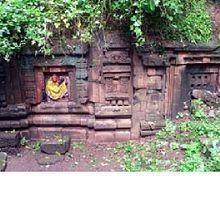
The visible superstructure measures approximately 6.75 metres in length and 4.35 metres in width. The temple is unique because it is partially buried on three sides, with only the eastern entrance fully excavated, creating a cool, cave-like interior.
The Bada (Vertical Walls)
The Bada (wall portion) is divided into three horizontal bands:
- Pabhaga (Base): Consists of three mouldings (approx. 0.85 metres).
- Jangha (Wall): The central vertical section, standing 1.55 metres high.
- Baranda (Coping): A projecting course measuring 0.33 metres.
Ornamentation
The exterior is decorated with:
- Raha Niches: The eastern wall features two vertical pilasters flanking a niche. The niche is crowned with a Vajramundi and features a “peeping human face”—a typical Kalinga motif symbolizing the divine looking out.
- Scroll Works: The jambs of the niche feature intricate bands of scroll works—lotus leaves, beaded designs, and floral motifs.
- Ghata Pallava: The base and top of the pilasters are adorned with pot-and-foliage motifs (Ghata Pallava), signifying fertility and abundance.
- The Khura (Base Moldings): Inscribed on the south wall are four decorated vertical pilasters with Chaitya medallions, similar to the famous Vaital Deula.
The Jagamohana (Assembly Hall)
The Jagamohana (pilgrim hall) is rectangular in shape. Historically, it was decorated with three baluster windows, though the interior is now simpler. The temple is unique in that the original doorjambs are still buried, requiring careful excavation to reveal further details.
Darshan & Ritual Logistics (2026 Update)
Unlike the massive complexes that operate 24/7, the Narayani Temple follows traditional temple timings, often linked to the adjacent Bhabani Sankar temple precincts. As of 2026, the temple maintains a standard daily schedule.
Daily Timings
| Session | Timing | Activity |
|---|---|---|
| Morning Darshan | 06:00 AM – 12:00 PM | Mangala Alati, Abhishekam |
| Afternoon Break | 12:00 PM – 03:00 PM | Temple Closed |
| Evening Darshan | 03:00 PM – 07:00 PM | Sandhya Alati, Dhupa |
Key Sevas and Online Booking
The temple administration (under the Lingaraja Temple Committee) has digitized offerings for devotees unable to visit physically.
- Abhishekam (Ritual Bathing): Performed on Tuesdays and Fridays.
- Chandi Patha: Recitation of the Durga Saptashati (essential for fulfilling wishes).
- Online Seva: Bookings are handled through the official Odisha Temple Portal. Look for “Narayani Temple Bhabani Sankar Precinct” under the dropdown menu.
2026 Festival Calendar
- Chaitra Mela (April 2026): The most significant annual festival held in the Indian month of Chaitra. The temple is decorated with lights, and a massive fair takes place in the village, celebrating the victory of good over evil.
- Durga Puja/Navaratri (Oct 2026): Special Havishti Yagna is performed. The atmosphere is electric, and the temple remains open from 4:00 AM to 10:00 PM.
- Deepavali (Nov 2026): The deity is adorned with gold ornaments and lit by thousands of earthen lamps.
Practical Visitor Guidance
Dress Code and Etiquette
As part of the sacred Lingaraja complex, strict adherence to traditional dress is required. Men must wear dhotis or trousers (no shorts). Women should wear sarees or full-length dresses. The temple authorities may refuse entry to those in Western casual wear.
Photography and Mobiles
Photography of the inner sanctum (Garbhagriha) is strictly prohibited by the ASI. However, photography of the exterior architecture and the surrounding Bindusagar tank is permitted. Mobile lockers are available at the entrance of the main Lingaraja complex, as electronic devices are not allowed inside the sanctum.
Crowd Management & Accessibility
The Narayani shrine is situated within a dense residential area and the temple precinct. It is less crowded than the main Lingaraja shrine but can get busy during Tuesdays and festival mornings.
- Best Hours: Visit between 8:00 AM and 10:00 AM on weekdays to avoid crowds.
- Summer (April-June): Odisha can be intensely hot. Carry a water bottle (plastic is banned, use steel/bamboo) and an umbrella.
- Monsoon: The stone steps can be slippery; wear rubber-soled footwear.
Pilgrimage Connectivity
How to Reach
The Narayani Temple is centrally located in Bhubaneswar, making it highly accessible.
- Nearest Airport: Biju Patnaik International Airport (BBI) is approximately 5 km away (15-20 minutes by taxi).
- Nearest Railway Station: Bhubaneswar Railway Station (BBS) is about 3 km away. Auto-rickshaws and city buses (Route 12) ply regularly to Lingaraja Temple.
- By Road: The temple is located on the Tala Bazar Road (connecting Lingaraja Temple to Bindusagar). It connects to NH-16 (formerly NH-5), the primary arterial road of the city.
Nearby Sacred Sites
Construct a spiritual circuit by visiting these adjacent landmarks:
- Bindusagar Lake: Located just 20 meters North-East of the temple. It is a massive sacred tank where the ashes of Lord Shiva are said to have dissolved. Taking a dip here is considered highly meritorious.
- Arjuneswara Temple: Located 5 meters North-East. A smaller but ancient Shiva temple contemporary to the Narayani shrine.
- Bhabani Sankara Temple: The Narayani Temple is situated within the precinct of this larger complex. It is a significant Shakti-peetha location.
Frequently Asked Questions (FAQ)
What is the primary deity form at Narayani Temple?
The primary deity is Goddess Narayani, depicted with ten arms seated in the Padmasana (lotus position). She is a form of Shakti combining the protective energies of Vishnu (Narayana) and the ferocity of Durga.
Is there a VIP darshan entry available?
Strictly speaking, the Narayani Temple does not have a separate VIP entry gate like larger commercial temples. However, the temple administration may allow priority access for senior citizens or donors booking specific Sevas online. It is best to inquire at the counter of the adjacent Bhabani Sankar temple office.
What is the best time to visit to avoid crowds?
The best time to visit is early morning between 6:30 AM and 8:00 AM on weekdays (Tuesday being the busiest). Avoid Sundays and major festival days unless you are prepared for heavy crowds.
Can I visit with family and children?
Yes, the site is family-friendly. However, keep in mind that the pathway from the main road to the shrine involves navigating narrow lanes and stone steps. Strollers may be difficult to use. The surrounding Bindusagar area offers open space for children to rest.
Is the temple open for all religions?
Like most Hindu temples in India, entry is primarily for devotees of the faith. Non-Hindus are generally allowed to view the architecture from the Jagamohana (hall) but may be restricted from entering the inner sanctum. Modest dressing and respectful behavior are mandatory for all visitors.
Contact Details
Address: Narayani Temple, Tala Bazar Road, Lingaraja Area, Bhubaneswar, Odisha, 751002
Administrative Contact: Office of the Bhabani Sankar Temple Committee (Under Endowments Commission, Govt. of Odisha)
Recent Posts

आना भी अकेला है जाना भी अकेला है – Lyrics & Meaning | BharatTemples
आना भी अकेला है जाना भी अकेला है – A Prayer to the Divine Witness Origin & Spiritual Essence Why This Bhajan Resonates Devotees turn to this bhajan in moments of deep reflection—when life’s attachments begin to ache. The…

माता शेरावाली के द्वार जो भी जाता है – Lyrics & Meaning
माता शेरावाली के द्वार जो भी जाता है – A Prayer to Maa Sherawali Origin & Spiritual Essence Why This Bhajan Resonates Devotees turn to this bhajan in times of fear or uncertainty—its promise that no one leaves Maa’s…

मार लेना सपणी उबार लेणा भवरा – Lyrics & Meaning
मार लेना सपणी उबार लेणा भवरा – A Prayer to the Divine Beloved Origin & Spiritual Essence Why This Bhajan Resonates Devotees chant this in moments of deep vulnerability—its cry of “मार लेना सपणी, उबार लेणा भवरा” is the…

हमें श्याम सुंदर भरोसा तुम्हारा – Lyrics & Meaning
हमें श्याम सुंदर भरोसा तुम्हारा – A Prayer to Shyam Sundar Origin & Spiritual Essence Why This Bhajan Resonates Devotees chant this when feeling alone—its refrain ‘de do sahara’ is the soul’s cry for divine support. Lyrics in Hindi…

Mere Satguru Ne Di Thi Davai Lyrics in Hindi & Meaning
Mere Satguru Ne Di Thi Davai: Invoking the Guru’s Liberating Wisdom This soul-stirring bhajan venerates the Satguru (True Spiritual Master) as the divine physician who dispenses the only remedy for life’s deepest sufferings. Composed by Sant Karmaveer Tufani, it…

Janm Diyo Thari Maa Dukh Dekhiyo Lyrics in Hindi & Meaning
जन्म दियो थारी माँ दुख देखियो (Maa’s Grief Upon Birthing You) This soul-stirring Chetavani Bhajan (admonitory hymn) is addressed to the Divine Mother (Maa) – a call for repentance when children forget their filial duties in the dark age…
Bhadi Sabha Mein Thane Manaun Lyrics in Hindi & Meaning
Bhadi Sabha Mein Thane Manaun: Invoking the Spear-Wielding Mother Mata Bhawani (श्री ज्वाला भवानी), the fiery manifestation of Shakti worshipped as the Protector of Dharma in Her Dhaulagarh sanctum. Origin & Spiritual Essence Composed in Rajasthani folk tradition by…
श्याम सुन्दरवा छोटे छोटे कनुवा Lyrics & Meaning
श्याम सुन्दरवा छोटे छोटे कनुवा (Shyam Sundarva Chhote Chhote Kanuva) is a heartfelt invocation to Lord Krishna in his most enchanting form—Shyam Sundar (the dark, beautiful one). This bhajan is a plea for the divine child Kanha to grace…
Maat Meri Chintapurni Lyrics in Hindi & Meaning
Maat Meri Chintapurni is a heartfelt devotional prayer dedicated to Maa Chintapurni, a form of the Divine Mother. She is revered as the remover of worries and the granter of wishes, especially venerated in the Himalayan region of Himachal…
थारी रे नदियां का ढावा पे खीची राजा Lyrics & Meaning
खीची राजा का अद्भुत युद्ध: एक शौर्य गाथा यह भजन एक पौराणिक या ऐतिहासिक शूरवीर राजा की वीरता का वर्णन करता है, जो प्रायः गुजराती लोक संस्कृति में लोककथाओं का हिस्सा है। इसकी रचना दुर्गेश कटारा ने की है…