
Contents
- 1 The Cosmic Dance of Grace: A Definitive Pilgrimage Guide to Nataraja Temple, Cuddalore
The Cosmic Dance of Grace: A Definitive Pilgrimage Guide to Nataraja Temple, Cuddalore
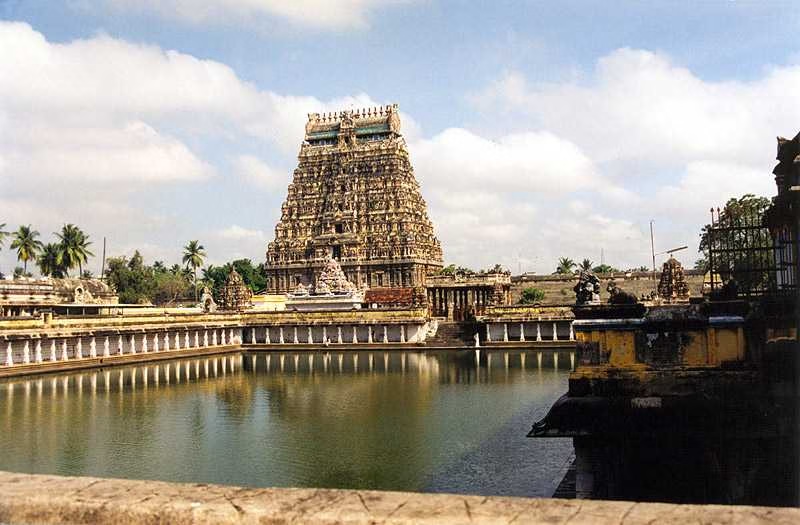
In the heart of Tamil Nadu, where the spiritual atmosphere is as thick as the coastal humidity, stands the Nataraja Temple in Chidambaram. More than a mere structure of stone, this is the celestial stage where Lord Shiva performs the Ananda Tandava—the Dance of Delight. It is a place where the material world dissolves into the ethereal, and the devotee witnesses the eternal rhythm of the universe.
As we look toward 2026, this guide serves as your compass to the Kovil (temple) of all temples, balancing deep reverence with the practical logistics required for a seamless pilgrimage.
1. Introduction & Spiritual Essence
The Lord of Dance
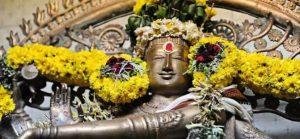
At the heart of this sanctum is Nataraja, Shiva manifested as the cosmic dancer. Unlike the Swayambhu (self-manifested) lingas found in other parts of India, the deity here is a Chit Sabha—a formless representation of the Chidambara Rahasyam (The Great Secret of Chidambaram). The temple name itself translates to “clothed in thought” or “atmosphere of wisdom,” signifying the space where the physical meets the metaphysical.
Phalaśruti: Why Devotees Visit
Legends dictate that a pilgrimage to this shrine offers benefits beyond measure. The primary spiritual reward is the dissolution of karma through witnessing the Ananda Tandava. It is believed that standing before the Nataraja sanctum helps devotees transcend the cycle of birth and death, offering liberation (Moksha). Specifically, pilgrims seek:
- Cleansing Ancestral Karma: Performing rites here is said to liberate ancestors from their karmic debts.
- Artistic & Creative Inspiration: As the patron deity of dance and arts, practitioners of Bharatanatyam and music visit to seek blessings for perfection in their craft.
- Wisdom: The sanctum is located at the heart chakra of the earth, granting clarity and wisdom to the seeker.
2. Historical Origins & Scriptural Legend
Chola Legacy and Temporal Architecture
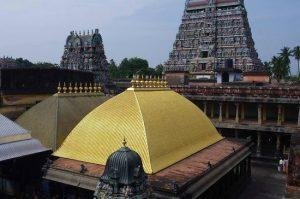
While the roots of the shrine are mythical, the current architectural complex was built in the 10th century CE by the Chola Dynasty. King Parantaka I, who considered Nataraja his family deity, gilded the sanctum roof, earning the title Pon Veinda Perumal (The King who covered in gold). It was during the reign of Rajaraja Chola I (985-1013 CE) that the temple saw significant expansion and the restoration of the Tevaram hymns.
Scriptural and Oral Traditions
The Skanda Purana and the Suta Samhita reference the divine dance that took place here to subdue the arrogance of sages. According to temple records and oral tradition, the spot was originally a dense forest (Thillai) inhabited by sages who performed black magic. Shiva appeared as a Bhikshatana (beggar) and danced to break their ego, establishing the Sthala Purana that anchors the temple’s identity.

3. Architectural Marvels
Dravidian Masterpiece
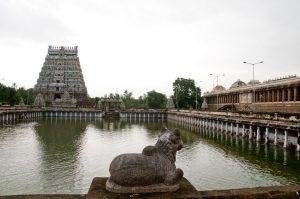
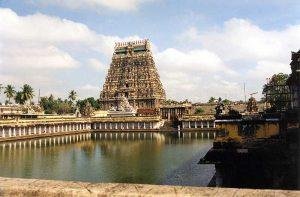
The temple is a quintessential example of the Dravida style of temple architecture. It spans 40 acres within a nearly square courtyard, aligned perfectly along the north-south and east-west axes, adhering to strict Vastu Shastra principles.
The Five Sacred Sabhas
The temple is unique for its five distinct pavilions (Sabhas), each representing a different aspect of Shiva’s cosmic play:
- Chit Sabha (Raja Sabha): The inner sanctum housing the Chidambara Rahasyam (the formless void representing Shiva).
- Nritta Sabha: The dance hall, featuring 108 Karanas (dance poses) carved on the pillars, a silent testimony to Bharatanatyam.
- Raja Sabha: The Nandi Mandapa, used for processional deities.
- Deva Sabha: The hall of deities.
- Chandikesvara Sabha: Dedicated to the guardian deity.
The Gopurams
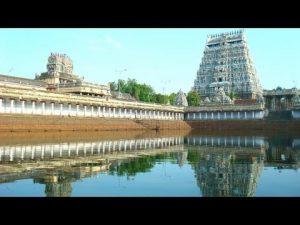
The skyline is dominated by four towering gopurams (gateways), with the Southern Tower standing at 150 feet. These act as visual markers for devotees, each step of ascent symbolizing a movement toward higher consciousness.
4. Darshan & Ritual Logistics (2026 Update)
Managing the logistics of a temple with such high footfall requires planning. Below are the general operational timings. Please verify with the temple administration for specific festival deviations.
Daily Darshan Timings
| Session | Timing | Status |
|---|---|---|
| Morning | 6:00 AM – 12:00 PM | General Darshan Open |
| Afternoon | 12:00 PM – 4:00 PM | Sanctum Closed for Abhishekam |
| Evening | 4:00 PM – 9:00 PM | General Darshan Open |
| Night | 9:00 PM – 9:30 PM | Final Palliyarai Pooja |
Key Sevas & Online Booking
To perform specific rituals, devotees can utilize the online portal managed by the Hindu Religious and Charitable Endowments (HR&CE) Department.
- Abhishekam: Performed during the afternoon closure. Must be booked 7 days in advance.
- Archana: Available on arrival at the counter.
- Rudra Homam: Available for special occasions; requires priest assistance.
Booking Link: HRCE Tamil Nadu Portal
2026 Major Festivals
- Arudra Darshanam: January 5, 2026. Celebrates the cosmic dance; the temple is lavishly decorated.
- Maha Shivaratri: February 26, 2026. The annual Natyanjali dance festival concludes on this day.
- Aippasi Poornima: November 5, 2026. A major full moon celebration in the Tamil calendar.
5. Practical Visitor Guidance
Code of Conduct & Dress Code
Traditional attire is mandatory to maintain the sanctity of the temple.
- Men: Dhoti or formal trousers with a shirt. No shorts or sleeveless t-shirts.
- Women: Saree, Salwar Kameez, or traditional skirt and blouse.
Crowd Management & Best Time to Visit
- Best Hours: 6:00 AM – 8:00 AM or 7:00 PM – 9:00 PM.
- Seasonal Advice: Chidambaram is humid year-round. In May, carry a water bottle and a hand fan. Monsoons (October–November) bring heavy rains; an umbrella is essential.
- Lockers: Mobile phones and large bags are not permitted inside the inner sanctum. Free locker facilities are available near the Rajagopuram.
Accessibility
The temple has leveled pathways for wheelchairs around the main corridors, though access to the inner sanctum involves steps and may require assistance.
6. Pilgrimage Connectivity
How to Reach
- By Air: The nearest airport is Pondicherry Airport (PNY), approximately 60 km away. The next major international hub is Chennai (MAA), 220 km north.
- By Rail: Chidambaram Railway Station is well-connected to Chennai, Trichy, and Villupuram via daily express trains.
- By Road: Chidambaram is located on National Highway 32 (NH-32). Regular bus services operate from Chennai, Madurai, and Tiruchirapalli.
Sacred Circuits (Pilgrimage Circuit)
Many devotees combine a visit to Chidambaram with the nearby holy sites to complete a spiritual circuit:
- Thiruvanaikaval (Trichy): Home to the Jambukeswarar Temple (one of the Pancha Bhoota Stalas for Water).
- Kumbakonam: Famous for the Sarangapani Temple and the Mahamaham tank.
- Vaitheeswaran Koil: Known for healing rituals and the shrine of Murugan.
7. Frequently Asked Questions (FAQ)
1. Is there a VIP darshan entry?
Yes, the temple offers a special darshan ticket (often priced around ₹100) for a faster queue. However, during peak festivals like Arudra Darshan, all devotees generally join the common queue to maintain order.
2. Can we perform our own Abhishekam?
No, only authorized temple priests (Dikshitars) can perform the Abhishekam. Devotees may sponsor the ritual and witness it from a designated gallery.
3. Is photography allowed inside the temple?
Photography is strictly prohibited inside the inner sanctum (Raja Sabha) and the Nritta Sabha. It is allowed in the outer corridors and courtyard, but drones are banned without special government permission.
4. What is the difference between the Nataraja of Chidambaram and others?
Most Nataraja idols are made of stone or metal. The Nataraja of Chidambaram is unique because the primary deity is a space within the sanctum, symbolized only by a small, inverted Veena-shaped villaku (lamp). The metallic Nataraja idol is the processional deity used for festivals.
5. Is there a dress code for children?
While there is no strict enforcement for young children, it is customary and respectful to dress them in traditional attire.
Conclusion
The Nataraja Temple is not merely a monument of the past; it is a living, breathing center of spiritual energy. As you walk through its four gopurams, leaving the chaos of the modern world behind, you enter a realm governed by rhythm and divinity. Whether you seek artistic inspiration or liberation from the cycle of rebirth, the Ananda Tandava in Chidambaram awaits your presence.
Contact Details
Official Address:
Nataraja Temple, Chidambaram,
Cuddalore District, Tamil Nadu 608001
Phone: +91-4144-230288 (Temple Office)
Recent Posts

Shri Kaamkoteeshwar Mandir, Varanasi – History & Significance
In the heart of Kashi, the eternal city of Lord Shiva, where the Ganges flows with celestial grace, stands the Shri Kaamkoteeshwar Mandir. This sacred Sannidhi is not merely a temple but a profound spiritual bridge between the Northern…

ओ सांवरे तूने ही मुझको संभाला – Lyrics & Meaning
ओ सांवरे तूने ही मुझको संभाला – A Prayer to Shyam Origin & Spiritual Essence Why This Bhajan Resonates Devotees chant this when overwhelmed by life’s storms—the refrain ‘तूने ही मुझको संभाला’ is the soul’s sigh of relief: “You…

कथा ये है महाराज मेरे की – Lyrics & Meaning
कथा ये है महाराज मेरे की छत्रपति संभाजी महाराज – A Prayer to Chhatrapati Sambhaji Maharaj Origin & Spiritual Essence Why This Bhajan Resonates Devotees chant this when their spirit feels tested—its powerful refrain “महाराज मेरे” is a soul’s…

Rigveda Samhita Yathartha Anuvada (ऋग्वेद संहिता यथार्थ अनुवाद) – Complete Set with Anvayartha & Hindi/English Translation
The Rigveda is the oldest surviving scripture of humanity and the foundational text of Sanātana Dharma. For serious students, scholars, UPSC aspirants studying ancient Indian history, Sanskrit learners, and spiritual seekers, a precise and grammatically structured translation is indispensable.…

आना भी अकेला है जाना भी अकेला है – Lyrics & Meaning | BharatTemples
आना भी अकेला है जाना भी अकेला है – A Prayer to the Divine Witness Origin & Spiritual Essence Why This Bhajan Resonates Devotees turn to this bhajan in moments of deep reflection—when life’s attachments begin to ache. The…

माता शेरावाली के द्वार जो भी जाता है – Lyrics & Meaning
माता शेरावाली के द्वार जो भी जाता है – A Prayer to Maa Sherawali Origin & Spiritual Essence Why This Bhajan Resonates Devotees turn to this bhajan in times of fear or uncertainty—its promise that no one leaves Maa’s…

मार लेना सपणी उबार लेणा भवरा – Lyrics & Meaning
मार लेना सपणी उबार लेणा भवरा – A Prayer to the Divine Beloved Origin & Spiritual Essence Why This Bhajan Resonates Devotees chant this in moments of deep vulnerability—its cry of “मार लेना सपणी, उबार लेणा भवरा” is the…

हमें श्याम सुंदर भरोसा तुम्हारा – Lyrics & Meaning
हमें श्याम सुंदर भरोसा तुम्हारा – A Prayer to Shyam Sundar Origin & Spiritual Essence Why This Bhajan Resonates Devotees chant this when feeling alone—its refrain ‘de do sahara’ is the soul’s cry for divine support. Lyrics in Hindi…

Mere Satguru Ne Di Thi Davai Lyrics in Hindi & Meaning
Mere Satguru Ne Di Thi Davai: Invoking the Guru’s Liberating Wisdom This soul-stirring bhajan venerates the Satguru (True Spiritual Master) as the divine physician who dispenses the only remedy for life’s deepest sufferings. Composed by Sant Karmaveer Tufani, it…

Janm Diyo Thari Maa Dukh Dekhiyo Lyrics in Hindi & Meaning
जन्म दियो थारी माँ दुख देखियो (Maa’s Grief Upon Birthing You) This soul-stirring Chetavani Bhajan (admonitory hymn) is addressed to the Divine Mother (Maa) – a call for repentance when children forget their filial duties in the dark age…