
Contents
Introduction & Spiritual Essence
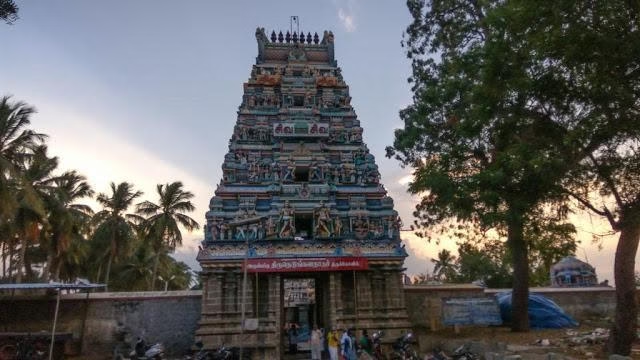
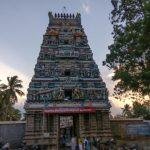
Nestled in the sacred plains of Thirunedunkulam, the Nedungalanathar Temple stands as a testament to ancient Saivite devotion. Located in the Trichy district of Tamil Nadu, this temple is one of the revered 275 Paadal Petra Sthalams—hallowed sites glorified by the Nayanar saints in the Thevaram hymns. The presiding deity, Nedungalanathar (also known as Nitya Sundareswarar), is a self-manifested (Swayambhu) Shiva Linga. The mother deity here is Oppila Nayaki (also called Mangalambikai).
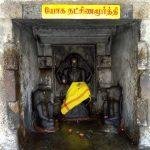
Phalaśruti (Spiritual Benefits): Devotees visit this shrine specifically to alleviate ancestral karma and seek blessings for harmonious marriages and childbirth. Legend holds that Mother Parvathi performed intense penance here to reunite with Lord Shiva, making the temple a powerful site for those seeking union or reconciliation. Worshipping the Yoga Dhakshinamoorthy here is believed to bestow profound knowledge and intellect.
Historical Origins & Scriptural Legend
According to temple records and local history, the structure dates back to the Chola period, spanning an area of 2 acres. It is the 125th Devaram Padal Petra Shiva Sthalam and the 8th Sthalam on the southern bank of the river Cauvery in Chozha Nadu.
Sthala Purana (Local Legends):
- The Ardhanareshwarar Form: While the sanctum houses a Shiva Linga, it is believed that Lord Shiva exists here as Artha Nareeshwarar—parting his left side to merge with Mother Parvathi, though she is in a formless state within the sanctum.
- The Thief’s Test: Tradition holds that to test Mother Parvathi’s devotion, Shiva appeared before her as a thief while she was performing penance near the Thazhai (screw pine) grove at Olimadhi cholai. Frightened, she hid, but later, the Lord revealed his true form and took her to Kailash.
- Vandhiya Chola’s Vision: The deity is named Nitya Sundareswarar (Ever Beautiful) because he appeared in celestial beauty to King Vandhiya Chola.
Architectural Marvels
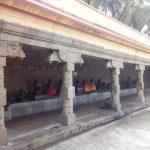
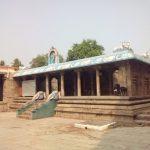
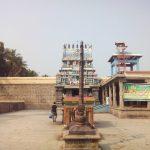
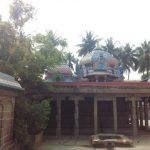
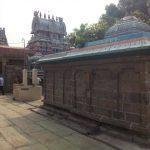
The temple showcases classic Dravidian architecture, characterized by its massive Gopurams (gateway towers) and spacious Prakaram (corridor).
Key Features:
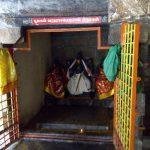
- Sanctum Sanctorum: The central shrine houses the Swayambhu Linga. Interestingly, the Utsavar (procession deity) known as Lord Somaskanda is unique as it lacks a right thumb—a result of a legend where an angry king cut the thumb of the idol while the Lord was serving as a disguised witness for a devotee.
- Sub-Shrines: The temple complex includes dedicated shrines for Yoga Dhakshinamoorthy, Lord Ayyanar, and Nataraja.
- Pond: The temple tank is located in the northern part, adding to the Vastu balance of the complex.
Darshan & Ritual Logistics (2026 Schedule)
Devotees are encouraged to partake in the various Sevas offered to the deity. Abhishekam (ritual bathing) is a primary form of worship here, often performed with milk, honey, and sandalwood paste.
Daily Timings:
| Session | Timing |
|---|---|
| Morning Darshan | 6:00 AM – 12:00 PM |
| Afternoon Break | 12:00 PM – 4:00 PM |
| Evening Darshan | 4:00 PM – 8:00 PM |
Key Sevas & Booking:
While the temple relies heavily on traditional worship, major rituals can be requested at the counter upon arrival. For those looking to perform specialized pujas (e.g., Abhishekam, Archana), it is recommended to contact the temple administration directly. Online booking platforms generally do not support this specific Paadal Petra Sthalam directly, so on-site arrangement is the standard procedure.
2026 Festival Calendar:
- Monthly Pradosham: Observed on the 13th day of every lunar fortnight (Check local Panchangam for exact dates).
- Aadi Month (July–August): Special Surya Puja is performed from Aadi 7 to Aadi 12. Friday worship in this month is considered highly auspicious for marriage-seeking devotees.
- Nalla Varusham: Prayers dedicated to the Four Saivite Saints (Naalvar) are held on their specific birth star days.
Practical Visitor Guidance
Ensuring a hassle-free visit requires adherence to local customs and logistical planning.
- Dress Code: Traditional attire is mandatory. Men should wear Veshti (dhoti) or pants with a shirt; women should wear saree, salwar kameez, or long skirts.
- Photography: Photography is prohibited inside the inner sanctum. Please respect the sanctity of the deity.
- Crowd Management: The temple attracts significant crowds during Aadi Fridays and Pradosham. Best time to visit: Weekday mornings between 7:00 AM and 9:00 AM. Summers (May/June) are hot; carry water and an umbrella.
- Accessibility: The temple is accessible for seniors, though the inner sanctum requires navigating a few steps.
Pilgrimage Connectivity
The temple is strategically located near Trichy, making it accessible for a day trip or a wider pilgrimage circuit.
How to Reach:
- By Road: Located on the Trichy–Thanjavur route via NH 136. The nearest bus stop is Thuvakudi (4 km from the temple). From Trichy Central Bus Stand, direct buses are available, though frequency is limited. Share autos are easily available from Thuvakudi to the temple.
- By Train: Trichy Junction (approx. 25 km) is the nearest major railway station. Thiruverumbur (approx. 13 km) is the closest suburban station.
- By Air: Trichy International Airport (TIR) is located approximately 26 km away.
Nearby Sacred Sites (The Cauvery Belt):
- Samayapuram Mariamman Temple: (33 km) A powerful shrine dedicated to Goddess Mariamman.
- Thiruvanaikoil (Jambukeswarar Temple): (25 km) One of the Pancha Bhoota Stalas (Water element).
- Srirangam (Ranganathaswamy Temple): (27 km) The largest functioning temple in the world.
Frequently Asked Questions (FAQ)
1. Is there a VIP darshan entry at Nedungalanathar Temple?
No, there is no specific VIP darshan entry. The temple follows a standard queue system for all devotees, ensuring an equal and peaceful darshan experience.
2. What is the significance of the ‘Aradhana’ for Yoga Dhakshinamoorthy?
The Yoga Dhakshinamoorthy shrine here is powerful for students and seekers of knowledge. Worshipping him with a ghee lamp on Thursdays for 5 consecutive weeks is believed to enhance intellect and academic success.
3. Can I perform the ‘Ragu Kaalam’ worship for Mother Oppila Nayaki?
Yes. Worshipping the Mother during Ragu Kaalam (a specific inauspicious time in Hindu astrology) on nine consecutive Tuesdays with a lemon ghee lamp is a popular remedy for removing impediments and poverty.
4. Are there accommodation facilities available at the temple?
The temple does not have a guest house. However, plenty of accommodation options are available in Trichy city (approx. 22 km away) ranging from budget lodges to luxury hotels.
5. What is the historical evidence of the temple?
The temple is inscribed in the Thevaram hymns by Saint Tirugnanasambandar, confirming its antiquity to the early medieval period. The architectural style clearly indicates Chola construction.
Address: Thiru Nedungala Nathar Temple, Thirunedungalam – 620 015, Trichy District, Tamil Nadu.
Contact: +91 431 252 0126 / 2510241

Recent Posts

ओ सांवरे तूने ही मुझको संभाला – Lyrics & Meaning
ओ सांवरे तूने ही मुझको संभाला – A Prayer to Shyam Origin & Spiritual Essence Why This Bhajan Resonates Devotees chant this when overwhelmed by life’s storms—the refrain ‘तूने ही मुझको संभाला’ is the soul’s sigh of relief: “You…

कथा ये है महाराज मेरे की – Lyrics & Meaning
कथा ये है महाराज मेरे की छत्रपति संभाजी महाराज – A Prayer to Chhatrapati Sambhaji Maharaj Origin & Spiritual Essence Why This Bhajan Resonates Devotees chant this when their spirit feels tested—its powerful refrain “महाराज मेरे” is a soul’s…

Rigveda Samhita Yathartha Anuvada (ऋग्वेद संहिता यथार्थ अनुवाद) – Complete Set with Anvayartha & Hindi/English Translation
The Rigveda is the oldest surviving scripture of humanity and the foundational text of Sanātana Dharma. For serious students, scholars, UPSC aspirants studying ancient Indian history, Sanskrit learners, and spiritual seekers, a precise and grammatically structured translation is indispensable.…

आना भी अकेला है जाना भी अकेला है – Lyrics & Meaning | BharatTemples
आना भी अकेला है जाना भी अकेला है – A Prayer to the Divine Witness Origin & Spiritual Essence Why This Bhajan Resonates Devotees turn to this bhajan in moments of deep reflection—when life’s attachments begin to ache. The…

माता शेरावाली के द्वार जो भी जाता है – Lyrics & Meaning
माता शेरावाली के द्वार जो भी जाता है – A Prayer to Maa Sherawali Origin & Spiritual Essence Why This Bhajan Resonates Devotees turn to this bhajan in times of fear or uncertainty—its promise that no one leaves Maa’s…

मार लेना सपणी उबार लेणा भवरा – Lyrics & Meaning
मार लेना सपणी उबार लेणा भवरा – A Prayer to the Divine Beloved Origin & Spiritual Essence Why This Bhajan Resonates Devotees chant this in moments of deep vulnerability—its cry of “मार लेना सपणी, उबार लेणा भवरा” is the…

हमें श्याम सुंदर भरोसा तुम्हारा – Lyrics & Meaning
हमें श्याम सुंदर भरोसा तुम्हारा – A Prayer to Shyam Sundar Origin & Spiritual Essence Why This Bhajan Resonates Devotees chant this when feeling alone—its refrain ‘de do sahara’ is the soul’s cry for divine support. Lyrics in Hindi…

Mere Satguru Ne Di Thi Davai Lyrics in Hindi & Meaning
Mere Satguru Ne Di Thi Davai: Invoking the Guru’s Liberating Wisdom This soul-stirring bhajan venerates the Satguru (True Spiritual Master) as the divine physician who dispenses the only remedy for life’s deepest sufferings. Composed by Sant Karmaveer Tufani, it…

Janm Diyo Thari Maa Dukh Dekhiyo Lyrics in Hindi & Meaning
जन्म दियो थारी माँ दुख देखियो (Maa’s Grief Upon Birthing You) This soul-stirring Chetavani Bhajan (admonitory hymn) is addressed to the Divine Mother (Maa) – a call for repentance when children forget their filial duties in the dark age…
Bhadi Sabha Mein Thane Manaun Lyrics in Hindi & Meaning
Bhadi Sabha Mein Thane Manaun: Invoking the Spear-Wielding Mother Mata Bhawani (श्री ज्वाला भवानी), the fiery manifestation of Shakti worshipped as the Protector of Dharma in Her Dhaulagarh sanctum. Origin & Spiritual Essence Composed in Rajasthani folk tradition by…