

Contents
Introduction & Spiritual Essence
The Neemach Mata Temple, perched gracefully on the Dewali hills overlooking the shimmering waters of Fateh Sagar Lake, is one of Udaipur, Rajasthan’s most revered spiritual sites. Dedicated to Mata Neemach (a form of Goddess Durga), the temple derives its name from the Sanskrit words Neem (to protect) and At (existent), signifying the “Protector of the World.”
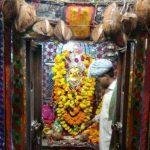
Locally known as the “Varaha Temple,” it is a Shakti Peeth where the idol is considered Swayambhu (self-manifested). This temple is unique for its west-facing entrance and the presence of stone idols of Ganesh and three lions guarding the sanctum.
Phalaśruti (Spiritual Benefits): Devotees believe that offering prayers here cleanses ancestral karma and brings protection from negative energies. The specific boon associated with Neemach Mata is the removal of fear and the granting of courage to face life’s adversities.
Historical Origins & Scriptural Legend
While the exact date of construction is not recorded in stone, tradition holds that the temple was established during the reign of the Sisodia Rajputs, roughly between the 17th and 18th centuries. It was built as a protective shrine for the city of Udaipur, guarding the northwestern flank.
The Sthala Purana (Legend):
According to local lore, the image of the Goddess was not installed by human hands but appeared naturally on a rock face. The temple name is also linked to the Varaha Avatar of Lord Vishnu, as the area was historically associated with meditative practices by ancient sages. The temple records suggest that the current structure was renovated to preserve the sanctity of the original self-manifested idol.
Architectural Marvels
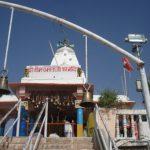
The architecture of Neemach Mata Temple is a beautiful blend of Heritage Hindu Styles, primarily reflecting the regional aesthetics of Rajasthan rather than a strictly defined Nagara or Dravida form. The structure features:
- Carved Shikharas: The spires are adorned with intricate Rajputana floral motifs and geometric patterns.
- West-Facing Sanctum: Unlike most temples, the inner sanctum (Garbhagriha) has a west-facing opening, which is considered highly auspicious in local Vastu traditions.
- Stone Sculptures: The exterior walls feature detailed carvings of deities, and the courtyard houses idols of Lord Ganesha and three majestic stone lions, symbolizing strength and protection.
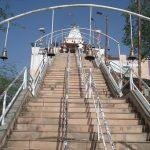
The walkway leading up to the temple is an architectural feat in itself—a 900-meter winding path that offers panoramic views of the Aravalli range and Fateh Sagar Lake.
Darshan & Ritual Logistics
Visitors can perform Darshan (viewing of the deity) throughout the day. For deeper spiritual engagement, the temple priests facilitate various Sevas (services).
Daily Timings
The temple remains open from early morning until late evening. The cool morning breeze and the sunset views are particularly mesmerizing.
| Session | Timings |
|---|---|
| Morning Darshan | 6:00 AM – 12:30 PM |
| Afternoon Break | 12:30 PM – 3:00 PM |
| Evening Darshan | 3:00 PM – 9:00 PM |
Key Sevas & Online Booking
Popular rituals include the Morning Abhishekam (ritual bathing of the deity) and Shayan Aarti (evening lullaby ceremony). While the temple administration is managed by the Shri Neemach Mata Temple Trust, standard Puja materials can be purchased at the entrance.
Note: For specific 2026 festival events, it is recommended to contact the temple office or check local listings closer to the date.
Practical Visitor Guidance
To ensure a comfortable visit, please adhere to the following guidelines:
- Dress Code: Traditional attire is recommended. Modest clothing (covering shoulders and knees) is required for entry into the inner sanctum.
- Footwear: Shoes must be removed at the designated shoe stand near the base of the hill or at the temple entrance (free of charge).
- Photography: Photography is allowed in the outer courtyard but is strictly prohibited inside the sanctum.
- Accessibility: The temple is accessible via two routes: a 900-meter trek up a paved hill path (stairs and slope) or a motorable road. The walk is pollution-free and scenic.
- Crowd Management: The best time to visit to avoid crowds is early morning (6:00 AM – 8:00 AM) or late evening. During summer (April–June), carry water and a hat as the walk can be strenuous under the sun.
Pilgrimage Connectivity
How to Reach:
The temple is located in the Shilpgram area, just off Fateh Sagar Road. It is approximately 5 km from Udaipur City Railway Station.
- Nearest Airport: Maharana Pratap Airport (UDR) – 22 km.
- Nearest Railway Station: Udaipur City Station – 5 km.
- By Road: The temple is well connected via local auto-rickshaws and taxis. The specific address is Fateh Sagar Rd, Shilpgram, Udaipur, Rajasthan 313001.
Nearby Sacred Sites
Make the most of your pilgrimage circuit by visiting these nearby spiritual landmarks:
- Maharana Pratap Smarak: Located nearby on the same hill, dedicated to the legendary warrior king.
- Sukhadia Circle: A prominent landmark with a large fountain, often visited for evening leisure.
- Shilpgram: A rural arts and crafts complex dedicated to traditional Rajasthani and Gujarati tribal structures.
Photo Gallery


Frequently Asked Questions (FAQ)
1. Is there a VIP or Special Darshan entry?
The temple trust provides a separate queue for senior citizens and differently-abled visitors. However, for general devotees, there is no paid VIP entry; darshan is open to all on a first-come, first-served basis.
2. Can we drive directly to the temple top?
Private vehicles are generally restricted from entering the hill boundary to maintain the sanctity and cleanliness of the area. However, specific arrangements for elderly devotees may be available at the base gate—please consult the security personnel on duty.
3. What is the best time to visit Neemach Mata Temple?
The ideal months are October to March when the weather in Udaipur is pleasant. The monsoon season (July–September) offers lush green views of the Aravalli hills, while summers (April–June) are hot; carry ample water if visiting during this period.
4. Is there a facility for shoe storage?
Yes, free shoe-keeping facilities are available at the base of the hill near the ticket counter.
5. Are there food facilities available?
While there isn’t a full-fledged restaurant at the top, water stations are available. For meals, you can head to the eateries around Fateh Sagar Lake or the nearby Shilpgram complex.
Recent Posts

ओ सांवरे तूने ही मुझको संभाला – Lyrics & Meaning
ओ सांवरे तूने ही मुझको संभाला – A Prayer to Shyam Origin & Spiritual Essence Why This Bhajan Resonates Devotees chant this when overwhelmed by life’s storms—the refrain ‘तूने ही मुझको संभाला’ is the soul’s sigh of relief: “You…

कथा ये है महाराज मेरे की – Lyrics & Meaning
कथा ये है महाराज मेरे की छत्रपति संभाजी महाराज – A Prayer to Chhatrapati Sambhaji Maharaj Origin & Spiritual Essence Why This Bhajan Resonates Devotees chant this when their spirit feels tested—its powerful refrain “महाराज मेरे” is a soul’s…

Rigveda Samhita Yathartha Anuvada (ऋग्वेद संहिता यथार्थ अनुवाद) – Complete Set with Anvayartha & Hindi/English Translation
The Rigveda is the oldest surviving scripture of humanity and the foundational text of Sanātana Dharma. For serious students, scholars, UPSC aspirants studying ancient Indian history, Sanskrit learners, and spiritual seekers, a precise and grammatically structured translation is indispensable.…

आना भी अकेला है जाना भी अकेला है – Lyrics & Meaning | BharatTemples
आना भी अकेला है जाना भी अकेला है – A Prayer to the Divine Witness Origin & Spiritual Essence Why This Bhajan Resonates Devotees turn to this bhajan in moments of deep reflection—when life’s attachments begin to ache. The…

माता शेरावाली के द्वार जो भी जाता है – Lyrics & Meaning
माता शेरावाली के द्वार जो भी जाता है – A Prayer to Maa Sherawali Origin & Spiritual Essence Why This Bhajan Resonates Devotees turn to this bhajan in times of fear or uncertainty—its promise that no one leaves Maa’s…

मार लेना सपणी उबार लेणा भवरा – Lyrics & Meaning
मार लेना सपणी उबार लेणा भवरा – A Prayer to the Divine Beloved Origin & Spiritual Essence Why This Bhajan Resonates Devotees chant this in moments of deep vulnerability—its cry of “मार लेना सपणी, उबार लेणा भवरा” is the…

हमें श्याम सुंदर भरोसा तुम्हारा – Lyrics & Meaning
हमें श्याम सुंदर भरोसा तुम्हारा – A Prayer to Shyam Sundar Origin & Spiritual Essence Why This Bhajan Resonates Devotees chant this when feeling alone—its refrain ‘de do sahara’ is the soul’s cry for divine support. Lyrics in Hindi…

Mere Satguru Ne Di Thi Davai Lyrics in Hindi & Meaning
Mere Satguru Ne Di Thi Davai: Invoking the Guru’s Liberating Wisdom This soul-stirring bhajan venerates the Satguru (True Spiritual Master) as the divine physician who dispenses the only remedy for life’s deepest sufferings. Composed by Sant Karmaveer Tufani, it…

Janm Diyo Thari Maa Dukh Dekhiyo Lyrics in Hindi & Meaning
जन्म दियो थारी माँ दुख देखियो (Maa’s Grief Upon Birthing You) This soul-stirring Chetavani Bhajan (admonitory hymn) is addressed to the Divine Mother (Maa) – a call for repentance when children forget their filial duties in the dark age…
Bhadi Sabha Mein Thane Manaun Lyrics in Hindi & Meaning
Bhadi Sabha Mein Thane Manaun: Invoking the Spear-Wielding Mother Mata Bhawani (श्री ज्वाला भवानी), the fiery manifestation of Shakti worshipped as the Protector of Dharma in Her Dhaulagarh sanctum. Origin & Spiritual Essence Composed in Rajasthani folk tradition by…