
Contents
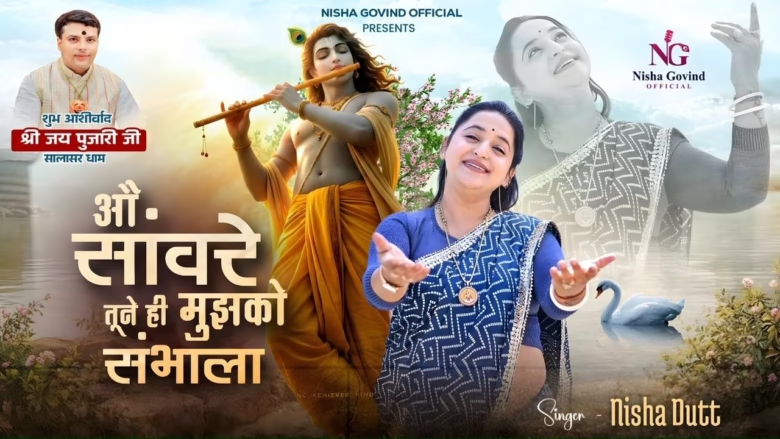
ओ सांवरे तूने ही मुझको संभाला – A Prayer to Shyam
Origin & Spiritual Essence
- Composer/Tradition: Lyrics – Rahul Sharma; Sung by Nisha Dutt. This bhajan flows from the timeless oral tradition of Shyam devotion.
- Phalaśruti: Sung to awaken trust in divine protection during loneliness, hardship, and abandonment.
Why This Bhajan Resonates
Devotees chant this when overwhelmed by life’s storms—the refrain ‘तूने ही मुझको संभाला’ is the soul’s sigh of relief: “You alone have held me.”
Lyrics in Hindi (Devanagari)
तर्ज – ओ साथी रे।
ओ सांवरे तूने ही मुझको संभाला,
तूने ही मुझको संभाला,
मुश्किल की घड़ियों में,
दुखों की झड़ियों में,
तू ही बना रखवाला,
तूने ही मुझको संभाला।।
दर दर मैं तो भटक रहा था,
आंखों में सबकी खटक रहा था,
कोई बना ना मेरा सहारा,
तब मैं अकेला सोच रहा था,
अब कौन आएगा,
साथ निभाएगा,
कौन बनेगा हमारा,
तूने ही मुझको संभाला।।
जिसको जैसी पड़ी जरूरत,
उसने अपना काम निकाला,
मुझको पड़ी जब उनकी जरूरत,
उनकी जुबां पर लग गया ताला,
अपने जो रूठे है,
साथी सब छूटे है,
तब जाके तुझको पुकारा,
तूने ही मुझको संभाला।।
जब से मैंने तुझको पुकारा,
साथ खड़ा है ये जग सारा,
साथ तू मेरा छोड़ ना देना,
जी ना सकेगा ‘राहुल’ तुम्हारा,
तू मेरी नैया है,
तू ही खिवैया है,
गोविंद ना करना किनारा,
‘निशा’ ने तुझको पुकारा,
तूने ही मुझको संभाला।।
ओ सांवरे तूने ही मुझको संभाला,
तूने ही मुझको संभाला,
मुश्किल की घड़ियों में,
दुखों की झड़ियों में,
तू ही बना रखवाला,
तूने ही मुझको संभाला।।
Simple English Meaning (Bhava-Focused)
The opening verse celebrates Shyam, the dark-hued Lord, as the sole protector. In every crisis, in every storm of sorrow, He becomes the guardian—this is not mere hope, but lived truth.
The second verse shares a soul’s journey—lost at every door, unseen by all, hearts failing as support vanishes. In utter aloneness, the cry rises: only You remain. And in that surrender, bhava blooms.
Third stanza reveals a divine paradox: when the world turns away, even loved ones fall silent, God seals their lips so the devotee turns only to Him. The pain of abandonment becomes the path to intimacy.
The final verse is a vow of mutual belonging. The world now stands with the devotee—but only because Shyam stands first. ‘You are my boat, You the boatman’—a beautiful metaphor for safe passage through life’s floods. The plea ‘do not leave me’ is not fear, but love’s deepest longing.
When & How to Chant
- Ideal time: Evenings, during Khatu Shyam aarti, or any moment of longing
- Simple offerings: A tulsi leaf, ghee lamp, or silent tears
- Repetition: Chant 11x when seeking comfort; 108x during Shravan or personal hardship
Cultural Legacy
This bhajan is lovingly sung in homes and satsangs across India.
Devotees Ask (FAQs)
Yes. Shyam meets you wherever you call—on the street, in silence, in your room. Your heart is His temple.
Each repetition deepens trust. It’s the soul remembering: even when I forgot You, You held me.
Tears are the purest offering. Let them flow—Shyam wipes each one with His flute.
Absolutely. It’s a lifeline. When the world turns away, this chant calls the One who never does.
You are the boat (नैया), and Shyam the boatman (खिवैया). Together, you cross life’s ocean safely.
🎬 Watch This Bhajan
Recent Posts

कथा ये है महाराज मेरे की – Lyrics & Meaning
कथा ये है महाराज मेरे की छत्रपति संभाजी महाराज – A Prayer to Chhatrapati Sambhaji Maharaj Origin & Spiritual Essence Why This Bhajan Resonates Devotees chant this when their spirit feels tested—its powerful refrain “महाराज मेरे” is a soul’s…

Rigveda Samhita Yathartha Anuvada (ऋग्वेद संहिता यथार्थ अनुवाद) – Complete Set with Anvayartha & Hindi/English Translation
The Rigveda is the oldest surviving scripture of humanity and the foundational text of Sanātana Dharma. For serious students, scholars, UPSC aspirants studying ancient Indian history, Sanskrit learners, and spiritual seekers, a precise and grammatically structured translation is indispensable.…

आना भी अकेला है जाना भी अकेला है – Lyrics & Meaning | BharatTemples
आना भी अकेला है जाना भी अकेला है – A Prayer to the Divine Witness Origin & Spiritual Essence Why This Bhajan Resonates Devotees turn to this bhajan in moments of deep reflection—when life’s attachments begin to ache. The…

माता शेरावाली के द्वार जो भी जाता है – Lyrics & Meaning
माता शेरावाली के द्वार जो भी जाता है – A Prayer to Maa Sherawali Origin & Spiritual Essence Why This Bhajan Resonates Devotees turn to this bhajan in times of fear or uncertainty—its promise that no one leaves Maa’s…

मार लेना सपणी उबार लेणा भवरा – Lyrics & Meaning
मार लेना सपणी उबार लेणा भवरा – A Prayer to the Divine Beloved Origin & Spiritual Essence Why This Bhajan Resonates Devotees chant this in moments of deep vulnerability—its cry of “मार लेना सपणी, उबार लेणा भवरा” is the…

हमें श्याम सुंदर भरोसा तुम्हारा – Lyrics & Meaning
हमें श्याम सुंदर भरोसा तुम्हारा – A Prayer to Shyam Sundar Origin & Spiritual Essence Why This Bhajan Resonates Devotees chant this when feeling alone—its refrain ‘de do sahara’ is the soul’s cry for divine support. Lyrics in Hindi…

Mere Satguru Ne Di Thi Davai Lyrics in Hindi & Meaning
Mere Satguru Ne Di Thi Davai: Invoking the Guru’s Liberating Wisdom This soul-stirring bhajan venerates the Satguru (True Spiritual Master) as the divine physician who dispenses the only remedy for life’s deepest sufferings. Composed by Sant Karmaveer Tufani, it…

Janm Diyo Thari Maa Dukh Dekhiyo Lyrics in Hindi & Meaning
जन्म दियो थारी माँ दुख देखियो (Maa’s Grief Upon Birthing You) This soul-stirring Chetavani Bhajan (admonitory hymn) is addressed to the Divine Mother (Maa) – a call for repentance when children forget their filial duties in the dark age…
Bhadi Sabha Mein Thane Manaun Lyrics in Hindi & Meaning
Bhadi Sabha Mein Thane Manaun: Invoking the Spear-Wielding Mother Mata Bhawani (श्री ज्वाला भवानी), the fiery manifestation of Shakti worshipped as the Protector of Dharma in Her Dhaulagarh sanctum. Origin & Spiritual Essence Composed in Rajasthani folk tradition by…

श्याम सुन्दरवा छोटे छोटे कनुवा Lyrics & Meaning
श्याम सुन्दरवा छोटे छोटे कनुवा (Shyam Sundarva Chhote Chhote Kanuva) is a heartfelt invocation to Lord Krishna in his most enchanting form—Shyam Sundar (the dark, beautiful one). This bhajan is a plea for the divine child Kanha to grace…