
Contents
Introduction & Spiritual Essence
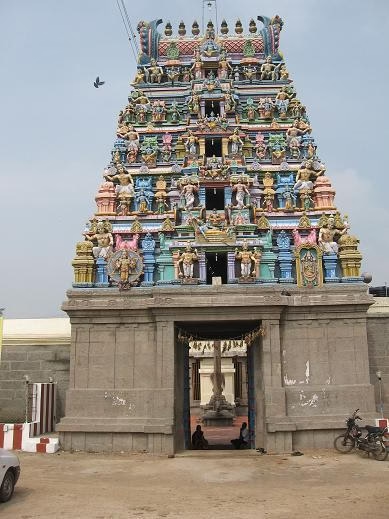
The Pachai Varana Perumal Temple, located in the serene village of Agaramel near Thiruvallur, Tamil Nadu, stands as a monumental testament to Dravidian heritage and unwavering devotion to Lord Vishnu. Known locally as the Haritha Varana Perumal Temple, the presiding deity is revered as Pachai (Green) Varana (Elephant) Perumal. This temple is unique because the primary form of Lord Vishnu is depicted as a Green Elephant, symbolizing purity, wisdom, and connection to nature.
Phalaśruti (Spiritual Benefits): Why do devotees make this pilgrimage? The temple is highly regarded for its ability to cleanse negative karma and provide spiritual stability. Devotees visit to seek relief from Pitru Dosha (ancestral afflictions) and to gain the blessings of Lord Vishnu for courage and wisdom. The temple is also an important Avarana Sthalam, where the Lord is believed to bless devotees with prosperity and marital harmony.
Historical Origins & Scriptural Legend
According to temple records and local tradition, this site holds immense significance in the history of the Alwar saints. It is the Avathara Sthalam (birthplace) of Mudaliandan (also known as Daasarathi), a primary disciple of the revered philosopher-saint Sri Ramanuja. Born here in the 11th century CE, Mudaliandan is celebrated for his exceptional service to his guru and his profound knowledge of the Vaikhanasa Aagamam.
The Legend of the Green Elephant:
The Sthala Purana recounts a fascinating Mahabharata legend. Following the great war, Yudhishthira, the Pandava king, faced guilt after falsely killing Ashwathama, the son of his guru Drona. Seeking redemption for this Brahmahatya Dosha (sin of killing a Brahmin), Yudhishthira performed a sacred Yagna at this very site on the advice of Sage Narada. Lord Krishna appeared from the sacrificial fire in the form of a radiant green elephant—Haritha Varana—to bless the king and absolve his sins. Thus, the deity remains here as the compassionate savior of Yudhishthira.
Architectural Marvels
The Pachai Varana Perumal Temple is an exquisite example of Dravidian Architecture, reflecting the grandeur of the late Chola or early Vijayanagara periods. The temple follows the traditional Vastu Shastra principles, oriented to harness solar and cosmic energies.
The Sanctum Sanctorum (Garbhagriha) houses the main deity in a standing posture facing East. The temple complex features:
- Rajagopuram: A towering gateway that welcomes pilgrims into the sacred precincts.
- Mandapas: Spacious pillared halls used for rituals and Utsavams (festivals), adorned with carvings of deities and mythological narratives.
- Sculptures: Intricate stonework depicting scenes from the Puranas and the life of Mudaliandan.
While the temple is a protected heritage structure under the Tamil Nadu Hindu Religious and Charitable Endowments (HR&CE) Department, its architecture showcases the distinct Vaikhanasa ritualistic layout, ensuring the sanctity of the space is maintained.
Darshan & Ritual Logistics
Visitors are encouraged to check the official timings before visiting, as schedules may vary during festivals. Below is the standard daily schedule.
| Darshan Slot | Timing | Details |
|---|---|---|
| Morning Darshan | 07:00 AM – 11:30 AM | Includes morning Sashthanam and Abhishekam. |
| Afternoon Break | 11:30 AM – 4:30 PM | Temple remains closed for sanctity. |
| Evening Darshan | 04:30 PM – 08:30 PM | Includes Deepa Aradhana and Sayarakshai. |
Key Sevas and 2026 Festivals
The rituals in this temple are conducted strictly according to the Vaikhanasa Aagamam. Key Sevas include:
- Abhishekam: Performed with holy water, milk, and herbal extracts.
- Archana: Chanting of Sahasranamams.
- Asthana Seva: Procession of the deity (check locally for timings).
Online Seva Booking: Devotees can now book Sevas online through the official Tamil Nadu HR&CE portal (temple.tamilnadutourism.tn.gov.in). Look for “Pachai Varana Perumal Temple” in the search list.
2026 Festival Dates (Predicted Calendar):
- Brahmotsavam: March 15th – March 24th, 2026 (Coinciding with Panguni Uthiram).
- Pavithrotsavam: October 22nd – October 24th, 2026 (Aippasi Month).
- Mudaliandan Thirunakshatram: April 10th, 2026 (Based on Chithirai month star).
Practical Visitor Guidance
To ensure a respectful and smooth visit, please adhere to the following guidelines:
- Dress Code: Traditional attire is mandatory. Men should wear dhotis or formal pants with shirts; women should wear sarees or salwar kameez.
- Photography: Photography is strictly prohibited inside the sanctum sanctorum. Flash photography is restricted in the inner prakaram.
- Mobile & Lockers: Visitors are advised to switch off mobile phones. Free locker facilities are available near the entrance for bags and electronics.
- Accessibility: The temple is accessible via stone steps. Wheelchair access is limited due to the heritage nature of the structure; assistance is available from temple staff.
Crowd Management & Seasonal Advice
Agaramel is generally peaceful, but crowds surge during Brahmotsavam.
- Best Time to Visit: Early mornings (7:00 AM – 8:00 AM) on weekdays offer the most serene darshan.
- Seasonal Tips: April and May are hot; carry a water bottle and an umbrella. The monsoon season (November) is beautiful but check for road accessibility.
Pilgrimage Connectivity
How to Reach Pachai Varana Perumal Temple
The temple is strategically located between Thirumazhisai and Poonamallee, making it accessible from Chennai.
- By Air: Chennai International Airport (MAA) is approximately 24 km away (approx. 45 mins by taxi).
- By Rail: The nearest major railway stations are Chennai Central (25 km) and Avadi Railway Station (13 km). Taxis and buses are readily available.
- By Road: The temple is 250 meters from the Agaramel bus stop. It is located off the Chennai – Tiruvallur High Road (SH-2). Buses numbered 54, 54C, and 54K from Poonamallee provide connectivity.
Nearby Sacred Sites
Enhance your pilgrimage by visiting these nearby temples:
- Sri Vedagiriswarar Temple (Thirumazhisai): A historic Shiva temple dedicated to Lord Shiva as the teacher of the Vedas.
- Kamakshi Amman Temple (Mangadu): A powerful Shakti shrine located about 9 km away, dedicated to Goddess Kamakshi.
- Sri Prasanna Venkateshwara Temple: Located in Thiruvallur, dedicated to Lord Venkateshwara.
Frequently Asked Questions (FAQ)
1. What is the significance of the name “Pachai Varana”?
The name derives from Sanskrit and Tamil roots. “Pachai” or “Haritha” means Green, and “Varana” means Elephant. The deity manifested in this form to absolve Yudhishthira of his sins in the Mahabharata.
2. Is there a VIP Darshan entry available?
Yes, special entry or VIP Darshan tickets are available at the temple counter for a nominal fee. However, during peak festival times like Brahmotsavam, general lines are strictly enforced to ensure order.
3. Can I book accommodation nearby?
The temple does not have dedicated guest houses, but there are several lodges and guest houses in Poonamallee and Avadi, ranging from budget to mid-range.
4. Is the temple open on all days?
Yes, the temple is open daily. However, it is closed between 11:30 AM and 4:30 PM. It is advisable to confirm public holidays before planning your trip.
5. What are the special rituals for ancestors?
While the primary focus is on Vishnu worship, specific prayers and tarpanam rituals can be arranged by speaking with the head priest (Gurukkal) upon arrival or via prior appointment.
Recent Posts

ओ सांवरे तूने ही मुझको संभाला – Lyrics & Meaning
ओ सांवरे तूने ही मुझको संभाला – A Prayer to Shyam Origin & Spiritual Essence Why This Bhajan Resonates Devotees chant this when overwhelmed by life’s storms—the refrain ‘तूने ही मुझको संभाला’ is the soul’s sigh of relief: “You…

कथा ये है महाराज मेरे की – Lyrics & Meaning
कथा ये है महाराज मेरे की छत्रपति संभाजी महाराज – A Prayer to Chhatrapati Sambhaji Maharaj Origin & Spiritual Essence Why This Bhajan Resonates Devotees chant this when their spirit feels tested—its powerful refrain “महाराज मेरे” is a soul’s…

Rigveda Samhita Yathartha Anuvada (ऋग्वेद संहिता यथार्थ अनुवाद) – Complete Set with Anvayartha & Hindi/English Translation
The Rigveda is the oldest surviving scripture of humanity and the foundational text of Sanātana Dharma. For serious students, scholars, UPSC aspirants studying ancient Indian history, Sanskrit learners, and spiritual seekers, a precise and grammatically structured translation is indispensable.…

आना भी अकेला है जाना भी अकेला है – Lyrics & Meaning | BharatTemples
आना भी अकेला है जाना भी अकेला है – A Prayer to the Divine Witness Origin & Spiritual Essence Why This Bhajan Resonates Devotees turn to this bhajan in moments of deep reflection—when life’s attachments begin to ache. The…

माता शेरावाली के द्वार जो भी जाता है – Lyrics & Meaning
माता शेरावाली के द्वार जो भी जाता है – A Prayer to Maa Sherawali Origin & Spiritual Essence Why This Bhajan Resonates Devotees turn to this bhajan in times of fear or uncertainty—its promise that no one leaves Maa’s…

मार लेना सपणी उबार लेणा भवरा – Lyrics & Meaning
मार लेना सपणी उबार लेणा भवरा – A Prayer to the Divine Beloved Origin & Spiritual Essence Why This Bhajan Resonates Devotees chant this in moments of deep vulnerability—its cry of “मार लेना सपणी, उबार लेणा भवरा” is the…

हमें श्याम सुंदर भरोसा तुम्हारा – Lyrics & Meaning
हमें श्याम सुंदर भरोसा तुम्हारा – A Prayer to Shyam Sundar Origin & Spiritual Essence Why This Bhajan Resonates Devotees chant this when feeling alone—its refrain ‘de do sahara’ is the soul’s cry for divine support. Lyrics in Hindi…

Mere Satguru Ne Di Thi Davai Lyrics in Hindi & Meaning
Mere Satguru Ne Di Thi Davai: Invoking the Guru’s Liberating Wisdom This soul-stirring bhajan venerates the Satguru (True Spiritual Master) as the divine physician who dispenses the only remedy for life’s deepest sufferings. Composed by Sant Karmaveer Tufani, it…

Janm Diyo Thari Maa Dukh Dekhiyo Lyrics in Hindi & Meaning
जन्म दियो थारी माँ दुख देखियो (Maa’s Grief Upon Birthing You) This soul-stirring Chetavani Bhajan (admonitory hymn) is addressed to the Divine Mother (Maa) – a call for repentance when children forget their filial duties in the dark age…
Bhadi Sabha Mein Thane Manaun Lyrics in Hindi & Meaning
Bhadi Sabha Mein Thane Manaun: Invoking the Spear-Wielding Mother Mata Bhawani (श्री ज्वाला भवानी), the fiery manifestation of Shakti worshipped as the Protector of Dharma in Her Dhaulagarh sanctum. Origin & Spiritual Essence Composed in Rajasthani folk tradition by…