
Contents
Introduction & Spiritual Essence
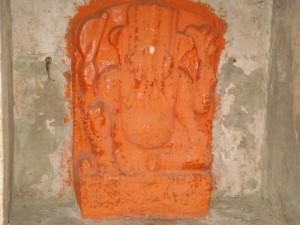
Amidst the ancient, labyrinthine lanes of Varanasi (Kashi), standing guard over the western horizon, resides a formidable manifestation of wisdom and remover of obstacles: Panchasya Vinayak. Also revered locally as Pancha Mukha Vinayak, this temple is a vital stop on the spiritual pilgrimage circuit of Kashi. Unlike the typical single-tusked depictions, the deity here is associated with the mystical Pancha Vinayaka (Five Ganeshas) mentioned in the sacred Kashi Khand of the Skanda Purana.
Phalaśruti (Spiritual Benefit):
Devotees visit this temple specifically to seek protection from evil forces and to cleanse deep-seated ancestral karma. As the guardian of the western gate of Kashi, worshipping the five-faced Ganesh here is believed to grant the devotee Siddhi (spiritual success), Buddhi (intellect), and liberation from past life karmic debts. It is a site of immense power for those facing obstacles in education or career.
Historical Origins & Scriptural Legend
The Legend of Pancha Mukha Vinayak
According to the Kashi Khand, Kashi is protected by distinct manifestations of Lord Ganesha at its four cardinal directions, with the fifth presiding over the center. Panchasya Vinayak guards the Pashchim Dwar (Western Gate). Tradition holds that this Swayambhu (self-manifested) murti emerged to protect the sacred land of Kashi from the Asuras (demons) and negative energies.
The temple records and oral histories suggest a lineage of worship dating back centuries, though the current structure has undergone renovations to preserve the sanctity of the sanctum. It remains one of the critical Pancha Tirthas associated with Ganesha in Varanasi.
Architectural Marvels
Fusion of Nagara and Local Varanasi Styles
The architecture of Panchasya Vinayak Temple is a testament to the resilience of traditional Hindu temple design. While the external facade may appear modest compared to the grand temples of South India, the inner sanctum follows the classical Nagara style, characterized by a tiered tower (Shikhara) that curves inward as it rises, culminating in a Amalaka (stone disk).
Key Elements:
– **The Sanctum (Garbhagriha):** Deeply recessed to maintain a cool, meditative atmosphere, housing the central murti.
– **Mandapas:** The pillared hall allows devotees to gather for collective prayers and rituals.
– **Vastu Shastra:** The placement is precise, aligned with the spiritual energy grid of Varanasi. The temple serves as a spiritual anchor point for the surrounding neighborhood of Pishachmochan.
Darshan & Ritual Logistics
The temple is a hub of daily spiritual activity. While specific administrative hours may vary, the sanctity of the temple ensures that devotees have access throughout the day.
Daily Timings (Estimated for 2026)
Note: Temple timings are subject to seasonal changes and festival schedules.
| Session | Timings |
|---|---|
| Morning Darshan | 05:00 AM – 1:00 PM |
| Afternoon Break | 1:00 PM – 4:00 PM |
| Evening Darshan | 4:00 PM – 10:00 PM |
Key Sevas & Booking
Devotees can perform standard Pooja by themselves, as the place of worship is open practically throughout the day. For special rituals, you may contact the designated priest.
Contact for Special Pujas: Shri Kamlesh Tiwari at Pishachmochan Teerth.
Contact: 09918989066
Online Seva Booking: While the specific temple website may vary, most Varanasi temple Sevas can be booked via the Kashi Vishwanath Temple official portal or local tour operators.
Major Festivals 2026
Panchasya Vinayak is celebrated with great fervor during Ganesh Chaturthi. For 2026, the approximate dates are:
- Ganesh Chaturthi: August 27, 2026 (Shukla Paksha Chaturthi of Bhadrapada month).
- Magh Ganesh Chaturthi: February 6, 2026.
Practical Visitor Guidance
Temple Etiquette
- Dress Code: Modest attire is required. Traditional Indian wear (Saree, Kurta-Pajama) is recommended. Western wear should be covered and respectful.
- Photography: Generally prohibited inside the inner sanctum. Please seek permission from the priest for external courtyard photography.
- Mobile/Lockers: Due to the narrow lanes of Varanasi, lockers are limited. It is advised to carry minimal luggage. Small mobile phones are allowed but should be kept silent.
- Accessibility: The temple is located in the old city. Visitors with mobility issues should hire a hand-pulled rickshaw to the nearest drop-off point.
Crowd Management & Seasonal Advice
- Best Hours: Early morning (6:00 AM – 8:00 AM) offers the most peaceful Darshan.
- Seasonal Tips:
– Summer (March-June): Carry a water bottle and cover your head with a scarf.
– Monsoon (July-Sept): Wear waterproof footwear; the old city drains can get clogged.
Pilgrimage Connectivity
How to Reach Panchasya Vinayak Temple
The temple is located in the Pishachmochan area, specifically at C-21/40.
Nearest Transportation:
– Airport: Lal Bahadur Shastri International Airport (LBS) Varanasi (Approx. 25 km).
– Railway Station: Varanasi Junction (BSB) is the main hub.
– Road Access: The temple lies near the Varanasi-Ghazipur road. From the railway station, take an auto-rickshaw to Luxa or Godaulia and proceed on foot through the historic lanes.
Nearby Sacred Sites (Pilgrimage Circuit)
To maximize your spiritual journey in Kashi, visit these nearby sites:
- Kashi Vishwanath Temple: The primary Jyotirlinga, located about 2 km away.
- Sanjay Ganesh Temple: Another ancient Ganesh temple nearby, located near Dashashwamedh Ghat.
- Annapurna Mata Temple: Located near Vishwanath Temple, dedicated to the Goddess of food.
Frequently Asked Questions (FAQ)
1. Is there a VIP Darshan entry at Panchasya Vinayak Temple?
As this is a neighborhood temple rather than a massive complex like Kashi Vishwanath, there is no official VIP ticket system. However, visiting early in the morning ensures a quick and intimate darshan.
2. Can I perform the Abhishekam myself?
Yes, the temple administration allows devotees to perform basic Abhishekam (ritual bathing) and offerings. For complex rituals, you should coordinate with Shri Kamlesh Tiwari at the provided contact number.
3. What is the significance of the “Five Faces”?
The five faces of the Vinayak represent the five elements (Pancha Bhuta) and the five directions (East, West, South, North, and Center). Worshipping the five-faced Ganesha here aligns the devotee with cosmic balance.
4. Is the temple accessible by car?
No, the temple is situated in the dense old city lanes. Vehicles cannot reach the doorstep. One must park at the outer parking lots (e.g., at Dashashwamedh or Godaulia) and walk or take a rickshaw.
5. Are there food facilities available?
The temple does not have a large community kitchen, but the area is filled with famous Varanasi street food vendors. Traditional Prasad can be purchased from local sweet shops.
Recent Posts

ओ सांवरे तूने ही मुझको संभाला – Lyrics & Meaning
ओ सांवरे तूने ही मुझको संभाला – A Prayer to Shyam Origin & Spiritual Essence Why This Bhajan Resonates Devotees chant this when overwhelmed by life’s storms—the refrain ‘तूने ही मुझको संभाला’ is the soul’s sigh of relief: “You…

कथा ये है महाराज मेरे की – Lyrics & Meaning
कथा ये है महाराज मेरे की छत्रपति संभाजी महाराज – A Prayer to Chhatrapati Sambhaji Maharaj Origin & Spiritual Essence Why This Bhajan Resonates Devotees chant this when their spirit feels tested—its powerful refrain “महाराज मेरे” is a soul’s…

Rigveda Samhita Yathartha Anuvada (ऋग्वेद संहिता यथार्थ अनुवाद) – Complete Set with Anvayartha & Hindi/English Translation
The Rigveda is the oldest surviving scripture of humanity and the foundational text of Sanātana Dharma. For serious students, scholars, UPSC aspirants studying ancient Indian history, Sanskrit learners, and spiritual seekers, a precise and grammatically structured translation is indispensable.…

आना भी अकेला है जाना भी अकेला है – Lyrics & Meaning | BharatTemples
आना भी अकेला है जाना भी अकेला है – A Prayer to the Divine Witness Origin & Spiritual Essence Why This Bhajan Resonates Devotees turn to this bhajan in moments of deep reflection—when life’s attachments begin to ache. The…

माता शेरावाली के द्वार जो भी जाता है – Lyrics & Meaning
माता शेरावाली के द्वार जो भी जाता है – A Prayer to Maa Sherawali Origin & Spiritual Essence Why This Bhajan Resonates Devotees turn to this bhajan in times of fear or uncertainty—its promise that no one leaves Maa’s…

मार लेना सपणी उबार लेणा भवरा – Lyrics & Meaning
मार लेना सपणी उबार लेणा भवरा – A Prayer to the Divine Beloved Origin & Spiritual Essence Why This Bhajan Resonates Devotees chant this in moments of deep vulnerability—its cry of “मार लेना सपणी, उबार लेणा भवरा” is the…

हमें श्याम सुंदर भरोसा तुम्हारा – Lyrics & Meaning
हमें श्याम सुंदर भरोसा तुम्हारा – A Prayer to Shyam Sundar Origin & Spiritual Essence Why This Bhajan Resonates Devotees chant this when feeling alone—its refrain ‘de do sahara’ is the soul’s cry for divine support. Lyrics in Hindi…

Mere Satguru Ne Di Thi Davai Lyrics in Hindi & Meaning
Mere Satguru Ne Di Thi Davai: Invoking the Guru’s Liberating Wisdom This soul-stirring bhajan venerates the Satguru (True Spiritual Master) as the divine physician who dispenses the only remedy for life’s deepest sufferings. Composed by Sant Karmaveer Tufani, it…

Janm Diyo Thari Maa Dukh Dekhiyo Lyrics in Hindi & Meaning
जन्म दियो थारी माँ दुख देखियो (Maa’s Grief Upon Birthing You) This soul-stirring Chetavani Bhajan (admonitory hymn) is addressed to the Divine Mother (Maa) – a call for repentance when children forget their filial duties in the dark age…
Bhadi Sabha Mein Thane Manaun Lyrics in Hindi & Meaning
Bhadi Sabha Mein Thane Manaun: Invoking the Spear-Wielding Mother Mata Bhawani (श्री ज्वाला भवानी), the fiery manifestation of Shakti worshipped as the Protector of Dharma in Her Dhaulagarh sanctum. Origin & Spiritual Essence Composed in Rajasthani folk tradition by…