
Contents
- 1 Panchavati Anjaneya Temple, Pondicherry: A Definitive Pilgrimage Guide (2026)
Panchavati Anjaneya Temple, Pondicherry: A Definitive Pilgrimage Guide (2026)
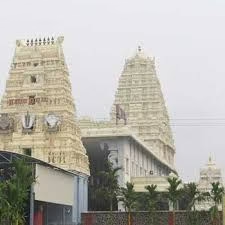
Welcome to the spiritual sanctuary of the Panchavati Anjaneya Temple in Pondicherry (Puducherry). As the name indicates, this is a premier Hanuman temple in Pondicherry, renowned for housing a colossal 32-foot tall idol of the presiding deity. Along with this gigantic murti, the splendid temple architecture draws a large number of tourists and followers to this place on a regular basis. The shrine sees a huge footfall of devotees on Saturdays, which is considered the ideal day to worship Lord Hanuman.
Sprawling across 12 acres of land, the Panchavati Temple is a rare space where you can spend tranquil moments appreciating the vibe and architectural beauty of the place, a stark contrast to the bustling city center. This guide is engineered for the modern pilgrim, providing historical context, devotional significance, and logistical precision for your visit in 2026.
1. Introduction & Spiritual Essence
The Panchavati Anjaneya Temple is dedicated to Anjaneya (Hanuman), the embodiment of strength, devotion, and humility. Unlike many temples where the deity is in a seated or kneeling posture, the presiding deity here stands in a majestic, heroic pose.
Phalaśruti: The Fruits of Visitation
According to temple lore and the beliefs of the local devotees, worshipping at this shrine offers specific spiritual benefits (Phalaśruti):
- Removal of Obstacles: Lord Hanuman is known as Sankat Mochan (deliverer from troubles). Devotees visit to overcome delays in marriage, career stagnation, and legal disputes.
- Cleansing Ancestral Karma: Rituals performed here are believed to pacify Pitru Doshas (ancestral flaws), bringing peace to the lineage.
- Protection from Evil: The vibration of the 32-foot idol is said to create a protective shield against negative energies.
- Health and Vitality: As the embodiment of physical prowess, prayers here are offered for the recovery from prolonged illness.
2. Historical Origins & Scriptural Legend
Builders and Century
While many ancient temples rely on inscriptions from medieval dynasties, the Panchavati Anjaneya Temple represents a unique blend of modern devotion and traditional aesthetics. It was established in the late 20th century (early 1990s), emerging as a significant spiritual landmark in the region. The temple is managed by a dedicated trust that oversees its expansion and the welfare activities associated with the shrine.
The Legend of Panchavati
The name “Panchavati” is deeply rooted in the Ramayana. It refers to the grove of five (Pancha) banyan trees (Vata) where Lord Rama, Sita, and Lakshmana dwelled during their exile in the forests of Dandaka. Tradition holds that this specific location in Pondicherry resonates with the energy of that sacred grove.
Local oral legends suggest that the site was once a dense forest of banyan trees. Devotees report that the energy of Lord Hanuman presides here as the eternal protector of the area, much as he guarded Lord Rama during their forest sojourn.
3. Architectural Marvels
The temple is a stunning example of contemporary South Indian temple architecture, specifically drawing from the Dravida style, yet infused with a grandeur that matches the scale of the deity.
The 32-Foot Anjaneya
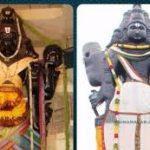
The central sanctum (Garbhagriha) houses the magnificent 32-foot idol of Anjaneya. Carved from a single block of stone (traditionally believed to be Saligrama or black granite), the deity stands in a dynamic posture. The sculpture depicts Hanuman holding the Gada (mace) and the Sanjivani mountain, with a serene yet powerful facial expression.
Vastu Shastra Elements
The temple complex is designed according to Vastu principles:
- Orientation: The main entrance faces East, allowing the first rays of the sun to illuminate the sanctum.
- Spacious Mandapas: The pillared hall (Mandapa) is designed to accommodate large gatherings during festivals, featuring intricate carvings of various forms of Vishnu and Shiva.
- Surrounding Deities: While Hanuman is the focus, the complex includes shrines for Lord Rama, Sita, Lakshmana, and Lord Shiva, creating a holistic pilgrimage circuit within the 12-acre grounds.
Photo Gallery
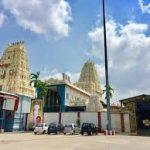
Capture the divine aura of the temple. The gallery below showcases the architectural details, the towering idol, and the serene landscape of the 12-acre complex.


4. Darshan & Ritual Logistics
Planning your visit requires awareness of the daily schedule and specific festivals. The temple is generally active from early morning until late evening.
Daily Timings (2026 Schedule)
Note: Timings may vary slightly during festival seasons.
| Session | Timing | Rituals |
|---|---|---|
| Morning | 06:00 AM – 12:00 PM | Thiruvabharanam, Archana, Abhishekam |
| Afternoon | 12:00 PM – 04:30 PM | Temple Rest / Alankaram |
| Evening | 04:30 PM – 08:30 PM | Deeparadhana, Nagara Parvai |
Key Sevas & Online Booking
To facilitate devotees worldwide, the temple has adopted digital booking systems.
- Abhishekam: Performed on Saturdays and Tuesdays. The idol is bathed with holy substances (milk, honey, sandalwood paste).
- Archana: Personalized chanting of Hanuman names.
- Annadhanam: Free meal service offered to all visitors.
Online Booking: Visit the official temple website or the Puducherry government tourism portal to book online seva slots. It is recommended to book at least 7 days in advance for special Abhishekams.
Major Festivals 2026
Mark your calendars for these auspicious dates:
- Hanuman Jayanti: (Grand procession and special rituals).
- Rama Navami: (Celebration of Lord Rama’s birth).
- Deepavali: (Special lighting and night darshan).
- Navaratri: .
5. Practical Visitor Guidance
To ensure a respectful and smooth darshan experience, please adhere to the following guidelines.
Dress Code & Etiquette
- Attire: Traditional Indian clothing is preferred (Dhoti, Kurta, Saree, Salwar Kameez). Western clothing like shorts, miniskirts, or sleeveless tops is discouraged.
- Footwear: Must be removed at the designated shoe stand before entering the temple premises.
- Photography: Photography inside the sanctum sanctorum is strictly prohibited. It is allowed in the outer prakarams (corridors) and courtyard, but drone usage requires special permission from local authorities.
Crowd Management & Accessibility
- Best Hours to Visit: To avoid long queues, visit between 8:00 AM and 10:00 AM on weekdays. Saturdays are exceptionally crowded; arriving before 6:00 AM is advised for a quick darshan.
- Mobile Lockers: The temple provides secure cloakrooms for mobile phones and bags, as electronic devices are not allowed inside the main shrine.
- Seasonal Advice: Pondicherry can get humid. In May (pre-monsoon), carry a water bottle and a handkerchief. During the monsoon (October–November), carry an umbrella.
- Accessibility: The temple complex is largely flat with ramp access to the main mandapa, making it wheelchair accessible.
6. Pilgrimage Connectivity
How to Reach
- By Air: The nearest airport is Puducherry International Airport (PNY), located roughly 8 km away. Alternatively, Chennai International Airport (MAA) is 150 km north.
- By Rail: Puducherry Railway Station (PDY) is the closest railhead, approximately 5 km from the temple. Auto-rickshaws and taxis are readily available.
- By Road: The temple is located off the ECR (East Coast Road) and is well-connected to the Chennai–Trichy National Highway (NH 32).
Nearby Sacred Sites (Pilgrimage Circuit)
Extend your spiritual journey by visiting these nearby landmarks:
- Irumbai Shiva Temple (Manakkula Vinayagar Temple): Located just a few kilometers away, this ancient temple is dedicated to Lord Ganesha and is historically significant for its connection to the Shiva temple in Thirukkovilur.
- Sri Vedapuriswarar Temple (Thirukkovilur): About 30 km away, this is a Paadal Petra Sthalam (shrine revered by Nayanmars) dedicated to Lord Shiva.
- Puvarasanathar Temple (Anandhapuram): Another nearby Shiva temple, roughly 25 km away, offering a quiet, spiritual atmosphere.
7. Frequently Asked Questions (FAQ)
1. Is there a VIP darshan entry available?
Yes, the temple offers a special entry darshan (Seva ticket) for devotees who wish to have a closer view of the deity. This can be booked online or at the counter near the main entrance. However, during peak hours, all devotees are generally accommodated in the queue.
2. What is the history of the 32-foot idol?
The idol was consecrated in the 1990s following the Agama Shastra norms. It is a modern marvel of sculpting, created to instill awe and devotion. Unlike ancient idols, this was carved by skilled artisans under the guidance of the temple trust to represent the imposing strength of Lord Hanuman.
3. Are there accommodation facilities available?
While the Panchavati Anjaneya Temple itself does not have a guest house, there are numerous lodges and hotels in the nearby town of Tindivanam and Puducherry city. Devotees often prefer staying in Puducherry for its wider range of options.
4. What is the significance of Saturday at this temple?
Saturday (Shanivar) is associated with Lord Hanuman in Hindu tradition. It is believed that worshipping Hanuman on Saturdays appeases the planet Saturn (Shani) and removes the hardships caused by its adverse positioning in one’s horoscope.
5. Is the temple open during lunch hours?
The sanctum is typically closed for a brief period between 12:00 PM and 4:30 PM for the deity’s rest. However, the outer complex and the shrine for Lord Rama usually remain open. It is best to check the notice board upon arrival.
Contact & Address
Panchavati Anjaneya Temple
Location: Near ECR, Panchavati Nagar, Pondicherry – 605102
Contact: +91-XXX-XXXX-XXXX (General Office)
Email: info@bharattemples.com (For editorial inquiries)
Recent Posts

Shri Kaamkoteeshwar Mandir, Varanasi – History & Significance
In the heart of Kashi, the eternal city of Lord Shiva, where the Ganges flows with celestial grace, stands the Shri Kaamkoteeshwar Mandir. This sacred Sannidhi is not merely a temple but a profound spiritual bridge between the Northern…

ओ सांवरे तूने ही मुझको संभाला – Lyrics & Meaning
ओ सांवरे तूने ही मुझको संभाला – A Prayer to Shyam Origin & Spiritual Essence Why This Bhajan Resonates Devotees chant this when overwhelmed by life’s storms—the refrain ‘तूने ही मुझको संभाला’ is the soul’s sigh of relief: “You…

कथा ये है महाराज मेरे की – Lyrics & Meaning
कथा ये है महाराज मेरे की छत्रपति संभाजी महाराज – A Prayer to Chhatrapati Sambhaji Maharaj Origin & Spiritual Essence Why This Bhajan Resonates Devotees chant this when their spirit feels tested—its powerful refrain “महाराज मेरे” is a soul’s…

Rigveda Samhita Yathartha Anuvada (ऋग्वेद संहिता यथार्थ अनुवाद) – Complete Set with Anvayartha & Hindi/English Translation
The Rigveda is the oldest surviving scripture of humanity and the foundational text of Sanātana Dharma. For serious students, scholars, UPSC aspirants studying ancient Indian history, Sanskrit learners, and spiritual seekers, a precise and grammatically structured translation is indispensable.…

आना भी अकेला है जाना भी अकेला है – Lyrics & Meaning | BharatTemples
आना भी अकेला है जाना भी अकेला है – A Prayer to the Divine Witness Origin & Spiritual Essence Why This Bhajan Resonates Devotees turn to this bhajan in moments of deep reflection—when life’s attachments begin to ache. The…

माता शेरावाली के द्वार जो भी जाता है – Lyrics & Meaning
माता शेरावाली के द्वार जो भी जाता है – A Prayer to Maa Sherawali Origin & Spiritual Essence Why This Bhajan Resonates Devotees turn to this bhajan in times of fear or uncertainty—its promise that no one leaves Maa’s…

मार लेना सपणी उबार लेणा भवरा – Lyrics & Meaning
मार लेना सपणी उबार लेणा भवरा – A Prayer to the Divine Beloved Origin & Spiritual Essence Why This Bhajan Resonates Devotees chant this in moments of deep vulnerability—its cry of “मार लेना सपणी, उबार लेणा भवरा” is the…

हमें श्याम सुंदर भरोसा तुम्हारा – Lyrics & Meaning
हमें श्याम सुंदर भरोसा तुम्हारा – A Prayer to Shyam Sundar Origin & Spiritual Essence Why This Bhajan Resonates Devotees chant this when feeling alone—its refrain ‘de do sahara’ is the soul’s cry for divine support. Lyrics in Hindi…

Mere Satguru Ne Di Thi Davai Lyrics in Hindi & Meaning
Mere Satguru Ne Di Thi Davai: Invoking the Guru’s Liberating Wisdom This soul-stirring bhajan venerates the Satguru (True Spiritual Master) as the divine physician who dispenses the only remedy for life’s deepest sufferings. Composed by Sant Karmaveer Tufani, it…

Janm Diyo Thari Maa Dukh Dekhiyo Lyrics in Hindi & Meaning
जन्म दियो थारी माँ दुख देखियो (Maa’s Grief Upon Birthing You) This soul-stirring Chetavani Bhajan (admonitory hymn) is addressed to the Divine Mother (Maa) – a call for repentance when children forget their filial duties in the dark age…