
Contents
- 1 Introduction & Spiritual Essence
- 2 Historical Origins & Scriptural Legend
- 3 Architectural Marvels
- 4 Darshan & Ritual Logistics
- 5 Practical Visitor Guidance
- 6 Pilgrimage Connectivity
- 7 Frequently Asked Questions (FAQ)
- 8 Architecture
- 9 Legend / Local stories
- 10 Photo Gallery
- 11 How to Reach:
- 12 Contact Details
Introduction & Spiritual Essence
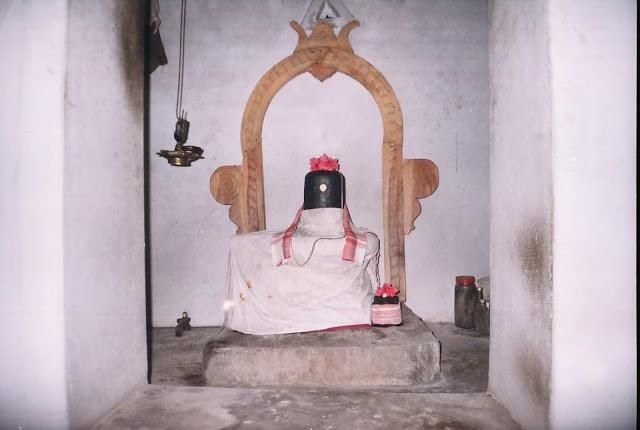
The Parasurameswarar Temple in Tirumalpur, Kanchipuram, stands as a profound testament to the Shaivite legacy of Tamil Nadu. Dedicated to Lord Shiva in the form of Parasurameswarar, this ancient shrine is deeply intertwined with the mythology of the Dashavatara (ten incarnations of Vishnu). The primary deity is a Swayambhu (self-manifested) Shiva Lingam, revered as the axis of spiritual energy for the region.
Phalaśruti: The Fruits of Devotion
Devotees flock to this temple seeking specific boons. According to the Sthala Purana, worshipping Lord Parasurameswarar here grants the following blessings:
- Cleansing Ancestral Karma: It is believed that performing rituals here liberates ancestors from Pitru Dosha (ancestral curses).
- Marital Harmony: The unique placement of the Goddess Brahmacharni Amman (facing the Lord on his right) is said to remove delays in marriage and ensure conjugal bliss.
- Vastu Rectification: As the temple faces West (contrary to the typical East-facing norms), it is considered a powerful remedy for Vastu defects in one’s residence.
Historical Origins & Scriptural Legend
The history of the Parasurameswarar Temple is a blend of mythological grandeur and recorded antiquity. While the structural architecture showcases the craftsmanship of subsequent centuries, the spiritual origins date back to the Treta Yuga.
The Legend of Parasuramar:
Tradition holds that the temple marks the site where Lord Rama (the 7th incarnation of Vishnu) performed penance to atone for the sin of killing Ravana (a Brahmin). However, some interpretations and local lore reference the 6th incarnation, Parasurama. It was here that the sage received his divine axe (Parasu) from Lord Shiva, thereby earning the name Parasuramar. This event sanctified the land, leading to the establishment of the temple.
Historical Timeline:
While definitive structural dating is complex, temple records and priestly traditions suggest a history spanning over 1,500 years. Some references in the Kanchi Puranam, historically preserved in fragments akin to archives from the Nalanda era, suggest the site’s spiritual significance may extend back nearly 3,000 years. The temple complex was likely expanded during the Pallava and early Chola periods, reflecting the region’s devotion to Shaivism.
Architectural Marvels
The Parasurameswarar Temple is a classic example of the Dravidian architectural style, characterized by its sturdy granite construction and intricate sculptural detailing.
Vastu Shastra & Orientation:
Unlike most Hindu temples which are oriented towards the East to welcome the rising sun, this temple is distinctly West-facing. From a Vastu perspective, this orientation is rare and potent; it is believed to enhance the spiritual merit (Punya) of the devotee and neutralize negative planetary influences.
Structural Layout:
- Sanctum Sanctorum (Garbhagriha): Houses the Swayambhu Lingam, which is slightly tilted towards the south.
- Ardha Mandapa: The pillared hall preceding the sanctum features stone carvings depicting various forms of Shiva.
- Gopuram: The temple tower is modest compared to the massive Rajagopurams of Kanchipuram, retaining a rustic, ancient charm preserved by the ASI (Archaeological Survey of India).
- Presiding Deity: The main Lingam is natural and unshaped, a true representation of a Kaala Meena (black granite) Lingam.
Darshan & Ritual Logistics
To facilitate a smooth pilgrimage experience in 2026, devotees are advised to adhere to the following schedules and booking protocols.
Daily Temple Timings
| Session | Timing | Activity |
|---|---|---|
| Morning | 6:00 AM – 12:00 PM | Abhishekam, Archana, General Darshan |
| Evening | 4:00 PM – 8:00 PM | Deepa Aradhana, Aarthi, General Darshan |
Key Sevas & Online Booking
Devotees can book major rituals through the official Tamil Nadu Hindu Religious & Charitable Endowments (HR&CE) portal.
- Abhishekam (Rudrabhishekam): Performed with milk, honey, and sandalwood paste. Best time: 7:00 AM.
- Archana: Personalized chanting of names. Available throughout open hours.
- Online Booking: Visit temple.tamilnadutourism.tn.gov.in and search for “Parasurameswarar Temple, Tirumalpur”.
2026 Major Festival Dates
- Maha Shivaratri: February 26, 2026 (Special night-long vigil and abhishekam).
- Arudra Darshanam: January 5, 2026 (Celebrating the cosmic dance of Nataraja).
- Kartikai Deepam: November 5, 2026 (Lighting of the holy lamp).
- Pradosham: 13th and 28th of every month (Specific Tamil calendar months vary).
Practical Visitor Guidance
Ensuring a respectful and hassle-free visit is crucial for maintaining the temple’s spiritual sanctity.
- Dress Code: Traditional attire is mandatory. Men must wear Dhoti or formal trousers/shirts; women are required to wear Saree, Salwar Kameez, or full-length skirts. Shorts and sleeveless tops are prohibited.
- Photography: Strictly prohibited inside the Sanctum Sanctorum. Photography is generally allowed in the outer prakaram (corridor) but requires permission from the temple executive officer.
- Electronics: Mobile phones are allowed but must be switched to silent mode. Lockers are available for electronic devices if required.
- Crowd Management:
- Best Hours: Weekday mornings between 7:00 AM and 9:00 AM offer the least crowd.
- Seasonal Advice: During summer (April–June), temperatures in Kanchipuram exceed 35°C. Carry a water bottle and a head covering. Monsoons (November) see higher footfall due to festival season.
- Accessibility: The temple complex is relatively compact but has granite steps at the entrance. Wheelchair access is limited to the outer courtyard.
Pilgrimage Connectivity
How to Reach
The temple is located in Tirumalpur village, approximately 20 km from the temple town of Kanchipuram.
- By Road: Take NH 75 (Bangalore – Chennai route) via Kanchipuram. From Kanchipuram, head towards Tiruthani/Tirumalpur. The village road connects directly to the temple entrance.
- By Rail: The nearest railway station is Tirumalpur Railway Station (located just 1 km from the temple). Alternatively, Kanchipuram Railway Station (20 km) connects to Chennai Egmore.
- By Air: Chennai International Airport (MAA) is the nearest airport, roughly 70 km away (approx. 1.5 hours drive).
Nearby Sacred Sites
Enhance your spiritual journey by visiting these nearby temples:
- Kailasanathar Temple, Kanchipuram: 20 km away. The oldest structural temple in Kanchipuram, built by the Pallavas.
- Ekambareswarar Temple: 22 km away. One of the Pancha Bhoota Stalas, representing the element of Earth.
- Thiruthani Murugan Temple: 25 km away. One of the six abodes of Lord Murugan, located on a hillock.
Frequently Asked Questions (FAQ)
1. Is there a VIP darshan entry available?
Yes, the temple facilitates a special darshan for elderly citizens, pregnant women, and differently-abled devotees. This can be arranged at the entrance counter upon production of valid ID proof. There is no specific “VIP” entry, but quick darshan tickets can be purchased online.
2. What is the significance of the West-facing orientation?
Most temples face East to catch the first rays of the sun. The Parasurameswarar Temple faces West, a rare architectural choice. Vastu experts suggest this orientation allows the devotee to offer prayers facing the setting sun, symbolizing the end of miseries and the setting of the ego.
3. Are there accommodation facilities nearby?
There are no hotels within Tirumalpur village. It is recommended to stay in Kanchipuram (20 km), which offers numerous guest houses (Dharmashalas) and hotels. The Tamil Nadu Tourism Development Corporation (TTDC) hotel in Kanchipuram is a reliable option.
4. What is the history behind the name ‘Tirumalpur’?
The name “Tirumalpur” combines “Tiru” (a respectful prefix) and “Mal” (a common suffix in Tamil Shaivite geography), signifying a holy abode. Historically, it was a settlement for merchants and artisans who served the temple.
5. Can we perform Thirumanjanam (self-abhishekam) ourselves?
No, only authorized temple priests are allowed to perform abhishekam inside the sanctum. Devotees can bring materials (milk, fruits, flowers) and hand them to the priest, who will perform the ritual on their behalf.
| Date built: | – |
|---|---|
| Deity: | Parasurameswarar |
| Architectural style: | Dravidian architecture |
| Major festivals | – |
| Locale: | Tirumalpur |
| District:: | Kanchipuram |
| Address: | – |
| Phone | – |
Architecture
Legend / Local stories
Photo Gallery
How to Reach:
Contact Details
Official Address
Recent Posts

ओ सांवरे तूने ही मुझको संभाला – Lyrics & Meaning
ओ सांवरे तूने ही मुझको संभाला – A Prayer to Shyam Origin & Spiritual Essence Why This Bhajan Resonates Devotees chant this when overwhelmed by life’s storms—the refrain ‘तूने ही मुझको संभाला’ is the soul’s sigh of relief: “You…

कथा ये है महाराज मेरे की – Lyrics & Meaning
कथा ये है महाराज मेरे की छत्रपति संभाजी महाराज – A Prayer to Chhatrapati Sambhaji Maharaj Origin & Spiritual Essence Why This Bhajan Resonates Devotees chant this when their spirit feels tested—its powerful refrain “महाराज मेरे” is a soul’s…

Rigveda Samhita Yathartha Anuvada (ऋग्वेद संहिता यथार्थ अनुवाद) – Complete Set with Anvayartha & Hindi/English Translation
The Rigveda is the oldest surviving scripture of humanity and the foundational text of Sanātana Dharma. For serious students, scholars, UPSC aspirants studying ancient Indian history, Sanskrit learners, and spiritual seekers, a precise and grammatically structured translation is indispensable.…

आना भी अकेला है जाना भी अकेला है – Lyrics & Meaning | BharatTemples
आना भी अकेला है जाना भी अकेला है – A Prayer to the Divine Witness Origin & Spiritual Essence Why This Bhajan Resonates Devotees turn to this bhajan in moments of deep reflection—when life’s attachments begin to ache. The…

माता शेरावाली के द्वार जो भी जाता है – Lyrics & Meaning
माता शेरावाली के द्वार जो भी जाता है – A Prayer to Maa Sherawali Origin & Spiritual Essence Why This Bhajan Resonates Devotees turn to this bhajan in times of fear or uncertainty—its promise that no one leaves Maa’s…

मार लेना सपणी उबार लेणा भवरा – Lyrics & Meaning
मार लेना सपणी उबार लेणा भवरा – A Prayer to the Divine Beloved Origin & Spiritual Essence Why This Bhajan Resonates Devotees chant this in moments of deep vulnerability—its cry of “मार लेना सपणी, उबार लेणा भवरा” is the…

हमें श्याम सुंदर भरोसा तुम्हारा – Lyrics & Meaning
हमें श्याम सुंदर भरोसा तुम्हारा – A Prayer to Shyam Sundar Origin & Spiritual Essence Why This Bhajan Resonates Devotees chant this when feeling alone—its refrain ‘de do sahara’ is the soul’s cry for divine support. Lyrics in Hindi…

Mere Satguru Ne Di Thi Davai Lyrics in Hindi & Meaning
Mere Satguru Ne Di Thi Davai: Invoking the Guru’s Liberating Wisdom This soul-stirring bhajan venerates the Satguru (True Spiritual Master) as the divine physician who dispenses the only remedy for life’s deepest sufferings. Composed by Sant Karmaveer Tufani, it…

Janm Diyo Thari Maa Dukh Dekhiyo Lyrics in Hindi & Meaning
जन्म दियो थारी माँ दुख देखियो (Maa’s Grief Upon Birthing You) This soul-stirring Chetavani Bhajan (admonitory hymn) is addressed to the Divine Mother (Maa) – a call for repentance when children forget their filial duties in the dark age…
Bhadi Sabha Mein Thane Manaun Lyrics in Hindi & Meaning
Bhadi Sabha Mein Thane Manaun: Invoking the Spear-Wielding Mother Mata Bhawani (श्री ज्वाला भवानी), the fiery manifestation of Shakti worshipped as the Protector of Dharma in Her Dhaulagarh sanctum. Origin & Spiritual Essence Composed in Rajasthani folk tradition by…