

Contents
Introduction & Spiritual Essence
In the pristine wilderness of Arunachal Pradesh, where the emerald Lohit River carves through the Himalayas, lies one of India’s most mystical sites: Parshuram Kund. Dedicated to Parshuram, the sixth avatar of Lord Vishnu and a timeless Brahmarishi, this site is not merely a geographical location but a powerful convergence of mythology, history, and divine energy.
According to Hindu mythology, Parshuram performed severe penance here to cleanse himself of the брахм (Brahmin) energy he expended during the Kartavirya Arjuna war. Devotees believe that a holy dip (snan) in the Kund’s icy waters during the auspicious period of Makar Sankranti washes away sins, liberates ancestors from the cycle of rebirth (Pitra Dosha), and bestows spiritual merit (Punya).
Phalaśruti: Why Visit Parshuram Kund?
- Ancestral Liberation: It is widely believed that offering prayers and taking a dip here liberates one’s ancestors from the cycle of reincarnation, specifically those awaiting salvation.
- Removal of Karmic Debt: As the abode of the warrior-sage, the site carries a frequency of purification, helping devotees sever ties with past negative karma.
- Healing Waters: The glacial meltwaters of the Lohit River, channeled through natural rock formations, are renowned for their therapeutic properties.
Historical Origins & Scriptural Legend
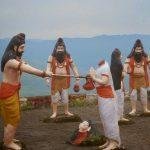
According to temple records and local tradition, the history of Parshuram Kund is intrinsically linked to the epic Padma Purana and the Kalki Purana. Legend holds that the mighty King Kartavirya Arjuna (Sahasrarjuna) stole the divine cow Kamadhenu from Sage Jamadagni (Parshuram’s father). Enraged by this act of adharma, Parshuram beheaded the king and his army. To atone for the sin of brahmahatya (killing a Brahmin), he sought a place of purification.
Guided by Lord Shiva, Parshuram meditated at the confluence of the Lohit and Brahmaputra rivers. It is said that the water turned blood-red due to his sins but turned crystal clear upon his penance, solidifying the site as a place of immense spiritual power.
The 1950 Earthquake & The New Kund
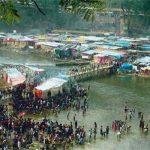
A defining moment in the site’s modern history occurred on August 15, 1950, when a massive 8.6 magnitude earthquake struck the Assam region. The seismic activity completely altered the landscape, burying the original stone-paved Kund beneath massive boulders.
However, a miracle occurred. In the riverbed, a new natural depression formed among the scattered boulders, mirroring the location of the original Kund. Devotees interpret this geological shift as a divine realignment by Parshuram himself, ensuring the continuity of the pilgrimage site. Today, the “New Kund” stands exactly where the waters diverge, revealing the sacred pit.
Architectural Marvels
Unlike the stone-carved grandeur of South Indian temples, Parshuram Kund represents a raw, nature-centric architectural style. The sanctity of the site lies in its geological formation rather than constructed arches.
- Natural Vastu: The site follows the principles of Vastu Shastra naturally, with the Lohit River flowing from North to South, and the Kund positioned in the Ishan Kone (Northeast corner) of the riverbed, attracting positive cosmic energy.
- The Confluence: The architecture is defined by the confluence of the Lohit and Brahmaputra (locally known as the Sadiya valley), creating a unique Triveni (triple confluence) atmosphere.
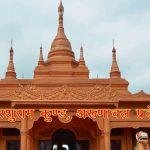
- The Shikhara: The main shrine, housing the idol of Parshuram with his axe (Parshu), features a modest Nagara-style tower, blending seamlessly with the forest backdrop.
Note: While the site is a major Hindu pilgrimage center, it is not currently listed as a UNESCO World Heritage Site or by the Archaeological Survey of India (ASI) as a protected monument, preserving its natural, unadulterated state.
Darshan & Ritual Logistics
Parshuram Kund is open year-round, but the pilgrimage season peaks during Makar Sankranti. The temple trust facilitates various Sevas (rituals) for devotees.
Daily Darshan Timings (2026 Schedule)
| Session | Timing | Activity |
|---|---|---|
| Morning | 5:00 AM – 1:00 PM | Opening of Sanctum, Snan (Holy Dip), Abhishekam |
| Afternoon | 1:00 PM – 3:00 PM | Break for Ritual Maintenance |
| Evening | 3:00 PM – 7:00 PM | Evening Aarti, Darshan Resumes |
Key Sevas & Online Booking
For the 2026 pilgrimage season, devotees can book specific rituals online. Visit the official website of the Parshuram Kund Development Committee.
- Abhishekam (Ritual Bathing): Performed on behalf of devotees unable to take the physical dip. Requires booking 24 hours in advance.
- Archana (Chanting): Personalized Vedic chanting for family well-being.
- Special Pooja for Makar Sankranti (Jan 14, 2026): The most auspicious day. Registration opens December 1, 2025.
2026 Festival Calendar
- Makar Sankranti: January 14, 2026 (Peak Crowd: 50,000+ devotees).
- Baisakhi: April 14, 2026 (Spring festival celebration).
- Parshuram Jayanti: May 2, 2026 (Akshaya Tritiya).
Practical Visitor Guidance
Given the rugged terrain and the nature of the rituals, proper preparation is essential for a safe and fulfilling journey.
- Dress Code: Modest attire is mandatory. Men should wear dhotis or full-length trousers; women should wear sarees or full-length salwar kameez. Bathing in Western swimwear is strictly prohibited.
- Photography: Photography is restricted near the sanctum and the Kund due to religious sentiments. Mobile photography is allowed in the courtyard, but drones require special district administration permission.
- Mobile Lockers: Paid locker facilities are available near the entry point. It is advised not to carry valuables to the riverbank.
- Accessibility: The descent to the riverbed involves approximately 150 uneven stone steps. It is challenging for those with mobility issues. Wheelchairs are not available on the riverbed.
- Crowd Management:
– Best Time to Visit: Early morning (5 AM – 8 AM) or late evening (4 PM – 6 PM) to avoid the mid-day rush.
– Seasonal Advice: Carry warm woolens from October to March. In May and June, carry ample water and sun protection as the region becomes humid.
Pilgrimage Connectivity
How to Reach Parshuram Kund
The Kund is located 21 km north of Tezu in the Lohit district.
- By Air: The nearest airport is Tezu Airport (TEZ), approximately 25 km away. For better connectivity, fly to Dibrugarh Airport (DIB) in Assam (approx. 180 km) and take a taxi.
- By Rail: The nearest broad-gauge railway station is Tinsukia (TSK), 120 km away. From Tinsukia, regular buses ply to Tezu via Namsai. Note: A proposed railway line (Rupai-Parshuram Kund) is currently under survey.
- By Road: Well-connected via National Highway 113 (formerly NH-52). Private taxis and state-run buses are available from Tezu, Tinsukia, and Dibrugarh.
Nearby Sacred Sites (Pilgrimage Circuit)
- Keshav Ghat (Tezu): A serene ghats on the Lohit River, ideal for morning rituals, located 21 km south.
- Parshuram Kund Museum: Located near the entrance, it houses artifacts depicting the life of Sage Parshuram and tribal culture of the Mishmi tribe.
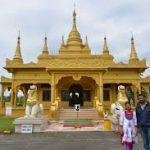
- Golden Pagoda (Namsai): A beautiful Buddhist monastery located 45 km from the Kund, representing the harmonious cultural blend of the region.
Photo Gallery




Frequently Asked Questions (FAQs)
1. Is there a VIP darshan entry at Parshuram Kund?
No, Parshuram Kund operates on a first-come-first-serve basis for darshan and snan. However, during Makar Sankranti, specific tokens are issued for the Pooja rituals which allow for a designated time slot. There is no separate entry for VIPs to maintain the spiritual equality of the site.
3. Can I perform the last rites (Shraddha) for my ancestors here?
Yes, this is one of the primary reasons devotees visit. The site is considered highly potent for Pitra Tarpan (offering to ancestors). Priests (Pandits) are available on-site to perform the rituals, especially during the Pitru Paksha and Makar Sankranti periods.
3. Is the water of the Kund safe for bathing?
The water is natural river water. While it is extremely cold and believed to have healing properties, those with respiratory or cardiac issues should consult a doctor before taking a dip, as the shock of the cold water can be intense.
4. Are there accommodation facilities near the Kund?
Basic guest houses and Dharamshalas are available in Tezu (21 km). For better hotels, Namsai (45 km) is recommended. It is advisable to book accommodation well in advance during the Makar Sankranti festival.
5. What is the best time of year to visit besides Makar Sankranti?
October to February is ideal for pleasant weather. The post-monsoon season (October-November) offers lush green landscapes and clearer skies, making it perfect for photography and peaceful meditation.
Contact Details
Parshuram Kund Development Committee
Address: Parsuram Kund, Arunachal Pradesh 792102
Contact: +91-XXXXXXXXXX (Official contact numbers are subject to change; please verify with the Lohit District Administration office in Tezu).
May the blessings of Lord Parshuram guide your path and bring peace to your soul.
Recent Posts

Shri Kaamkoteeshwar Mandir, Varanasi – History & Significance
In the heart of Kashi, the eternal city of Lord Shiva, where the Ganges flows with celestial grace, stands the Shri Kaamkoteeshwar Mandir. This sacred Sannidhi is not merely a temple but a profound spiritual bridge between the Northern…

ओ सांवरे तूने ही मुझको संभाला – Lyrics & Meaning
ओ सांवरे तूने ही मुझको संभाला – A Prayer to Shyam Origin & Spiritual Essence Why This Bhajan Resonates Devotees chant this when overwhelmed by life’s storms—the refrain ‘तूने ही मुझको संभाला’ is the soul’s sigh of relief: “You…

कथा ये है महाराज मेरे की – Lyrics & Meaning
कथा ये है महाराज मेरे की छत्रपति संभाजी महाराज – A Prayer to Chhatrapati Sambhaji Maharaj Origin & Spiritual Essence Why This Bhajan Resonates Devotees chant this when their spirit feels tested—its powerful refrain “महाराज मेरे” is a soul’s…

Rigveda Samhita Yathartha Anuvada (ऋग्वेद संहिता यथार्थ अनुवाद) – Complete Set with Anvayartha & Hindi/English Translation
The Rigveda is the oldest surviving scripture of humanity and the foundational text of Sanātana Dharma. For serious students, scholars, UPSC aspirants studying ancient Indian history, Sanskrit learners, and spiritual seekers, a precise and grammatically structured translation is indispensable.…

आना भी अकेला है जाना भी अकेला है – Lyrics & Meaning | BharatTemples
आना भी अकेला है जाना भी अकेला है – A Prayer to the Divine Witness Origin & Spiritual Essence Why This Bhajan Resonates Devotees turn to this bhajan in moments of deep reflection—when life’s attachments begin to ache. The…

माता शेरावाली के द्वार जो भी जाता है – Lyrics & Meaning
माता शेरावाली के द्वार जो भी जाता है – A Prayer to Maa Sherawali Origin & Spiritual Essence Why This Bhajan Resonates Devotees turn to this bhajan in times of fear or uncertainty—its promise that no one leaves Maa’s…

मार लेना सपणी उबार लेणा भवरा – Lyrics & Meaning
मार लेना सपणी उबार लेणा भवरा – A Prayer to the Divine Beloved Origin & Spiritual Essence Why This Bhajan Resonates Devotees chant this in moments of deep vulnerability—its cry of “मार लेना सपणी, उबार लेणा भवरा” is the…

हमें श्याम सुंदर भरोसा तुम्हारा – Lyrics & Meaning
हमें श्याम सुंदर भरोसा तुम्हारा – A Prayer to Shyam Sundar Origin & Spiritual Essence Why This Bhajan Resonates Devotees chant this when feeling alone—its refrain ‘de do sahara’ is the soul’s cry for divine support. Lyrics in Hindi…

Mere Satguru Ne Di Thi Davai Lyrics in Hindi & Meaning
Mere Satguru Ne Di Thi Davai: Invoking the Guru’s Liberating Wisdom This soul-stirring bhajan venerates the Satguru (True Spiritual Master) as the divine physician who dispenses the only remedy for life’s deepest sufferings. Composed by Sant Karmaveer Tufani, it…

Janm Diyo Thari Maa Dukh Dekhiyo Lyrics in Hindi & Meaning
जन्म दियो थारी माँ दुख देखियो (Maa’s Grief Upon Birthing You) This soul-stirring Chetavani Bhajan (admonitory hymn) is addressed to the Divine Mother (Maa) – a call for repentance when children forget their filial duties in the dark age…