Parvateeshwar Temple, Varanasi: History, Darshan Timings & Complete Pilgrimage Guide
Receive daily temple updates, divine darshan, and morning bhajans directly on WhatsApp.
Contents
- 1 Parvateeshwar Temple Varanasi: The Divine Shiv Ling Installed by Goddess Parvati
Parvateeshwar Temple Varanasi: The Divine Shiv Ling Installed by Goddess Parvati
1. Introduction & Spiritual Essence
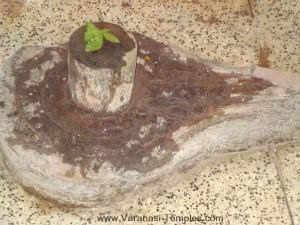
Nestled in the sacred lanes of Varanasi, the Parvateeshwar Temple stands as a testament to divine marital devotion and the boundless spiritual energy of Kashi. Dedicated to Lord Shiva, this ancient shrine is unique in its origin. While most temples in Kashi are ancient or mythological in origin, Parvateeshwar is special because it was installed by Devi Parvati (Sati) herself, following the express permission of Lord Shiva. The presiding deity is a Swayambhu (self-manifested) Shiv Ling.
Phalaśruti: The Fruits of Worship
Devotees flock to this temple seeking relief from the cycle of karma. According to the revered Kashi Khand (Chapter 93) of the Skanda Purana, worshipping Parvateeshwar offers immense spiritual benefits:
- Cleansing of Sins: It is believed that even the gravest sin, such as Brahma Hatya (the killing of a Brahmin), is washed away by the grace of Parvateeshwar.
- Attainment of Moksha: Regular worshippers are blessed with liberation from the cycle of birth and death.
- Post-Life Transformation: A devotee who regularly performs Puja here is said to transform into a Shiv Ling in Kashi after death, residing eternally in the holy city.
📖 Related: Vimal Aditya Temple Varanasi: History, Darshan Timings & Significance
2. Historical Origins & Scriptural Legend
The history of Parvateeshwar is woven into the fabric of cosmic mythology and local tradition. While specific dynastic records of its construction are obscured by time, its roots are deeply embedded in the Skanda Purana and oral histories.
The Legend of Divine Permission
Tradition holds that Goddess Parvati once inquired of Lord Shiva why Kashi was universally happy. Shiva explained that while a single Shiv Ling brings happiness to a 10-mile radius, Kashi is filled with countless Lings, making its joy immeasurable (Ananda Van).
Desiring to contribute to this spiritual wealth, Devi Parvati sought Shiva’s permission to install a Ling herself. As a Pativrata (devoted wife), she performed this sacred act with his blessings, and the Ling installed by her came to be known as Parvateeshwar.
Scriptural Significance
The Kashi Khand explicitly mentions this shrine, highlighting its power to grant prosperity and Moksha. The temple holds special significance during the Chaitra month (March-April). Specifically, on the Shukla Paksha Triteeya (the 3rd day of the bright fortnight), worshipping Parvateeshwar is believed to bring all-round prosperity and spiritual fulfillment.
3. Architectural Marvels
The architecture of Parvateeshwar Temple reflects the indigenous Nagara style, typical of the temple clusters in Varanasi. Given the compact nature of the space in the Aadi Mahadev area, the structure prioritizes the sanctity of the inner shrine over elaborate external facades.
Key Architectural Features
- The Sanctum (Garbhagriha): The temple houses a distinct Shiv Ling, revered as the installation of Goddess Parvati. The atmosphere within is dimly lit, creating a meditative focus on the Jyotirlinga.
- Stone Carvings: The walls and pillars display intricate carvings of various forms of Shiva and Parvati, though the structure has been renovated over centuries.
- Vastu Shastra: The temple follows the traditional Vastu alignments aligning the sanctum with the natural energies of the region, though it does not have a massive Shikhara (tower) like the grand Kashi Vishwanath Temple.
📖 Related: Prem Mandir, Mathura: History, Timings & Complete Pilgrimage Guide
Note: As a heritage structure in Varanasi, the temple is maintained by local trusts and aligns with the heritage preservation guidelines of the Varanasi district.
4. Darshan & Ritual Logistics
Visiting Parvateeshwar Temple requires adherence to specific timings and ritual schedules. Below is the general schedule for darshan.
| Session | Timings | Details |
|---|---|---|
| Morning Darshan | 5:00 AM – 12:00 PM | Opens with Mangala Aarti. Best time is 6:00 AM – 8:00 AM. |
| Afternoon Break | 12:00 PM – 3:00 PM | Temple may be closed for sanctity and preparations. |
| Evening Darshan | 3:00 PM – 11:00 PM | Includes Sandhya Aarti and Shayan Darshan. |
Key Sevas & Booking
Note: For temple-specific online booking, it is recommended to check the official Varanasi temple trust portals or visit the temple office directly.
- Abhishekam: Performed with water, milk, and honey. Timings: 6:00 AM – 8:00 AM.
- Rudrabhishek: A powerful Vedic ritual for peace and prosperity.
- Archana: Offering flowers and Bilva leaves to the deity.
Festival Dates 2026
Plan your visit for these significant 2026 dates:
- Mahashivratri: February 14, 2026. (Major festivities; expect crowds).
- Pradosh Vrat: Monthly (13th day of the lunar fortnight).
- Shivratri in Chaitra Month: April, 2026. This is particularly auspicious at Parvateeshwar.
5. Practical Visitor Guidance
Varanasi is a spiritual hub, and navigating the old city requires preparation.
Dress Code & Etiquette
Visitors must dress modestly. Traditional Indian attire (Saree, Kurta-Pajama) is preferred. Leather items are generally prohibited inside the sanctum.
Photography & Mobiles
Photography inside the sanctum is strictly prohibited. Mobile phones are allowed but must be silenced. Some smaller temples may require you to leave shoes at a designated counter (check locally for nominal fees).
Crowd Management
- Best Hours: Early morning (5:30 AM – 7:00 AM) or late evening (9:00 PM onwards).
- Seasonal Advice: Summers (April-June) in Varanasi are hot; carry water and a head covering. Winters (Dec-Feb) are foggy and cool; layers are recommended.
6. Pilgrimage Connectivity
The temple is located in the heart of the old city. Travel by auto-rickshaw or boat is the most convenient option.
📖 Related: Vedeshwar Temple, Varanasi: History, Darshan Timings & Complete Pilgrimage Guide
How to Reach
- Nearest Airport: Lal Bahadur Shastri International Airport (LBS) Varanasi (approx. 25 km).
- Nearest Railway Station: Varanasi Junction (approx. 5 km) or Kashi Vishwanath Temple (approx. 2 km).
- Address: A-3/92, Aadi Mahadev, Trilochan, Varanasi, Uttar Pradesh 221001.
- Route: Take an auto to Birla Hospital or Machhodari and proceed to Aadi Mahadev. Alternatively, take a boat to Trilochan Ghat and climb the steps.
Nearby Sacred Sites (Pilgrimage Circuit)
- Adi Keshava Temple: Located very close to Aadi Mahadev, this is one of the 12 Jyotirlingas where Lord Vishnu first worshipped Lord Shiva.
- Trilochan Ghat: A sacred bathing ghat with three eyes of Lord Shiva.
- Kashi Vishwanath Temple: The main Jyotirlinga, roughly 2 km away via the winding alleys.
7. Frequently Asked Questions (FAQs)
1. Is there a VIP darshan entry at Parvateeshwar Temple?
As a smaller heritage temple, VIP entry systems may not be as formalized as at major shrines. However, early morning entry for sincere devotees is always granted. It is best to consult the temple caretaker upon arrival.
2. Can I perform a Rudrabhishek at the temple?
Yes, Rudrabhishek can be performed. It is advisable to bring your own Purohit (priest) or arrange one through the local trust office nearby. Offerings of Bilva leaves and Ganga water are highly recommended.
3. What is the significance of the Chaitra month here?
According to the Kashi Khand, the Chaitra Shukla Paksha Triteeya is exceptionally powerful for worshipping Parvateeshwar. Devotees believe this specific day brings unmatched prosperity and liberation.
4. Is the temple accessible for elderly devotees?
The temple is located in the narrow lanes of Varanasi. While there is no steep climb to the main gate, the approach might be difficult for wheelchairs. We suggest hiring a porter for assistance.
5. Are there accommodation facilities nearby?
There are numerous Dharamshalas and guest houses around Aadi Mahadev and Machhodari. For luxury stays, hotels near Dashashwamedh Ghat are a 10-minute auto ride away.