
Contents
- 1 Pattarai Perumbudur Shiva Temple, Thiruvallur: A Definitive Pilgrimage Guide
Pattarai Perumbudur Shiva Temple, Thiruvallur: A Definitive Pilgrimage Guide
By BharatTemples.com Heritage & SEO Strategy Team
Introduction & Spiritual Essence
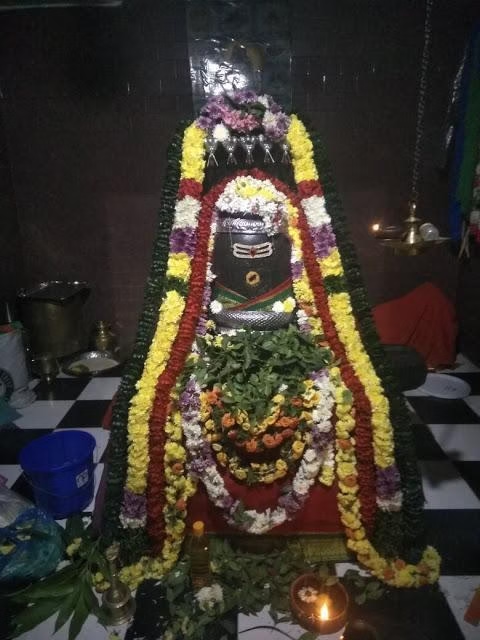
Nestled in the serene agrarian landscape of Thiruvallur district, the Pattarai Perumbudur Shiva Temple stands as a testament to the enduring spiritual legacy of Tamil Nadu. While the official records may list the deity simply as Lord Shiva, the temple embodies the essence of a Swayambhu (self-manifested) Lingam, radiating a profound aura of tranquility. This shrine is dedicated to the Supreme Lord Shiva, revered here in his form as the destroyer of ignorance and the bestower of grace.
Phalaśruti: The Spiritual Benefits
According to temple lore and the unwavering faith of devotees, a pilgrimage to this sacred site offers profound spiritual benefits. The primary Phalaśruti (benefits of listening/visiting) associated with Pattarai Perumbudur is the cleansing of ancestral karma. It is believed that performing rituals here aids in the liberation (Moksha) of forefathers’ souls, making it a crucial site for Shraddha and Tharpana ceremonies. Devotees visit to seek relief from planetary afflictions, specifically appeasing the influence of Shani (Saturn) and Rahu-Ketu, ensuring a path of righteousness (Dharma) and prosperity.
Historical Origins & Scriptural Legend
Chronicles of Construction
According to temple records and regional architectural analysis, the Pattarai Perumbudur Temple likely dates back to the Chola period (circa 9th-12th Century CE), characterized by the distinctive granite masonry and the layout of the sanctum. Although specific imperial inscriptions are yet to be fully cataloged by the ASI (Archaeological Survey of India) compared to larger metropolitan temples, the structural integrity and the style of the Vimana (tower above the sanctum) suggest a legacy of patronage by local Chola chieftains or later Nayak rulers. The temple has undergone several renovations to preserve its structural sanctity while retaining the original sanctity of the Garbhagriha (inner sanctum).
The Sthala Purana (Local Legend)
Tradition holds that the village of Pattarai Perumbudur derives its spiritual potency from a legend involving a devout Pattar (a community of Vedic scholars and cooks). It is said that a group of these scholars performed intense Tapas (penance) at this very spot to appease Lord Shiva. Pleased by their devotion, the Lord manifested as a Swayambhu Lingam. The name “Pattarai” itself is deeply connected to the abode of these holy sages. The temple is thus regarded as a Tapo Bhumi (land of penance), where the vibrations of ancient Vedic chants still linger in the air.
Architectural Marvels
Dravidian Style & Vastu Shastra
The temple is a classic example of the Dravidian style of architecture. It follows the Panchayatana layout, where the main shrine is surrounded by four subsidiary shrines, adhering to the principles of Vastu Shastra to balance cosmic energies.
The Vimana and Mandapas
The Shikhara (or Vimana) over the sanctum sanctorum is a barrel-shaped structure typical of the Dravidian style, designed to channel spiritual energy inward. The temple features a modest yet sturdy Mandapa (hall) with stone pillars. These pillars often feature sculptures of deities like Nandi (the bull vehicle of Shiva), Dwarapalakas (guardian deities), and floral motifs typical of Chola art.
Unlike massive urban temples, the architectural beauty here lies in its simplicity and the preservation of the Sreekovil (sanctum), which is circular and built on a raised platform. The inner walls are likely covered in layers of traditional lime plaster and natural dyes, protecting the stonework.
Darshan & Ritual Logistics
Note: Timings and seva schedules are projected for the year 2026. Devotees are advised to verify via the temple helpline before travel.
Daily Darshan Timings
| Session | Timings | Details |
|---|---|---|
| Morning | 06:00 AM – 12:00 PM | Includes Morning Abhishekam and Alankaram. |
| Evening | 04:00 PM – 08:30 PM | Includes Deeparadhana and Yama Dhakshinai. |
Key Sevas & Online Booking
The temple facilitates several major Sevas. While physical booking is available at the counter, the online seva booking system is integrated through the Tamil Nadu Hindu Religious and Charitable Endowments (HR&CE) portal.
- Abhishekam: Performed with milk, honey, and sandalwood paste. Best performed on Mondays.
- Archana: Personalized recitation of names (e.g., Sahasranama).
- Annadhanam: Free noon meal for devotees (Prasad distribution).
2026 Major Festival Dates
- Maha Shivaratri: February 26, 2026 (Wednesday) – Night-long vigil and special Abhishekam.
- Pradosham: Every 13th lunar day (monthly) – Special homams.
- Arudra Darshanam: January 12, 2026 (Sunday) – Celebration of Lord Nataraja.
- Karthigai Deepam: November 12, 2026 (Wednesday).
Practical Visitor Guidance
Dress Code & Etiquette
To maintain the sanctity of the shrine, devotees are required to wear traditional attire. Men should wear Dhoti or Panchakacham and shirts, while women are encouraged to wear Saree, Half-Saree, or Salwar Kameez. Western casual wear (shorts/t-shirts) is generally discouraged.
Photography & Lockers
Photography is strictly prohibited inside the Garbhagriha and the inner praharam (circumambulation path). Mobile phones should be switched to silent mode. Small bags and mobile lockers are available near the entrance, managed by the temple trust.
Crowd Management & Best Time to Visit
The temple sees moderate crowds during weekends and Mondays.
- Best Hours: 8:00 AM – 10:00 AM is ideal for a peaceful Darshan.
- Seasonal Advice: During the summer months (April–May), the granite floors retain heat. It is advisable to carry a water bottle and wear light cotton fabrics. The monsoon season (October–December) offers a lush, green backdrop but requires sturdy footwear due to the rural approach roads.
Pilgrimage Connectivity
How to Reach
The temple is conveniently located near Thiruvallur, making it accessible from Chennai and Tirupati.
- By Air: Chennai International Airport (MAA) is approximately 56 km away.
- By Rail: The nearest major railway junction is Thiruvallur (TRV) (approx. 10 km). From there, hire an auto-rickshaw or take a local bus toward Tiruthani.
- By Road: Located on the Tiruthani Highway. The temple is approximately 350 meters from the Pattarai Perumbudur village bus stop. Private vehicles can park near the village square.
Nearby Sacred Sites
Expand your pilgrimage circuit by visiting these nearby temples:
- Sri Veeraraghava Swamy Temple (Thiruvallur): Located 10 km away, this is a major Divyadesam dedicated to Lord Vishnu, known as the “Doctor God” who cures illnesses.
- Thiruvalangadu Vadaranyeswarar Temple: Located roughly 8 km away, this is a massive Paadal Petra Sthalam (Shiva Temple) renowned for its cosmic dance hall and the myth of Nataraja.
Photo Gallery


Frequently Asked Questions (FAQs)
1. Is there a VIP Darshan entry available?
As a village temple, the Pattarai Perumbudur Shiva Temple does not have a formal VIP ticket system like large Tirupati-style temples. However, devotees can book special Archana or Abhishekam slots to facilitate a closer and more extended darshan experience.
2. What is the best way to book seva online?
You can book sevas through the official Tamil Nadu HR&CE website. Select “Thiruvallur” district and search for “Pattarai Perumbudur Temple.” The portal lists available slots for Archana, Abhishekam, and Deepam.
3. Are there accommodation facilities at the temple?
The temple does not have an attached guest house (Choultry). However, budget lodges and hotels are available in Thiruvallur town (10 km away) and Tirupati (35 km away). For spiritual stays, the Sri Veeraraghava Swamy Temple in Thiruvallur offers accommodation for pilgrims.
4. What is the significance of the local name “Pattarai”?
The term “Pattarai” refers to a school or an abode of Vedic scholars. The name signifies the historical presence of Brahmin scholars who resided here to study the Vedas and serve the deity, making it a Brahmadesam (land of Brahmins).
5. Is the temple accessible for senior citizens?
The temple complex is relatively compact with stone steps leading to the sanctum. While there are no wheelchair ramps (typical of ancient structures), the courtyard is level. Senior citizens can request assistance from temple volunteers for support.
Contact Details
Address:
Pattarai Perumbudur Shiva Temple,
Pattarai Perumbudur Village,
Thiruvallur District, Tamil Nadu.
Phone: +91 94443 07272 (Thiruvallur Temple Office – General Enquiries)
Recent Posts

ओ सांवरे तूने ही मुझको संभाला – Lyrics & Meaning
ओ सांवरे तूने ही मुझको संभाला – A Prayer to Shyam Origin & Spiritual Essence Why This Bhajan Resonates Devotees chant this when overwhelmed by life’s storms—the refrain ‘तूने ही मुझको संभाला’ is the soul’s sigh of relief: “You…

कथा ये है महाराज मेरे की – Lyrics & Meaning
कथा ये है महाराज मेरे की छत्रपति संभाजी महाराज – A Prayer to Chhatrapati Sambhaji Maharaj Origin & Spiritual Essence Why This Bhajan Resonates Devotees chant this when their spirit feels tested—its powerful refrain “महाराज मेरे” is a soul’s…

Rigveda Samhita Yathartha Anuvada (ऋग्वेद संहिता यथार्थ अनुवाद) – Complete Set with Anvayartha & Hindi/English Translation
The Rigveda is the oldest surviving scripture of humanity and the foundational text of Sanātana Dharma. For serious students, scholars, UPSC aspirants studying ancient Indian history, Sanskrit learners, and spiritual seekers, a precise and grammatically structured translation is indispensable.…

आना भी अकेला है जाना भी अकेला है – Lyrics & Meaning | BharatTemples
आना भी अकेला है जाना भी अकेला है – A Prayer to the Divine Witness Origin & Spiritual Essence Why This Bhajan Resonates Devotees turn to this bhajan in moments of deep reflection—when life’s attachments begin to ache. The…

माता शेरावाली के द्वार जो भी जाता है – Lyrics & Meaning
माता शेरावाली के द्वार जो भी जाता है – A Prayer to Maa Sherawali Origin & Spiritual Essence Why This Bhajan Resonates Devotees turn to this bhajan in times of fear or uncertainty—its promise that no one leaves Maa’s…

मार लेना सपणी उबार लेणा भवरा – Lyrics & Meaning
मार लेना सपणी उबार लेणा भवरा – A Prayer to the Divine Beloved Origin & Spiritual Essence Why This Bhajan Resonates Devotees chant this in moments of deep vulnerability—its cry of “मार लेना सपणी, उबार लेणा भवरा” is the…

हमें श्याम सुंदर भरोसा तुम्हारा – Lyrics & Meaning
हमें श्याम सुंदर भरोसा तुम्हारा – A Prayer to Shyam Sundar Origin & Spiritual Essence Why This Bhajan Resonates Devotees chant this when feeling alone—its refrain ‘de do sahara’ is the soul’s cry for divine support. Lyrics in Hindi…

Mere Satguru Ne Di Thi Davai Lyrics in Hindi & Meaning
Mere Satguru Ne Di Thi Davai: Invoking the Guru’s Liberating Wisdom This soul-stirring bhajan venerates the Satguru (True Spiritual Master) as the divine physician who dispenses the only remedy for life’s deepest sufferings. Composed by Sant Karmaveer Tufani, it…

Janm Diyo Thari Maa Dukh Dekhiyo Lyrics in Hindi & Meaning
जन्म दियो थारी माँ दुख देखियो (Maa’s Grief Upon Birthing You) This soul-stirring Chetavani Bhajan (admonitory hymn) is addressed to the Divine Mother (Maa) – a call for repentance when children forget their filial duties in the dark age…
Bhadi Sabha Mein Thane Manaun Lyrics in Hindi & Meaning
Bhadi Sabha Mein Thane Manaun: Invoking the Spear-Wielding Mother Mata Bhawani (श्री ज्वाला भवानी), the fiery manifestation of Shakti worshipped as the Protector of Dharma in Her Dhaulagarh sanctum. Origin & Spiritual Essence Composed in Rajasthani folk tradition by…