
Contents
Introduction & Spiritual Essence
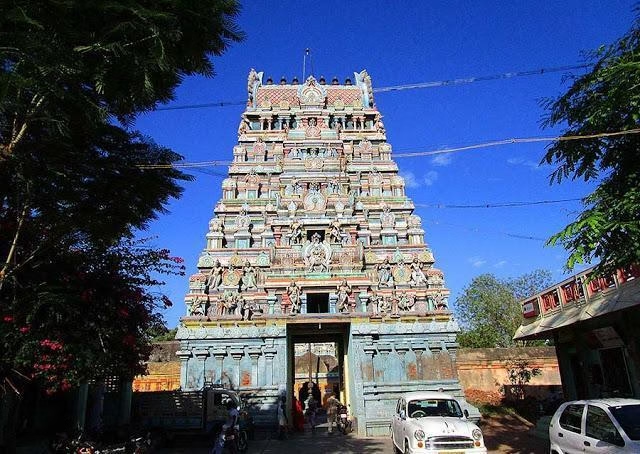
Suyambunadhar Temple, nestled in the sacred town of Peralam in the Thiruvarur district of Tamil Nadu, stands as a profound testament to Dravidian heritage and spiritual devotion. This ancient shrine is dedicated to Lord Shiva, revered here as Suyambunadhar (the self-manifested form of grace) or Peralanathar. The presiding deity is a Swayambhu Moorthy—a sacred lingam believed to have manifested naturally without human craftsmanship.
At the feet of this divine form resides the Divine Mother, Bhavani Amman, completing the cosmic balance of the temple. For the devotee, this temple is not merely a structure of stone but a living energy center. The Phalaśruti (spiritual benefits) of visiting this temple is deeply rooted in the cleansing of ancestral karma. It is believed that prayers offered here help release the souls of ancestors from the cycle of rebirth, granting them peace (Shanti).
Historical Origins & Scriptural Legend
While specific epigraphic dates are often subject to the fading of time, temple records and oral history weave a rich tapestry of origin. The management of the Suyambunadhar Temple falls under the revered Dharmapuram Adheenam Devastanam, a prominent monastic institution in the region.
According to the Sthala Purana (local legend), the temple derives its name from the sage Peralar, who performed intense penance in this location to seek the blessings of Lord Shiva. Pleased by his devotion, Shiva manifested as the Swayambhu Lingam. Thus, the town came to be known as Peralam, and the Lord as Suyambunadhar. The temple’s history is interwoven with the traditions of Saivism in the Cauvery Delta, a region historically patronized by the Chola and Nayak dynasties, whose influence is evident in the temple’s architectural foundations.
Architectural Marvels
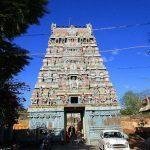
The Suyambunadhar Temple is a classic example of Dravidian Temple Architecture, characterized by its layered construction and intricate stone carvings. While it may not possess the colossal scale of the Brihadeeswarar Temple in Thanjavur, its sanctity is defined by its structural harmony.
Key Structural Elements:
- The Garbhagriha (Sanctum Sanctorum): Houses the Swayambhu Lingam of Suyambunadhar, facing East. The natural stone formation is unique to this site.
- The Mandapas: The temple features pillared halls (Mandapas) used for rituals and religious discourses. The pillars often depict mythological scenes from the Puranas.
- The Prakaram (Circumambulatory Path): A sacred pathway encircling the inner sanctum allows devotees to perform Pradakshina (circumambulation), a ritual believed to align the body’s energy with the divine.
- Niches & Sculptures: Though modest in scale compared to UNESCO World Heritage sites, the temple walls feature niches housing various deities, including intricate carvings of Bhairava and Ganesha, showcasing the precision of local artisans.
The temple complex is compact but dense with symbolism, adhering to the principles of Vastu Shastra, where the orientation of the sanctum aligns with cosmic energies.
Darshan & Ritual Logistics
Planning your visit requires attention to the specific timings for Ushathkalam (early morning) and Arthajamam (evening). Below are the standard operating hours for the Suyambunadhar Temple.
| Session | Timings | Details |
|---|---|---|
| Morning Darshan | 06:00 AM – 12:00 PM | Includes morning Abhishekam rituals. |
| Afternoon Break | 12:00 PM – 04:00 PM | Temple closed for Nithya Puja. |
| Evening Darshan | 04:00 PM – 08:00 PM | Includes evening Deeparadhana. |
Key Sevas and Rituals
Devotees can participate in various Sevas (services) to the deity. Due to the administrative control by Dharmapuram Adheenam, standard rituals are strictly followed.
- Abhishekam: The ritual bathing of the Swayambhu Lingam with milk, honey, and sandalwood paste.
- Archana: Offering of flowers and recitation of holy names.
- Deepam: Lighting of the ceremonial lamp for ancestors.
Online Seva Booking: While traditional booking is available at the temple counter, the Dharmapuram Adheenam is increasingly digitizing services. Check the official Adheenam portal or trusted pilgrimage partners for specific online booking links closer to your travel date in 2026.
2026 Festival Calendar
Major festivals in 2026 observed at Suyambunadhar Temple include:
- Pradosham: Occurs every month (13th day after New Moon/Full Moon). Special Abhishekam is performed.
- Shivratri (Feb 26, 2026): The most significant annual celebration; the temple remains open throughout the night.
- Arudra Darshanam (Jan 2026): Celebrates the cosmic dance of Lord Natarajar (adjacent deity).
- Aadi Perukku: A river festival specific to the Cauvery delta region, usually celebrated with special processions.
Practical Visitor Guidance
To ensure a spiritually fulfilling and hassle-free visit, please adhere to the following guidelines:
- Dress Code: Traditional attire is mandatory. Men should wear dhotis or trousers with shirts; women should wear sarees, salwar kameez, or long skirts.
- Photography: Photography is strictly prohibited inside the sanctum sanctorum (Garbhagriha).
- Mobile Lockers: As the temple is compact, large bags are not allowed inside. It is advisable to keep personal belongings in your vehicle or use the limited deposit counters provided near the entrance.
- Accessibility: The temple has stone steps at the entrance. While the inner sanctum is accessible, those with mobility issues may find the Garbhagriha entry challenging due to the traditional layout.
Crowd Management Tips
Best Hours to Visit: Weekday mornings (7:00 AM – 9:00 AM) are generally less crowded. Weekends and festival days see a surge in local devotees.
Seasonal Advice: The Delta region is humid. If visiting between May and June, carry a bottle of water and an umbrella. During the monsoon season (October–November), be mindful of slippery floors in the Prakaram.
Facilities Note: Since this is a town panchayat temple, amenities are modest. Carry your own hand sanitizer and expect basic sanitation facilities.
Pilgrimage Connectivity
How to Reach Suyambunadhar Temple
Peralam is well-connected by both rail and road in the Thiruvarur district.
- By Air: The nearest airport is Trichy International Airport (TRZ), located approximately 123 km away (approx. 3 hours by road).
- By Rail: The nearest railway station is Peralam Junction, just 700 meters from the temple. It is a stop for passenger trains connecting Mayiladuthurai and Thiruvarur.
- By Road: Peralam is located on the Mayiladuthurai–Thiruvarur State Highway. It is well connected by buses to Mayiladuthurai (17 km), Nagapattinam (44 km), and Thiruvarur (25 km). Private taxis and auto-rickshaws are easily available from the bus stop.
Nearby Sacred Sites (Pilgrimage Circuit)
Enhance your pilgrimage by visiting these nearby temples:
- Thirumeeyachur Temple (2 km): A historic temple dedicated to Lord Lakshminarayana (Vishnu) and Meghavaneswarar (Shiva), known for its unique architectural layout.
- Koothanur Temple (5 km): The only temple in India dedicated to Goddess Saraswati (Goddess of Knowledge).
- Thirupampuram Temple (10 km): A unique temple where Lord Shiva is worshipped as Pranavalingam (the form of ‘Om’).
For those traveling from Trichy, the route via NH 226 offers a scenic drive through the agrarian heartland of Tamil Nadu.
Photography & Gallery
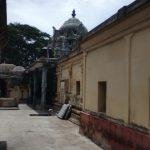
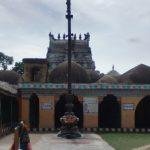
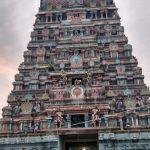
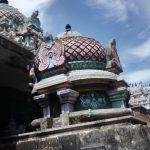
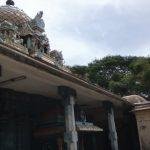
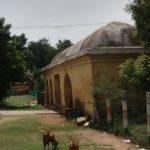
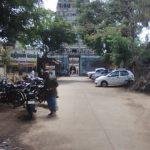
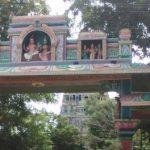
Captured moments of devotion and architecture from the Suyambunadhar Temple.
Frequently Asked Questions (FAQ)
1. What is the significance of the name “Suyambunadhar”?
The name Suyambunadhar translates to “The Lord who self-manifested.” In Hindu iconography, a Swayambhu lingam is considered one of the most powerful forms of Shiva, as it is believed to have appeared on its own accord, often descending from the heavens or emerging from the earth, rather than being carved by human hands.
2. Is there a VIP darshan entry available?
As this is a temple under the Dharmapuram Adheenam, there is no commercial “VIP” ticket system like in some major Southern Indian temples. However, devotees who sponsor specific rituals or Abhishekams may be granted priority entry during the designated ritual times. It is best to coordinate with the temple office for large group visits.
3. Are non-Hindus allowed inside the temple?
Strictly speaking, entry is restricted to those practicing the Hindu faith, as is traditional for most ancient Shiva temples in Tamil Nadu. However, visitors interested in architecture and culture may view the exterior structures and gardens. Please respect the sanctity of the premises.
4. How do I reach Peralam from Mayiladuthurai?
Mayiladuthurai is the nearest major town. You can take a local bus bound for Thiruvarur or Peralam. The travel time is approximately 30-40 minutes. Auto-rickshaws are also available at the Mayiladuthurai bus stand and railway station.
5. What is the best time of year to visit?
The ideal time to visit is between October and March, when the weather in the Delta region is pleasant and cool. January is particularly vibrant due to the Margazhi season festivals.
Recent Posts

ओ सांवरे तूने ही मुझको संभाला – Lyrics & Meaning
ओ सांवरे तूने ही मुझको संभाला – A Prayer to Shyam Origin & Spiritual Essence Why This Bhajan Resonates Devotees chant this when overwhelmed by life’s storms—the refrain ‘तूने ही मुझको संभाला’ is the soul’s sigh of relief: “You…

कथा ये है महाराज मेरे की – Lyrics & Meaning
कथा ये है महाराज मेरे की छत्रपति संभाजी महाराज – A Prayer to Chhatrapati Sambhaji Maharaj Origin & Spiritual Essence Why This Bhajan Resonates Devotees chant this when their spirit feels tested—its powerful refrain “महाराज मेरे” is a soul’s…

Rigveda Samhita Yathartha Anuvada (ऋग्वेद संहिता यथार्थ अनुवाद) – Complete Set with Anvayartha & Hindi/English Translation
The Rigveda is the oldest surviving scripture of humanity and the foundational text of Sanātana Dharma. For serious students, scholars, UPSC aspirants studying ancient Indian history, Sanskrit learners, and spiritual seekers, a precise and grammatically structured translation is indispensable.…

आना भी अकेला है जाना भी अकेला है – Lyrics & Meaning | BharatTemples
आना भी अकेला है जाना भी अकेला है – A Prayer to the Divine Witness Origin & Spiritual Essence Why This Bhajan Resonates Devotees turn to this bhajan in moments of deep reflection—when life’s attachments begin to ache. The…

माता शेरावाली के द्वार जो भी जाता है – Lyrics & Meaning
माता शेरावाली के द्वार जो भी जाता है – A Prayer to Maa Sherawali Origin & Spiritual Essence Why This Bhajan Resonates Devotees turn to this bhajan in times of fear or uncertainty—its promise that no one leaves Maa’s…

मार लेना सपणी उबार लेणा भवरा – Lyrics & Meaning
मार लेना सपणी उबार लेणा भवरा – A Prayer to the Divine Beloved Origin & Spiritual Essence Why This Bhajan Resonates Devotees chant this in moments of deep vulnerability—its cry of “मार लेना सपणी, उबार लेणा भवरा” is the…

हमें श्याम सुंदर भरोसा तुम्हारा – Lyrics & Meaning
हमें श्याम सुंदर भरोसा तुम्हारा – A Prayer to Shyam Sundar Origin & Spiritual Essence Why This Bhajan Resonates Devotees chant this when feeling alone—its refrain ‘de do sahara’ is the soul’s cry for divine support. Lyrics in Hindi…

Mere Satguru Ne Di Thi Davai Lyrics in Hindi & Meaning
Mere Satguru Ne Di Thi Davai: Invoking the Guru’s Liberating Wisdom This soul-stirring bhajan venerates the Satguru (True Spiritual Master) as the divine physician who dispenses the only remedy for life’s deepest sufferings. Composed by Sant Karmaveer Tufani, it…

Janm Diyo Thari Maa Dukh Dekhiyo Lyrics in Hindi & Meaning
जन्म दियो थारी माँ दुख देखियो (Maa’s Grief Upon Birthing You) This soul-stirring Chetavani Bhajan (admonitory hymn) is addressed to the Divine Mother (Maa) – a call for repentance when children forget their filial duties in the dark age…
Bhadi Sabha Mein Thane Manaun Lyrics in Hindi & Meaning
Bhadi Sabha Mein Thane Manaun: Invoking the Spear-Wielding Mother Mata Bhawani (श्री ज्वाला भवानी), the fiery manifestation of Shakti worshipped as the Protector of Dharma in Her Dhaulagarh sanctum. Origin & Spiritual Essence Composed in Rajasthani folk tradition by…