
Contents
Introduction & Spiritual Essence
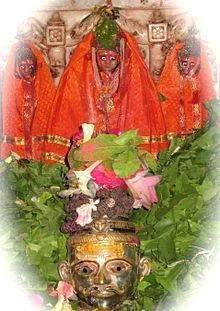
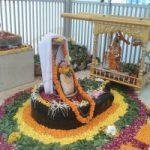
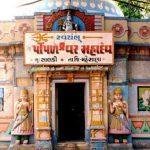
Nestled in the serene village of Saldi, Mehsana district, Pimpleshwar Mahadev stands as a testament to unwavering faith and natural divinity. Known locally as Shri Pimpleshwar Mahadev, this ancient shrine is dedicated to Lord Shiva (Mahadev), the Supreme Being in Hinduism. Unlike standard Shiva temples that house a carved stone Shiv Linga, Pimpleshwar is unique. The sanctum houses a Jaladhari—a natural, continuous spring of water emerging directly from an underground aquifer. This eternal flow is believed to be a self-manifested (Swayambhu) symbol of Lord Shiva’s presence.
Phalaśruti: Why Visit?
Devotees flock to Pimpleshwar Mahadev for specific spiritual benefits:
- Removal of Ancestral Karmic Blockages: It is believed that offering milk to the Jaladhari washes away Pitru Dosha (ancestral curses).
- Wish Fulfillment: The temple is renowned for fulfilling the sincere prayers of childless couples and those seeking prosperity.
- Healing Properties: The water from the Jaladhari is considered to have healing properties, and pilgrims often carry Teerth (holy water) home for medicinal and spiritual use.
Historical Origins & Scriptural Legend
The history of Pimpleshwar Mahadev is deeply woven into the local agrarian heritage of Gujarat.
The Legend of the Divine Cow
According to local tradition and the Sthala Purana, the temple’s origin traces back roughly 200 years (approx. 1820 CE). A herder named Petha Patel noticed that one of his cows would consistently stop at the base of a massive Pimpal tree to release her milk. Despite the herder’s efforts, the milk would flow into a specific spot on the ground. This phenomenon occurred daily, and upon investigation, a natural water source was discovered.
Seeing this as a divine sign of Lord Shiva (as cows are sacred to Shiva and milk is a primary offering), Petha Patel was inspired to establish a shrine. The first shrine was erected in the Hindu year Vikram Samvat 1143 (1086 AD).
Current Structure
The current masonry and temple structure were constructed in 1895 under the patronage of Sayajirao Gaekwad III, the ruler of the Baroda State during the British colonial era. This grants the temple a heritage status that blends pre-colonial devotion with colonial-era architectural restoration.
Architectural Marvels
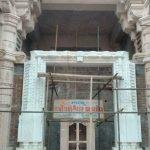
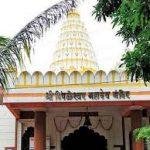
The temple offers a glimpse into the vernacular architecture of Gujarat from the late 19th century.
Style and Layout
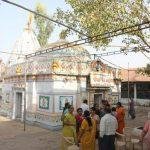
The temple features a modest but sturdy construction typical of regional Hindu shrines. It does not strictly follow the grand Nagara or Dravida styles found in massive imperial temples but rather the Gujarati vernacular style, characterized by:
- Stone Masonry: The walls are constructed of dressed stone, showcasing the durability of local materials.
- Sanctum Sanctorum (Garbhagriha): The inner chamber is designed to accommodate the natural water source (Jaladhari), which requires specific hydraulic engineering to prevent flooding while maintaining accessibility.
Notable Features
- The Sacred Flora: The temple complex is enveloped by ancient Pimpal (Peepal), Bili, and Vakhada trees. In Hinduism, the Peepal is considered the abode of the Trinity (Trimurti), making the grove highly sacred.
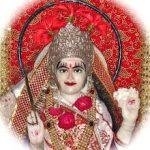
- Sculptures: Carved stone images of Ganesha, Parvati, and Hanuman are installed within the complex.
- Ambaji Shrine: A smaller shrine dedicated to Goddess Ambaji (the family deity of the Gaekwads) is also located within the premises.
Darshan & Ritual Logistics
The temple operations are streamlined to accommodate the influx of devotees, particularly during the Shravan month.
Daily Timings
Timings may vary slightly based on seasonal changes and festival schedules. Current as of 2026.
| Session | Timings |
|---|---|
| Morning Darshan | 6:00 AM – 12:00 PM |
| Afternoon Break | 12:00 PM – 3:00 PM |
| Evening Darshan | 3:00 PM – 8:30 PM |
Key Sevas & Rituals
The primary ritual at Pimpleshwar Mahadev is the Abhishekam (ritual bathing) of the Jaladhari.
- Abhishekam: Devotees pour milk, honey, and rose water over the natural spring. This is often accompanied by the chanting of Rudra Sukta.
- Archana: Offering of flowers and Bilva leaves (Bael) to the presiding deity.
Online Seva Booking
While many rituals are performed in person, the temple trust (under the Mehsana district administration) has digitized certain offerings. To book Abhishekam or Sankalp for 2026 festivals:
- Visit the official Mehsana District Temple Portal (search: “Mehsana Devasthanam Online Seva”).
- Select “Pimpleshwar Mahadev, Saldi” from the list.
- Choose the desired date and seva type.
2026 Major Festival Dates
- Maha Shivaratri: February 26, 2026 (Special night-long vigil).
- Saladi no Melo (Annual Fair): Last Monday of Shravan (August 2026). This is the peak event when the village transforms into a massive pilgrimage hub.
- Navratri: Ashwin Shukla Pratipada to Navami (October 2026).
Practical Visitor Guidance
Dress Code and Etiquette
As a traditional Shiva temple, modesty is expected.
- Attire: Traditional Indian wear is preferred. For men, dhoti or trousers; for women, saree or salwar kameez. Avoid shorts or sleeveless tops.
- Photography: Photography is strictly prohibited inside the sanctum sanctorum to maintain the sanctity of the Jaladhari. It is allowed in the outer complex.
Crowd Management
- Best Time to Visit: Weekday mornings (6 AM – 8 AM) offer the quietest darshan.
- Seasonal Advice:
- May-June (Summer): Temperatures in Mehsana can exceed 42°C. Carry water bottles and cover your head.
- July-August (Monsoon): This is the busiest season due to Shravan. Expect long queues. Use the designated queue management railings.
- Lockers: There are no digital lockers on-site. Travel light. A small bag storage facility is usually available near the entrance for a nominal fee, but it is not secure for valuables.
- Accessibility: The temple is older and has a single step at the entrance, which may pose a challenge for wheelchair users. The inner sanctum is narrow.
Pilgrimage Connectivity
How to Reach Pimpleshwar Mahadev
Address: Pimpleshwar Mahadev & Ambaji Mandir, GJ SH 217, Gujarat 382730.
- By Road: Saldi is located on State Highway 217 (GJ SH 217). It is approximately 60 km northwest of Ahmedabad via the Mehsana highway. Regular GSRTC buses ply from Mehsana and Visnagar.
- By Rail: The nearest railway station is Mehsana Junction (approx. 15 km). From there, taxis and local buses are available to Saldi.
- By Air: The nearest airport is Sardar Vallabhbhai Patel International Airport (AMD), Ahmedabad (approx. 55 km). Taxis are easily available from the airport.
Nearby Sacred Sites (Pilgrimage Circuit)
Extend your spiritual journey by visiting these nearby temples:
- Modhera Sun Temple: Located 30 km from Saldi. A UNESCO World Heritage Site showcasing exquisite Solanki architecture.
- Mata Umiya Temple, Unjha: Located 25 km from Saldi. One of the largest pilgrimage centers for the Patidar community in Gujarat.
- Kamalamedi Temple: Located near Patan (35 km), a serene hilltop temple dedicated to Goddess Ashapura.
Frequently Asked Questions (FAQ)
1. Is there a VIP darshan entry?
Currently, Pimpleshwar Mahadev does not have a formal VIP entry system. Darshan is on a first-come, first-served basis. However, donations for maintenance are accepted at the office.
2. Can we perform Rudra Abhishekam ourselves?
While personal Abhishekam with milk is allowed, elaborate Vedic rituals like Rudra Abhishekam require the assistance of the temple priests. It is recommended to book these rituals in advance.
3. Is the temple accessible for elderly pilgrims?
The outer courtyard is paved, but the inner sanctum has a narrow entry. Assistance may be required for those with mobility issues. Portable chairs are usually allowed in the outer courtyard.
4. What is the significance of the Jaladhari?
The Jaladhari replaces the traditional Shiv Linga. It represents the Ardhanarishvara form where water (feminine principle/Shakti) flows continuously over the earth (masculine principle/Shiva), symbolizing eternal creation and purification.
5. Are there food facilities available?
There is a small community kitchen (Bhojanalaya) that serves simple Prasad (lunch) to devotees during noon and evening. Private restaurants are limited in the immediate vicinity; Mehsana city (15 km) offers more options.
Recent Posts

Shri Kaamkoteeshwar Mandir, Varanasi – History & Significance
In the heart of Kashi, the eternal city of Lord Shiva, where the Ganges flows with celestial grace, stands the Shri Kaamkoteeshwar Mandir. This sacred Sannidhi is not merely a temple but a profound spiritual bridge between the Northern…

ओ सांवरे तूने ही मुझको संभाला – Lyrics & Meaning
ओ सांवरे तूने ही मुझको संभाला – A Prayer to Shyam Origin & Spiritual Essence Why This Bhajan Resonates Devotees chant this when overwhelmed by life’s storms—the refrain ‘तूने ही मुझको संभाला’ is the soul’s sigh of relief: “You…

कथा ये है महाराज मेरे की – Lyrics & Meaning
कथा ये है महाराज मेरे की छत्रपति संभाजी महाराज – A Prayer to Chhatrapati Sambhaji Maharaj Origin & Spiritual Essence Why This Bhajan Resonates Devotees chant this when their spirit feels tested—its powerful refrain “महाराज मेरे” is a soul’s…

Rigveda Samhita Yathartha Anuvada (ऋग्वेद संहिता यथार्थ अनुवाद) – Complete Set with Anvayartha & Hindi/English Translation
The Rigveda is the oldest surviving scripture of humanity and the foundational text of Sanātana Dharma. For serious students, scholars, UPSC aspirants studying ancient Indian history, Sanskrit learners, and spiritual seekers, a precise and grammatically structured translation is indispensable.…

आना भी अकेला है जाना भी अकेला है – Lyrics & Meaning | BharatTemples
आना भी अकेला है जाना भी अकेला है – A Prayer to the Divine Witness Origin & Spiritual Essence Why This Bhajan Resonates Devotees turn to this bhajan in moments of deep reflection—when life’s attachments begin to ache. The…

माता शेरावाली के द्वार जो भी जाता है – Lyrics & Meaning
माता शेरावाली के द्वार जो भी जाता है – A Prayer to Maa Sherawali Origin & Spiritual Essence Why This Bhajan Resonates Devotees turn to this bhajan in times of fear or uncertainty—its promise that no one leaves Maa’s…

मार लेना सपणी उबार लेणा भवरा – Lyrics & Meaning
मार लेना सपणी उबार लेणा भवरा – A Prayer to the Divine Beloved Origin & Spiritual Essence Why This Bhajan Resonates Devotees chant this in moments of deep vulnerability—its cry of “मार लेना सपणी, उबार लेणा भवरा” is the…

हमें श्याम सुंदर भरोसा तुम्हारा – Lyrics & Meaning
हमें श्याम सुंदर भरोसा तुम्हारा – A Prayer to Shyam Sundar Origin & Spiritual Essence Why This Bhajan Resonates Devotees chant this when feeling alone—its refrain ‘de do sahara’ is the soul’s cry for divine support. Lyrics in Hindi…

Mere Satguru Ne Di Thi Davai Lyrics in Hindi & Meaning
Mere Satguru Ne Di Thi Davai: Invoking the Guru’s Liberating Wisdom This soul-stirring bhajan venerates the Satguru (True Spiritual Master) as the divine physician who dispenses the only remedy for life’s deepest sufferings. Composed by Sant Karmaveer Tufani, it…

Janm Diyo Thari Maa Dukh Dekhiyo Lyrics in Hindi & Meaning
जन्म दियो थारी माँ दुख देखियो (Maa’s Grief Upon Birthing You) This soul-stirring Chetavani Bhajan (admonitory hymn) is addressed to the Divine Mother (Maa) – a call for repentance when children forget their filial duties in the dark age…