
Contents
Introduction & Spiritual Essence: The Linga of Ancestors
In the labyrinthine spiritual geography of Varanasi (Kashi), every stone resonates with the energy of Shiva. The Pita Maheshwar Temple stands as a profound testament to the connection between the living and their lineage. The term Pita translates to “Father” or “Ancestor,” making this temple unique among the ancient shrines of Kashi. It is the place where the prayers of forefathers are said to be heard.
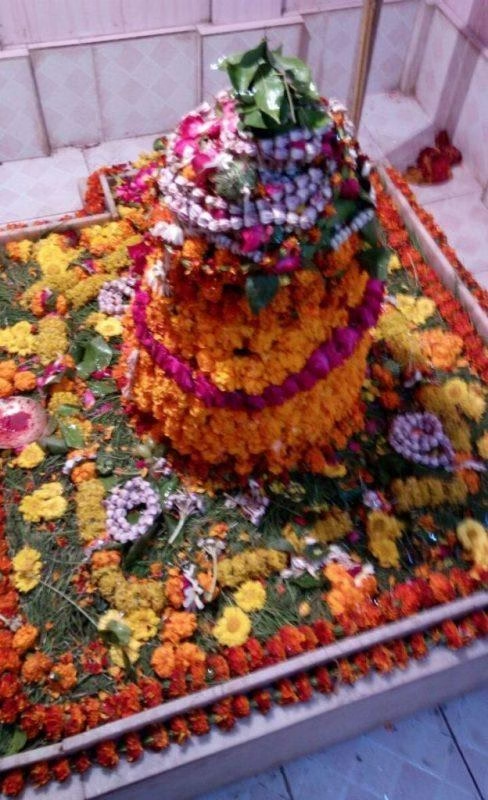
Primary Deity: The temple houses a Swayambhu (self-manifested) Shiv Linga. Unlike man-made icons, the Swayambhu form is believed to have emerged spontaneously from the earth, possessing immense cosmic energy. Here, the Linga represents Lord Shiva in his form as Pita Maheshwar—the guardian of ancestors.
Phalaśruti: Why Devotees Visit
According to ancient texts and the oral traditions of Kashi, visiting Pita Maheshwar carries specific spiritual benefits:
- Resolution of Pitru Dosha: The primary reason devotees visit is to cleanse ancestral karma. It is believed that paying respects here helps resolve Pitru Dosha (ancestral afflictions) that may be causing obstacles in one’s life.
- Moksha for Ancestors: The energy of Kashi is known as the land of liberation. Offering water and prayers at this specific Linga is said to elevate the souls of departed ancestors to higher realms.
- Inner Peace: For the living, the temple offers a sanctuary from the sensory overload of the city, fostering a deep sense of familial duty and spiritual grounding.
Historical Origins & Scriptural Legend
The Legend of Kashi Khand (Chapter 68)
The primary scriptural reference for Pita Maheshwar is found in the Kashi Khand of the Skanda Purana. Tradition holds that while Lord Kartikeya was narrating the glory of Kashi to his mother Parvati, he described various important Shiv Lings that appeared in the region.
Pita Maheshwar is one of these sacred manifestations that appeared alongside holy Teerths (ponds). While many of these ponds have been lost to urbanization over centuries, the Swayambhu Ling of Pita Maheshwar remains eternally present in the heart of the city.
Historical Age and Location
While the specific century of the current temple structure is not recorded in the partial data available, the architecture and the sanctity of the deity place it in the medieval era of Varanasi’s temple-building history. The temple is located in Mohalla Sheetla Galli, an ancient locality in Varanasi, indicating its integration into the fabric of daily Kashi life for centuries.
Architectural Marvels
The architecture of Varanasi’s smaller temples often blends the Nagara style with the vernacular building traditions of the region. The Pita Maheshwar Temple follows this pattern:
- Sanctum Sanctorum (Garbhagriha): The inner sanctum is designed to be intimate, focusing the devotee’s attention entirely on the Swayambhu Linga. The space is typically dimly lit, evoking a womb-like atmosphere of creation.
- Shikhara: The spire above the sanctum is likely a Nagara style tower, curving upwards and capped by an Amalaka (stone disk). However, in the dense urban setting of Chowk, these spires are often compact and integrated into the surrounding buildings.
- Mandapa: The prayer hall allows for circumambulation (Parikrama), a crucial ritual in Shaivism. The architecture prioritizes function over grandeur, ensuring the devotee can engage in prolonged meditation.
| Date built: | – |
|---|---|
| Deity: | Pita Maheshwar |
| Architectural style: | Hindu Temple architecture |
| Major festivals | Mahashivratri |
| Locale: | Varanasi |
| District:: | Varanasi |
| Address: | – |
| Phone | – |
Darshan & Ritual Logistics (2026 Guide)
Since this is a traditional neighborhood temple in the Chowk area, timings may vary slightly based on the season and priest schedules. However, the temple generally follows the standard Kashi timings.
Daily Darshan Timings
| Session | Timings | Details |
|---|---|---|
| Morning (Morning) | 05:00 AM – 12:00 PM | Best for meditation and Abhishekam. |
| Mid-Day | 12:00 PM – 4:00 PM | Intermission (Temple often remains closed or has restricted access). |
| Evening (Sandhya) | 4:00 PM – 9:00 PM | Aarti and evening darshan. |
Key Sevas & Online Booking
While many neighborhood temples operate on-site registrations, the Varanasi Temple Board and local trusts increasingly utilize online portals for standard rituals.
- Abhishekam (Ritual Bathing): Performed with water, milk, honey, and bel leaves. Best performed in the morning.
- Archana (Naming Ritual): Chanting the specific name of the deity along with your lineage (Gotra).
- Rudra Abhishek: A more elaborate Vedic ritual for ancestors.
Booking: For online booking, visit kashivishwanath.com or the official Varanasi District administration portal. Note: For local shrines like Pita Maheshwar, on-the-spot offerings are also common.
2026 Festival Calendar Highlights
Varanasi celebrates festivals with unique fervor. The Maha Shivratri is the major festival here.
- Maha Shivratri: February 26, 2026. The temple remains open 24 hours during this period. Expect heavy crowds; visit between 2 AM and 5 AM for a serene darshan.
- Pradosh Vrat: Every month (13th day of the lunar fortnight). Specific times vary by lunar month.
- Shravan Mondays (July-August 2026): The holiest month for Shiva devotees. The temple decorates with marigolds and bel leaves.
Practical Visitor Guidance
Navigating the Chowk area requires patience and preparation.
Dress Code & Etiquette
- Attire: Traditional Indian clothing (Kurta-Pajama, Saree, Salwar Kameez) is recommended. Western attire should be modest (covering shoulders and knees).
- Photography: Generally prohibited inside the Garbhagriha (sanctum). Photography in the outer courtyard may be allowed, but always ask the priest or security first.
- Mobiles: Silence your phone. Use lockers if available, though small neighborhood temples may not have formal locker systems. It is best to carry minimal luggage.
Crowd Management & Accessibility
- Best Hours: 6:00 AM to 8:00 AM is ideal for a peaceful darshan. Late evenings (after 8:00 PM) are also less crowded except on festivals.
- Seasonal Advice: Summer (April-June) in Varanasi can reach 45°C; carry a water bottle and cover your head. Monsoon (July-Sept) requires waterproof footwear as the gullies can be slippery.
- Accessibility: The lanes of Chowk are narrow and often congested with pedestrians. Wheelchair access is extremely difficult due to uneven stone steps and narrow passages. Auto-rickshaws can only go up to the Chowk drop-off point; the rest of the walk is on foot (approx. 10-15 minutes).
Pilgrimage Connectivity
How to Reach
- Nearest Airport: Lal Bahadur Shastri International Airport (VNS). It is approximately 25 km from Chowk. Pre-paid taxis and cab services (Uber/Ola) are available.
- Nearest Railway Station: Varanasi Junction (BSB). It is about 7 km (30 minutes by road) from the temple. From the station, take an auto-rickshaw to Chowk gate.
- Location: No. Ck.7/92, Mohalla Sheetla Galli, Chowk, Varanasi.
Nearby Sacred Sites
After visiting Pita Maheshwar, expand your pilgrimage circuit with these nearby sites:
- Sheetala Mata Mandir (Sheetla Galli): Located in the same lane. The patron goddess of the galli is worshipped here.
- Kashi Vishwanath Temple (Jyotirlinga): Approximately 15-20 minute walk through the crowded markets. The main center of Kashi.
- Durga Temple (Durga Kund): Known as the Monkey Temple, it is a short rickshaw ride away. A stunning example of Nagara architecture.
Frequently Asked Questions (FAQ)
1. Is there a VIP or Special Entry darshan?
As a neighborhood temple, Pita Maheshwar typically does not have a formal VIP entry system like large shrines (e.g., Kashi Vishwanath Corridor). Darshan is generally open to all, though making a small offering to the priest can expedite the process during peak hours.
2. Can I perform the last rites (Shraddha) here?
Yes. Pita Maheshwar is particularly significant for Shraddha and Tarpan (offerings to ancestors). The name of the deity itself is connected to the Pitas (Ancestors). It is advisable to bring a qualified priest to perform the exact rituals as per your family tradition.
3. Is the temple accessible from the Kashi Vishwanath Corridor?
Yes, it is located in the older part of the city (Chowk) which is accessible from the Corridor. However, it is not within the sanitized, tiled perimeter of the Corridor. It requires entering the traditional market lanes.
4. Are there accommodation options nearby?
There are numerous Dharamshalas and guest houses near Dashashwamedh Ghat and Godaulia, which are a 10-15 minute walk from Sheetla Galli. The Varanasi Junction area also offers hotels ranging from budget to luxury.
5. What is the significance of the “Pita” name?
In Hinduism, Pita refers to forefathers. Worshipping this Shiva Linga is believed to pacify the Rudra Gana associated with ancestors, ensuring their peace and granting blessings of progeny and family stability to the devotee.
Photo Gallery
Recent Posts

ओ सांवरे तूने ही मुझको संभाला – Lyrics & Meaning
ओ सांवरे तूने ही मुझको संभाला – A Prayer to Shyam Origin & Spiritual Essence Why This Bhajan Resonates Devotees chant this when overwhelmed by life’s storms—the refrain ‘तूने ही मुझको संभाला’ is the soul’s sigh of relief: “You…

कथा ये है महाराज मेरे की – Lyrics & Meaning
कथा ये है महाराज मेरे की छत्रपति संभाजी महाराज – A Prayer to Chhatrapati Sambhaji Maharaj Origin & Spiritual Essence Why This Bhajan Resonates Devotees chant this when their spirit feels tested—its powerful refrain “महाराज मेरे” is a soul’s…

Rigveda Samhita Yathartha Anuvada (ऋग्वेद संहिता यथार्थ अनुवाद) – Complete Set with Anvayartha & Hindi/English Translation
The Rigveda is the oldest surviving scripture of humanity and the foundational text of Sanātana Dharma. For serious students, scholars, UPSC aspirants studying ancient Indian history, Sanskrit learners, and spiritual seekers, a precise and grammatically structured translation is indispensable.…

आना भी अकेला है जाना भी अकेला है – Lyrics & Meaning | BharatTemples
आना भी अकेला है जाना भी अकेला है – A Prayer to the Divine Witness Origin & Spiritual Essence Why This Bhajan Resonates Devotees turn to this bhajan in moments of deep reflection—when life’s attachments begin to ache. The…

माता शेरावाली के द्वार जो भी जाता है – Lyrics & Meaning
माता शेरावाली के द्वार जो भी जाता है – A Prayer to Maa Sherawali Origin & Spiritual Essence Why This Bhajan Resonates Devotees turn to this bhajan in times of fear or uncertainty—its promise that no one leaves Maa’s…

मार लेना सपणी उबार लेणा भवरा – Lyrics & Meaning
मार लेना सपणी उबार लेणा भवरा – A Prayer to the Divine Beloved Origin & Spiritual Essence Why This Bhajan Resonates Devotees chant this in moments of deep vulnerability—its cry of “मार लेना सपणी, उबार लेणा भवरा” is the…

हमें श्याम सुंदर भरोसा तुम्हारा – Lyrics & Meaning
हमें श्याम सुंदर भरोसा तुम्हारा – A Prayer to Shyam Sundar Origin & Spiritual Essence Why This Bhajan Resonates Devotees chant this when feeling alone—its refrain ‘de do sahara’ is the soul’s cry for divine support. Lyrics in Hindi…

Mere Satguru Ne Di Thi Davai Lyrics in Hindi & Meaning
Mere Satguru Ne Di Thi Davai: Invoking the Guru’s Liberating Wisdom This soul-stirring bhajan venerates the Satguru (True Spiritual Master) as the divine physician who dispenses the only remedy for life’s deepest sufferings. Composed by Sant Karmaveer Tufani, it…

Janm Diyo Thari Maa Dukh Dekhiyo Lyrics in Hindi & Meaning
जन्म दियो थारी माँ दुख देखियो (Maa’s Grief Upon Birthing You) This soul-stirring Chetavani Bhajan (admonitory hymn) is addressed to the Divine Mother (Maa) – a call for repentance when children forget their filial duties in the dark age…
Bhadi Sabha Mein Thane Manaun Lyrics in Hindi & Meaning
Bhadi Sabha Mein Thane Manaun: Invoking the Spear-Wielding Mother Mata Bhawani (श्री ज्वाला भवानी), the fiery manifestation of Shakti worshipped as the Protector of Dharma in Her Dhaulagarh sanctum. Origin & Spiritual Essence Composed in Rajasthani folk tradition by…