
Contents
- 1 Rajagopalaswamy Temple Mullaivasal: A Definitive Pilgrimage Guide
Rajagopalaswamy Temple Mullaivasal: A Definitive Pilgrimage Guide
1. Introduction & Spiritual Essence
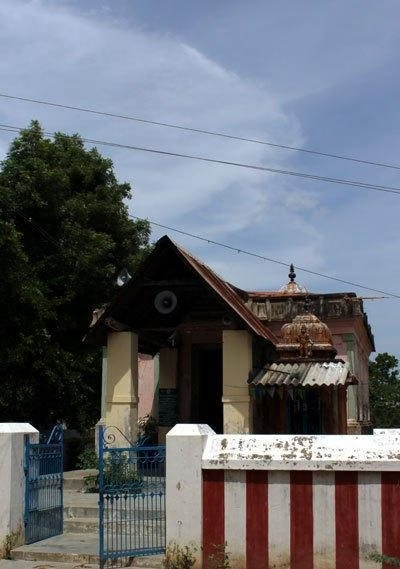
Nestled in the serene village of Mullaivasal in the Thiruvarur district of Tamil Nadu, the Rajagopalaswamy Temple stands as a timeless testament to Dravidian spirituality. The primary deity, Rajagopalaswamy, is a majestic manifestation of Lord Vishnu, worshipped in the form of a Murti (idol) that is believed to be Swayambhu (self-manifested).
Devotees refer to this sacred shrine as the “House of Miracles.” The presiding deity is flanked by his consort, Goddess Alarmelmangai Thayar, bestowing grace upon the faithful.
Phalaśruti: The Spiritual Benefits
Why do pilgrims traverse the landscape of the Cauvery delta to visit Mullaivasal? The temple is renowned for its powerful ability to neutralize the ill effects of the serpent planet (Rahu-Ketu Dosha). According to popular belief, offering prayers here aids in:
- Cleansing Ancestral Karma: Performing rituals for forefathers liberates the soul from transmigration.
- Removal of Obstacles: Particularly for students and professionals facing stagnant career growth.
- Mental Peace: The Sthala Vriksham (sacred tree) in the temple courtyard is said to emit calming energy.
2. Historical Origins & Scriptural Legend
While specific dynastic records for Mullaivasal are fragmented compared to larger imperial temples, historical analysis of the architecture points to the Later Chola Period (circa 13th-14th Century).
The Sthala Purana
According to local oral tradition (Stala Purana), the temple derives its name from two Sanskrit words: Raja (King) and Gopala (Cowherd/Krishna). Legend holds that Lord Krishna appeared here to alleviate the suffering of a local Chola prince who was stricken by a severe skin disease. Upon bathing in the temple tank and worshipping the self-manifested idol, the prince was miraculously cured, restoring his royal lineage.
Devotees often quote the phrase “Daridrya Dvāra Nirghātam“—meaning the removal of the door to poverty—when describing the historical grace received by visitors to this temple.
According to temple records, the sanctity of the site has been preserved by generations of caretakers who have maintained the Vedic rituals without interruption.
3. Architectural Marvels
The Rajagopalaswamy Temple is a classic example of Dravidian Architecture. Unlike the towering Nagara style of the north, this temple emphasizes horizontal expansion and intricate carvings.
Vastu Shastra & Design
The temple faces East, adhering to strict Vastu principles. The Garbhagriha (sanctum sanctorum) houses the main deity, while the Ardha Mandapa (half-hall) features exquisite pillars.
- The Shikhara: The roof structure over the sanctum is distinctively Dravidian, featuring a tiered design rather than a spire.
- Niche Sculptures: The outer walls of the Prakaram (circumambulatory path) feature detailed stucco work depicting scenes from the Puranas.
- Notable Shrine: The Jayavaradha Anjaneyar shrine located in the prakaram is a highlight. Devotees believe this Hanuman avatar grants immense strength and courage.
4. Darshan & Ritual Logistics
To ensure a seamless spiritual experience, we have compiled the official schedule for 2026. Note that timings may vary slightly during festival seasons.
Daily Darshan Timings
| Session | Timings | Activity |
|---|---|---|
| Morning | 6:00 AM – 12:00 PM | Abhishekam & Archana |
| Afternoon | 12:00 PM – 4:00 PM | Temple Closed |
| Evening | 4:00 PM – 8:00 PM | Darshan & Seveliyam |
Key Sevas & 2026 Festivals
Standard Sevas like Abhishekam (sacred bathing of the deity) and Archana (offering of flowers and mantras) are conducted daily. While the temple is a smaller shrine, online booking is generally handled via the HR&CE department of Tamil Nadu or by contacting the temple priest directly.
2026 Festival Calendar (Tentative):
- Masi Magam (Feb 2026): A grand procession involving Rajagopalaswamy and Alarmelmangai Thayar.
- Panguni Uthiram (Mar/Apr 2026): Special Abhishekam and Sahasranama Archana.
- Brahmotsavam (Nov 2026): The annual temple festival spanning 10 days.
5. Practical Visitor Guidance
Code of Conduct
- Dress Code: Traditional attire is mandatory. Men should wear Dhotis or pants with shirts; women should wear Sarees or Salwar Kameez.
- Photography: Photography is strictly prohibited inside the sanctum sanctorum.
- Mobile Phones: Lockers are generally not available in smaller temples, so visitors are advised to keep phones on silent mode and refrain from taking pictures of the deity.
Crowd Management
Being a relatively quiet village temple, the crowds are manageable compared to metropolitan shrines. However, during Pradosham and monthly Ekadashi, crowds swell. Best hours to visit: Weekday mornings between 7:00 AM and 9:00 AM. Seasonal Advice: The Cauvery delta gets humid in May; carry a water bottle and a hat, although the temple’s granite corridors offer respite.
6. Pilgrimage Connectivity
Mullaivasal is well-connected to major towns in the Thanjavur and Thiruvarur districts.
How to Reach
- By Air: Trichy (Tiruchirappalli) International Airport is the nearest airport, approximately 91 km away. Taxis are available directly to Mullaivasal.
- By Rail: The nearest railway station is Needamangalam (approx. 4 km). It is a significant stop for trains running between Thanjavur and Thiruvarur.
- By Road: The temple is situated right on the main road. It is 30 km from Thiruvarur and 18 km from Mannargudi. State Highways connect to NH 83 near Mannargudi.
Nearby Sacred Sites
Extend your pilgrimage to include these nearby shrines:
- Mannargudi Rajagopalaswamy Temple: The larger, famous counterpart dedicated to Lord Krishna (18 km away).
- Alangudi Guru Temple: Dedicated to Jupiter (Guru), located 11 km away on the Alangudi route.
- Koradacherry Shiva Temple: A historic Shiva temple 11 km from Mullaivasal.
7. Frequently Asked Questions (FAQ)
1. Is there a VIP darshan entry at Rajagopalaswamy Temple?
As a smaller village temple, there is no formal VIP entry system like in Tirupati. However, devotees can schedule a private Archana or Abhishekam during non-peak hours by offering a donation to the priest.
2. What is the significance of Jayavaradha Anjaneyar in this temple?
The shrine of Jayavaradha Anjaneyar (a standing form of Hanuman) is highly potent for removing obstacles. It is often visited by devotees seeking relief from Rahu Kethu Dosham.
3. Can we perform last rites (Shraddha) here?
While the temple is primarily a Vishnu shrine, the nearby temple tanks and the general sanctity of the place make it suitable for performing prayers for ancestors, especially during the Mahalaya period.
4. Is the temple accessible for senior citizens?
Yes, the temple has a flat floor plan with a single prakaram. There are no steep stairs to the main sanctum, making it relatively easy for senior citizens to navigate.
5. Where can I find food near the temple?
Small eateries serving vegetarian meals are available in Needamangalam (4 km away). The temple itself may offer Prasadam on special days; it is advisable to inquire with the temple administration.
Photo Gallery

Address & Contact
Rajagopalaswamy Temple, Mullaivasal, Needamangalam Post, Thiruvarur District, Tamil Nadu 614404.
Recent Posts

ओ सांवरे तूने ही मुझको संभाला – Lyrics & Meaning
ओ सांवरे तूने ही मुझको संभाला – A Prayer to Shyam Origin & Spiritual Essence Why This Bhajan Resonates Devotees chant this when overwhelmed by life’s storms—the refrain ‘तूने ही मुझको संभाला’ is the soul’s sigh of relief: “You…

कथा ये है महाराज मेरे की – Lyrics & Meaning
कथा ये है महाराज मेरे की छत्रपति संभाजी महाराज – A Prayer to Chhatrapati Sambhaji Maharaj Origin & Spiritual Essence Why This Bhajan Resonates Devotees chant this when their spirit feels tested—its powerful refrain “महाराज मेरे” is a soul’s…

Rigveda Samhita Yathartha Anuvada (ऋग्वेद संहिता यथार्थ अनुवाद) – Complete Set with Anvayartha & Hindi/English Translation
The Rigveda is the oldest surviving scripture of humanity and the foundational text of Sanātana Dharma. For serious students, scholars, UPSC aspirants studying ancient Indian history, Sanskrit learners, and spiritual seekers, a precise and grammatically structured translation is indispensable.…

आना भी अकेला है जाना भी अकेला है – Lyrics & Meaning | BharatTemples
आना भी अकेला है जाना भी अकेला है – A Prayer to the Divine Witness Origin & Spiritual Essence Why This Bhajan Resonates Devotees turn to this bhajan in moments of deep reflection—when life’s attachments begin to ache. The…

माता शेरावाली के द्वार जो भी जाता है – Lyrics & Meaning
माता शेरावाली के द्वार जो भी जाता है – A Prayer to Maa Sherawali Origin & Spiritual Essence Why This Bhajan Resonates Devotees turn to this bhajan in times of fear or uncertainty—its promise that no one leaves Maa’s…

मार लेना सपणी उबार लेणा भवरा – Lyrics & Meaning
मार लेना सपणी उबार लेणा भवरा – A Prayer to the Divine Beloved Origin & Spiritual Essence Why This Bhajan Resonates Devotees chant this in moments of deep vulnerability—its cry of “मार लेना सपणी, उबार लेणा भवरा” is the…

हमें श्याम सुंदर भरोसा तुम्हारा – Lyrics & Meaning
हमें श्याम सुंदर भरोसा तुम्हारा – A Prayer to Shyam Sundar Origin & Spiritual Essence Why This Bhajan Resonates Devotees chant this when feeling alone—its refrain ‘de do sahara’ is the soul’s cry for divine support. Lyrics in Hindi…

Mere Satguru Ne Di Thi Davai Lyrics in Hindi & Meaning
Mere Satguru Ne Di Thi Davai: Invoking the Guru’s Liberating Wisdom This soul-stirring bhajan venerates the Satguru (True Spiritual Master) as the divine physician who dispenses the only remedy for life’s deepest sufferings. Composed by Sant Karmaveer Tufani, it…

Janm Diyo Thari Maa Dukh Dekhiyo Lyrics in Hindi & Meaning
जन्म दियो थारी माँ दुख देखियो (Maa’s Grief Upon Birthing You) This soul-stirring Chetavani Bhajan (admonitory hymn) is addressed to the Divine Mother (Maa) – a call for repentance when children forget their filial duties in the dark age…
Bhadi Sabha Mein Thane Manaun Lyrics in Hindi & Meaning
Bhadi Sabha Mein Thane Manaun: Invoking the Spear-Wielding Mother Mata Bhawani (श्री ज्वाला भवानी), the fiery manifestation of Shakti worshipped as the Protector of Dharma in Her Dhaulagarh sanctum. Origin & Spiritual Essence Composed in Rajasthani folk tradition by…