
Contents
Introduction & Spiritual Essence
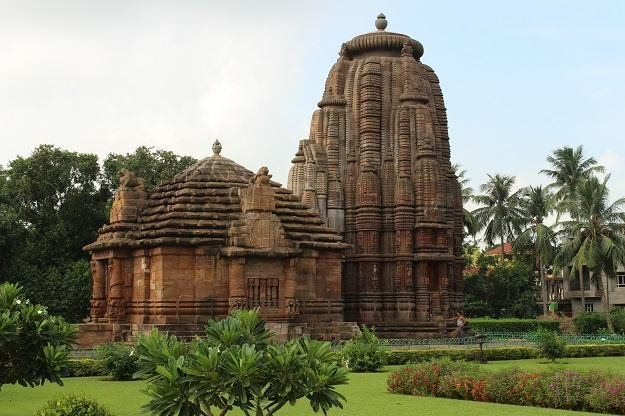
The Rajarani Temple in Bhubaneswar, Odisha, stands as a quintessential example of the glorious heritage of the Kalinga region. Built in the 11th century, this temple is distinct from other religious shrines in the region due to its unique character: it is not associated with a specific deity or sect. Instead, the temple is locally revered as the “Love Temple” owing to its intricate exterior carvings depicting amorous couples and sensuous figures. Constructed from the local dull red and yellow sandstone—locally termed “Rajarani”—the temple exudes a warm, golden hue that changes with the shifting sunlight.
Phalaśruti: The Spiritual Benefit
While there is no inner sanctum housing a deity, the temple follows the traditional Saivite iconography based on the niches and sculptures. Devotees visit to admire the divine union of masculine and feminine energies, celebrating the celestial marriage of Lord Shiva and Parvati. The temple is considered a sanctuary of artistic expression where the stone itself serves as a medium for devotion. It is believed that observing the intricate nayikas (heroines) and the eternal dance of Shiva grants peace, prosperity, and a deeper appreciation for the divine play (Leela) of the universe.
Historical Origins & Scriptural Legend
According to archaeological surveys and temple records, the Rajarani Temple was constructed between the 11th and 12th centuries. Historians often associate its construction with the Somavamsi dynasty, whose kings migrated from Central India and brought with them a distinct architectural style that influenced the region.
The temple is often dated to the same period as the renowned Jagannath Temple in Puri and the Lingaraja Temple in Bhubaneswar. Tradition holds that the temple was originally named Indreswara. Unlike the grand Lingaraja Temple, which is an active place of worship, the Rajarani Temple was likely built as a monument of artistic grandeur, possibly by a regional chieftain or a high-ranking official of the Somavamsi court. The sandstone used in its construction, known as “Rajarani stone,” gives the temple its modern name. It stands as a testament to the era when the Kalinga region was a hub of architectural innovation, influencing temple designs as far away as Khajuraho.
Architectural Marvels
The Rajarani Temple is a masterpiece of the Pancharatha style, a distinct sub-style of Kalinga architecture. The temple complex is set on a raised platform and consists of two primary structures: the Vimana (sanctum) and the Jagamohana (porch).
The Vimana and Jagamohana
The Vimana (tower) rises to a height of approximately 18 meters (59 ft) and features a curvilinear spire known as a Rekha Shikhara. It is crowned with a fluted disc-shaped stone called an Amalaka and a finial vase (Kalasa). Unlike other temples in Bhubaneswar, the tower here appears more rounded, closely resembling the architecture of the Khajuraho temples.
The Jagamohana (audience hall) features a pyramidal roof, which appears incomplete compared to the towering Vimana. It measures roughly 36 ft externally and contains tiered (Pidha) architecture. The Bada (vertical wall) of the temple is divided into five distinct segments (Panchanga Bada), a feature that distinguishes it from the three-segmented walls of earlier temples.
Notable Sculptures
The exterior walls are adorned with elaborate carvings that rival the finest temples of Khajuraho. The sculptures depict a variety of themes:
- Nayikas and Dwarapalas: Tall, slender figures of women (nayikas) are carved in various moods—fondling children, playing musical instruments, or removing an anklet. The guardian deities (Dwarapalas) flank the entrance.
- Navagrahas: An architrave above the entrance features the nine celestial bodies.
- Shiva’s Marriage: Cult images depict scenes from the marriage of Shiva and Parvati, along with Nataraja.
- Vertical Mouldings: The base of the temple features projections in the form of vertical mouldings decorated with foliage, creepers, and scroll motifs.
Note: Unlike active shrines, the Rajarani Temple has no image in the sanctum, classifying it strictly as a monument preserved by the Archaeological Survey of India (ASI).
Darshan & Ritual Logistics
Rajarani Temple functions as a protected archaeological monument rather than a daily functioning temple with active Pujas. However, it remains a site of deep reverence and architectural observation.
Daily Timings (2026 Schedule)
| Session | Timings | Status |
|---|---|---|
| Morning Darshan | 09:00 AM – 12:30 PM | Open (Ticketed) |
| Afternoon Break | 12:30 PM – 02:00 PM | Closed |
| Evening Darshan | 03:00 PM – 05:30 PM | Open (Ticketed) |
| Night Closure | 05:30 PM onwards | Closed |
Sevas and Festivals
As a ticketed monument, standard Sevas (Abhishekam, Archana) are not performed daily. However, special events are organized by the ASI on significant dates. For 2026, visitors should note the following festivals where the temple may be illuminated or special viewing is allowed:
- Maha Shivaratri (Feb 26, 2026): Special illumination and extended evening hours.
- Ratha Yatra (June 27, 2026): Although the temple is not dedicated to Jagannath, the festive atmosphere in Bhubaneswar attracts many pilgrims.
- Durga Puja (Oct 2026): Cultural programs often held in the precincts.
Practical Visitor Guidance
Rules and Etiquette
- Entry Ticket: Indian nationals must pay a nominal fee (approx. ₹25), while SAARC/BIMSTEC nationals and foreigners pay higher rates. Tickets are available at the ASI counter on-site.
- Photography: Still photography is allowed. However, a separate fee is required for using video cameras or professional equipment.
- Dress Code: While no strict code exists for the monument, it is respectful to wear modest clothing covering shoulders and knees.
- Mobile Lockers: Large backpacks are not allowed inside. Small lockers are generally available near the entrance, but it is advisable to carry minimal luggage.
- Accessibility: The precinct is flat with stone paving. It is accessible for wheelchairs, though assistance may be required on the steps leading to the Jagamohana.
Crowd Management
- Best Hours: To avoid the midday Odisha heat and crowds, visit between 09:00 AM – 10:30 AM or 04:00 PM – 05:00 PM.
- Seasonal Advice: Summers (April–June) are hot; carry water and a hat. The monsoon (July–September) offers lush greenery but be cautious of slippery stones.
Pilgrimage Connectivity
How to Reach
- Air: Biju Patnaik International Airport (BBI) is the nearest airport, located roughly 8 km away. A taxi or ride-share takes about 20–30 minutes.
- Rail: Bhubaneswar Railway Station (BBS) is the closest major railhead, approximately 4 km from the temple.
- Road: The temple is located on Tankapani Road. It is easily accessible via NH 16 (formerly NH 5), which connects Bhubaneswar to Kolkata and Chennai. Local city buses and auto-rickshaws are readily available.
Nearby Sacred Sites
To create a complete pilgrimage circuit, visitors are encouraged to explore these nearby temples:
- Lingaraja Temple (3 km): The largest and most famous temple in Bhubaneswar, dedicated to Lord Shiva.
- Mukteswara Temple (3.5 km): A gem of Kalinga architecture, known for its intricate carvings and arched gateway.
- Kedar Gauri Temple (4 km): Located near the Bindu Sagar Lake, dedicated to Lord Shiva and Goddess Gauri.
Frequently Asked Questions (FAQ)
1. Is there a VIP Darshan entry available?
No, as the Rajarani Temple is maintained by the Archaeological Survey of India (ASI), there is no VIP darshan facility. Entry is general on a first-come, first-served basis with a standard ticket.
2. Can we perform wedding photography at Rajarani Temple?
Professional photo shoots and wedding photography require prior permission from the ASI office in Bhubaneswar. Commercial photography without a permit is strictly prohibited.
3. Is online seva booking available?
Since the temple is not an active place of worship with daily pujas, online seva booking is not applicable. The ticket purchased at the gate is solely for monument viewing.
4. What is the significance of the “Rajarani” stone?
The temple is built using a locally quarried dull red and yellow sandstone. This sandstone, known as “Rajarani stone,” gives the temple its distinct honey-colored appearance and has excellent durability, allowing the intricate carvings to survive for centuries.
5. How far is the temple from the airport?
The Biju Patnaik International Airport is approximately 8 kilometers away. A taxi ride typically takes 20 to 30 minutes depending on traffic.
Photo Gallery

How to Reach:
Address: Tankapani Rd, Near BOI ATM, Bhubaneswar, Odisha 751002, India.
Landmark: Located near the banks of the Bindu Sagar Lake, approximately 3 km from the main railway station.
Contact Details
For heritage conservation queries, contact the Superintending Archaeologist, Circle Office, Bhubaneswar (ASI).
Phone: +91-674-2530327 (ASI Bhubaneswar Office)
Recent Posts

ओ सांवरे तूने ही मुझको संभाला – Lyrics & Meaning
ओ सांवरे तूने ही मुझको संभाला – A Prayer to Shyam Origin & Spiritual Essence Why This Bhajan Resonates Devotees chant this when overwhelmed by life’s storms—the refrain ‘तूने ही मुझको संभाला’ is the soul’s sigh of relief: “You…

कथा ये है महाराज मेरे की – Lyrics & Meaning
कथा ये है महाराज मेरे की छत्रपति संभाजी महाराज – A Prayer to Chhatrapati Sambhaji Maharaj Origin & Spiritual Essence Why This Bhajan Resonates Devotees chant this when their spirit feels tested—its powerful refrain “महाराज मेरे” is a soul’s…

Rigveda Samhita Yathartha Anuvada (ऋग्वेद संहिता यथार्थ अनुवाद) – Complete Set with Anvayartha & Hindi/English Translation
The Rigveda is the oldest surviving scripture of humanity and the foundational text of Sanātana Dharma. For serious students, scholars, UPSC aspirants studying ancient Indian history, Sanskrit learners, and spiritual seekers, a precise and grammatically structured translation is indispensable.…

आना भी अकेला है जाना भी अकेला है – Lyrics & Meaning | BharatTemples
आना भी अकेला है जाना भी अकेला है – A Prayer to the Divine Witness Origin & Spiritual Essence Why This Bhajan Resonates Devotees turn to this bhajan in moments of deep reflection—when life’s attachments begin to ache. The…

माता शेरावाली के द्वार जो भी जाता है – Lyrics & Meaning
माता शेरावाली के द्वार जो भी जाता है – A Prayer to Maa Sherawali Origin & Spiritual Essence Why This Bhajan Resonates Devotees turn to this bhajan in times of fear or uncertainty—its promise that no one leaves Maa’s…

मार लेना सपणी उबार लेणा भवरा – Lyrics & Meaning
मार लेना सपणी उबार लेणा भवरा – A Prayer to the Divine Beloved Origin & Spiritual Essence Why This Bhajan Resonates Devotees chant this in moments of deep vulnerability—its cry of “मार लेना सपणी, उबार लेणा भवरा” is the…

हमें श्याम सुंदर भरोसा तुम्हारा – Lyrics & Meaning
हमें श्याम सुंदर भरोसा तुम्हारा – A Prayer to Shyam Sundar Origin & Spiritual Essence Why This Bhajan Resonates Devotees chant this when feeling alone—its refrain ‘de do sahara’ is the soul’s cry for divine support. Lyrics in Hindi…

Mere Satguru Ne Di Thi Davai Lyrics in Hindi & Meaning
Mere Satguru Ne Di Thi Davai: Invoking the Guru’s Liberating Wisdom This soul-stirring bhajan venerates the Satguru (True Spiritual Master) as the divine physician who dispenses the only remedy for life’s deepest sufferings. Composed by Sant Karmaveer Tufani, it…

Janm Diyo Thari Maa Dukh Dekhiyo Lyrics in Hindi & Meaning
जन्म दियो थारी माँ दुख देखियो (Maa’s Grief Upon Birthing You) This soul-stirring Chetavani Bhajan (admonitory hymn) is addressed to the Divine Mother (Maa) – a call for repentance when children forget their filial duties in the dark age…

Bhadi Sabha Mein Thane Manaun Lyrics in Hindi & Meaning
Bhadi Sabha Mein Thane Manaun: Invoking the Spear-Wielding Mother Mata Bhawani (श्री ज्वाला भवानी), the fiery manifestation of Shakti worshipped as the Protector of Dharma in Her Dhaulagarh sanctum. Origin & Spiritual Essence Composed in Rajasthani folk tradition by…