
Contents
Introduction & Spiritual Essence
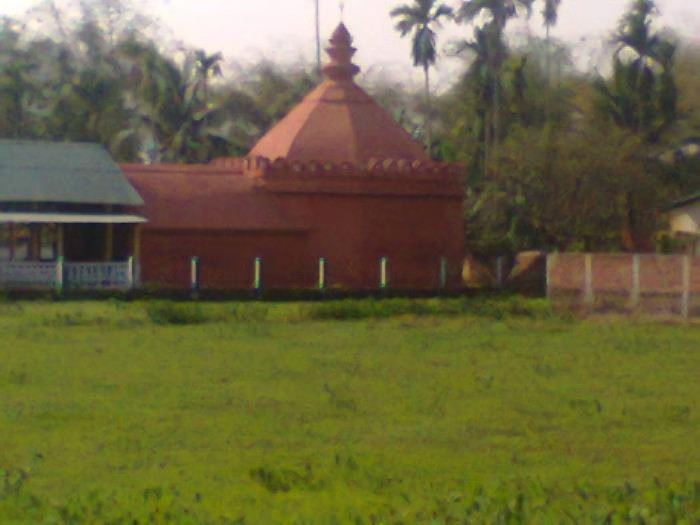
The Rangnath Dol stands as a serene testament to devotion on the banks of the Joysagar tank in Assam. Dedicated to Lord Shiva, this historic temple is not merely a stone structure but a focal point of spiritual energy in the region. While specific alternate names vary locally, it is primarily revered as the Rangnath Dol, symbolizing the “stage” or “platform” of divine worship.
The Phalaśruti: Why Visit?
Devotees flock to Rangnath Dol seeking the blessings of Lord Shiva for strength and tranquility. According to Hindu tradition, worshipping here is believed to cleanse ancestral karma and bestow spiritual merit (punya). The temple’s proximity to the vast Joysagar tank—emblematic of purity and expansiveness—enhances the meditative atmosphere, allowing pilgrims to immerse themselves in deep contemplation and prayer.
Historical Origins & Scriptural Legend
Builders and Era: The temple was constructed in 1703 under the patronage of the Ahom king, Swargadeo Rudra Singha. This period marked a zenith of Ahom architecture and religious synthesis, where indigenous Assamese styles blended with Hindu temple traditions.
The Legend of Joysagar
Tradition holds that the construction of Rangnath Dol is inextricably linked to the creation of the Joysagar tank. King Rudra Singha excavated this massive water body—covering 318 acres, making it one of the largest man-made tanks in the world—in memory of his mother, Sati Joymati. The Rangnath Dol was built on the bank of this tank, serving as a spiritual anchor to the king’s filial piety. According to temple records, the location was chosen to offer prayers to Lord Shiva, ensuring the peace and salvation of the queen’s soul.
Architectural Marvels
The temple exhibits classic Ahom architecture, characterized by robust structural integrity and distinct aesthetic choices that differ from the typical Nagara or Dravida styles of Southern India.
Vastu and Structure
While the site predates modern Vastu Shastra dominance, the orientation follows traditional principles facing East to welcome the rising sun (Surya). The temple features a raised platform (dol) and a unique curvilinear tower that reflects the Ahom adaptation of Hindu temple forms.
Although it lacks the towering spires of Khajuraho or the intricate carvings of Konark, Rangnath Dol is noted for its solid masonry and serene simplicity. The surrounding precinct includes the massive Joysagar tank, creating a harmonious landscape architecture complex.
Darshan & Ritual Logistics
To ensure a smooth pilgrimage experience, we have outlined the daily schedule and key rituals below. Note that timings may vary during major festivals.
Daily Timings
| Session | Timing | Details |
|---|---|---|
| Morning Darshan | 6:00 AM – 12:00 PM | Opens with morning Arati. |
| Afternoon Break | 12:00 PM – 2:00 PM | Temple remains closed. |
| Evening Darshan | 2:00 PM – 8:00 PM | Includes evening Arati. |
Key Sevas & Online Booking
Devotees can participate in various rituals, including:
- Abhishekam: Ritual bathing of the Shiva Linga.
- Archana: Recitation of names and hymns.
- Deepa Daan: Offering of lamps.
Note: Online booking infrastructure varies for heritage sites. It is recommended to contact the temple administration or visit the local temple office for specific Seva bookings prior to arrival.
2026 Major Festival Dates
Plan your visit around these auspicious occasions:
- Maha Shivaratri: February 26, 2026 (Special night-long vigil and Puja).
- Kartik Purnima: November 4, 2026 (Deepening spiritual significance at the Joysagar tank).
- Bhadoh Saptami: August 21, 2026.
Practical Visitor Guidance
Dress Code & Etiquette
Visitors are requested to wear modest clothing. Traditional Indian attire is preferred, but western clothing is acceptable if it covers the body adequately (shoulders and knees). Leather items should be minimized as per temple norms.
Photography & Mobile
Photography is generally permitted in the outer complex but restricted inside the inner sanctum (Garbhagriha). Mobile lockers are recommended for securing personal belongings during darshan.
Crowd Management
Best Time to Visit: Early mornings (6:00 AM – 8:00 AM) offer the most peaceful experience.
Seasonal Advice: Assam summers (May-June) can be humid. Carry water and a cap. During the monsoon (June-September), a light raincoat is essential.
Pilgrimage Connectivity
How to Reach
By Air: The nearest airport is Jorhat Airport (about 60 km away). Lokpriya Gopinath Bordoloi International Airport in Guwahati is roughly 300 km away.
By Rail: The nearest major railway station is Jorhat Town Railway Station (approx. 65 km). Taxis and buses are available to Joysagar.
By Road: The temple is located in Joysagar, near Jorhat. It connects via NH 27. Local transport is readily available from Jorhat city.
Nearby Sacred Sites
Enhance your pilgrimage circuit by visiting:
- Joysagar Tank: The massive water body adjacent to the temple.
- Talatal Ghar: The Ahom palace and underground base (approx. 10 km away).
- Sivasagar Sivadol: The iconic temple complex in the nearby town of Sivasagar (approx. 30 km away).
Photo Gallery
(WordPress Gallery shortcode preserves original image layout and metadata)
Temple Virtual Tour
Frequently Asked Questions (FAQ)
1. Is there a VIP darshan entry at Rangnath Dol?
Rangnath Dol is a heritage site that generally operates on an egalitarian basis. While there is no formal VIP system like large commercial shrines, contacting the temple priests ahead of time may facilitate a smoother darshan during peak hours.
2. What is the entry fee for the temple?
Entry to the Rangnath Dol temple is free for all devotees. However, donations are welcome for the maintenance of the heritage site.
3. Are non-Hindus allowed inside?
As a place of traditional Hindu worship, access to the inner sanctum is generally restricted to followers of the Hindu faith. However, the outer complex and the tank area are accessible to all visitors.
4. Where can I stay near the temple?
Accommodation options are available in Jorhat city, which is the nearest urban center. There are also modest lodges and guest houses in Joysagar catering to pilgrims.
5. When was the Rangnath Dol built?
The temple was built in 1703 by the Ahom King Rudra Singha.
Contact Details
Recent Posts

ओ सांवरे तूने ही मुझको संभाला – Lyrics & Meaning
ओ सांवरे तूने ही मुझको संभाला – A Prayer to Shyam Origin & Spiritual Essence Why This Bhajan Resonates Devotees chant this when overwhelmed by life’s storms—the refrain ‘तूने ही मुझको संभाला’ is the soul’s sigh of relief: “You…

कथा ये है महाराज मेरे की – Lyrics & Meaning
कथा ये है महाराज मेरे की छत्रपति संभाजी महाराज – A Prayer to Chhatrapati Sambhaji Maharaj Origin & Spiritual Essence Why This Bhajan Resonates Devotees chant this when their spirit feels tested—its powerful refrain “महाराज मेरे” is a soul’s…

Rigveda Samhita Yathartha Anuvada (ऋग्वेद संहिता यथार्थ अनुवाद) – Complete Set with Anvayartha & Hindi/English Translation
The Rigveda is the oldest surviving scripture of humanity and the foundational text of Sanātana Dharma. For serious students, scholars, UPSC aspirants studying ancient Indian history, Sanskrit learners, and spiritual seekers, a precise and grammatically structured translation is indispensable.…

आना भी अकेला है जाना भी अकेला है – Lyrics & Meaning | BharatTemples
आना भी अकेला है जाना भी अकेला है – A Prayer to the Divine Witness Origin & Spiritual Essence Why This Bhajan Resonates Devotees turn to this bhajan in moments of deep reflection—when life’s attachments begin to ache. The…

माता शेरावाली के द्वार जो भी जाता है – Lyrics & Meaning
माता शेरावाली के द्वार जो भी जाता है – A Prayer to Maa Sherawali Origin & Spiritual Essence Why This Bhajan Resonates Devotees turn to this bhajan in times of fear or uncertainty—its promise that no one leaves Maa’s…

मार लेना सपणी उबार लेणा भवरा – Lyrics & Meaning
मार लेना सपणी उबार लेणा भवरा – A Prayer to the Divine Beloved Origin & Spiritual Essence Why This Bhajan Resonates Devotees chant this in moments of deep vulnerability—its cry of “मार लेना सपणी, उबार लेणा भवरा” is the…

हमें श्याम सुंदर भरोसा तुम्हारा – Lyrics & Meaning
हमें श्याम सुंदर भरोसा तुम्हारा – A Prayer to Shyam Sundar Origin & Spiritual Essence Why This Bhajan Resonates Devotees chant this when feeling alone—its refrain ‘de do sahara’ is the soul’s cry for divine support. Lyrics in Hindi…

Mere Satguru Ne Di Thi Davai Lyrics in Hindi & Meaning
Mere Satguru Ne Di Thi Davai: Invoking the Guru’s Liberating Wisdom This soul-stirring bhajan venerates the Satguru (True Spiritual Master) as the divine physician who dispenses the only remedy for life’s deepest sufferings. Composed by Sant Karmaveer Tufani, it…

Janm Diyo Thari Maa Dukh Dekhiyo Lyrics in Hindi & Meaning
जन्म दियो थारी माँ दुख देखियो (Maa’s Grief Upon Birthing You) This soul-stirring Chetavani Bhajan (admonitory hymn) is addressed to the Divine Mother (Maa) – a call for repentance when children forget their filial duties in the dark age…
Bhadi Sabha Mein Thane Manaun Lyrics in Hindi & Meaning
Bhadi Sabha Mein Thane Manaun: Invoking the Spear-Wielding Mother Mata Bhawani (श्री ज्वाला भवानी), the fiery manifestation of Shakti worshipped as the Protector of Dharma in Her Dhaulagarh sanctum. Origin & Spiritual Essence Composed in Rajasthani folk tradition by…