
Contents
Introduction & Spiritual Essence
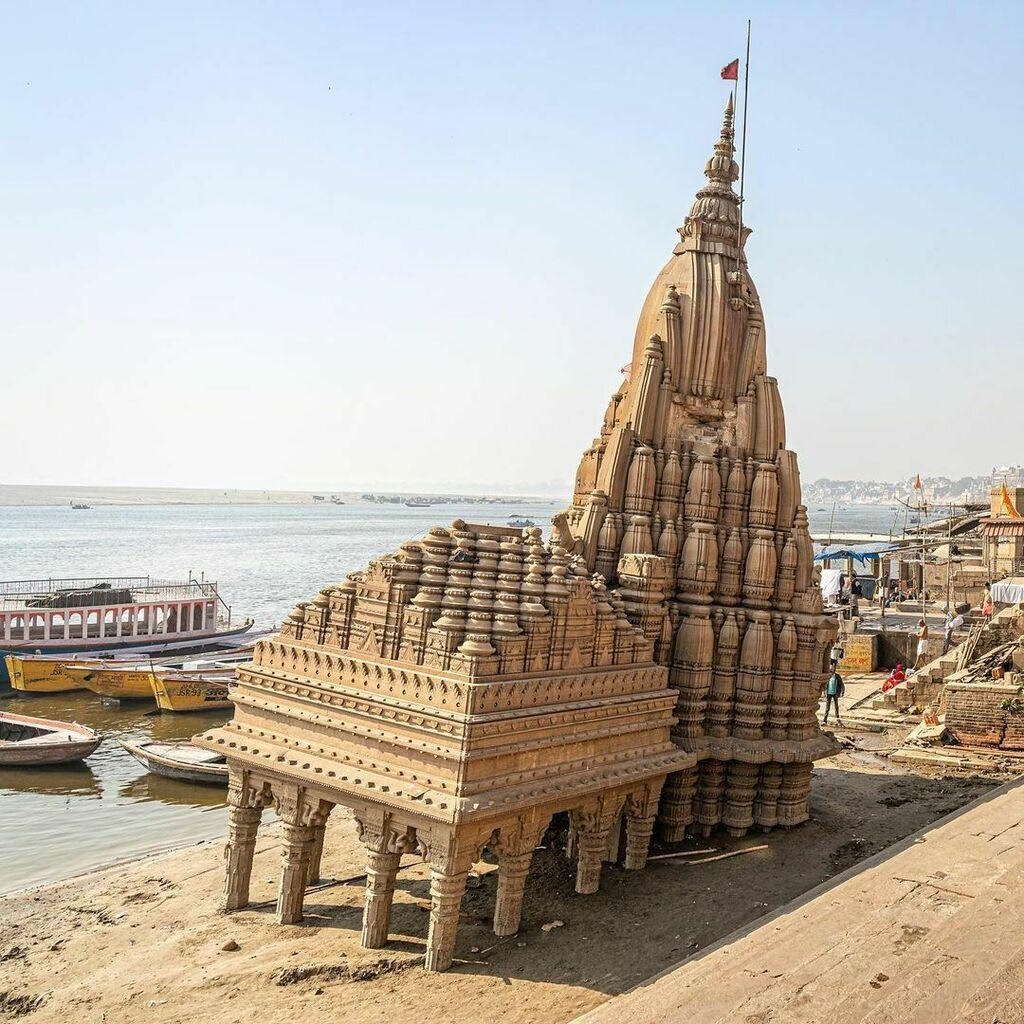
Deep in the sacred lanes of Varanasi, near the banks of the Ganga, lies the Ratneshwar Mahadev Temple (also known as Ratneshwar Mahadev Mandir). Dedicated to Lord Shiva, this shrine is unique not only for its devotion but for its origin story—one where divine wealth literally manifests into the form of the deity. While the city of Kashi is dotted with countless shrines, Ratneshwar holds a specific place in the hearts of devotees seeking prosperity and the dissolution of ancestral debts.
Phalaśruti: The Benefits of Darshan
According to the Kashi Khand of the Skanda Purana, worshipping Ratneshwar Mahadev bestows immense material and spiritual wealth. It is said that the merit (Punya) gained by offering prayers here is equivalent to performing one crore recitations of the Rudri Jap. Devotees visit this temple to cleanse ancestral karma and invite prosperity into their households, believing that the Lord accepts offerings of precious stones and gold, granting stability and abundance to the devotee.
Historical Origins & Scriptural Legend
The history of Ratneshwar is less about stone inscriptions and more about divine intervention. The legend is rooted in the Kashi Khand (Chapter 67), which narrates the story of Giri Raj Himavan (King of the Mountains and father of Goddess Parvati).
The Legend of Giri Raj
Tradition holds that Giri Raj, separated from his daughter Parvati, decided to visit her in Kashi. According to custom, a father brings gifts for his daughter. Giri Raj loaded his caravan with 8,000 grams of pearls, 1,000 grams of diamonds, and vast quantities of emeralds, sapphires, and corals.
Upon arriving in Kashi, he was awestruck by the splendor of the city and the palace of Lord Shiva (Kashi Vishwanath). He realized that his offerings, though grand by earthly standards, were humble compared to the divine opulence of Kashi. Overcome by a mix of joy and humility, he decided to leave the heap of precious stones (Ratnas) at a spot near the banks of the Ganga and departed.
The Miracle of the Lingam
The scriptures describe that the accumulated Ratnas (jewels) spontaneously merged and formed the shape of a Shiva Lingam. When Lord Shiva and Goddess Parvati discovered this, they named the deity Ratneshwar—the Lord of Gems. Worshippers believe that this self-manifested (Swayambhu) Lingam radiates the combined energy of wealth (Lakshmi) and spiritual liberation (Moksha).
Architectural Marvels
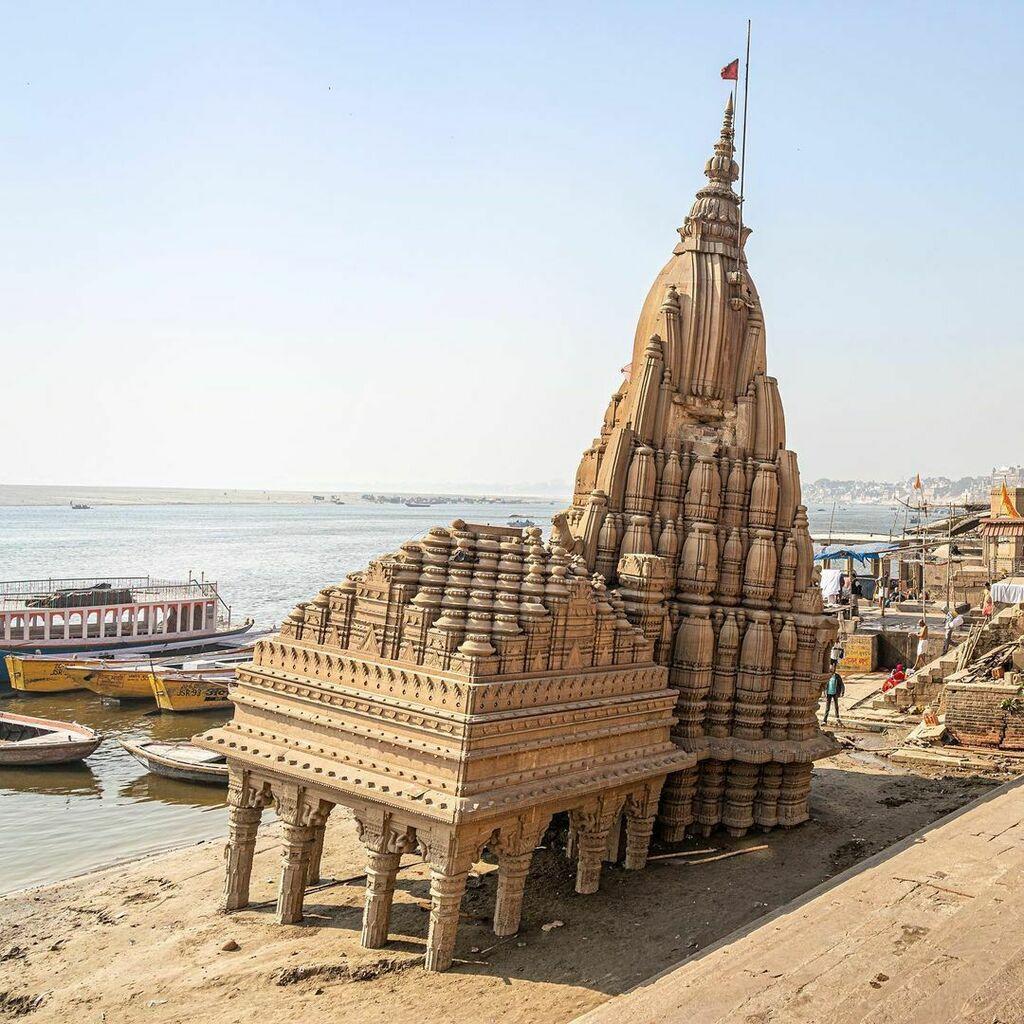
The Ratneshwar Mahadev Temple showcases a blend of classical Nagara-style architecture adapted to the constraints of Varanasi’s dense urban fabric. Unlike the towering grandeur of the Kashi Vishwanath Temple, this shrine offers an intimate and intricate architectural experience.
Structural Details
The temple features a tiered Shikhara (spire) that rises in distinct segments, typical of the Kashi architectural school. The sanctum (Garbhagriha) houses the Murti of Lord Shiva. While the exterior is adorned with traditional motifs, the interior emphasizes the sanctity of the Shiva Lingam. The temple complex follows Vastu Shastra principles, with the entrance aligned to allow morning sunlight to illuminate the deity, symbolizing the awakening of consciousness.
Darshan & Ritual Logistics
Visitors to Varanasi should note that timings for smaller shrines can vary slightly based on local priest schedules and seasonal festivals. Below is the general schedule for Ratneshwar Mahadev.
Daily Darshan Timings
| Session | Timing |
|---|---|
| Morning Darshan | 05:00 AM – 12:00 PM |
| Evening Darshan | 04:00 PM – 09:00 PM |
Key Sevas & Offerings
The primary ritual here is the Rudrabhishek and the offering of precious items (symbolized by gold or silver coins) to Ratneshwar Mahadev.
- Abhishekam: Performed daily in the morning with Panchamrit and Ganga Jal.
- Archana: Recitation of Shiva Sahasranama and Ratneshwar specific mantras.
- Online Seva Booking: While Ratneshwar is a smaller shrine, major rituals can often be booked through the official Kashi Vishwanath Trust portals or authorized local Pandits in Varanasi. It is recommended to inquire locally upon arrival or contact the temple administration for the most current online availability.
2026 Festival Dates
Special Pujas are held during these dates. The temple is usually decorated with flowers and lights.
- Maha Shivaratri: February 26, 2026
- Shravan Month (Mondays): July 14, 21, 28 (approximate dates)
- Nag Panchami: July 30, 2026
- Kartik Purnima: November 5, 2026
Practical Visitor Guidance
To ensure a serene darshan experience, adhere to the following guidelines which are standard for Shiva temples in Varanasi.
Etiquette & Rules
- Dress Code: Traditional attire is recommended (Kurta-Pajama for men, Saree/Salwar Kameez for women). Avoid shorts or sleeveless tops.
- Photography: Generally restricted inside the inner sanctum. Mobile photography is permitted in the courtyard, but respect the sanctity of the space.
- Footwear: Remove shoes before entering the temple premises. Designated shoe stalls are available nearby.
- Accessibility: The temple is located in the old city lanes. Accessibility is challenging for wheelchairs due to narrow, uneven pathways. Senior citizens are advised to visit during early morning hours (5:30 AM – 7:00 AM) to avoid crowds.
Crowd Management Tips
Varanasi can be overwhelming. For a peaceful darshan at Ratneshwar:
- Best Time: Early morning (5:30 AM) or late evening (7:00 PM).
- Seasonal Advice: Summers (April–June) are extremely hot; carry a water bottle. Winters (Dec–Jan) are pleasant but foggy.
Pilgrimage Connectivity
Ratneshwar Mahadev is situated in the heart of the old city, making it accessible via local transport but difficult for private vehicles.
How to Reach
- Nearest Airport: Lal Bahadur Shastri International Airport (LBS), Varanasi (approx. 30 mins by cab to Durga Ghat/Kashi Vishwanath area).
- Nearest Railway Station: Varanasi Junction (BSB) or Kashi Vishwanath Express (approx. 20-30 mins by auto-rickshaw).
- By Road: The temple is located at K-53/40, near Vridhha Kaleshwar. From the main ghats (Dashashwamedh or Assi), it is a short walk or a cycle-rickshaw ride through the narrow heritage lanes. Bisheshwarganj/GPO serves as a nearby landmark.
Nearby Sacred Sites (Pilgrimage Circuit)
Combine your visit to Ratneshwar with these nearby spiritual centers:
- Vridh Kaleshwar Temple: Located very close by, this temple is dedicated to Lord Shiva and is associated with removing sins related to one’s parents.
- Kashi Vishwanath Temple (Vishwanath Gali): The epicenter of Kashi (approx. 10-15 min walk).
- Panchganga Ghat: The legendary spot where Giri Raj is said to have worshipped Kaal Bhairav before leaving his gems.
Photo Gallery
Frequently Asked Questions (FAQs)
1. Is there a VIP darshan entry at Ratneshwar Temple?
As a heritage shrine managed largely by local priests and situated in the dense old city, there is no formal VIP entry system like in mega-temple complexes. However, visiting outside peak hours (early morning or late evening) ensures a quick and peaceful darshan.
2. Can I offer real jewelry to Lord Ratneshwar?
While devotees historically offered precious stones, today, it is customary to offer symbolic offerings like silver coins, flowers, and bilva leaves. If you wish to offer valuables, it is strictly advised to speak with the head priest first for secure handling and donation protocols.
3. Is there a mobile locker or shoe-keeping facility?
Yes, small designated stalls near the temple entrance manage footwear. However, for mobile phones and bags, it is best to carry minimal luggage or use the cloakrooms available near major ghats (like Dashashwamedh Ghat) before entering the narrow lanes.
4. What is the best time to visit specifically for the festival?
Maha Shivaratri (February/March) and Shravan Mondays (July/August) are the most significant times. Expect large crowds, but the atmosphere is electric with devotion and chants.
5. Is this temple part of the Kashi Vishwanath Trust?
Ratneshwar Mahadev is generally a private or community-managed shrine, distinct from the direct administration of the Kashi Vishwanath Temple Trust. However, rituals often align with the traditions of Kashi Vishwanath. Online seva booking for this specific shrine is usually handled through local priests or third-party spiritual service providers rather than a central government portal.
Contact Details
Address: K-53/40, Near Vridhha Kaleshwar, Varanasi, Uttar Pradesh 221001
Phone: – (Contact local Varanasi tourism office for updated numbers)
Recent Posts

ओ सांवरे तूने ही मुझको संभाला – Lyrics & Meaning
ओ सांवरे तूने ही मुझको संभाला – A Prayer to Shyam Origin & Spiritual Essence Why This Bhajan Resonates Devotees chant this when overwhelmed by life’s storms—the refrain ‘तूने ही मुझको संभाला’ is the soul’s sigh of relief: “You…

कथा ये है महाराज मेरे की – Lyrics & Meaning
कथा ये है महाराज मेरे की छत्रपति संभाजी महाराज – A Prayer to Chhatrapati Sambhaji Maharaj Origin & Spiritual Essence Why This Bhajan Resonates Devotees chant this when their spirit feels tested—its powerful refrain “महाराज मेरे” is a soul’s…

Rigveda Samhita Yathartha Anuvada (ऋग्वेद संहिता यथार्थ अनुवाद) – Complete Set with Anvayartha & Hindi/English Translation
The Rigveda is the oldest surviving scripture of humanity and the foundational text of Sanātana Dharma. For serious students, scholars, UPSC aspirants studying ancient Indian history, Sanskrit learners, and spiritual seekers, a precise and grammatically structured translation is indispensable.…

आना भी अकेला है जाना भी अकेला है – Lyrics & Meaning | BharatTemples
आना भी अकेला है जाना भी अकेला है – A Prayer to the Divine Witness Origin & Spiritual Essence Why This Bhajan Resonates Devotees turn to this bhajan in moments of deep reflection—when life’s attachments begin to ache. The…

माता शेरावाली के द्वार जो भी जाता है – Lyrics & Meaning
माता शेरावाली के द्वार जो भी जाता है – A Prayer to Maa Sherawali Origin & Spiritual Essence Why This Bhajan Resonates Devotees turn to this bhajan in times of fear or uncertainty—its promise that no one leaves Maa’s…

मार लेना सपणी उबार लेणा भवरा – Lyrics & Meaning
मार लेना सपणी उबार लेणा भवरा – A Prayer to the Divine Beloved Origin & Spiritual Essence Why This Bhajan Resonates Devotees chant this in moments of deep vulnerability—its cry of “मार लेना सपणी, उबार लेणा भवरा” is the…

हमें श्याम सुंदर भरोसा तुम्हारा – Lyrics & Meaning
हमें श्याम सुंदर भरोसा तुम्हारा – A Prayer to Shyam Sundar Origin & Spiritual Essence Why This Bhajan Resonates Devotees chant this when feeling alone—its refrain ‘de do sahara’ is the soul’s cry for divine support. Lyrics in Hindi…

Mere Satguru Ne Di Thi Davai Lyrics in Hindi & Meaning
Mere Satguru Ne Di Thi Davai: Invoking the Guru’s Liberating Wisdom This soul-stirring bhajan venerates the Satguru (True Spiritual Master) as the divine physician who dispenses the only remedy for life’s deepest sufferings. Composed by Sant Karmaveer Tufani, it…

Janm Diyo Thari Maa Dukh Dekhiyo Lyrics in Hindi & Meaning
जन्म दियो थारी माँ दुख देखियो (Maa’s Grief Upon Birthing You) This soul-stirring Chetavani Bhajan (admonitory hymn) is addressed to the Divine Mother (Maa) – a call for repentance when children forget their filial duties in the dark age…
Bhadi Sabha Mein Thane Manaun Lyrics in Hindi & Meaning
Bhadi Sabha Mein Thane Manaun: Invoking the Spear-Wielding Mother Mata Bhawani (श्री ज्वाला भवानी), the fiery manifestation of Shakti worshipped as the Protector of Dharma in Her Dhaulagarh sanctum. Origin & Spiritual Essence Composed in Rajasthani folk tradition by…