
Contents
- 1 The Sacred Rudranath Temple: Definitive Pilgrimage Guide to the Face of Shiva
The Sacred Rudranath Temple: Definitive Pilgrimage Guide to the Face of Shiva
Rudranath, Garhwal, Uttarakhand
Introduction & Spiritual Essence
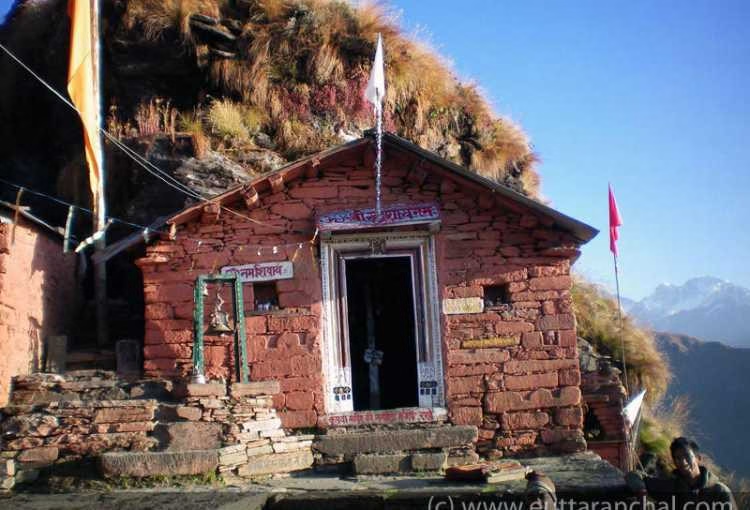
In the lofty elevations of the Garhwal Himalayas, where the air thins and the earth touches the heavens, stands the Rudranath Temple. Dedicated to Lord Shiva, this ancient shrine is the third jewel in the sacred Panch Kedar pilgrimage circuit. Unlike traditional stone structures, Rudranath is a natural rock formation that enshrines the mukha (face) of Lord Shiva, revered here as Nilkanth Mahadeva.
Phalaśruti (Spiritual Benefits): Devotees undertake this arduous trek not merely for sightseeing, but for profound spiritual cleansing. It is believed that offering prayers at Rudranath absolves the sins of past lives and helps attain Moksha (liberation). A unique ritual here involves the worship of ancestors (Pitridarshan) at Pitradhar, making it a vital stop for those seeking to honor their lineage and resolve ancestral karmic debts.
Historical Origins & Scriptural Legend
The Pandava Connection: The origins of Rudranath are rooted in the epic Mahabharata. According to the Sthala Purana, the Pandavas, burdened by the guilt of fratricide in the Kurukshetra war, sought the blessings of Lord Shiva to attain salvation. To avoid them, Shiva assumed the form of a bull and vanished into the earth. The Pandavas chased the bull to the Himalayas, where it reappeared in five parts. While the hump manifested at Kedarnath and the arms at Tungnath, the face appeared at Rudranath.
Oral Tradition: Tradition holds that the local Bhatts and Tiwaris of Gopeshwar have been the custodians of this shrine for centuries. A specific local legend narrates the Doli Yatra, where a symbolic idol of Shiva is carried from Gopeshwar via Lyuti Bugyal and Panar to Rudranath annually. During winter, when the main shrine is buried in snow, the deity is moved to the Annapurna Temple in Gopeshwar for worship.
Architectural Marvels
While specific architectural blueprints are scarce due to the temple’s antiquity, the shrine exhibits the raw, elemental aesthetics of Himalayan rock-cut architecture. The temple is situated amidst a dense forest of Rhododendron dwarfs and Alpine pastures.
- The Shikhara: The temple features a low shikhara (tower) typical of the Nagara style, but simplified to withstand the high-altitude winds.
- The Garbhagriha: The inner sanctum houses the swayambhu (self-manifested) rock face representing the face of Shiva. This natural formation is revered as Nilkanth (Blue Throated One), symbolizing the episode of Shiva consuming the poison Halahala during the churning of the ocean.
- The Mandapa: A modest assembly hall allows pilgrims to gather, though space is limited due to the geographical constraints of the location.
While the temple is not designated as an ASI or UNESCO heritage site, its cultural heritage is protected by the local Garhwal community. The surrounding landscape features natural rock formations like Pitradhar (a ridge dedicated to ancestors) and Tarakeshwar.
Darshan & Ritual Logistics
Important Note: Unlike urban temples, Rudranath does not have a rigid “opening” time in the traditional sense. However, accessibility is dictated by daylight and weather conditions.
| Time / Season | Darshan Information |
|---|---|
| May – June | Pilgrimage season begins. Meadows turn lush green. |
| July – August | Monsoon season. High risk of landslides. Temple celebrates an annual fair on the full moon day of Shravan. |
| September – October | Best time to visit. Clear skies and pleasant weather. |
| November – April | Temple Closed. The shrine is buried in heavy snow. Deity shifted to Gopeshwar. |
Key Sevas and Bookings
Due to the remote location, formal “online” bookings are limited compared to Kedarnath. Devotees generally perform the following rituals on-site:
- Rudra Abhishekam: Performed during the day using water, milk, and honey offered directly at the rock face.
- Pinda Daan (Ancestral Rites): Specifically performed at Pitradhar and Narad Shila, located near the temple.
For official Uttarakhand Char Dham Yatra registration (which now includes Panch Kedar), visitors must visit the official portal (registrationandtourism.uk.gov.in) before starting the trek.
2026 Festival Dates:
- Akshaya Tritiya: April 30, 2026 (Season Opening)
- Raksha Bandhan / Shravan Purnima: August 18, 2026 (Annual Fair)
- Naraka Chaturdashi (Deepotsav): October 20, 2026 (Closing of Shrine)
Practical Visitor Guidance
Visiting Rudranath requires physical and mental preparedness. It is a high-altitude trek at 3,600 meters.
- Dress Code: Traditional attire is recommended due to the spiritual nature of the site. In winter, heavy woolens are mandatory. Even in summer, nights are freezing.
- Photography: Photography inside the sanctum is strictly prohibited. However, the panoramic views of Nanda Devi, Trishul, and Nanda Ghunti peaks are permitted to photograph.
- Mobile/Lockers: There are no modern locker facilities. Travel light. A small backpack with essentials (water, energy bars, first aid) is advised.
- Crowd Management: Unlike Kedarnath, Rudranath sees fewer pilgrims. However, during the Raksha Bandhan fair, the area becomes crowded with locals. Best hours to visit: 6:00 AM – 9:00 AM to enjoy solitude and clear weather.
Pilgrimage Connectivity
How to Reach Rudranath
The trek to Rudranath is challenging and does not have motorable access directly to the temple.
- Base Stations: The journey typically starts from Gopeshwar (a major town in Chamoli district).
- Trek Routes:
- From Sagar Village: Approx 3 km drive from Gopeshwar to Sagar, followed by a steep trek.
- From Mandal: A 12 km drive from Gopeshwar to Mandal. From here, the trek passes through the Anusuya Devi Temple and takes roughly 8-10 hours to reach Rudranath.
- Nearest Transport Hubs:
- Air: Jolly Grant Airport, Dehradun (approx. 220 km away).
- Rail: Rishikesh Railway Station (approx. 210 km away).
- Road: Motorable roads connect Gopeshwar via National Highway 7 (NH7) via Joshimath and Chamoli.
Nearby Sacred Sites
Extend your pilgrimage to complete the Panch Kedar circuit or visit nearby gems:
- Annapurna Temple (Gopeshwar): The winter seat of Lord Rudranath.
- Chopta-Tungnath: Accessible from Gopeshwar, this is the second temple in the Panch Kedar circuit and offers a scenic trek.
- Kedarnath: The first and most prominent Panch Kedar shrine, located further north.
Frequently Asked Questions (FAQs)
1. Is there a VIP Darshan entry or fast-track pass for Rudranath?
Unlike major temples like Tirupati or Vaishno Devi, Rudranath does not offer VIP darshan passes. All pilgrims must trek the same route. However, horses or mules are available for hire on specific stretches (mainly up to Mandal or Sagar) for elderly pilgrims.
2. What is the best month to visit Rudranath?
The ideal months are May to June and September to October. During monsoon (July-August), landslides can block routes. Winters (November to April) are extremely harsh with temperatures dropping below -10°C, and the temple remains closed.
3. Are there accommodation facilities near the temple?
There are no hotels or lodges at Rudranath. Basic Dharamshalas and GMVN (Garhwal Mandal Vikas Nigam) guesthouses are available in Gopeshwar and Mandal. At Rudranath, devotees can stay in the temple premises or in basic tents.
4. Is it safe to trek to Rudranath?
For a beginner, the trek can be strenuous due to steep ascents and high altitude. It is advisable to carry an oxygen cylinder if you have respiratory issues and to stay hydrated. Local guides are recommended.
5. Can we visit Rudranath during winter?
Physical darshan of the main deity is not possible as the temple is covered in snow. However, the symbolic idol of Shiva is taken to Gopeshwar, where you can have darshan at the Annapurna Temple.
Recent Posts

ओ सांवरे तूने ही मुझको संभाला – Lyrics & Meaning
ओ सांवरे तूने ही मुझको संभाला – A Prayer to Shyam Origin & Spiritual Essence Why This Bhajan Resonates Devotees chant this when overwhelmed by life’s storms—the refrain ‘तूने ही मुझको संभाला’ is the soul’s sigh of relief: “You…

कथा ये है महाराज मेरे की – Lyrics & Meaning
कथा ये है महाराज मेरे की छत्रपति संभाजी महाराज – A Prayer to Chhatrapati Sambhaji Maharaj Origin & Spiritual Essence Why This Bhajan Resonates Devotees chant this when their spirit feels tested—its powerful refrain “महाराज मेरे” is a soul’s…

Rigveda Samhita Yathartha Anuvada (ऋग्वेद संहिता यथार्थ अनुवाद) – Complete Set with Anvayartha & Hindi/English Translation
The Rigveda is the oldest surviving scripture of humanity and the foundational text of Sanātana Dharma. For serious students, scholars, UPSC aspirants studying ancient Indian history, Sanskrit learners, and spiritual seekers, a precise and grammatically structured translation is indispensable.…

आना भी अकेला है जाना भी अकेला है – Lyrics & Meaning | BharatTemples
आना भी अकेला है जाना भी अकेला है – A Prayer to the Divine Witness Origin & Spiritual Essence Why This Bhajan Resonates Devotees turn to this bhajan in moments of deep reflection—when life’s attachments begin to ache. The…

माता शेरावाली के द्वार जो भी जाता है – Lyrics & Meaning
माता शेरावाली के द्वार जो भी जाता है – A Prayer to Maa Sherawali Origin & Spiritual Essence Why This Bhajan Resonates Devotees turn to this bhajan in times of fear or uncertainty—its promise that no one leaves Maa’s…

मार लेना सपणी उबार लेणा भवरा – Lyrics & Meaning
मार लेना सपणी उबार लेणा भवरा – A Prayer to the Divine Beloved Origin & Spiritual Essence Why This Bhajan Resonates Devotees chant this in moments of deep vulnerability—its cry of “मार लेना सपणी, उबार लेणा भवरा” is the…

हमें श्याम सुंदर भरोसा तुम्हारा – Lyrics & Meaning
हमें श्याम सुंदर भरोसा तुम्हारा – A Prayer to Shyam Sundar Origin & Spiritual Essence Why This Bhajan Resonates Devotees chant this when feeling alone—its refrain ‘de do sahara’ is the soul’s cry for divine support. Lyrics in Hindi…

Mere Satguru Ne Di Thi Davai Lyrics in Hindi & Meaning
Mere Satguru Ne Di Thi Davai: Invoking the Guru’s Liberating Wisdom This soul-stirring bhajan venerates the Satguru (True Spiritual Master) as the divine physician who dispenses the only remedy for life’s deepest sufferings. Composed by Sant Karmaveer Tufani, it…

Janm Diyo Thari Maa Dukh Dekhiyo Lyrics in Hindi & Meaning
जन्म दियो थारी माँ दुख देखियो (Maa’s Grief Upon Birthing You) This soul-stirring Chetavani Bhajan (admonitory hymn) is addressed to the Divine Mother (Maa) – a call for repentance when children forget their filial duties in the dark age…
Bhadi Sabha Mein Thane Manaun Lyrics in Hindi & Meaning
Bhadi Sabha Mein Thane Manaun: Invoking the Spear-Wielding Mother Mata Bhawani (श्री ज्वाला भवानी), the fiery manifestation of Shakti worshipped as the Protector of Dharma in Her Dhaulagarh sanctum. Origin & Spiritual Essence Composed in Rajasthani folk tradition by…