
Contents
Introduction & Spiritual Essence
Located in the ancient bylanes of Kashi (Varanasi), the Saamba Aditya Temple is a sacred sanctum dedicated to Lord Surya (the Sun God). This temple is not merely a structure but a testament to divine grace and the healing power of devotion. The presiding deity here is Saamba Aditya, a unique form of the Sun God worshipped to eradicate diseases and bestow Sumangali (longevity of the husband) upon married women.
According to the Kashi Khand of the Skanda Purana, this site is the epicenter of a legendary event involving Saamba, the son of Lord Krishna, who was cured of leprosy by worshipping Lord Surya at this very spot.
| Date built: | – |
|---|---|
| Deity: | Saamba Aditya |
| Architectural style: | Dravidian architecture |
| Major festivals | – |
| Locale: | Varanasi |
| District:: | Varanasi |
| Address: | – |
| Phone | – |
Phalaśruti (Spiritual Benefits): Devotees visit this temple primarily to seek relief from chronic and incurable ailments. As per the Kashi Khand, a ritual bath in the temple’s holy water body (Surya Kund) on Sundays at sunrise, followed by prayers to Saamba Aditya, is believed to cleanse one of diseases and ancestral karma. Married women observe rituals here for the well-being and long life of their husbands.
Historical Origins & Scriptural Legend
The history of the Saamba Aditya Temple is deeply rooted in the Skanda Purana, specifically the Kashi Khand (Chapter 48). While the exact construction date and the specific dynasty responsible for the original masonry are not explicitly recorded in modern catalogs, the temple stands on a site of immense antiquity. The architecture suggests influences of the Dravidian style, likely introduced during the Vijayanagara period or through the influence of South Indian pilgrim communities who settled in Kashi.
Soon Narad left the palace and Lord Krishna started keeping a close watch on Saamba but nothing untoward was observed in Saamba’s behaviour. However, the surveillance went on for quite some time.
After some days, Narad again visited Dwarka Puri and precisely at that time, Lord Krishna was in his personal chambers alongwith various ladies. Narad called Saamba, who was loitering outside, and told him to inform Lord Krishna about his arrival. Saamba hesitated for a while. It was a double whammy for him. On the one hand, if he barges in and disturbs Lord Krishna, the latter may get angry. On the other hand, if he disobeys Narad, he may get angry because on the earlier occasion he had not respected Narad.
With a dilemma, he went inside Lord Krishna’s private quarters, not knowing that Narad was following him. Both of them disturbed Lord Krishna who was in a compromising position. Lord Krishna suddenly got up very embarrassed. All the girls surrounding him were also equally embarrassed. Saamba silently left the place.
Narad gave a wrong interpretation of the events to Lord Krishna stating that the ladies who were with Lord Krishna were indeed seduced by the appearance of Saamba. Lord Krishna got infuriated and cursed Saamba that he will be inflicted with Leprosy. However, Saamba pleaded innocence and Lord Krishna was very much moved. He told Saamba that to get rid of this curse, he should go to Kashi and pray to Lord Surya.
Accordingly, Saamba came to Kashi, dug a Kund which was called Saamba Kund and undertook rigorous penance and pooja of Lord Surya. In due course, he was cured of this dreaded disease. Lord Aditya who is present at this place came to be called Saamba Aditya.
According to Kashi Khand Chapter 48, a person who takes bath in Saamba Kund religiously on Sundays at sunrise and prays to Saamba Aditya will get cured of any incurable disease, any married lady performing such prayers will always remain Sumangali (Suhagin-lady whose husband is alive) and childless couple will be blessed with child.
Saamba Kund is now known as Surya Kund / Suraj Kund.
Architectural Marvels
The Saamba Aditya Temple showcases a distinct Dravidian architectural style, setting it apart from the typical Nagara style temples of North India. This style is characterized by its pyramidal towers, ornate mandapas (halls), and intricate carvings of deities and floral motifs.
Key architectural elements include:
- Shikhara/Vimana: The towering spire above the sanctum sanctorum (Garbhagriha) is typical of Dravidian design, featuring multiple tiers decorated with miniature niches (koshtas).
- Garbhagriha: The inner sanctum houses the Murti (idol) of Saamba Aditya, depicted with four arms, holding lotus flowers and the sun disc, radiating divine energy.
- Surrounding Carvings: The walls and pillars feature carvings of various solar deities and mythological scenes from the Kashi Khand.
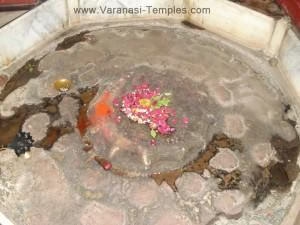
The temple complex also encompasses the Surya Kund (formerly Saamba Kund), which is a rectangular stepwell structure. This tank is an integral part of the temple’s Vastu Shastra, aligning with the path of the sun to capture the first rays of daylight for the ritual bath.
Darshan & Ritual Logistics
To facilitate a seamless spiritual experience, the temple administration has established specific timings for Darshan (viewing of the deity) and Sevas (ritual offerings). As of 2026, devotees can utilize online platforms for booking specific rituals.
Daily Timings
| Session | Timings | Details |
|---|---|---|
| Morning Darshan | 06:00 AM – 12:00 PM | Opens with Surya Namaskar. Best time for Surya Kund bath (Sunrise). |
| Afternoon Break | 12:00 PM – 03:00 PM | Temple remains closed for Deity rest. |
| Evening Darshan | 03:00 PM – 09:00 PM | Includes Aarti and Shayan Darshan. |
Key Sevas & Online Booking
Devotees can book the following Sevas online via the official Kashi Vishwanath Temple trust portal or designated counters:
- Surya Namaskar & Archana: Offered daily, ideal for general well-being.
- Abhishekam: Ritual bathing of the Saamba Aditya idol (requires prior booking).
- Surya Kund Snan: Devotees are encouraged to take a dip in the holy Kund on Sundays, especially during Ravi Yoga and Pushya Karsha periods.
2026 Festival Calendar Highlights
- Maha Shivaratri (February 26, 2026): Special darshan hours likely extended. Expect crowds at adjoining Kashi Vishwanath Temple.
- Ratha Saptami (February 4, 2026): A major festival for Lord Surya. Special Yajnas and processions are held at Saamba Aditya Temple.
- Makar Sankranti (January 14, 2026): Devotees perform tarpan for ancestors and offer Til (sesame) to the Sun God.
- Shravan Month (July – August 2026): Mondays during this month are highly auspicious for Lord Shiva, and Tuesdays (associated with the Sun) see a surge in devotees at Surya Kund.
Practical Visitor Guidance
Visiting the Saamba Aditya Temple requires preparation, as it is located in the dense, vibrant core of Varanasi.
- Dress Code: Traditional attire is recommended. Men should wear dhotis or trousers and shirts; women should wear sarees or salwar kameez. Avoid shorts and sleeveless tops.
- Photography & Mobiles: Photography is generally prohibited inside the inner sanctum. Mobile phones are allowed but must be silenced.
- Accessibility: The temple is accessible by foot. The lanes are narrow, making it difficult for wheelchairs; however, assistance is available from local volunteers.
- Crowd Management:
- Best Hours: Early morning (6:00 AM – 8:00 AM) or late evening (7:00 PM – 9:00 PM) to avoid peak rush.
- Seasonal Advice: Summers (May-June) in Varanasi are intense. Carry a water bottle (preferably from the temple’s Annadanam facility) and wear light cotton clothes. During winters (Dec-Jan), carry a shawl as the temple opens early.
Pilgrimage Connectivity
How to Reach Saamba Aditya Temple
The temple is located at D-51/90 Surya Kund (Suraj Kund), near the famous Dashashwamedh Ghat area.
- By Air: Lal Bahadur Shastri International Airport (LBS) (VNS) is approximately 25 km away. Taxis and pre-paid cabs are available.
- By Rail: Varanasi Junction (BSB) is about 5-6 km away. Kashi Vishwanath Express (BSB) and Manduadih Railway Station are also nearby.
- By Road: The temple is well connected via NH-19 (formerly NH-2) and NH-35. Auto-rickshaws and cycle rickshaws are the best modes to reach the temple entrance from major city points.
Nearby Sacred Sites (Pilgrimage Circuit)
Expand your spiritual journey by visiting these nearby holy sites:
- Kashi Vishwanath Temple (700m): The primary Jyotirlinga of Lord Shiva.
- Annapurna Devi Temple (1km): Dedicated to the Goddess of food and nourishment.
- Sankat Mochan Hanuman Temple (2.5km): Famous for the Sankat Mochan Hanuman Temple and its unique monkey population.
Photo Gallery
How to Reach:
Saamba Aditya is located at D-51/90 Surya Kund (Suraj Kund). This is a famous locality. Devotees can travel up to this place in a cycle rickshaw.
Frequently Asked Questions (FAQ)
1. Is there a VIP Darshan entry at Saamba Aditya Temple?
While the temple administration maintains a general darshan queue, VIP entry is typically reserved for senior citizens and specially abled devotees. For special darshan during festival days, it is advisable to contact the local temple office or the Kashi Vishwanath Temple trust.
2. What is the significance of Surya Kund?
Surya Kund, originally known as Saamba Kund, is the stepwell where Saamba performed penance. Bathing in this tank on Sundays at sunrise is believed to cure diseases and nullify negative planetary effects related to the Sun in one’s horoscope.
3. Can I perform Rudra Abhishekam here?
Yes, the temple allows for Rudra Abhishekam and other Shiva-related rituals, given its proximity to the Kashi Vishwanath Jyotirlinga. However, primary sevas are dedicated to Lord Surya (Aditya).
4. Is the temple open on Sundays?
Yes, the temple is open on Sundays. In fact, Sunday is the most auspicious day to visit, as it is dedicated to Lord Surya. The temple may see a higher influx of devotees seeking relief from physical ailments.
5. Are there accommodation facilities nearby?
There are no hotels directly inside the temple premises. However, Varanasi has numerous guest houses, Dharamshalas, and hotels ranging from budget to luxury near Dashashwamedh Ghat and Godaulia, which are within walking distance.
Recent Posts

ओ सांवरे तूने ही मुझको संभाला – Lyrics & Meaning
ओ सांवरे तूने ही मुझको संभाला – A Prayer to Shyam Origin & Spiritual Essence Why This Bhajan Resonates Devotees chant this when overwhelmed by life’s storms—the refrain ‘तूने ही मुझको संभाला’ is the soul’s sigh of relief: “You…

कथा ये है महाराज मेरे की – Lyrics & Meaning
कथा ये है महाराज मेरे की छत्रपति संभाजी महाराज – A Prayer to Chhatrapati Sambhaji Maharaj Origin & Spiritual Essence Why This Bhajan Resonates Devotees chant this when their spirit feels tested—its powerful refrain “महाराज मेरे” is a soul’s…

Rigveda Samhita Yathartha Anuvada (ऋग्वेद संहिता यथार्थ अनुवाद) – Complete Set with Anvayartha & Hindi/English Translation
The Rigveda is the oldest surviving scripture of humanity and the foundational text of Sanātana Dharma. For serious students, scholars, UPSC aspirants studying ancient Indian history, Sanskrit learners, and spiritual seekers, a precise and grammatically structured translation is indispensable.…

आना भी अकेला है जाना भी अकेला है – Lyrics & Meaning | BharatTemples
आना भी अकेला है जाना भी अकेला है – A Prayer to the Divine Witness Origin & Spiritual Essence Why This Bhajan Resonates Devotees turn to this bhajan in moments of deep reflection—when life’s attachments begin to ache. The…

माता शेरावाली के द्वार जो भी जाता है – Lyrics & Meaning
माता शेरावाली के द्वार जो भी जाता है – A Prayer to Maa Sherawali Origin & Spiritual Essence Why This Bhajan Resonates Devotees turn to this bhajan in times of fear or uncertainty—its promise that no one leaves Maa’s…

मार लेना सपणी उबार लेणा भवरा – Lyrics & Meaning
मार लेना सपणी उबार लेणा भवरा – A Prayer to the Divine Beloved Origin & Spiritual Essence Why This Bhajan Resonates Devotees chant this in moments of deep vulnerability—its cry of “मार लेना सपणी, उबार लेणा भवरा” is the…

हमें श्याम सुंदर भरोसा तुम्हारा – Lyrics & Meaning
हमें श्याम सुंदर भरोसा तुम्हारा – A Prayer to Shyam Sundar Origin & Spiritual Essence Why This Bhajan Resonates Devotees chant this when feeling alone—its refrain ‘de do sahara’ is the soul’s cry for divine support. Lyrics in Hindi…

Mere Satguru Ne Di Thi Davai Lyrics in Hindi & Meaning
Mere Satguru Ne Di Thi Davai: Invoking the Guru’s Liberating Wisdom This soul-stirring bhajan venerates the Satguru (True Spiritual Master) as the divine physician who dispenses the only remedy for life’s deepest sufferings. Composed by Sant Karmaveer Tufani, it…

Janm Diyo Thari Maa Dukh Dekhiyo Lyrics in Hindi & Meaning
जन्म दियो थारी माँ दुख देखियो (Maa’s Grief Upon Birthing You) This soul-stirring Chetavani Bhajan (admonitory hymn) is addressed to the Divine Mother (Maa) – a call for repentance when children forget their filial duties in the dark age…
Bhadi Sabha Mein Thane Manaun Lyrics in Hindi & Meaning
Bhadi Sabha Mein Thane Manaun: Invoking the Spear-Wielding Mother Mata Bhawani (श्री ज्वाला भवानी), the fiery manifestation of Shakti worshipped as the Protector of Dharma in Her Dhaulagarh sanctum. Origin & Spiritual Essence Composed in Rajasthani folk tradition by…