
Contents
Saatchi Boodeshwarar Temple, Pazhayanur, Thiruvalangadu, Thiruvallur
| Date built: | – |
|---|---|
| Deity: | Saatchi Boodeshwarar |
| Architectural style: | Dravidian architecture |
| Major festivals | – |
| Locale: | Pazhayanur, Thiruvalangadu |
| District:: | Thiruvallur |
| Address: | – |
| Phone | – |
1. Introduction & Spiritual Essence
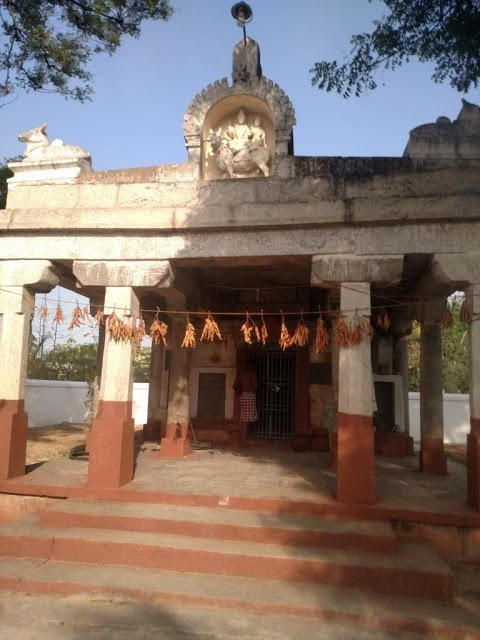
Located in the serene village of Pazhayanur, just a few kilometers from the historic town of Thiruvalangadu, the Saatchi Boodeshwarar Temple stands as a profound testament to the complex human emotions reflected through divine justice. The primary deity here is Lord Shiva, worshipped as Saatchi Boodeshwarar (meaning “The Lord of Witnessing Truth”) and Pazhayanureswarar (The Lord of the Old Village). The consort is Goddess Periyanayagi (also known as Angala Parameshwari).
Phalaśruti: Why Devotees Visit
Unlike many temples focused solely on prosperity or health, this shrine is deeply associated with the spiritual science of karma and witness protection. Devotees visit this temple to:
- Cleansing Ancestral Karma: Performing rites to mitigate the ill-effects of unfulfilled promises and false oaths taken by ancestors.
- Truth & Justice: Seeking the courage to speak the truth and receive divine justice in legal or interpersonal disputes.
- Protection from Negative Forces: The legend of Neeli reinforces the temple’s protective energy against spectral or psychological distress.
2. Historical Origins & Scriptural Legend
While the exact date of construction is not explicitly etched in current records, the temple follows the traditional Pallava-Chola stylistic influences typical of the Thiruvallur district. The structure has stood for centuries, witnessing renovations by local patronage.
The Legend of Pazhayanur Neeli Kanneer
The Sthala Purana (local oral tradition) revolves around a gripping narrative of deceit, murder, and retribution. According to tradition holds:
A wealthy merchant, while traveling to Kasi (Varanasi), married a young woman at first sight, abandoning his virtue for lust. He returned to his native village near Pazhayanur with his new bride and her brother. Consumed by the fear of his first wife’s reaction, the merchant lured his brother-in-law to a nearby pond and drowned him. When the bride inquired about her brother, he drowned her as well.
The woman’s soul, refusing to accept the injustice, transformed into a vengeful spirit known as “Neeli.” She appeared before the village elders (Velalars) disguised as the merchant’s original wife, pleading that he had abandoned her. The elders, moved by her apparent tears, intervened. The Neeli cunningly requested that the village heads (70 in number) ensure the merchant did not carry his protective knife and promised to stay with him only if they guaranteed his safety.
That night, the Neeli revealed her true form and killed the merchant. Realizing they had been deceived by the spirit, the 63 elders who had given the oath committed self-immolation (Agni Pravesam) before the Shivalinga to keep their promise. The remaining 7 elders were also tricked into suicide by Neeli. It is believed that the only survivor was a headman who was warned by the divine spirit and escaped, or who performed the ultimate sacrifice after realizing the truth.
3. Architectural Marvels
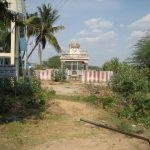
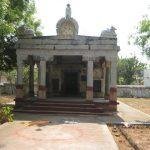
The Saatchi Boodeshwarar Temple is a classic example of Dravidian Architecture, characterized by its layered compounds and towering gateways.
Structural Elements:
- Shikhara (Vimana): The presiding deity’s sanctum is crowned by a typical Dravidian tiered superstructure, typical of the late Pallava period.
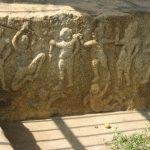
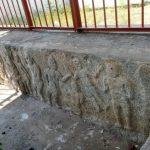
- Mandapas: The temple features a pillared Ardha Mandapa (semi-hall) and a Maha Mandapa (main hall) where the legend of the 64 heads is commemorated. The pillars depict scenes from local folklore and traditional jali (perforated stone) work.
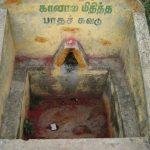
- The Holy Pond: Located adjacent to the temple, the pond where the tragic events occurred is considered a sacred Teertham (water tank). Devotees believe bathing here cleanses the sins associated with the eyes (as the legend revolves around “false tears”).
- Presiding Deity: The Lingam of Saatchi Boodeshwarar is a Swayambhu (self-manifested) idol, facing east.
4. Darshan & Ritual Logistics
Visitors are encouraged to adhere to the daily schedule to ensure a peaceful darshan. As of 2026, the following timings apply.
Daily Darshan Timings
| Session | Timing | Details |
|---|---|---|
| Morning Opening | 6:00 AM | Opening of Sanctum |
| Morning Abhishekam | 6:30 AM – 8:30 AM | Ritual bathing of the Deity |
| Midday Closure | 12:00 PM – 4:00 PM | Rest period for the deity |
| Evening Opening | 4:00 PM | Dressa Darshan begins |
| Temple Closing | 8:00 PM | Palliyarai Pooja (Night ritual) |
Sevas and Online Booking
While this is a smaller temple complex, specific rituals can be requested directly at the counter upon arrival. For larger Shiva temples in the district (such as Vadaranyeswarar Temple nearby), online portals like HRCE Online are used. However, for Saatchi Boodeshwarar, it is recommended to contact the local administration directly.
- Regular Archana: Offering of flowers and sacred leaves.
- Deepa Aradhanai: Waving of camphor.
- Special Abhishekam: Usually performed on Mondays and Pradosham days.
2026 Festival Dates
- Shivratri: February 26, 2026 (Major celebration with special night-long vigils).
- Pradosham: Every Monday and Saturday (Twilight worship).
- Arudra Darshanam: December 2026 (Date varies based on Tamil Calendar).
- Kartikai Deepam: November 2026.
5. Practical Visitor Guidance
To ensure a respectful and comfortable visit, please observe the following protocols.
- Dress Code: Traditional attire is mandatory. Men should wear Veshti (dhoti) or formal trousers with a shirt, and women should wear sarees, salwar kameez, or long skirts. Shorts and revealing clothing are prohibited.
- Photography: Photography is strictly prohibited inside the inner sanctum (Garbhagriha). You may take photos of the outer courtyards and architectural details, but respect the privacy of the deity.
- Mobile Lockers: Small temples like this may not have high-tech lockers. It is advised to leave valuables in your vehicle. A designated shelf is available for footwear.
- Accessibility: The temple has steps at the entrance. While the inner sanctum is compact, the outer courtyard is flat and accessible for wheelchairs with assistance.
Crowd Management & Seasonal Advice
- Best Hours: The ideal time for a peaceful darshan is between 7:00 AM and 9:00 AM or post 6:00 PM.
- Summer (March – June): Tamil Nadu can get extremely hot. Carry a water bottle and an umbrella. Wear light cotton fabrics.
- Monsoon (October – December): Carry rain gear. The pond area can become slippery.
6. Pilgrimage Connectivity
The temple is strategically located between major spiritual hubs, making it an excellent stop for a day-long pilgrimage circuit.
How to Reach
- Nearest Airport: Chennai International Airport (MAA) – Approx. 65 km.
- Nearest Railway Station: Thiruvalangadu Railway Station (Penultimate station on the Chennai-Arakkonam route). Share autos are available for the 6 km ride to the temple.
- By Road (NH 205):
- From Chennai: Take NH 205 (Chennai-Avadi-Thiruvallur-Renigunta route).
- Distance from Thiruvalangadu Bus Stop: 1 km.
- Distance from Chennai: Approx. 65 km.
- Distance from Thiruvallur: Approx. 17 km.
Nearby Sacred Sites (The Thiruvalangadu Circuit)
Extend your spiritual journey by visiting these nearby temples:
- Thiruvalangadu Vadaranyeswarar Temple: Located 1 km away. One of the 276 Paadal Petra Sthalams (Shiva Temples revered in the Tevaram). It is part of the “Kailayam” group of temples.
- Pazhayanur Kailasanathar Temple: Located 1.5 km away. A smaller, ancient shrine dedicated to Lord Shiva as the Lord of Mount Kailash.
- Tazuvikuzandheswarar Temple: Located 1 km away. Another historic Shiva temple in the immediate vicinity, perfect for a short walk between shrines.
7. Frequently Asked Questions (FAQ)
Is there a VIP darshan entry?
As this is a local heritage temple rather than a large commercial shrine, there is no formal VIP ticket system. However, contacting the executive officer or the local pujari in advance for special permission may facilitate a closer darshan during non-peak hours.
Can we perform last rites or Shradh here?
While the temple is dedicated to Lord Shiva, specific Shradh ceremonies are usually performed at Rameswaram or Thiruvarangam. However, the waters here are considered sacred for ancestral appeasement due to the legend of Neeli. It is advisable to consult a local priest for specific rituals.
What is the significance of the “Neeli” legend?
The legend serves as a spiritual warning about the consequences of false promises and the “agony of the eyes” (tears). It represents the feminine energy that demands justice when driven to despair.
Are there accommodation facilities nearby?
Basic lodging is available in Thiruvalangadu and Arakkonam. For more comfortable stays, travelers often opt for hotels in Thiruvallur or Chennai. Day visits are recommended for this specific temple.
What language is spoken by the priests?
The resident priests primarily speak Tamil. Basic English or Telugu may be understood, but communication is easiest through a local guide or translator.
Is non-vegetarian food allowed?
No, the temple premises and the immediate vicinity are strictly vegetarian zones. Alcohol and tobacco are prohibited.
Photo Gallery



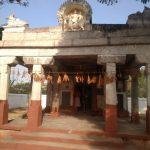

How to Reach:
The Temple is located at about 1.5 Kms from Pazhayanur Kailasanathar Temple, Temple, 1 Km from Tazuvikuzandheswarar Temple, 1 Km from Thiruvalangadu Vadaranyeswarar Temple, 3 Kms from Palayanur, 6 Kms from Narayanapuram Koot road, 20 Kms from Arakkonam, 21 Kms from Kavanoor, 31 Kms from Thiruthani, 17 Kms from Thiruvallur, 45 Kms from Kanchipuram, 36 Kms from Sriperumbudur and 65 Kms from Chennai.
By Road:
The Temple is located at about 1 Km from Thiruvalangadu Bus Stop. Thiruvalangadu can be accessed by road on NH 205 (Chennai-Avadi-Thiruvallur-Renigunta route). A slight detour before Narayanapuram Koot road of about 6 Kms from NH 205 on to the left takes one to the temple town. The place can be reached from Chennai, Thiruvallur and Kancheepuram also.
Town buses available from Chennai (T Nagar, Broadway, and Vadapalani) to Thiruvallur (Bus no 597 from T Nagar). Regular Buses are also available from Koyambedu. Buses are available from Thiruvallur to Arakkonam via Thiruvalangadu 105 C, T20, Srinivasa (a Private bus). Share autos are also available from Narayanapuram Koot road on the Thiruthani bus route.
By Train:
Thiruvalangadu has a railway station on the Chennai – Arakkonam rail route and it is the penultimate station before Arakkonam. From central catch a train to Arakkonam and get down at Thiruvalangadu railway station. Share autos are also available from Thiruvalangadu Railway station to temple entrance. The Temple is located at about 6 Kms from Thiruvalangadu Railway Station and 5 Kms from Manavur Railway Station.
By Air:
Nearest Airport is located at Chennai (65 Kms).
Contact Details
Official Address
Recent Posts

ओ सांवरे तूने ही मुझको संभाला – Lyrics & Meaning
ओ सांवरे तूने ही मुझको संभाला – A Prayer to Shyam Origin & Spiritual Essence Why This Bhajan Resonates Devotees chant this when overwhelmed by life’s storms—the refrain ‘तूने ही मुझको संभाला’ is the soul’s sigh of relief: “You…

कथा ये है महाराज मेरे की – Lyrics & Meaning
कथा ये है महाराज मेरे की छत्रपति संभाजी महाराज – A Prayer to Chhatrapati Sambhaji Maharaj Origin & Spiritual Essence Why This Bhajan Resonates Devotees chant this when their spirit feels tested—its powerful refrain “महाराज मेरे” is a soul’s…

Rigveda Samhita Yathartha Anuvada (ऋग्वेद संहिता यथार्थ अनुवाद) – Complete Set with Anvayartha & Hindi/English Translation
The Rigveda is the oldest surviving scripture of humanity and the foundational text of Sanātana Dharma. For serious students, scholars, UPSC aspirants studying ancient Indian history, Sanskrit learners, and spiritual seekers, a precise and grammatically structured translation is indispensable.…

आना भी अकेला है जाना भी अकेला है – Lyrics & Meaning | BharatTemples
आना भी अकेला है जाना भी अकेला है – A Prayer to the Divine Witness Origin & Spiritual Essence Why This Bhajan Resonates Devotees turn to this bhajan in moments of deep reflection—when life’s attachments begin to ache. The…

माता शेरावाली के द्वार जो भी जाता है – Lyrics & Meaning
माता शेरावाली के द्वार जो भी जाता है – A Prayer to Maa Sherawali Origin & Spiritual Essence Why This Bhajan Resonates Devotees turn to this bhajan in times of fear or uncertainty—its promise that no one leaves Maa’s…

मार लेना सपणी उबार लेणा भवरा – Lyrics & Meaning
मार लेना सपणी उबार लेणा भवरा – A Prayer to the Divine Beloved Origin & Spiritual Essence Why This Bhajan Resonates Devotees chant this in moments of deep vulnerability—its cry of “मार लेना सपणी, उबार लेणा भवरा” is the…

हमें श्याम सुंदर भरोसा तुम्हारा – Lyrics & Meaning
हमें श्याम सुंदर भरोसा तुम्हारा – A Prayer to Shyam Sundar Origin & Spiritual Essence Why This Bhajan Resonates Devotees chant this when feeling alone—its refrain ‘de do sahara’ is the soul’s cry for divine support. Lyrics in Hindi…

Mere Satguru Ne Di Thi Davai Lyrics in Hindi & Meaning
Mere Satguru Ne Di Thi Davai: Invoking the Guru’s Liberating Wisdom This soul-stirring bhajan venerates the Satguru (True Spiritual Master) as the divine physician who dispenses the only remedy for life’s deepest sufferings. Composed by Sant Karmaveer Tufani, it…

Janm Diyo Thari Maa Dukh Dekhiyo Lyrics in Hindi & Meaning
जन्म दियो थारी माँ दुख देखियो (Maa’s Grief Upon Birthing You) This soul-stirring Chetavani Bhajan (admonitory hymn) is addressed to the Divine Mother (Maa) – a call for repentance when children forget their filial duties in the dark age…
Bhadi Sabha Mein Thane Manaun Lyrics in Hindi & Meaning
Bhadi Sabha Mein Thane Manaun: Invoking the Spear-Wielding Mother Mata Bhawani (श्री ज्वाला भवानी), the fiery manifestation of Shakti worshipped as the Protector of Dharma in Her Dhaulagarh sanctum. Origin & Spiritual Essence Composed in Rajasthani folk tradition by…