
Contents
Introduction & Spiritual Essence
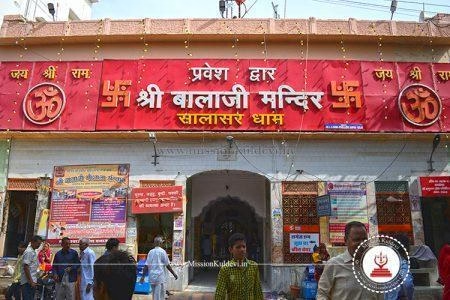
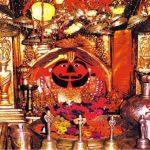
Salasar Balaji, also revered as Salasar Dham, stands as a beacon of faith in the arid landscape of Rajasthan. The presiding deity is Lord Hanuman, worshipped here in his specific Balaji form. Unlike many idols carved by human hands, the murti at Salasar is revered as Swayambhu (self-manifested), radiating immense spiritual energy.
Phalaśruti: The Boon of Visitation
Devotees flock to this Shakti Sthal (abode of power) seeking specific blessings. The primary significance lies in the cleansing of ancestral karma and the fulfillment of sincere vows (mannat). It is widely believed that offering prayers here brings relief from worldly obstacles, grants protection from evil forces, and strengthens the resolve of the devotee. Lord Hanuman here is known as the Samasya Haran—the remover of all troubles.
Historical Origins & Scriptural Legend
The history of Salasar Balaji is a blend of recorded dates and miraculous oral traditions that have been passed down for centuries.
The Miracle of Asota Village
According to the Sthala Purana, the date of origin is recorded as the 9th day of the bright half of Shraavana in Samvat 1811 (1754 AD). The legend begins in the village of Asota, Nagaur district. A Jat farmer was ploughing his field when his implement struck a stone object. Digging further, he uncovered an idol of Lord Hanuman covered in sand.
When his wife arrived with food, she cleaned the idol with her saree. At that very moment, the Thakur of Asota (the local ruler) received a divine dream instructing him to send the idol to Salasar in Churu district. Simultaneously, a devotee in Salasar named Mohandas Maharaj also dreamed of the deity and the location of the idol. Miraculously, the Thakur sent the idol to Salasar, where it was consecated and remains to this day.
Architectural Marvels
The temple complex is a stunning example of devotional artistry and traditional construction methods. Built over approximately two years using bricks, stones, cement, and lime mortar, the structure is adorned with extensive white marble.
Sanctum & Decor
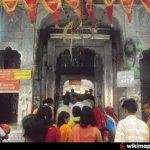
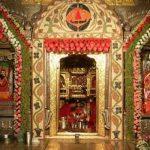
The Sanctum Sanctorum and the Sabha Mandap (prayer hall) are highlights of the architecture. The interiors feature intricate artistic works in gold and silver. The vestibule and doors are crafted from silver, while the main gate features exquisite carving work in white marble. Floral patterns and mosaic works decorate the shrine, reflecting a blend of Rajput and Mughal architectural influences.

Darshan & Ritual Logistics
To facilitate the millions of devotees visiting annually, the temple administration has established a structured schedule for darshan and seva. The temple remains open for most of the day with a short afternoon break.
Daily Darshan Timings (2026 Schedule)
| Session | Timings |
|---|---|
| Morning Darshan | 5:00 AM – 12:00 PM |
| Afternoon Break | 12:00 PM – 4:00 PM |
| Evening Darshan | 4:00 PM – 10:00 PM |
Key Sevas and Online Booking
Devotees can perform various sevas such as Abhishekam (ritual bathing of the deity) and Archana (offering of prayers with names). For the convenience of pilgrims, the temple facilitates online seva booking through its official portal.
Note: It is recommended to book special darshan or seva slots at least 48 hours in advance during festival periods.
2026 Festival Calendar
Two major festivals attract massive congregations:
- Chaitra Purnima: April 12, 2026 (Sunday)
- Ashvin Purnima (Kojagiri): October 6, 2026 (Tuesday)
Practical Visitor Guidance
Ensuring a smooth pilgrimage requires preparation regarding dress code, rules, and crowd management.
Rules and Regulations
- Dress Code: Traditional attire is mandatory. Men should wear Dhoti/Kurta or trousers with a shirt; Women should wear Saree/Salwar Kameez. Western attire (jeans, shorts) is strictly prohibited inside the temple premises.
- Photography: Photography is prohibited inside the Sanctum Sanctorum. Mobile phones should be kept on silent mode.
- Lockers: Mobile lockers and shoe-keeping facilities are available at nominal charges near the main entrance.
Crowd Management & Best Time to Visit
The temple is heavily crowded on weekends and full moon days.
- Best Hours: The ideal time for a peaceful darshan is early morning (between 5:00 AM – 7:00 AM) or late night (after 9:00 PM).
- Seasonal Advice: Summers in Churu (May–June) are extremely hot. Carry sufficient water and head coverings. The winter months (November–February) offer the most pleasant weather for travel.
Pilgrimage Connectivity
Salasar Balaji is well-connected by road and rail, making it accessible for pilgrims across North India.
How to Reach
- By Air: The nearest airport is Jaipur International Airport (approx. 165 km).
- By Rail: The nearest major railway station is Ringas Junction (approx. 80 km). From there, taxi services are readily available.
- By Road: Salasar is located directly on National Highway 65 (NH 65). It connects the temple to major cities like Jaipur, Sikar, and Jodhpur. Private buses and state transport operate frequently.
Nearby Sacred Sites (Pilgrimage Circuit)
Salasar is part of a significant religious circuit in Rajasthan. Devotees often visit these nearby shrines:
- Jeene Mata Temple: Located approximately 25 km away, dedicated to the Goddess Durga.
- Rani Sati Temple (Jhunjhunu): Famous for its grand architecture and devotional atmosphere.
- Khatu Shyamji Temple: Another highly revered Hanuman temple in the region, located roughly 80 km away.
Frequently Asked Questions (FAQ)
1. Is there a VIP or special entry darshan available?
Yes, the temple administration offers a Special Darshan ticket system which allows devotees to bypass the general queue for a quicker darshan. These can be purchased at the temple counter or booked online.
2. What is the significance of the Swayambhu idol?
A Swayambhu idol is one that is self-manifested rather than sculpted by human hands. In Salasar, the idol of Balaji is believed to be discovered naturally, imbuing it with high spiritual potency and the power to grant wishes instantly.
3. Is accommodation available near the temple?
Yes, there are numerous hotels, guest houses, and dharamshalas in Salasar town ranging from budget to mid-range. The temple trust also runs guest houses for pilgrims (booking is subject to availability).
4. What are the temple contact details?
The official contact number for inquiries is 01568-252059. The address is Salasar – Sikar Rd, Salasar, Rajasthan 331506.
5. Is non-vegetarian food allowed in Salasar?
No. As this is a holy pilgrimage site located in a sanctified area, alcohol, non-vegetarian food, and smoking are strictly prohibited within the temple premises and nearby vicinity.
Recent Posts

ओ सांवरे तूने ही मुझको संभाला – Lyrics & Meaning
ओ सांवरे तूने ही मुझको संभाला – A Prayer to Shyam Origin & Spiritual Essence Why This Bhajan Resonates Devotees chant this when overwhelmed by life’s storms—the refrain ‘तूने ही मुझको संभाला’ is the soul’s sigh of relief: “You…

कथा ये है महाराज मेरे की – Lyrics & Meaning
कथा ये है महाराज मेरे की छत्रपति संभाजी महाराज – A Prayer to Chhatrapati Sambhaji Maharaj Origin & Spiritual Essence Why This Bhajan Resonates Devotees chant this when their spirit feels tested—its powerful refrain “महाराज मेरे” is a soul’s…

Rigveda Samhita Yathartha Anuvada (ऋग्वेद संहिता यथार्थ अनुवाद) – Complete Set with Anvayartha & Hindi/English Translation
The Rigveda is the oldest surviving scripture of humanity and the foundational text of Sanātana Dharma. For serious students, scholars, UPSC aspirants studying ancient Indian history, Sanskrit learners, and spiritual seekers, a precise and grammatically structured translation is indispensable.…

आना भी अकेला है जाना भी अकेला है – Lyrics & Meaning | BharatTemples
आना भी अकेला है जाना भी अकेला है – A Prayer to the Divine Witness Origin & Spiritual Essence Why This Bhajan Resonates Devotees turn to this bhajan in moments of deep reflection—when life’s attachments begin to ache. The…

माता शेरावाली के द्वार जो भी जाता है – Lyrics & Meaning
माता शेरावाली के द्वार जो भी जाता है – A Prayer to Maa Sherawali Origin & Spiritual Essence Why This Bhajan Resonates Devotees turn to this bhajan in times of fear or uncertainty—its promise that no one leaves Maa’s…

मार लेना सपणी उबार लेणा भवरा – Lyrics & Meaning
मार लेना सपणी उबार लेणा भवरा – A Prayer to the Divine Beloved Origin & Spiritual Essence Why This Bhajan Resonates Devotees chant this in moments of deep vulnerability—its cry of “मार लेना सपणी, उबार लेणा भवरा” is the…

हमें श्याम सुंदर भरोसा तुम्हारा – Lyrics & Meaning
हमें श्याम सुंदर भरोसा तुम्हारा – A Prayer to Shyam Sundar Origin & Spiritual Essence Why This Bhajan Resonates Devotees chant this when feeling alone—its refrain ‘de do sahara’ is the soul’s cry for divine support. Lyrics in Hindi…

Mere Satguru Ne Di Thi Davai Lyrics in Hindi & Meaning
Mere Satguru Ne Di Thi Davai: Invoking the Guru’s Liberating Wisdom This soul-stirring bhajan venerates the Satguru (True Spiritual Master) as the divine physician who dispenses the only remedy for life’s deepest sufferings. Composed by Sant Karmaveer Tufani, it…

Janm Diyo Thari Maa Dukh Dekhiyo Lyrics in Hindi & Meaning
जन्म दियो थारी माँ दुख देखियो (Maa’s Grief Upon Birthing You) This soul-stirring Chetavani Bhajan (admonitory hymn) is addressed to the Divine Mother (Maa) – a call for repentance when children forget their filial duties in the dark age…
Bhadi Sabha Mein Thane Manaun Lyrics in Hindi & Meaning
Bhadi Sabha Mein Thane Manaun: Invoking the Spear-Wielding Mother Mata Bhawani (श्री ज्वाला भवानी), the fiery manifestation of Shakti worshipped as the Protector of Dharma in Her Dhaulagarh sanctum. Origin & Spiritual Essence Composed in Rajasthani folk tradition by…