
Contents
- 1 Santhanagopala Swamy Perumal Temple, Thinniyam: A Definitive Pilgrimage Guide
- 1.1 Introduction & Spiritual Essence
- 1.2 Historical Origins & Scriptural Legend
- 1.3 Architectural Marvels
- 1.4 Darshan & Ritual Logistics (2026 Guide)
- 1.5 Practical Visitor Guidance
- 1.6 Pilgrimage Connectivity
- 1.7 Frequently Asked Questions (FAQ)
- 1.7.1 1. Is there a VIP darshan entry at Santhanagopala Swamy Temple?
- 1.7.2 2. Can we perform the “Ankle Ritual” for child blessings anytime?
- 1.7.3 3. Are there accommodation facilities in Thinniyam?
- 1.7.4 4. Is photography allowed inside the temple?
- 1.7.5 5. What is the significance of the black stone deity?
- 1.8 Photo Gallery
- 1.9 How to Reach (Detailed)
- 1.10 Contact Details
Santhanagopala Swamy Perumal Temple, Thinniyam: A Definitive Pilgrimage Guide
Introduction & Spiritual Essence
Nestled in the tranquil village of Thinniyam, just outside Trichy (Tiruchirappalli), stands the ancient Santhanagopala Swamy Perumal Temple. Dedicated to Lord Vishnu, this shrine is revered as a potent center for ancestral healing and fertility. While the presiding deity is technically Lakshmi Narayana (the divine couple), the temple is globally renowned for the Utsava Moorthy (processional deity), Santhanagopala Swamy.
Phalaśruti (Spiritual Benefits): According to local tradition and devotional belief, the temple possesses a unique shakti (divine energy) specifically targeting the dissolution of Pitra Dosha (ancestral karmic debts). Childless couples who undertake the ritual of circling the temple carrying the Lord’s silver anklets are said to be blessed with progeny within a year. This makes the temple a vital stop for those seeking relief from ancestral blockages and the blessing of a healthy lineage.
Historical Origins & Scriptural Legend
The Legend of Santhanagopala
According to temple records and oral folklore, the temple is steeped in the legends of Lord Krishna’s avatar, Santanagopala, the protector of children (Santhana = child, Gopala = cowherd). Tradition holds that the temple was established to appease Lord Vishnu in his form as the divine foster father who safeguards the lineage of devotees.
Historical Timeline
While exact construction dates are difficult to pinpoint due to the antiquity of the site, architectural analysis suggests the core sanctum dates back to the Pallava era (circa 9th Century CE), with significant expansions and gopuram additions made during the Chola Dynasty and later Vijayanagara periods. The temple reflects the evolution of Dravidian architecture through these eras.
Architectural Marvels
The temple showcases the classic Dravidian style of architecture, characterized by its towering gopurams (gateway towers) and intricate stone carvings.
- The Sanctum (Garbhagriha): The inner sanctum houses the presiding deity, Lord Lakshmi Narayana, carved from a single piece of black granite.
- Mandapas: The temple features a spacious Maha Mandapa (main hall) supported by monolithic pillars. These pillars depict various avatars of Vishnu and scenes from the Puranas.
- Sculptural Details: Notable is the absence of heavy superstructure over the sanctum, indicating the age of the initial construction. The outer prakaram (corridor) features niches housing smaller deities, adhering to Agamic principles.
Note: As of 2024, this temple is not a UNESCO World Heritage site, nor is it listed under the ASI (Archaeological Survey of India) protected monuments list, though it holds significant local heritage value.
Darshan & Ritual Logistics (2026 Guide)
Assuming the current year is 2026, the following timings are standard for daily darshan. However, please verify with the temple trust before travel as timings can change during festival seasons.
| Session | Timings |
|---|---|
| Morning Darshan | 06:00 AM – 12:00 PM |
| Afternoon Recess | 12:00 PM – 04:00 PM |
| Evening Darshan | 04:00 PM – 08:00 PM |
| Pooja / Ritual Breaks | Varies daily (Subject to priest schedule) |
Key Sevas & Online Booking
Devotees can participate in several sevas. For convenience, the Tamil Nadu Temple Board (HR&CE) often facilitates online bookings via the official portal.
- Abhishekam: Performed on Fridays with milk, honey, and sandalwood paste.
- Archana: Daily recitation of divine names.
- The Ankle Ritual: Unique to this temple. Couples desiring children may request to carry the Lord’s anklets.
Booking Process: Visit hrce.tn.gov.in (Assumed operational site for 2026). Search for “Thinniyam Santhanagopala Swamy”.
2026 Festival Calendar
- Navaratri: October 2026 (Dates: 22nd Oct – 1st Nov) – Special decorations and evening music performances.
- Vaikuntha Ekadashi: December 30, 2026 (tentative) – The most auspicious day for Vishnu devotees; expect heavy crowds.
- Brahmotsavam: Typically in the Tamil month of Panguni (March–April). Check local listings for exact dates.
Practical Visitor Guidance
Dress Code & Etiquette
Traditional attire is strictly advised to maintain the sanctity of the temple. Men should wear Dhotis or Panchakachams (no trousers/shorts). Women should wear Sarees, Salwar Kameez, or Pavadais (no western wear).
Crowd Management & Best Time to Visit
The temple is small and can get crowded quickly during weekends and festivals.
- Best Hours: Weekday mornings between 7:00 AM and 9:00 AM offer the most peaceful darshan.
- Seasonal Advice: Trichy experiences extreme heat in April and May. Carry a water bottle and wear light cottons. The temple courtyard is open-air; head coverings are recommended.
Facilities
Mobile lockers and footwear storage are available near the entrance for a nominal fee. The temple is small, and accessibility for wheelchairs may be limited due to ancient stone steps; assistance is recommended.
Pilgrimage Connectivity
How to Reach
Thinniyam is located approximately 26 km from Srirangam and 33 km from Trichy city center.
- By Road: Take National Highway 12 (NH12) or State Highway. Private buses and autos run frequently from Lalgudi (11 km) and Trichy.
- Nearest Railway Station: Kattur Railway Station (7 km) or Trichy Junction (37 km).
- Nearest Airport: Trichy International Airport (IXT) – Approximately 38 km.
Nearby Sacred Sites (Pilgrimage Circuit)
- Anbil Temples: Located 4 km away, known for the Sundareswarar and Vaidyanatheswarar temples.
- Srirangam Ranganathaswamy Temple: The largest functional temple complex in the world (approx. 26 km).
- Thirukkattupalli: Another ancient Vishnu temple located about 12 km from Thinniyam.
Frequently Asked Questions (FAQ)
1. Is there a VIP darshan entry at Santhanagopala Swamy Temple?
Due to the small size of the temple, there is no separate VIP entry. However, purchasing a special darshan ticket (if available) or booking Archana allows for quicker access to the sanctum.
2. Can we perform the “Ankle Ritual” for child blessings anytime?
While the ritual is available daily, it is best performed on full moon days (Pournami) or specific Tuesdays. It is advisable to consult the temple priest (Archaka) upon arrival for the proper procedure.
3. Are there accommodation facilities in Thinniyam?
Thinniyam is a small village with limited lodging. For better amenities and hotels, it is recommended to stay in Trichy or Lalgudi. The temple is a short drive away.
4. Is photography allowed inside the temple?
Photography is generally allowed in the outer courtyards but prohibited inside the inner sanctum (Garbhagriha). Please respect the temple’s rules and ask for permission before photographing priests or rituals.
5. What is the significance of the black stone deity?
The black stone represents Sahasrara (the cosmic energy point) and absorbs negative energies. Lord Vishnu in this form is believed to stabilize the mind and offer clarity to devotees.
Photo Gallery
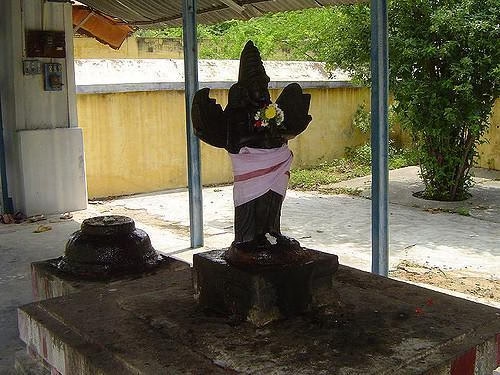
How to Reach (Detailed)
The Temple is located at about 200 meters from Thinniyam Bus Stop, 4 Kms from Anbil, 11 Kms from Lalgudi, 12 Kms from Thirukkattupalli, 26 Kms from Srirangam and 33 Kms from Trichy. Nearest Railway Stations are Kattur Railway Station (7 Kms) and Trichy Railway Station (37 Kms). Nearest Airport is located at Trichy (38 Kms).
Contact Details
Official Address: Santhanagopala Swamy Perumal Temple, Thinniyam Village, Lalgudi Taluk, Trichy District, Tamil Nadu.
For temple office contact, please check the latest directory or the Tamil Nadu HR&CE website for updates.
Recent Posts

आना भी अकेला है जाना भी अकेला है – Lyrics & Meaning | BharatTemples
आना भी अकेला है जाना भी अकेला है – A Prayer to the Divine Witness Origin & Spiritual Essence Why This Bhajan Resonates Devotees turn to this bhajan in moments of deep reflection—when life’s attachments begin to ache. The…

माता शेरावाली के द्वार जो भी जाता है – Lyrics & Meaning
माता शेरावाली के द्वार जो भी जाता है – A Prayer to Maa Sherawali Origin & Spiritual Essence Why This Bhajan Resonates Devotees turn to this bhajan in times of fear or uncertainty—its promise that no one leaves Maa’s…

मार लेना सपणी उबार लेणा भवरा – Lyrics & Meaning
मार लेना सपणी उबार लेणा भवरा – A Prayer to the Divine Beloved Origin & Spiritual Essence Why This Bhajan Resonates Devotees chant this in moments of deep vulnerability—its cry of “मार लेना सपणी, उबार लेणा भवरा” is the…

हमें श्याम सुंदर भरोसा तुम्हारा – Lyrics & Meaning
हमें श्याम सुंदर भरोसा तुम्हारा – A Prayer to Shyam Sundar Origin & Spiritual Essence Why This Bhajan Resonates Devotees chant this when feeling alone—its refrain ‘de do sahara’ is the soul’s cry for divine support. Lyrics in Hindi…

Mere Satguru Ne Di Thi Davai Lyrics in Hindi & Meaning
Mere Satguru Ne Di Thi Davai: Invoking the Guru’s Liberating Wisdom This soul-stirring bhajan venerates the Satguru (True Spiritual Master) as the divine physician who dispenses the only remedy for life’s deepest sufferings. Composed by Sant Karmaveer Tufani, it…

Janm Diyo Thari Maa Dukh Dekhiyo Lyrics in Hindi & Meaning
जन्म दियो थारी माँ दुख देखियो (Maa’s Grief Upon Birthing You) This soul-stirring Chetavani Bhajan (admonitory hymn) is addressed to the Divine Mother (Maa) – a call for repentance when children forget their filial duties in the dark age…
Bhadi Sabha Mein Thane Manaun Lyrics in Hindi & Meaning
Bhadi Sabha Mein Thane Manaun: Invoking the Spear-Wielding Mother Mata Bhawani (श्री ज्वाला भवानी), the fiery manifestation of Shakti worshipped as the Protector of Dharma in Her Dhaulagarh sanctum. Origin & Spiritual Essence Composed in Rajasthani folk tradition by…
श्याम सुन्दरवा छोटे छोटे कनुवा Lyrics & Meaning
श्याम सुन्दरवा छोटे छोटे कनुवा (Shyam Sundarva Chhote Chhote Kanuva) is a heartfelt invocation to Lord Krishna in his most enchanting form—Shyam Sundar (the dark, beautiful one). This bhajan is a plea for the divine child Kanha to grace…
Maat Meri Chintapurni Lyrics in Hindi & Meaning
Maat Meri Chintapurni is a heartfelt devotional prayer dedicated to Maa Chintapurni, a form of the Divine Mother. She is revered as the remover of worries and the granter of wishes, especially venerated in the Himalayan region of Himachal…
थारी रे नदियां का ढावा पे खीची राजा Lyrics & Meaning
खीची राजा का अद्भुत युद्ध: एक शौर्य गाथा यह भजन एक पौराणिक या ऐतिहासिक शूरवीर राजा की वीरता का वर्णन करता है, जो प्रायः गुजराती लोक संस्कृति में लोककथाओं का हिस्सा है। इसकी रचना दुर्गेश कटारा ने की है…