
Contents
Introduction & Spiritual Essence
Situated in the serene village of Manakkal near Lalgudi in Trichy district, the Sapthamadha Temple stands as a beacon of Shakthi worship, dedicated to the seven divine forms of the Goddess. Known locally as the Saptha Madhas, the presiding deities are Brahmi, Maheswari, Vaishnavi, Varahi, Rudrani, Gaumari, and Chamundi. This ancient shrine is unique in its theological significance, representing the multifaceted energies of the divine feminine.
Phalaśruti: Why Devotees Visit
Devotees flock to this temple to seek blessings for child boon and longevity. A specific spiritual benefit observed here is the ritual of circumambulating the Naruvali tree (Sthala Vriksham), which is believed to fulfill the wishes of those yearning for progeny. Furthermore, the temple is renowned for resolving ancestral karma and alleviating debts, making it a vital stop for those seeking spiritual and material stability.
Historical Origins & Scriptural Legend
The temple dates back approximately 800 years, rooted deep in the cultural soil of the Chola territory. While the specific dynastic builder is not explicitly documented in current archives, the architectural ethos suggests a legacy preserved by local lineage.
The Legend of Chettiappar
According to the Sthala Purana (local oral tradition), the temple owes its existence to Chettiappar, a tantric and turmeric trader from Kerala. While bathing in the village tank, he witnessed the Saptha Madhas. Seeking to sell his stock, he approached them, only to be humbled by their divine nature. The goddess Gowmari offered a flower in exchange for his entire stock of turmeric; the weight of the flower alone balanced the heavy sacks.
Realizing their divinity, Chettiappar sought pardon and constructed the temple for the seven virgins. Tradition holds that while most Saptha Madha temples face north, the presiding deities here face east, a unique architectural alignment attributed to this specific legend.
Architectural Marvels
The temple exhibits classic Dravidian architecture with distinct traditional elements. The complex is enclosed by a prakara (compound wall) that houses several subsidiary shrines.
- Sanctum Sanctorum: The main shrine houses the Saptha Madhas, presided over by Goddess Gowmari.
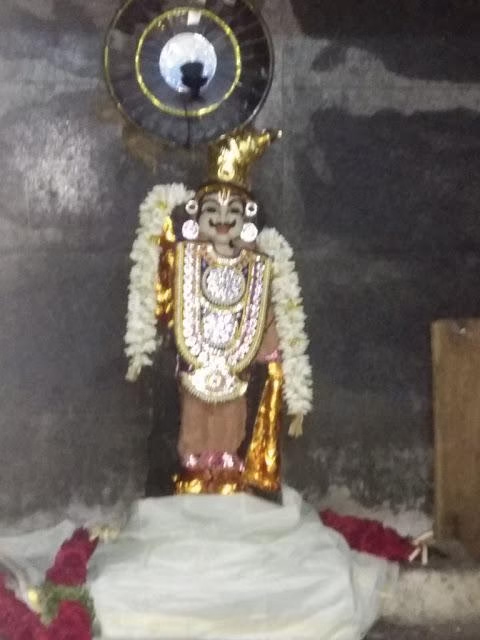
- Sculpture & Art: The Maha Mandapam features intricately carved pillars depicting horses and elephants. Notable sculptures include Dwarapalakis (guardian deities) at the entrance and a statue of Chettiappar on the right side.
- Sub-Shrines: The prakara contains shrines for Madurai Veeran, Karuppannan, and Ayyanar. These deities are mounted on their respective vahanas (vehicles) – the elephant and the horse.
Darshan & Ritual Logistics
The temple follows a traditional schedule, opening for devotees in the morning and evening. Note: Specific timings are based on standard temple operations; please verify with the temple trust before travel.
Daily Timings
| Session | Timing |
|---|---|
| Morning Darshan | 6:00 AM – 10:00 AM |
| Evening Darshan | 5:00 PM – 8:00 PM |
Key Sevas & Online Booking
Devotees can perform Abhishekam and Archana for Goddess Gowmari. Offerings of Vastras (clothes) are common. For those seeking financial recovery, special prayers are offered to Karuppannasami. While traditional on-site booking is available, devotees should check the Tamil Nadu Temples official portal for potential online seva booking integrations as the state moves toward digital-first management.
2026 Festival Calendar (Highlights)
- Navarathri (Oct 11–19, 2026): Laksharchana (chanting names of Shakti) is performed for 10 days.
- Thayir Pavadai Festival (Oct 19, 2026): A unique ritual where the Artha Mandapa floor is covered with curd rice, offered to the deity, and distributed as Prasad.
- Karagam Festival: Held following the Masi Amavasya (New Moon in Feb/March). This involves traditional dancing with pots balanced on the head.
Practical Visitor Guidance
- Dress Code: Traditional attire is mandatory. Men should wear dhotis or pants with shirts; women should wear sarees or salwar kameez.
- Photography: Strictly prohibited inside the sanctum sanctorum. Allowed in the outer prakara with permission.
- Accessibility: The temple is accessible via a paved road. However, the inner sanctum has traditional steps.
- Crowd Management: Weekends and festivals see heavy influx. For a peaceful darshan, visit between 8:00 AM and 10:00 AM on weekdays. Summers (April–June) can be hot; carry water and wear light cotton clothes.
Pilgrimage Connectivity
How to Reach
The temple is strategically located in the central Cauvery delta region.
- Nearest Town: Lalgudi (1 km from Lalgudi Bus Station).
- By Air: Trichy International Airport is the nearest airport, approximately 29 km away.
- By Rail: Lalgudi Railway Station is just 2 km from the temple.
- By Road: The temple is 250 meters from the Manakkal Mandapam Bus Stop. It is well-connected via State Highway 22 to Trichy.
Nearby Sacred Sites
- Anbil Temples (7 km): Known for the ancient Thiruvaiyaru and Apaththaruvi temples.
- Lalgudi Temple Complex (1 km): Dedicated to various deities, including Lord Shiva.
- Trichy Rock Fort (24 km): The iconic Uchipillayar Temple offering panoramic views.
Photo Gallery
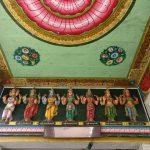

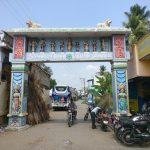
Frequently Asked Questions (FAQs)
Is there a VIP Darshan entry available?
While special entry tickets are common in major shrines, the Sapthamadha Temple maintains a traditional approach. VIP or special darshan arrangements are usually handled through prior intimation to the temple administration for large groups or donors.
What is the best time to visit the temple?
The ideal months are October to February when the weather is pleasant. If you wish to witness the vibrant Karagam festival, plan your visit around February/March.
Are there accommodation facilities in Manakkal?
Manakkal is a small village. Basic lodging is available in Lalgudi town. For premium stays, it is recommended to book hotels in Trichy city, which is 24 km away.
Can we perform special prayers for loan recovery?
Yes. Devotees frequently worship Lord Karuppannasami (located in the prakara) specifically for the recovery of loans and legal victories. Offerings like garlands are made to his horse vahana.
Is the temple open on all days?
Yes, barring rare maintenance schedules or extreme weather advisories. Morning hours are generally consistent.
Recent Posts

ओ सांवरे तूने ही मुझको संभाला – Lyrics & Meaning
ओ सांवरे तूने ही मुझको संभाला – A Prayer to Shyam Origin & Spiritual Essence Why This Bhajan Resonates Devotees chant this when overwhelmed by life’s storms—the refrain ‘तूने ही मुझको संभाला’ is the soul’s sigh of relief: “You…

कथा ये है महाराज मेरे की – Lyrics & Meaning
कथा ये है महाराज मेरे की छत्रपति संभाजी महाराज – A Prayer to Chhatrapati Sambhaji Maharaj Origin & Spiritual Essence Why This Bhajan Resonates Devotees chant this when their spirit feels tested—its powerful refrain “महाराज मेरे” is a soul’s…

Rigveda Samhita Yathartha Anuvada (ऋग्वेद संहिता यथार्थ अनुवाद) – Complete Set with Anvayartha & Hindi/English Translation
The Rigveda is the oldest surviving scripture of humanity and the foundational text of Sanātana Dharma. For serious students, scholars, UPSC aspirants studying ancient Indian history, Sanskrit learners, and spiritual seekers, a precise and grammatically structured translation is indispensable.…

आना भी अकेला है जाना भी अकेला है – Lyrics & Meaning | BharatTemples
आना भी अकेला है जाना भी अकेला है – A Prayer to the Divine Witness Origin & Spiritual Essence Why This Bhajan Resonates Devotees turn to this bhajan in moments of deep reflection—when life’s attachments begin to ache. The…

माता शेरावाली के द्वार जो भी जाता है – Lyrics & Meaning
माता शेरावाली के द्वार जो भी जाता है – A Prayer to Maa Sherawali Origin & Spiritual Essence Why This Bhajan Resonates Devotees turn to this bhajan in times of fear or uncertainty—its promise that no one leaves Maa’s…

मार लेना सपणी उबार लेणा भवरा – Lyrics & Meaning
मार लेना सपणी उबार लेणा भवरा – A Prayer to the Divine Beloved Origin & Spiritual Essence Why This Bhajan Resonates Devotees chant this in moments of deep vulnerability—its cry of “मार लेना सपणी, उबार लेणा भवरा” is the…

हमें श्याम सुंदर भरोसा तुम्हारा – Lyrics & Meaning
हमें श्याम सुंदर भरोसा तुम्हारा – A Prayer to Shyam Sundar Origin & Spiritual Essence Why This Bhajan Resonates Devotees chant this when feeling alone—its refrain ‘de do sahara’ is the soul’s cry for divine support. Lyrics in Hindi…

Mere Satguru Ne Di Thi Davai Lyrics in Hindi & Meaning
Mere Satguru Ne Di Thi Davai: Invoking the Guru’s Liberating Wisdom This soul-stirring bhajan venerates the Satguru (True Spiritual Master) as the divine physician who dispenses the only remedy for life’s deepest sufferings. Composed by Sant Karmaveer Tufani, it…

Janm Diyo Thari Maa Dukh Dekhiyo Lyrics in Hindi & Meaning
जन्म दियो थारी माँ दुख देखियो (Maa’s Grief Upon Birthing You) This soul-stirring Chetavani Bhajan (admonitory hymn) is addressed to the Divine Mother (Maa) – a call for repentance when children forget their filial duties in the dark age…
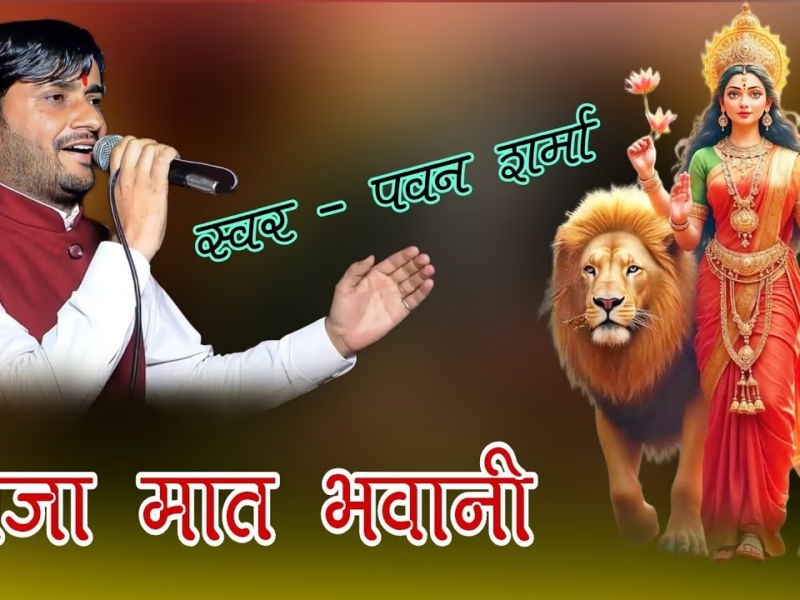
Bhadi Sabha Mein Thane Manaun Lyrics in Hindi & Meaning
Bhadi Sabha Mein Thane Manaun: Invoking the Spear-Wielding Mother Mata Bhawani (श्री ज्वाला भवानी), the fiery manifestation of Shakti worshipped as the Protector of Dharma in Her Dhaulagarh sanctum. Origin & Spiritual Essence Composed in Rajasthani folk tradition by…