
Contents
- 1 Introduction & Spiritual Essence
- 2 Historical Origins & Scriptural Legend
- 3 Architectural Marvels
- 4 Darshan & Ritual Logistics
- 5 Practical Visitor Guidance
- 6 Pilgrimage Connectivity
- 7 Frequently Asked Questions (FAQs)
- 8 Architecture
- 9 Legend / Local stories
- 10 Photo Gallery
- 11 How to Reach:
- 12 Contact Details
Introduction & Spiritual Essence
The Shri Shantadurga Temple, located in the serene village of Kavalem in North Goa, stands as a luminous testament to faith, resilience, and the enduring cultural heritage of the Goud Saraswat Brahmin community. Known locally as Kavale Saunsthan, this sacred abode is dedicated to Shantadurga, the peace-bringing form of Goddess Durga.
The primary deity here is a unique Murti (idol) of Shantadurga, depicted in a tranquil pose as she mediates between the opposing forces of Lord Vishnu and Lord Shiva. This form symbolizes the cessation of conflict and the restoration of harmony. The temple is revered as the Kuldevi (Family Deity) for countless Saraswat families, drawing devotees seeking ancestral blessings and spiritual cleansing.
Phalaśruti (Spiritual Benefits): Devotees visit this temple primarily to offer gratitude and seek blessings for family prosperity and the resolution of disputes. The temple is historically significant for cleansing ancestral Karma, as it serves as a vital anchor for families displaced during the Portuguese Inquisition in Goa, reconnecting them with their spiritual roots.
Historical Origins & Scriptural Legend
The history of the Shantadurga Temple is a poignant narrative of survival and re-establishment.
Origins: The original temple was located in Quelossim (Keloshi) in the Mormugao region. Tradition holds that the temple was destroyed by Portuguese invaders in 1566. To preserve the sanctity of the deity, the idol was secretly moved to the village of Kavalem, where worship continued in a smaller shrine for over a century.
Reconstruction: The magnificent current structure was built between 1730 and 1738 AD. Naroram Rege Mantri, a minister in the court of the Maratha ruler Chhatrapati Shahu Maharaj of Satara, played a pivotal role in this reconstruction. He obtained the necessary patronage and resources to build the temple, and the village of Kavalem was bequeathed to the Deasthan (Temple Trust) by Peshwa Bajirao I in 1738.
On December 4, 2016, the temple celebrated its 450th year of existence, marking centuries of uninterrupted worship despite historical upheavals.
Architectural Marvels
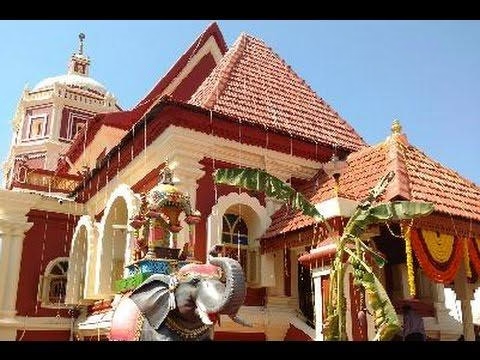
The temple is a stunning example of the Luso-Indian architectural style, blending traditional Hindu temple elements with Portuguese colonial aesthetics.
Structure and Design:
- Pyramidal Shikharas: The temple features pyramid-shaped roofs (shikharas) rising over the facade and the Sabhamandap (main hall).
- Roman Arched Windows: Stained-glass windows in deep red, yellow, blue, and green allow colorful light to filter into the sanctum, creating a serene atmosphere.
- Materials: The pillars and flooring are crafted from high-quality Kashmir stone (turkey red stone), ensuring durability and elegance.
- Colors: The exterior is painted in maroon, peach, and white, giving it a distinct and tranquil appearance.
Notable Features:
- The Golden Palanquin (Palkhi): The highlight of the complex is the golden palanquin used to carry the deity during festive occasions, specifically the Mahapanchami processions.
- Tank & Deepastambha: The complex includes a large tank and a towering lamp post (Deepastambha), surrounded by lush greenery at the foothills of Kavalem.
- Complex Layout: The temple is situated on a slope, surrounded by vegetation. It houses the main shrine and three smaller temples dedicated to other deities, along with agrashalas (guest houses).
Darshan & Ritual Logistics
To ensure a smooth pilgrimage experience in 2026, please note the following schedules. Note: Timings are subject to change during festivals; check with the temple trust for updates.
Daily Darshan Timings
| Session | Timings |
|---|---|
| Morning Darshan | 6:00 AM – 12:30 PM |
| Afternoon Break | 12:30 PM – 4:00 PM (Sanctum Closed) |
| Evening Darshan | 4:00 PM – 9:00 PM |
| Special Aarti | Morning 8:00 AM & Evening 7:30 PM |
Seva & Rituals (2026 Schedule)
The temple conducts various sevas (services) which can be booked online via the official Shree Shantadurga Saunsthan, Kavale website or at the temple counter.
- Abhishekam: Performed with milk, honey, and holy waters. Best timing: 7:00 AM – 9:00 AM.
- Archana: Chanting of the Shanti Mantra. Available throughout the day.
- Naivedya: Offering of vegetarian food (Prasad).
Major Festivals in 2026
- Magh Shuddha Panchami (Jatrautsav): This is the grandest festival of the temple. In 2026, this falls in February (Exact date based on Hindu lunar calendar). The deity is paraded in the Golden Palanquin.
- Navaratri: Celebrated with special decorations and Patha Puja (worship with flowers). Dates: October 2026.
- Deepavali: Special lighting and temple stay open late night.
Practical Visitor Guidance
Dress Code: As this is a private temple of the Saraswat community, strict traditional attire is recommended. Men should wear dhotis or trousers and formal shirts. Women should wear sarees or salwar kameez. Avoid shorts and sleeveless tops.
Photography & Mobiles:
- Photography inside the sanctum is strictly prohibited.
- Mobile phones must be switched to silent mode. Some areas may require depositing phones in lockers.
Foreign Tourists: Please note that the temple administration maintains a strict dress code. Foreigners are allowed entry only if dressed modestly (covering shoulders and knees).
Crowd Management:
- Best Time to Visit: Weekdays between 9:00 AM and 11:00 AM.
- Seasonal Advice: Goa gets hot in May. Carry a water bottle and an umbrella. During the monsoon (June-September), the temple’s lush surroundings are beautiful, but roads may be slippery.
Pilgrimage Connectivity
How to Reach: The temple is located in Kavalem, Ponda Taluka, roughly 30 km from Panjim.
- By Air: Dabolim Airport (GOI) is the nearest airport, approximately 35 km away (1 hr drive).
- By Rail: The nearest major railway station is Karmali (KRMI) (25 km). Thivim Station (THVM) on the Konkan Railway is also an option (15 km).
- By Road: From Panjim, take NH 748 towards Ponda. Once at the Ponda bypass, follow the signboards towards Kavalem. The roads are well-paved but include winding sections near the foothills.
Nearby Sacred Sites (Pilgrimage Circuit)
Since the temple is located in the cultural hub of Ponda, several other major temples are within a 10-15 km radius, making it ideal for a day-long pilgrimage circuit:
- Mahalaxmi Temple (Bandora): Dedicated to the Goddess of Wealth, located 5 km away.
- Sri Dev Bodgeshwar Temple (Mangueshi): A popular deity for removing obstacles, located 7 km away.
- Mangueshi Temple: One of Goa’s most famous temples, featuring a magnificent 7-story lamp tower (Deepastambha), just 8 km from Kavalem.
Frequently Asked Questions (FAQs)
1. Is there a VIP or Special Entry Darshan available?
Yes, the temple offers a special entry darshan. Devotees can purchase a special ticket at the temple counter to bypass the general queue. This is particularly useful during festivals like Navaratri.
2. Is the temple wheelchair accessible?
Yes, the main entrance and the Sabhamandap are accessible for wheelchair users. However, due to the heritage nature of the structure, there are slight elevations. Assistance from temple staff is available upon request.
3. Can non-Hindus enter the Shanta Durga Temple?
As a private temple belonging to the Goud Saraswat Brahmin community, non-Hindus are allowed entry as tourists but must adhere strictly to the dress code and temple etiquette. While the inner sanctum is generally for Hindus, the outer premises and architecture are open for viewing.
4. How do I book an online seva for 2026?
Online seva booking is managed by the Shree Shantadurga Saunsthan Kavale. Visit their official website (search for “Shree Shantadurga Saunsthan Kavale”) and navigate to the ‘Seva’ or ‘Donation’ section. It is advisable to book at least 48 hours in advance for specific rituals like Abhishekam.
5. Are there accommodation facilities nearby?
Yes, the temple trust runs Agrashalas (guest houses) which are primarily for devotees associated with the community. However, there are numerous private hotels and homestays in Ponda and around the Panjim area, ranging from budget to luxury.
| Date built: | 16th centuary |
|---|---|
| Deity: | Shantadurga, Vishnu, Shiva |
| Architectural style: | – |
| Major festivals | Magh Shuddha Panchmi (Jatrautsav), Navaratri |
| Locale: | Goa |
| District:: | North Goa |
| Address: | – |
| Phone | – |
Shri Shantadurga Temple is a Private temple complex belonging to Goud Saraswat Brahmin community(Saraswat Temple). 30 km (19 mi) from Panaji at the foothill of Kavalem village in Ponda Taluka, Goa, India.
H.H.Shrimad Swamiji of ShriKavale Math is Spiritual head Of Shree Shantadurga Saunsthan,Kavale.Shree Shantadurga is the Kuldevi (family deity) of many Goud Saraswat Brahmin families.This current temple structure of Shree Shantadurga Devasthan was built during the period from 1713 AD to 1738 AD by Naroram Rege Mantri.On 4 December 2016, the temple completed its 450th year of existence.
Architecture
Its pyramidical shape ‘shikaras’ rising on the roofs of the facade (entrance hall) and the ‘Sabhamandap’ (the main hall), its roman-arched windows, some of which have the stained-glass window panes of deep red, yellow, blue, green colours, its chandeliers, its gate posts, balustraded flat dome, the maroon-peach-white colour paint of the temple gives the temple a serene beautiful look.
The highlight of the temple is its golden palanquin (palkhi) in which the deity is carried on festive occasions(only 5 Mahapanchmi).
Legend / Local stories
The original temple at Quelossim (Keloshi) in mormugao was destroyed by the Portuguese in 1566. The goddess was shifted to Kavalem and worship was continued there. The site on which the original Temple of Shantadurga stood at Quelossim (Keloshi) is known as “Deoolbhata” and it is in the possession of the Shree Shantadurga Saunsthan Committee,Kavale.
The current temple was constructed during the reign of Maratha ruler Chattrapati Shahu Maharaj of Satara in about 1738 A.D. Naroram Rege Mantri originally from Kochara village in the Vengurla Taluka,(Konkan) was a Mantri (Minister) in Chattrapati Shahu’s Court at Satara (Grandson of Shivaji Maharaj)around 1723. He obtained finances to construct the new temple for the goddess from Chh.Shahu Maharaj of Satara. The temple construction started around 1730 . Due to his efforts, the village of Kavalem was bequeathed to the Temple by Shrimant Bajirao-1 Peshwa in 1738.[
The temple complex is on the slope of the foothills of a mountain chain, surrounded by lush vegetation. There is a main temple and three smaller temples of other deities which have been built on three sides of the temple. The temple consists of a collection of pyramidal roofs with a dome. The pillars and floors are made of Kashmir stone. The temple has a huge tank, a Deepastambha and agrashalas (guest houses).
Many renovations have been completed over the years to the main temple and the temples of the other deities as well as to the agrashala. The temple has recently banned entry of foreigners into the temple citing objectionable dressing and conduct as the reason.
Photo Gallery
How to Reach:
Contact Details
Official Address
Recent Posts

ओ सांवरे तूने ही मुझको संभाला – Lyrics & Meaning
ओ सांवरे तूने ही मुझको संभाला – A Prayer to Shyam Origin & Spiritual Essence Why This Bhajan Resonates Devotees chant this when overwhelmed by life’s storms—the refrain ‘तूने ही मुझको संभाला’ is the soul’s sigh of relief: “You…

कथा ये है महाराज मेरे की – Lyrics & Meaning
कथा ये है महाराज मेरे की छत्रपति संभाजी महाराज – A Prayer to Chhatrapati Sambhaji Maharaj Origin & Spiritual Essence Why This Bhajan Resonates Devotees chant this when their spirit feels tested—its powerful refrain “महाराज मेरे” is a soul’s…

Rigveda Samhita Yathartha Anuvada (ऋग्वेद संहिता यथार्थ अनुवाद) – Complete Set with Anvayartha & Hindi/English Translation
The Rigveda is the oldest surviving scripture of humanity and the foundational text of Sanātana Dharma. For serious students, scholars, UPSC aspirants studying ancient Indian history, Sanskrit learners, and spiritual seekers, a precise and grammatically structured translation is indispensable.…

आना भी अकेला है जाना भी अकेला है – Lyrics & Meaning | BharatTemples
आना भी अकेला है जाना भी अकेला है – A Prayer to the Divine Witness Origin & Spiritual Essence Why This Bhajan Resonates Devotees turn to this bhajan in moments of deep reflection—when life’s attachments begin to ache. The…

माता शेरावाली के द्वार जो भी जाता है – Lyrics & Meaning
माता शेरावाली के द्वार जो भी जाता है – A Prayer to Maa Sherawali Origin & Spiritual Essence Why This Bhajan Resonates Devotees turn to this bhajan in times of fear or uncertainty—its promise that no one leaves Maa’s…

मार लेना सपणी उबार लेणा भवरा – Lyrics & Meaning
मार लेना सपणी उबार लेणा भवरा – A Prayer to the Divine Beloved Origin & Spiritual Essence Why This Bhajan Resonates Devotees chant this in moments of deep vulnerability—its cry of “मार लेना सपणी, उबार लेणा भवरा” is the…

हमें श्याम सुंदर भरोसा तुम्हारा – Lyrics & Meaning
हमें श्याम सुंदर भरोसा तुम्हारा – A Prayer to Shyam Sundar Origin & Spiritual Essence Why This Bhajan Resonates Devotees chant this when feeling alone—its refrain ‘de do sahara’ is the soul’s cry for divine support. Lyrics in Hindi…

Mere Satguru Ne Di Thi Davai Lyrics in Hindi & Meaning
Mere Satguru Ne Di Thi Davai: Invoking the Guru’s Liberating Wisdom This soul-stirring bhajan venerates the Satguru (True Spiritual Master) as the divine physician who dispenses the only remedy for life’s deepest sufferings. Composed by Sant Karmaveer Tufani, it…

Janm Diyo Thari Maa Dukh Dekhiyo Lyrics in Hindi & Meaning
जन्म दियो थारी माँ दुख देखियो (Maa’s Grief Upon Birthing You) This soul-stirring Chetavani Bhajan (admonitory hymn) is addressed to the Divine Mother (Maa) – a call for repentance when children forget their filial duties in the dark age…
Bhadi Sabha Mein Thane Manaun Lyrics in Hindi & Meaning
Bhadi Sabha Mein Thane Manaun: Invoking the Spear-Wielding Mother Mata Bhawani (श्री ज्वाला भवानी), the fiery manifestation of Shakti worshipped as the Protector of Dharma in Her Dhaulagarh sanctum. Origin & Spiritual Essence Composed in Rajasthani folk tradition by…