
Contents
- 1 Introduction & Spiritual Essence: The Resonance of Primal Sound
- 2 Historical Origins & Scriptural Legend
- 3 Architectural Marvels: The Dravidian Aesthetic
- 4 Darshan & Ritual Logistics
- 5 Practical Visitor Guidance
- 6 Pilgrimage Connectivity
- 7 Frequently Asked Questions (FAQ)
- 8 Architecture
- 9 Legend / Local stories
- 10 How to Reach:
- 11 Contact Details
Introduction & Spiritual Essence: The Resonance of Primal Sound
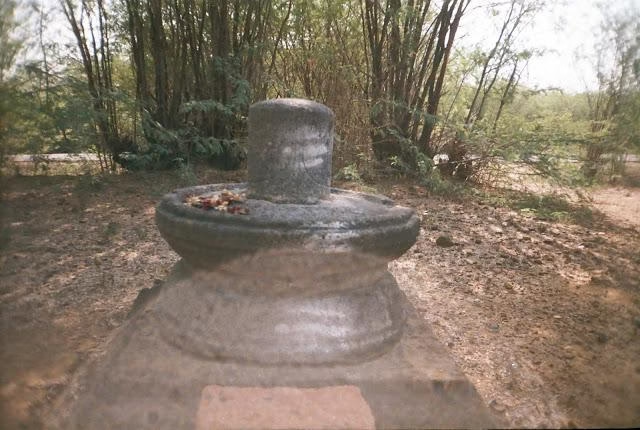
Hidden amidst the rustic charm of the Kanchipuram district lies the Hariharapakkam Shiva Temple, a sanctuary where the divine duality of creation and preservation dissolves into oneness. Here, the primary deity is worshipped as Lord Shiva in the form of a Swayambhu (self-manifested) Lingam. The temple is deeply revered for its spiritual potency, drawing devotees seeking liberation from the cyclical burdens of Samsara (worldly existence).
Why do pilgrims traverse the lanes of Hariharapakkam? The Phalaśruti (scriptural promise of benefits) associated with this shrine suggests that sincere prayer here aids in the cleansing of ancestral karma and pacifies malefic planetary influences. Devotees believe that the vibrational energy of this space aligns the chakras, fostering a profound sense of inner stillness (Shanti).
Historical Origins & Scriptural Legend
While exact inscriptional dates remain elusive in public archives, the temple’s architectural vocabulary firmly roots it in the Dravidian tradition, likely originating during the post-Chola or Vijayanagara era of temple construction in the 16th-17th centuries. The region of Kanchipuram has historically been a magnet for Shaivite devotion, and Hariharapakkam serves as a testament to this enduring legacy.
The Legend of Hariharapakkam:
According to local tradition and oral legends (Sthala Purana), the name “Hariharapakkam” itself holds the key to the temple’s sanctity. It is believed that Lord Vishnu (Hari) and Lord Shiva (Hara) are manifestations of the same Supreme Reality (Brahman). This temple is said to be a spot where the energies of these two deities merged harmoniously. Devotees hold that the sage Narada, while traveling through this region, paused to perform intense penance. Pleased by his devotion, Lord Shiva manifested as the Swayambhu Lingam to grant Moksha (liberation) to the sage and all future devotees.
Architectural Marvels: The Dravidian Aesthetic
The temple stands as a classic example of the Dravidian architectural style, characterized by its pyramidal towers (Vimana) and pillared halls (Mandapas).
- The Vimanam (Shikhara): The sanctum sanctorum features a tiered Vimanam, typical of Kanchipuram region temples, adorned with intricate stucco work and niches housing images of deities.
- The Mandapa: The temple boasts a spacious pillared hall that facilitates ritual gatherings. The pillars are often carved with motifs of Yalis (mythical creatures) and floral patterns, showcasing the craftsmanship of ancient artisans.
- Sculptural Details: Unlike the grandeur of the Kailasanathar temple, Hariharapakkam offers a more intimate architectural experience. The inner prakaram (corridor) is lined with niches that traditionally house the Ashta Dikpalakas (guardians of the directions), though weathering has softened some details over centuries.
Darshan & Ritual Logistics
To ensure a seamless pilgrimage experience, devotees are advised to plan their visit according to the temple schedule. Please note that timings may vary during festival seasons.
Daily Temple Timings
| Session | Timing | Activity |
|---|---|---|
| Morning | 06:00 AM – 12:00 PM | Morning Abhishekam & General Darshan |
| Afternoon | 12:00 PM – 04:00 PM | Temple Rest / Deepa Aradhana |
| Evening | 04:00 PM – 08:00 PM | Evening Darshan & Pooja |
Key Sevas & Online Booking
Devotees can perform various Sevas (ritual offerings) to Lord Shiva. Standard offerings include:
- Abhishekam: Ritual bathing of the Lingam with milk, honey, and sandalwood paste.
- Archana: Recitation of names accompanied by the offering of vilva leaves (Bilva Patram).
- Deepa Aradhana: Offering of camphor and ghee lamps.
Note: For specific online booking options, visit the official Tamil Nadu Hindu Religious and Charitable Endowments (HR&CE) website or the link below.
2026 Festival Calendar
Plan your visit around these auspicious 2026 dates to witness the temple in full vibrancy:
- Maha Shivaratri: February 26, 2026 (Special night-long vigil and abhishekam).
- Arudra Darshanam: January 8, 2026 (Celebration of Nataraja form).
- Pradosham: Occurs twice monthly. Key dates include January 22 and February 5, 2026.
Practical Visitor Guidance
Respect for the sanctity of the space is paramount. Please adhere to the following guidelines:
- Dress Code: Traditional attire is mandatory. Men should wear dhotis or formal trousers with shirts; women should wear sarees, salwar kameez, or long skirts.
- Photography: Strictly prohibited inside the sanctum sanctorum (Garbhagriha).
- Mobile Lockers: While the temple may not have large-scale locker facilities, it is advised to travel light and leave valuables in your vehicle.
- Accessibility: The temple premises involve uneven stone flooring. Elderly devotees are advised to use the provided compound walls for support. Wheelchair access is limited to the outer corridors.
- Crowd Management: The best time for a peaceful Darshan is the Morning Slot (6:00 AM – 7:30 AM). During summer (April-May), carry a water bottle and a handheld fan, as the stone interiors can retain heat.
Pilgrimage Connectivity
How to Reach Hariharapakkam
Hariharapakkam is situated approximately 5 kilometers from the Kanchipuram town center.
- By Air: The nearest airport is Chennai International Airport (MAA), roughly 75 km away (approx. 2 hours drive via NH 48).
- By Rail: The nearest major railway junction is Kanchipuram Railway Station. Local taxis and auto-rickshaws are readily available from the station to Hariharapakkam.
- By Road: From Chennai, take NH 48 towards Sriperumbudur, then proceed to Kanchipuram. State Transport buses frequently ply between Chennai and Kanchipuram.
Nearby Sacred Sites (The Kanchipuram Circuit)
Enhance your spiritual journey by visiting these nearby temples:
- Kamakshi Amman Temple: Located in Kanchipuram, this is a major Shakti Peetham dedicated to Goddess Parvati.
- Ekambareswarar Temple: One of the Pancha Bhoota Stalas (representing the element of Earth), located just a short drive from Hariharapakkam.
- Kailasanathar Temple: The oldest structural temple in Kanchipuram, built by the Pallava kings in the 8th century.
Frequently Asked Questions (FAQ)
Is there a VIP darshan entry available?
Yes, the temple management typically offers a “Special Darshan” or “VIP Darshan” pass, often available through donation or for senior citizens. However, for a small temple like Hariharapakkam, general darshan is usually swift and does not require long queues.
Can I perform a Shiva Abhishekam myself?
Generally, only authorized priests (Archakas) are permitted to enter the Garbhagriha to perform the Abhishekam. Devotees can sponsor the ritual and watch from the designated area.
Are there food facilities available?
Large-scale temple canteens are not present on-site. It is recommended to have meals at the annadhanam centers near the Kamakshi Amman or Ekambareswarar temples in central Kanchipuram.
What is the best season to visit?
The ideal time is between October and February when the weather in Tamil Nadu is pleasant and cool, avoiding the intense heat of May.
Is the temple child-friendly?
Yes, the temple is safe for families. However, the flooring is ancient and can be slippery during the rainy season; parents should hold young children’s hands while navigating the corridors.
Architecture
Legend / Local stories
How to Reach:
Contact Details
Official Address: Shiva Temple, Hariharapakkam, Kanchipuram, Tamil Nadu
Recent Posts

ओ सांवरे तूने ही मुझको संभाला – Lyrics & Meaning
ओ सांवरे तूने ही मुझको संभाला – A Prayer to Shyam Origin & Spiritual Essence Why This Bhajan Resonates Devotees chant this when overwhelmed by life’s storms—the refrain ‘तूने ही मुझको संभाला’ is the soul’s sigh of relief: “You…

कथा ये है महाराज मेरे की – Lyrics & Meaning
कथा ये है महाराज मेरे की छत्रपति संभाजी महाराज – A Prayer to Chhatrapati Sambhaji Maharaj Origin & Spiritual Essence Why This Bhajan Resonates Devotees chant this when their spirit feels tested—its powerful refrain “महाराज मेरे” is a soul’s…

Rigveda Samhita Yathartha Anuvada (ऋग्वेद संहिता यथार्थ अनुवाद) – Complete Set with Anvayartha & Hindi/English Translation
The Rigveda is the oldest surviving scripture of humanity and the foundational text of Sanātana Dharma. For serious students, scholars, UPSC aspirants studying ancient Indian history, Sanskrit learners, and spiritual seekers, a precise and grammatically structured translation is indispensable.…

आना भी अकेला है जाना भी अकेला है – Lyrics & Meaning | BharatTemples
आना भी अकेला है जाना भी अकेला है – A Prayer to the Divine Witness Origin & Spiritual Essence Why This Bhajan Resonates Devotees turn to this bhajan in moments of deep reflection—when life’s attachments begin to ache. The…

माता शेरावाली के द्वार जो भी जाता है – Lyrics & Meaning
माता शेरावाली के द्वार जो भी जाता है – A Prayer to Maa Sherawali Origin & Spiritual Essence Why This Bhajan Resonates Devotees turn to this bhajan in times of fear or uncertainty—its promise that no one leaves Maa’s…

मार लेना सपणी उबार लेणा भवरा – Lyrics & Meaning
मार लेना सपणी उबार लेणा भवरा – A Prayer to the Divine Beloved Origin & Spiritual Essence Why This Bhajan Resonates Devotees chant this in moments of deep vulnerability—its cry of “मार लेना सपणी, उबार लेणा भवरा” is the…

हमें श्याम सुंदर भरोसा तुम्हारा – Lyrics & Meaning
हमें श्याम सुंदर भरोसा तुम्हारा – A Prayer to Shyam Sundar Origin & Spiritual Essence Why This Bhajan Resonates Devotees chant this when feeling alone—its refrain ‘de do sahara’ is the soul’s cry for divine support. Lyrics in Hindi…

Mere Satguru Ne Di Thi Davai Lyrics in Hindi & Meaning
Mere Satguru Ne Di Thi Davai: Invoking the Guru’s Liberating Wisdom This soul-stirring bhajan venerates the Satguru (True Spiritual Master) as the divine physician who dispenses the only remedy for life’s deepest sufferings. Composed by Sant Karmaveer Tufani, it…

Janm Diyo Thari Maa Dukh Dekhiyo Lyrics in Hindi & Meaning
जन्म दियो थारी माँ दुख देखियो (Maa’s Grief Upon Birthing You) This soul-stirring Chetavani Bhajan (admonitory hymn) is addressed to the Divine Mother (Maa) – a call for repentance when children forget their filial duties in the dark age…
Bhadi Sabha Mein Thane Manaun Lyrics in Hindi & Meaning
Bhadi Sabha Mein Thane Manaun: Invoking the Spear-Wielding Mother Mata Bhawani (श्री ज्वाला भवानी), the fiery manifestation of Shakti worshipped as the Protector of Dharma in Her Dhaulagarh sanctum. Origin & Spiritual Essence Composed in Rajasthani folk tradition by…