
Contents
Introduction & Spiritual Essence of Shree Govindajee Temple
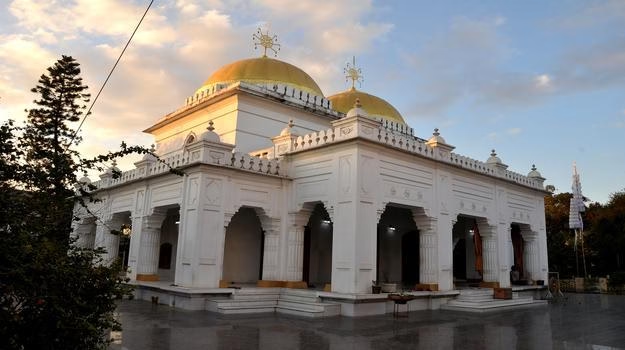
Nestled in the heart of Imphal, adjacent to the royal palace, stands Shree Govindajee Temple, the largest and most significant Vaishnav temple in Manipur. Dedicated to Govindaji, a beloved incarnation of Lord Krishna (an avatar of Vishnu), this temple serves as the spiritual nucleus of the state. The presiding deity is worshipped here in a serene form, accompanied by his consort Radha, creating an atmosphere of divine harmony known as Madhurya Bhava (the sweetness of devotion).
Phalaśruti (Spiritual Benefits): Devotees flock here to seek blessings for mental peace, familial harmony, and the purification of ancestral karma. According to the Sthala Purana, offering sincere prayers to Govindaji helps in overcoming the cycle of suffering (Samsara) and fosters a deep connection with the cosmic order. It is particularly meritorious to visit during the monthly Ekadashi and the grand festivals of Janmashtami.
Historical Origins & Scriptural Legend
The Royal Lineage and Consecration
The history of Shree Govindajee Temple is deeply intertwined with the royal history of Manipur. Original construction began in 1846 under the reign of Maharaja Nara Singh (1844–1850 AD), who dedicated the temple to his family deity. However, a devastating earthquake in 1868 severely damaged the structure.
According to temple records, the edifice was rebuilt and consecrated on April 26, 1876 by Maharaja Chandrakriti (1859–1886 AD). Following the Anglo-Manipur War of 1891, the idols were moved for safety to Kongma but were later restored to the present structure in 1908 under Maharaja Churchand Singh.
Oral Legends and Divine Epiphany
Tradition holds that the roots of the deity go back even further. Maharaja Bhagya Chandra (Jai Singh, 1763–1798 AD), an ardent devotee of Lord Krishna, is said to have received a divine epiphany from the Lord commanding the carving of the idol. This sacred task was completed in November 1779, marked by the performance of the Ras Lila at Raas Mandal Pukhri in Langthabal, a tradition that continues to thrive today.
Architectural Marvels
The temple architecture is a blend of Manipuri and Vaishnav styles, characterized by its distinct simplicity and elegance. Unlike the towering Shikharas of North Indian temples, Shree Govindajee features a raised Mandapa (congregation hall) and a central chamber (Garbhagriha) framed by two gold-plated domes that shimmer in the sunlight.
- Sanctum Sanctorum: The central chamber houses Govindaji and Radha. Flanking them are two other chambers. To one side reside images of Balabhadra (Balarama) and Krishna, and to the other, the holy Triad of Jagannath, Subhadra, and Balabhadra (adopted from the Puri tradition).
- Paved Court: The temple complex includes a spacious paved courtyard, ideal for the ceremonial processions (Yatras) during festivals.
- Preservation Status: While not a UNESCO site, the temple is a protected monument under the state archaeological department, preserving its unique cultural heritage.
Darshan & Ritual Logistics
Visitors are greeted by the tranquil ambiance and the rhythmic chanting of hymns. The temple follows a strict daily routine of Aarti and offerings.
Daily Darshan Timings (Standard Schedule)
| Session | Timing | Activity |
|---|---|---|
| Morning | 6:00 AM – 12:00 PM | Mangala Aarti, Darshan, Abhishekam |
| Afternoon | 12:00 PM – 4:00 PM | Closed (Deity Rest) |
| Evening | 4:00 PM – 9:00 PM | Bhoga Aarti, Darshan, Sandhya Aarti |
Sevas and Online Booking
Devotees can participate in daily rituals such as Abhishekam (ritual bathing of the deity) and Archana (recitation of names). While standard offerings are available at the temple counter, special Sevas are often managed by the Temple Board.
Note: For 2026, the Manipur Temple Board is expected to enhance online booking facilities. Check the official state tourism or temple board website for the current portal status.
Major Festivals in 2026
- Janmashtami: Celebrating the birth of Lord Krishna (Date: August 14, 2026). This is the grandest event here, marked by night-long vigils and cultural programs.
- Kang (Ratha Yatra): The chariot festival where idols are taken out in procession (Dates: Usually June/July; in 2026, likely around June 27).
- Ras Lila: Performed during Kartik Purnima and Holi, showcasing the divine dance of Krishna.
Practical Visitor Guidance
- Dress Code: Traditional attire is preferred. Men should wear Dhotis or formal trousers with shirts; women should wear Sarees, Salwar Kameez, or modest covers. Avoid shorts and sleeveless tops.
- Photography: Photography is strictly prohibited inside the sanctum sanctorum. Mobile phones should be kept silent or switched off.
- Crowd Management: The temple witnesses heavy crowds during festivals and weekends. Best hours to visit: Early morning (6:30 AM) or late evening (6:00 PM).
- Seasonal Advice: Imphal can be hot and humid in May/June; carry water. Winters (Nov-Feb) are pleasant but require light woolens.
Pilgrimage Connectivity
How to Reach
Shree Govindajee Temple is located in the heart of Imphal (east district), within the palace precincts.
- Air: Imphal International Airport (Bir Tikendrajit) is the nearest airport, well-connected to Delhi, Kolkata, Guwahati, and Silchar.
- Rail: The nearest major railhead is Dimapur (Nagaland), approximately 215 km away. From Dimapur, regular buses and taxis ply to Imphal.
- Road: Excellent connectivity via National Highways:
- NH 39: Connects Imphal to Dimapur and Nagaland.
- NH 2: Connects Imphal to Assam and Guwahati (formerly NH 53).
- NH 150: Connects to Mizoram.
Nearby Sacred Sites
Extend your pilgrimage with these nearby holy destinations:
- Kaina Temple: Located about 20 km away, this is a sacred site where Govindaji appeared in the form of a natural rock.
- Shri Radha Govindaji Temple (Kangla): A historic site within the Kangla Fort precincts.
- Ema Temple (Ema Konthoujam): Located on the banks of Loktak Lake, dedicated to Goddess Phouoibi.
Frequently Asked Questions (FAQ)
1. What is the historical significance of the Shree Govindajee Temple?
The temple dates back to the 19th century, originally built by Maharaja Nara Singh in 1846 and rebuilt by Maharaja Chandrakriti in 1876. It is the epicenter of Manipuri Vaishnavism and houses the royal deity of the former kings of Manipur.
2. Is there a VIP darshan entry available?
Generally, there is no separate VIP entry system. However, devotees wishing to perform special Abhishekam or Archana can book specific Seva slots (if available) which may allow closer access to the deity during the ritual.
3. Are there accommodation facilities near the temple?
Yes, Imphal city offers a wide range of hotels and guesthouses near the palace area. It is advisable to book in advance during Janmashtami and Ratha Yatra.
4. Can international tourists visit the temple?
Absolutely. All are welcome, provided they adhere to the dress code and temple etiquette. Silence and respect for rituals are paramount.
5. What is the best time to visit Imphal for darshan?
October to March is ideal due to pleasant weather. However, if you wish to witness the vibrant festivals, plan your visit around August (Janmashtami) or June/July (Kang).
Recent Posts

ओ सांवरे तूने ही मुझको संभाला – Lyrics & Meaning
ओ सांवरे तूने ही मुझको संभाला – A Prayer to Shyam Origin & Spiritual Essence Why This Bhajan Resonates Devotees chant this when overwhelmed by life’s storms—the refrain ‘तूने ही मुझको संभाला’ is the soul’s sigh of relief: “You…

कथा ये है महाराज मेरे की – Lyrics & Meaning
कथा ये है महाराज मेरे की छत्रपति संभाजी महाराज – A Prayer to Chhatrapati Sambhaji Maharaj Origin & Spiritual Essence Why This Bhajan Resonates Devotees chant this when their spirit feels tested—its powerful refrain “महाराज मेरे” is a soul’s…

Rigveda Samhita Yathartha Anuvada (ऋग्वेद संहिता यथार्थ अनुवाद) – Complete Set with Anvayartha & Hindi/English Translation
The Rigveda is the oldest surviving scripture of humanity and the foundational text of Sanātana Dharma. For serious students, scholars, UPSC aspirants studying ancient Indian history, Sanskrit learners, and spiritual seekers, a precise and grammatically structured translation is indispensable.…

आना भी अकेला है जाना भी अकेला है – Lyrics & Meaning | BharatTemples
आना भी अकेला है जाना भी अकेला है – A Prayer to the Divine Witness Origin & Spiritual Essence Why This Bhajan Resonates Devotees turn to this bhajan in moments of deep reflection—when life’s attachments begin to ache. The…

माता शेरावाली के द्वार जो भी जाता है – Lyrics & Meaning
माता शेरावाली के द्वार जो भी जाता है – A Prayer to Maa Sherawali Origin & Spiritual Essence Why This Bhajan Resonates Devotees turn to this bhajan in times of fear or uncertainty—its promise that no one leaves Maa’s…

मार लेना सपणी उबार लेणा भवरा – Lyrics & Meaning
मार लेना सपणी उबार लेणा भवरा – A Prayer to the Divine Beloved Origin & Spiritual Essence Why This Bhajan Resonates Devotees chant this in moments of deep vulnerability—its cry of “मार लेना सपणी, उबार लेणा भवरा” is the…

हमें श्याम सुंदर भरोसा तुम्हारा – Lyrics & Meaning
हमें श्याम सुंदर भरोसा तुम्हारा – A Prayer to Shyam Sundar Origin & Spiritual Essence Why This Bhajan Resonates Devotees chant this when feeling alone—its refrain ‘de do sahara’ is the soul’s cry for divine support. Lyrics in Hindi…

Mere Satguru Ne Di Thi Davai Lyrics in Hindi & Meaning
Mere Satguru Ne Di Thi Davai: Invoking the Guru’s Liberating Wisdom This soul-stirring bhajan venerates the Satguru (True Spiritual Master) as the divine physician who dispenses the only remedy for life’s deepest sufferings. Composed by Sant Karmaveer Tufani, it…

Janm Diyo Thari Maa Dukh Dekhiyo Lyrics in Hindi & Meaning
जन्म दियो थारी माँ दुख देखियो (Maa’s Grief Upon Birthing You) This soul-stirring Chetavani Bhajan (admonitory hymn) is addressed to the Divine Mother (Maa) – a call for repentance when children forget their filial duties in the dark age…
Bhadi Sabha Mein Thane Manaun Lyrics in Hindi & Meaning
Bhadi Sabha Mein Thane Manaun: Invoking the Spear-Wielding Mother Mata Bhawani (श्री ज्वाला भवानी), the fiery manifestation of Shakti worshipped as the Protector of Dharma in Her Dhaulagarh sanctum. Origin & Spiritual Essence Composed in Rajasthani folk tradition by…