
Contents
- 1 Introduction & Spiritual Essence
- 2 Historical Origins & Scriptural Legend
- 3 Architectural Marvels
- 4 Darshan & Ritual Logistics
- 5 Practical Visitor Guidance
- 6 Pilgrimage Connectivity
- 7 Frequently Asked Questions (FAQs)
- 7.1 1. Is there a VIP Darshan entry at Shri Balajipuram?
- 7.2 2. What is the exact distance of Balajipuram from Betul Railway Station?
- 7.3 3. Can we perform the last rites (Shraddha) here?
- 7.4 4. Is outside food allowed inside the temple premises?
- 7.5 5. When was the temple inaugurated?
- 7.6 Contact Details
Introduction & Spiritual Essence
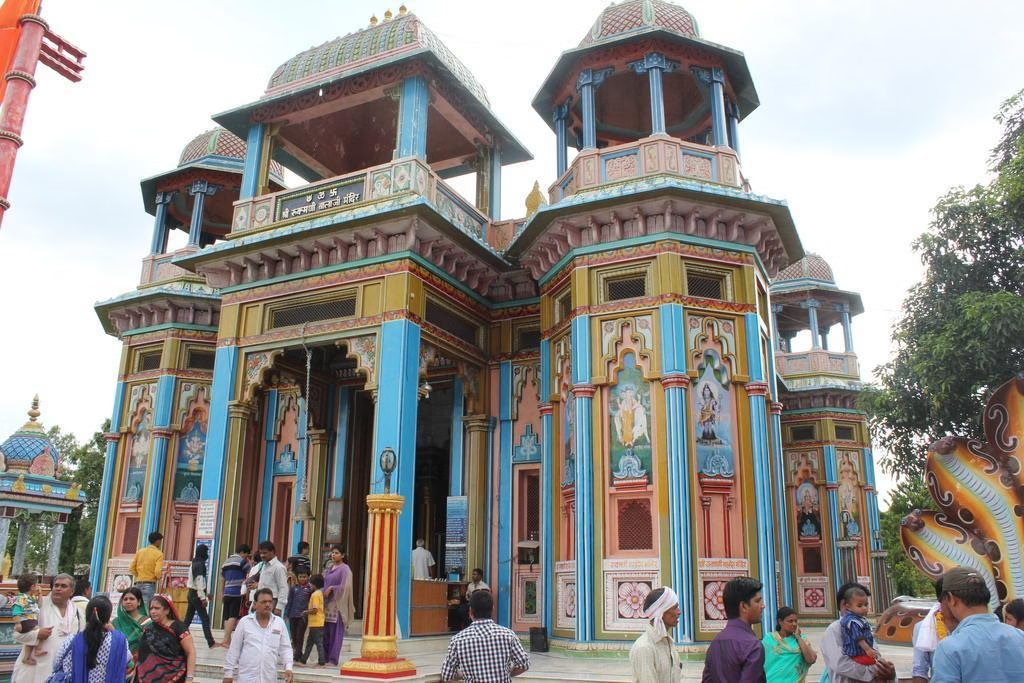
Shri Balajipuram Temple stands as a monumental beacon of devotion on the outskirts of Betul, Madhya Pradesh. Dedicated to Lord Balaji (Venkateswara Swamy), this temple is not merely a structure of stone but a sanctum of spiritual solace for devotees seeking the blessings of the remover of hardships. Rising majestically to a height of 111 feet, it currently holds the distinction of being the highest temple in Betul, visible from the adjoining national highway.
While the presiding deity is Lord Venkateswara, the temple complex is a holistic spiritual ecosystem. It houses shrines for Goddess Lakshmi, Lord Shiva, and various other deities, making it a comprehensive pilgrimage site. The temple was conceptualized by NRI devotee Shri Sem Verma in memory of his late mother, Rukmani Devi Mehto, infusing the sacred space with a deep sense of familial devotion and sacrifice.
Phalaśruti: The Spiritual Benefits
According to local tradition and the spiritual insights shared by the mystic Mony Baba of Ujjain, who meditated within the temple premises for eight days, the temple holds immense merit (Punya). It is believed that:
- Equal to Tirupati: A pilgrimage to Balajipuram is considered spiritually equivalent to visiting the sacred Tirupati Balaji temple in Andhra Pradesh. Devotees visit to cleanse ancestral karma and seek liberation (Moksha).
- Harmony of Sects: The presence of Shankaracharyas from all four Mathas during the inauguration (2001) established the temple as a center of Sanatana Dharma unity, blessing visitors with universal peace.
Historical Origins & Scriptural Legend
The history of Balajipuram is a blend of modern architectural ambition and ancient spiritual longing. The temple was constructed by artisans hailing from Andhra Pradesh, the home of the original Tirumala Venkateswara Temple, ensuring the architectural purity of the Dravidian style.
Timeline of Consecration
According to temple records, the complex was completed in the year 2001. The Prana Pratishtha (life-infusion ceremony) of the idols was conducted over a period of five days, from January 29 to February 4, 2001. This grand event was graced by the revered Shankaracharyas and Hindu saints from across India, marking a significant moment of religious convergence.
The Legend of Betul Balaji
Tradition holds that the site on the Betul outskirts was chosen for its serene, naturally elevated terrain, reminiscent of the Venkata Hills of Tirupati. The temple is viewed as a divine intervention in the region, a Swayambhu-like manifestation (self-manifested in spirit) of Lord Venkateswara in the heart of Madhya Pradesh. The legend passed down by local devotees suggests that the Lord desired to reside here to grant the wishes of his devotees in the central part of India, saving them the arduous journey to the south.
Architectural Marvels
The temple is a masterpiece of South Indian Dravida architecture, transported entirely to the soil of Madhya Pradesh. It strictly adheres to the principles of Vastu Shastra, ensuring a flow of positive energy throughout the 10.5-acre complex.
The temple is built in the traditional South Indian style, with intricate carvings and a grand entrance. The temple complex includes a large hall and a sanctum sanctorum where the main deity is enshrined.
Architecture
- Main Temple: The main temple is dedicated to Lord Balaji (Venkateswara Swamy) and is accompanied by the idol of Goddess Laxmi. The temple is known for its beautiful sculptures and colourful decorative paintings on the inner walls and ceiling .
Key Architectural Features
- The Shikhara (Vimana): The towering 111-foot spire is adorned with intricate Murtis and carvings that depict stories from the Puranas. The height symbolizes the spiritual aspiration of the devotee ascending toward the heavens.
- The Mandapa: The hall supports pillars carved with deities, allowing for congregational worship and Vedic rituals.
- Ksheer Sagar: A unique feature mentioned in the temple lore is the Ksheer Sagar (Ocean of Milk). This aquatic feature houses an idol of Lord Vishnu submerged underwater, surrounded by fish, symbolizing the cosmic rest of the Lord.
- Ksheer Sagar: This is a pool where the idol of Lord Vishnu is submerged underwater, surrounded by multifaceted fish species. It is a unique feature of the temple .
Unique Cave Shrines
The complex is distinct for its network of symbolic caves and tunnels, adding an element of exploration to the pilgrimage:
- A python-shaped cave housing idols of the Shiva family.
- A tunnel leading to the Santoshi Mata temple.
- A cave passage leading to the Ram Mandir and the Twelve Jyotirlingams.
Festivals
The temple hosts several festivals throughout the year, including the annual Brahmotsavam festival, which is a major event attracting devotees from across the state. During Navratras, the temple sees a devotional frenzy with special events and activities organized for devotees.
The temple hosts several festivals throughout the year, including the annual Brahmotsavam festival, which is a major event attracting devotees from across the state .
- Annual Festivals: The temple hosts several festivals throughout the year, including the annual Brahmotsavam festival, which is a major event attracting devotees from across the state .
- Navratras and Festivals: The temple sees a devotional frenzy during festivals and Navratras, with various events and activities organized for devotees .
Darshan & Ritual Logistics
For devotees planning their visit in 2026, it is essential to understand the daily rituals and special sevas available. The temple administration follows a traditional schedule while offering modern booking facilities.
Daily Timings
Devotees can visit throughout the day, but the morning and evening hours are most auspicious for witnessing the Aarti ceremonies.
| Session | Timings | Activity |
|---|---|---|
| Morning | 6:00 AM – 12:00 PM | Suprabhatam, Abhishekam, Darshan |
| Afternoon | 12:00 PM – 4:00 PM | Temple Cleaning / Midday Aarti |
| Evening | 4:00 PM – 8:30 PM | Dopalkala Seva, Mandala Aarti |
Key Sevas & 2026 Festivals
- Abhishekam: Performed in the morning with milk, honey, and sandalwood paste.
- Archana: Individual or family name recitations (Sankalpam) are accepted.
- Online Seva Booking: While historically a physical process, the temple has moved toward digitalization. Devotees can check the official Balajipuram website or the MP Online portal for booking specific Sevas.
Notable 2026 Dates (Tentative based on Hindu Almanac):
- Maha Shivaratri: February 26, 2026
- Rama Navami: April 6, 2026
- Brahmotsavam (Annual): Usually held in March (Specific dates to be confirmed by temple notice board).
- Deepotsav (Diwali): November 1, 2026
Practical Visitor Guidance
To ensure a smooth darshan experience, adhere to the following guidelines which respect both the sanctity of the temple and modern visitor requirements.
Rules & Etiquette
- Dress Code: Traditional attire is mandatory. Men should wear dhotis or full-length trousers with shirts; women should wear sarees, salwar kameez, or churidars. Western wear is strictly prohibited.
- Photography: Photography is generally restricted inside the main sanctum (Garbhagriha). Visitors are advised to seek permission for photography in the outer premises.
- Mobile Phones: Usage is discouraged inside the temple. Lockers are available near the entrance to store phones and electronic items.
- Accessibility: The temple complex is wheelchair accessible to a large extent, though the inner sanctum requires climbing a few steps.
Crowd Management
- Best Time to Visit: Weekdays (Monday–Thursday) between 8:00 AM and 10:00 AM offer the shortest queues.
- Seasonal Advice: Betul experiences a humid subtropical climate. May and June are hot; carry a water bottle (though outside food is restricted). The winter months (October–February) offer the most pleasant weather for pilgrimage.
Pilgrimage Connectivity
Balajipuram is strategically located on the Betul-Bhopal National Highway, making it highly accessible.
How to Reach
- By Air: The nearest airport is Raja Bhoj Airport, Bhopal, approximately 90 km away (a 2-hour drive via NH47).
- By Rail: The closest railway station is Betul Railway Station (approx. 5 km) or Itarsi Junction (major hub, 50 km away).
- By Road: Located directly on National Highway 47 (NH47). Regular buses and taxis are available from Betul main bus stand.
Nearby Sacred Sites
Extend your pilgrimage circuit by visiting these nearby sites:
- Sri Sri Rukmini Mahadev Temple: Located roughly 3 km from Balajipuram. As per the legend of Mony Baba, visiting this temple is considered equal to visiting the Mahakaal of Ujjain.
- Shri Hanuman Temple (Silwani): A significant temple in the Betul district known for its ancient idol.
- Gawilgarh Fort (Chikhaldara): For those interested in history combined with spirituality, this fort is a short drive away and houses an ancient Mahadev temple.
Legend
The temple is believed to have been built by the local king, who was a devotee of Lord Balaji. The temple is said to have been constructed to fulfil a vow made by the king to the deity.
Special Features:
The temple is known for its beautiful sculptures and intricate carvings, which are a testament to the skill of the artisans who built it. The temple also has a large courtyard where devotees can gather for prayers and rituals.
Frequently Asked Questions (FAQs)
1. Is there a VIP Darshan entry at Shri Balajipuram?
While the temple maintains a policy of equality among devotees, special passes or tokens are sometimes issued for senior citizens, differently-abled visitors, and for performing specific Sevas. It is recommended to inquire at the administrative office upon arrival.
2. What is the exact distance of Balajipuram from Betul Railway Station?
The temple is located approximately 5 to 6 kilometers from the Betul Railway Station. Auto-rickshaws and local taxis are readily available for this short route.
3. Can we perform the last rites (Shraddha) here?
The temple primarily focuses on daily worship and festivals of Lord Balaji. For specific Shraddha or ancestral rituals, the priests can guide you, but it is advisable to confirm availability in advance as facilities may vary compared to dedicated Shiva temples.
4. Is outside food allowed inside the temple premises?
Strictly no. To maintain the sanctity and hygiene of the premises, outside food is not permitted. Devotees can avail themselves of the Annaprasadam (free community meals) served at designated hours in the temple dining hall.
5. When was the temple inaugurated?
Shri Balajipuram Temple was inaugurated on February 4, 2001, in the presence of revered Shankaracharyas and Hindu saints. It was built by NRI Shri Sem Verma in memory of his mother, Rukmani Devi Mehto.
Contact Details
+91 – 9300787332
Mandir: 91 – 7141 – 329644, 268236
Recent Posts

ओ सांवरे तूने ही मुझको संभाला – Lyrics & Meaning
ओ सांवरे तूने ही मुझको संभाला – A Prayer to Shyam Origin & Spiritual Essence Why This Bhajan Resonates Devotees chant this when overwhelmed by life’s storms—the refrain ‘तूने ही मुझको संभाला’ is the soul’s sigh of relief: “You…

कथा ये है महाराज मेरे की – Lyrics & Meaning
कथा ये है महाराज मेरे की छत्रपति संभाजी महाराज – A Prayer to Chhatrapati Sambhaji Maharaj Origin & Spiritual Essence Why This Bhajan Resonates Devotees chant this when their spirit feels tested—its powerful refrain “महाराज मेरे” is a soul’s…

Rigveda Samhita Yathartha Anuvada (ऋग्वेद संहिता यथार्थ अनुवाद) – Complete Set with Anvayartha & Hindi/English Translation
The Rigveda is the oldest surviving scripture of humanity and the foundational text of Sanātana Dharma. For serious students, scholars, UPSC aspirants studying ancient Indian history, Sanskrit learners, and spiritual seekers, a precise and grammatically structured translation is indispensable.…

आना भी अकेला है जाना भी अकेला है – Lyrics & Meaning | BharatTemples
आना भी अकेला है जाना भी अकेला है – A Prayer to the Divine Witness Origin & Spiritual Essence Why This Bhajan Resonates Devotees turn to this bhajan in moments of deep reflection—when life’s attachments begin to ache. The…

माता शेरावाली के द्वार जो भी जाता है – Lyrics & Meaning
माता शेरावाली के द्वार जो भी जाता है – A Prayer to Maa Sherawali Origin & Spiritual Essence Why This Bhajan Resonates Devotees turn to this bhajan in times of fear or uncertainty—its promise that no one leaves Maa’s…

मार लेना सपणी उबार लेणा भवरा – Lyrics & Meaning
मार लेना सपणी उबार लेणा भवरा – A Prayer to the Divine Beloved Origin & Spiritual Essence Why This Bhajan Resonates Devotees chant this in moments of deep vulnerability—its cry of “मार लेना सपणी, उबार लेणा भवरा” is the…

हमें श्याम सुंदर भरोसा तुम्हारा – Lyrics & Meaning
हमें श्याम सुंदर भरोसा तुम्हारा – A Prayer to Shyam Sundar Origin & Spiritual Essence Why This Bhajan Resonates Devotees chant this when feeling alone—its refrain ‘de do sahara’ is the soul’s cry for divine support. Lyrics in Hindi…

Mere Satguru Ne Di Thi Davai Lyrics in Hindi & Meaning
Mere Satguru Ne Di Thi Davai: Invoking the Guru’s Liberating Wisdom This soul-stirring bhajan venerates the Satguru (True Spiritual Master) as the divine physician who dispenses the only remedy for life’s deepest sufferings. Composed by Sant Karmaveer Tufani, it…

Janm Diyo Thari Maa Dukh Dekhiyo Lyrics in Hindi & Meaning
जन्म दियो थारी माँ दुख देखियो (Maa’s Grief Upon Birthing You) This soul-stirring Chetavani Bhajan (admonitory hymn) is addressed to the Divine Mother (Maa) – a call for repentance when children forget their filial duties in the dark age…
Bhadi Sabha Mein Thane Manaun Lyrics in Hindi & Meaning
Bhadi Sabha Mein Thane Manaun: Invoking the Spear-Wielding Mother Mata Bhawani (श्री ज्वाला भवानी), the fiery manifestation of Shakti worshipped as the Protector of Dharma in Her Dhaulagarh sanctum. Origin & Spiritual Essence Composed in Rajasthani folk tradition by…